Who Is Hagith, and Is the Olympic Spirit of Venus an Angel?
One Latin handbook printed in 1575 is the whole basis for this name, and it does not call him an angel.
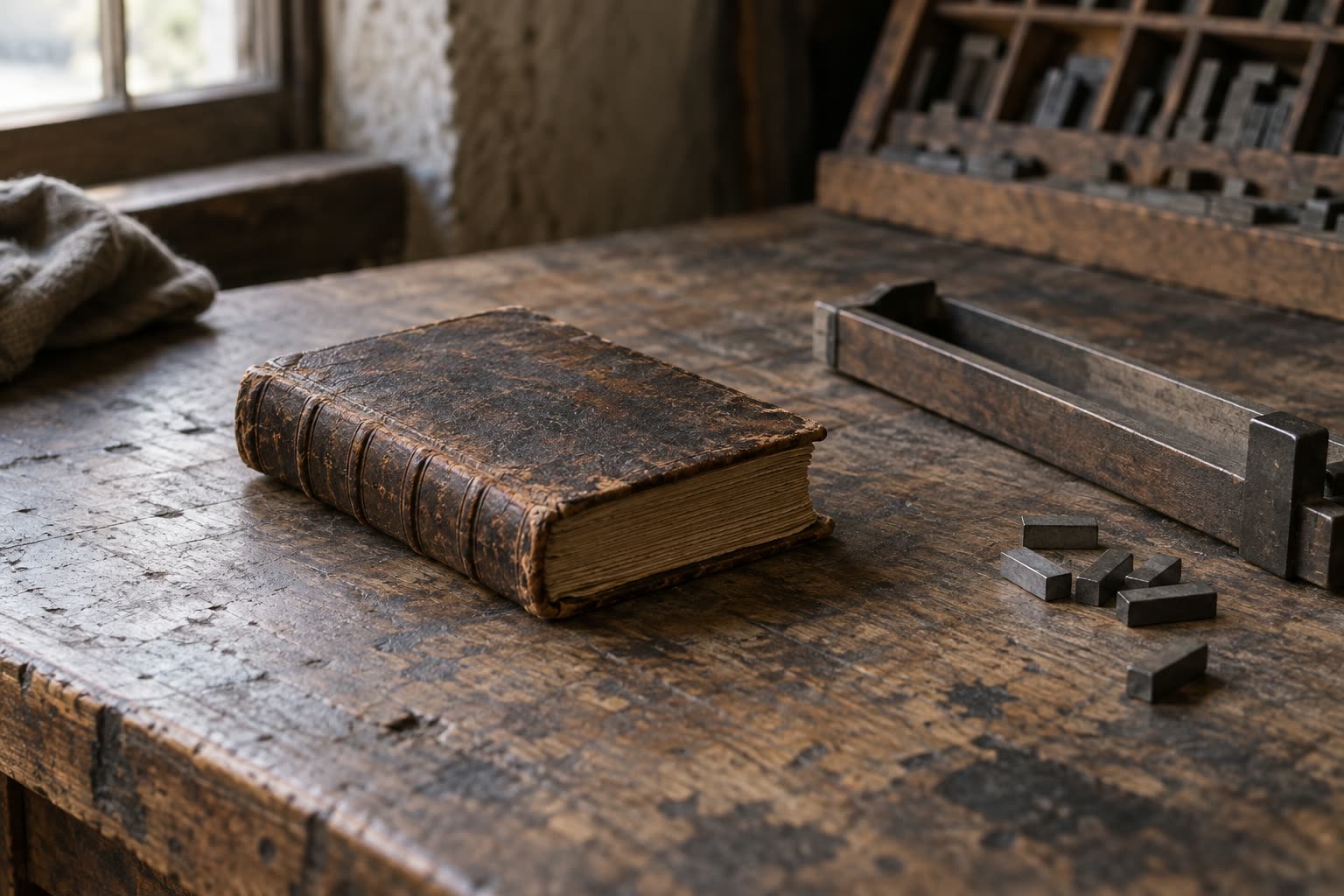
Hagith turns up on angel lists with a planet, a colour and a set of gentle attributes, presented as though he had been there all along.
He had not. The name appears in a single Latin handbook of magic printed in Basel in 1575, and that book calls him something quite specific: an Olympic spirit, one of seven governors dividing the provinces of heaven between them.
This page follows the name back to that text. What is there is stranger and more particular than the modern entry, and it includes a detail almost nobody repeats.
Quick Facts
- Category in the source
- Olympic spirit, not angel
- Only substantial source
- Arbatel de Magia Veterum, Basel, 1575
- Planet governed
- Venus
- Metal
- Copper, which the text has him transmute
- Term of office
- 490 years, in a rotation of seven
- Entered English
- Robert Turner's translation, 1655
Is Hagith an angel at all?
Not in any tradition that uses the word angel the way scripture does. Hagith appears on modern angel lists, and his only source calls him something else entirely.
The term the source uses is Olympic spirit, and it belongs to a single Latin handbook of magic printed in Basel in 1575. That book is the Arbatel de Magia Veterum, and it is where this name begins and very nearly ends.
| Usually implied | What the Arbatel gives |
|---|---|
| A messenger sent by God | A governor of a planetary province |
| Attestation in scripture or tradition | One printed book, dated 1575 |
| A name in Hebrew, Greek or Arabic | A name with no established derivation |
| Devotion or petition within a religion | Instructions for a magical operation |
None of the right column is hidden or controversial. The Arbatel is explicit about what it is, and the drift into angel lists happened afterwards and elsewhere.
The word angel does appear in the wider literature this book belongs to, which is part of why the categories blurred. Renaissance writers used a crowded vocabulary of spirits, intelligences, genii and angels, and the boundaries between those terms were argued rather than fixed.
What matters here is narrower. Whatever the surrounding literature did, this text places Hagith among planetary governors and not among messengers.

Saying that plainly is not a dismissal of the material. It is the difference between describing a Renaissance magical system accurately and quietly promoting one of its officers into a different religion.
What is the Arbatel, and who are the Olympic spirits?
The Arbatel de Magia Veterum is a short Latin work published anonymously in Basel in 1575. It is unusually restrained for its genre, presenting itself as a book of wisdom rather than a manual of coercion, and it was widely reprinted and translated.
Its most influential contribution is a scheme of seven governors. The text divides the heavens into provinces and assigns each of the seven classical planets a spirit who governs them.

The book is short and organised as a sequence of aphorisms rather than as a set of rituals. That form is part of why it was taken seriously by readers who had no interest in conjuring, and why it circulated in respectable libraries.
| Spirit | Planet | Traditional association |
|---|---|---|
| Aratron | Saturn | Time, endurance, transformation of substances |
| Bethor | Jupiter | Fortune and elevation |
| Phaleg | Mars | War and command |
| Och | Sun | Health, gold, long life |
| Hagith | Venus | Beauty, and the transmutation of copper |
| Ophiel | Mercury | Learning and swift knowledge |
| Phul | Moon | Water, silver, and the healing of bodies |
Hagith sits in the Venus position, which determines almost everything later writers say about him.
The seven names have no agreed etymology in Hebrew, Greek or Latin, and the most economical explanation is that they were coined for the system rather than inherited from an older one. That is a normal feature of Renaissance magical literature and not a mark against the text.
What does the Arbatel itself teach?
Reading the book rather than its name list produces a different impression from the one the grimoire label suggests. The Arbatel spends most of its length on conduct rather than on operations.
Its aphorisms return repeatedly to the same instructions. Seek wisdom from God, keep to your calling, be useful to your neighbour, and do not sell yourself to any spirit.
- Against pacts: the text warns explicitly not to bind oneself to any spirit.
- Against idleness: it treats a settled vocation as a condition of the wisdom it offers.
- Against secrecy for its own sake: knowledge is described as given to be used well.
- Toward God: the source of what it promises is named as God rather than the spirits it catalogues.
That framing is why the book circulated where more lurid works did not.
It reads as a devotional handbook with a cosmology attached, and early modern readers who would not have touched a book of conjurations were willing to own this one. Its influence on later occult writing is out of all proportion to its length.
None of that makes its cosmology true, and none of it makes Hagith an angel. It does mean that a page describing the Arbatel as a book of demon summoning has not opened it.
What does the Arbatel say Hagith actually does?
The text is specific in a way that later summaries usually are not. Hagith governs a fixed number of provinces, commands a stated body of spirits, and is credited with two particular operations.
- He governs Venus, and everything the tradition files under that planet.
- He commands legions, given in the text as four thousand.
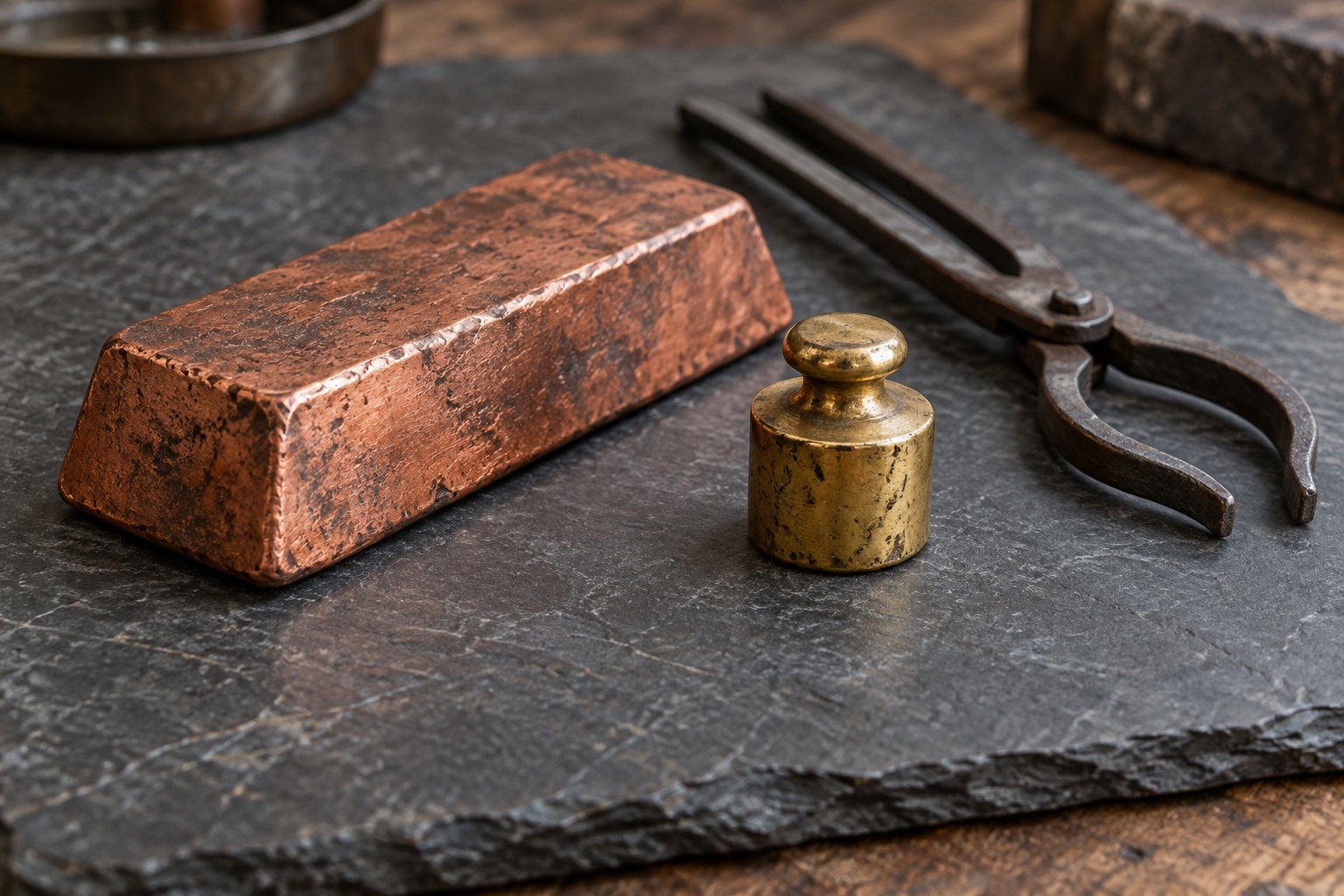
- He works on copper, which the text describes as being turned into gold.
- He confers beauty, and the adorning of the person is named among his effects.
The copper detail is the one that identifies a real reading of the source.
The provinces are counted as well, and the numbers are part of the system rather than decoration. Each of the seven governs a stated share of a fixed total, so the scheme divides the heavens exhaustively rather than sketching a few regions.
Copper is the metal of Venus in the standard planetary correspondences, so the operation is not an arbitrary flourish but a straightforward consequence of the position Hagith holds in the scheme.
A page that gives him love, romance and relationships without mentioning copper or the provinces has taken the planet and discarded the text. That is the most common way this entry is written.
Why does the Arbatel give the spirits fixed terms of office?
This is the strangest feature of the system and the one most often left out. The Arbatel does not present its seven governors as permanent.
It sets out a rotating scheme in which each spirit governs for a defined period before handing on to the next, with the cycle running in a fixed order. The periods are long, measured in centuries rather than years.

The consequence for a modern reader is direct. If the system is taken at its word, whether Hagith is currently in office is a question with an answer, and that is not how any tradition treats an angel.
It is a good test of whether a source has actually read the Arbatel. The rotation is central to the book's own scheme and almost entirely absent from the angel-list version of the same names.
How did an Olympic spirit end up on angel lists?
By a route that is easy to trace and rarely stated. The Arbatel was translated into English by Robert Turner in 1655 and circulated widely in that form, which put the seven names into English occult literature centuries before modern angel writing existed.
From there the names travelled into nineteenth and twentieth century compilations. Those works gathered names from every available source, and a compilation entry does not usually preserve the difference between a scriptural messenger and a planetary governor from a magic handbook.

What the angel-list version keeps and drops
The transfer is not a forgery; it is a loss of labels.
What the evidence supports
- The name survives intact
Hagith is spelled the same in the Arbatel and in modern lists.
- The planet survives
Venus travels with the name in nearly every version.
- Some attributes survive
Beauty and love are recognisably descended from the Venus assignment.
What remains limited
- The category is lost
Olympic spirit becomes angel, which the source never says.
- The rotation is lost
The 490-year term disappears entirely from the later entries.
- The operations are lost
Copper, provinces and legions are replaced by softer modern attributes.
The result is a name that looks like it has a long religious pedigree and has a short documented one. Everything solid about Hagith comes from a single book, and everything devotional about him was added after that book stopped being read.
There is a smaller irony worth noting. The Arbatel warns its reader against binding themselves to spirits, and the tradition that inherited its names went on to build devotional relationships with them.
Should you invoke Hagith?
This page is not the place for a ritual instruction, and the honest answer does not require one. The Arbatel itself is more cautious than most of what has been written about it.
Its framing is that wisdom is sought from God and that its operations are dangerous to the careless, which is a warning the modern angel-list version drops along with the rotation and the provinces.
Four questions to put to any Hagith page
Each one asks whether the page has met the source.
- Is the Arbatel named?
The 1575 text is the only substantial source; a page that omits it is quoting a compilation.
- Is he called an Olympic spirit?
That is the category the source uses; angel is a later relabelling.
- Is the 490-year rotation mentioned?
It is central to the scheme and almost always missing.
- Are copper and the provinces there?
Their absence means the planet was kept and the text was not.
What remains after those checks is genuinely interesting on its own terms. Hagith is a well-documented officer in a specific Renaissance cosmology, with a term of office, a province and a metal, which is a stranger and more particular thing than the entry he has become.
Frequently Asked Questions
Is Hagith an angel?
Not in the source that names him. The Arbatel calls him an Olympic spirit, a governor of planetary provinces, and the word angel appears nowhere in that description.
The relabelling happened later, in compilations that gathered names without preserving their categories.
Where does the name Hagith come from?
From the Arbatel de Magia Veterum, printed anonymously in Basel in 1575.
The seven Olympic names have no agreed derivation in Hebrew, Greek or Latin, and the most economical explanation is that they were coined for the system.
What is Hagith associated with?
Venus, and everything the planetary tradition files under it, including beauty and the adorning of the person.
The text also credits him with turning copper into gold, which follows from copper being the metal assigned to Venus.
What are the seven Olympic spirits?
Aratron for Saturn, Bethor for Jupiter, Phaleg for Mars, Och for the Sun, Hagith for Venus, Ophiel for Mercury and Phul for the Moon.
Each governs a stated number of provinces and commands a stated body of spirits.
Do the Olympic spirits rule forever?
No, and this is the detail most often dropped. The Arbatel gives each spirit a term of 490 years and cycles through all seven in order.
That makes their authority scheduled and temporary, which is not how any tradition describes an angel.
How did Hagith end up on angel lists?
Through Robert Turner's 1655 English translation, which put the seven names into English occult literature, and then through nineteenth and twentieth century compilations.
Those works preserved the name and the planet while losing the category, the rotation and the operations.
Sources
- (1575). Arbatel de Magia Veterum. Latin handbook, Basel
- (1655). English translation of the Arbatel. Early modern occult literature
- (1575). The seven Olympic spirits and their provinces. Latin handbook, Basel
- (1575). The scheme of 490-year terms of office. Latin handbook, Basel
- (classical to early modern). The assignment of copper to Venus. Astrological correspondence
About Our Editorial Process
Every KnowTheAngels guide separates calculation method, tradition context, and personal reflection. We cite where interpretations come from, present more than one view, and never present symbolic reading as prediction.
Read our editorial policy