What Do Ladder and Stairs Dreams Mean?
Read the scene before the symbol, compare it with Jacob's dream, and recognize the ordinary sleep event behind a falling jolt
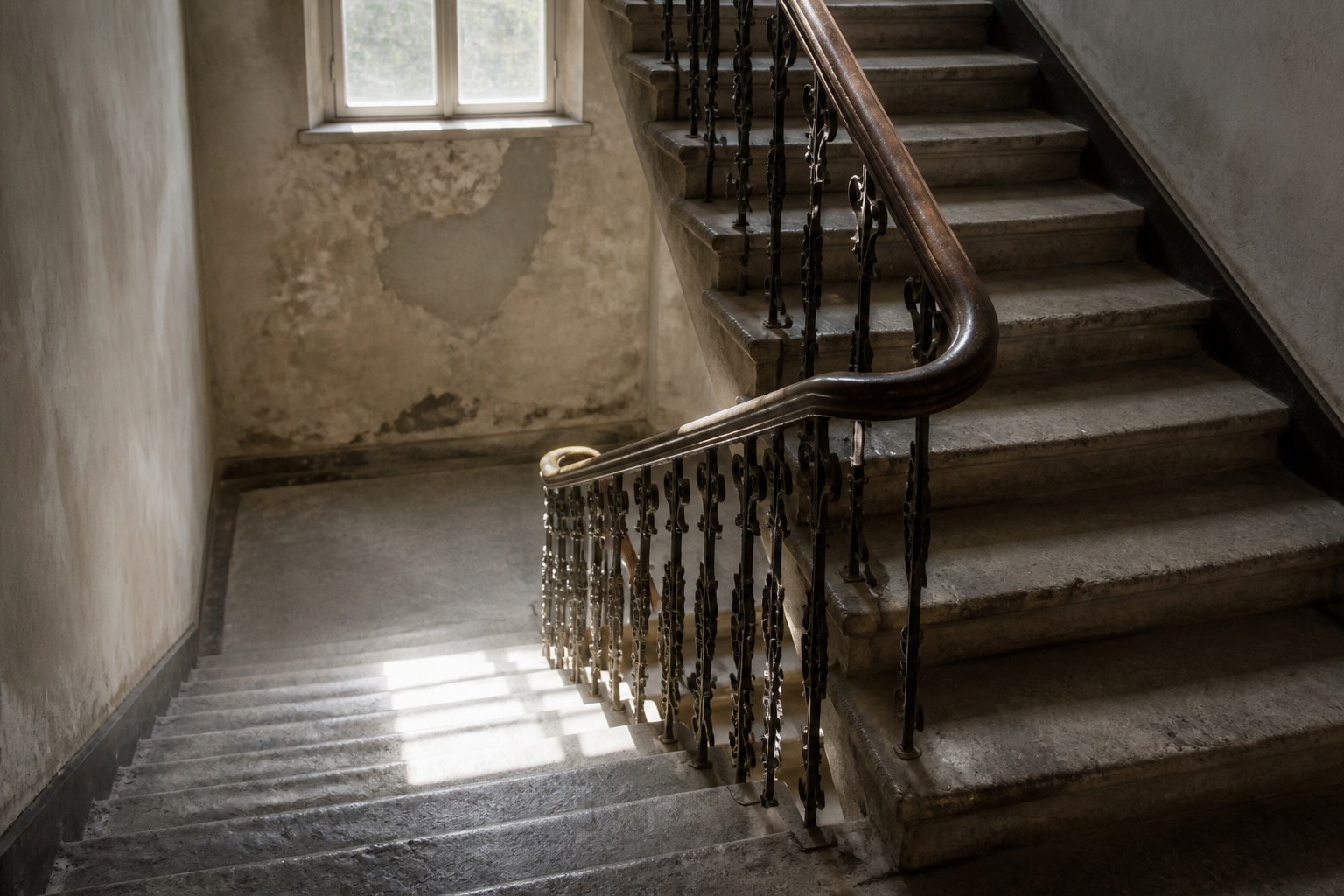
A dream about climbing stairs can feel like a progress report, while descending or missing a step can feel like a warning. Those reactions are understandable, but the direction alone does not establish what the dream means.
A grounded reading begins with the scene you actually remember. Note whether you climbed or watched, whether the stairs were stable, who else was present, what destination was visible, and how the dream ended.
Genesis 28 adds an important source comparison. In Jacob's dream the angels move up and down while Jacob remains asleep on the ground, so the passage does not use the stairway to score his personal ascent.
If a falling sensation and a body jolt woke you at sleep onset, an ordinary hypnic jerk is also worth considering before you assign the scene a spiritual message.
Quick Facts
- Meaning boundary
- No single meaning; the scene and your context determine the useful questions
- Scriptural comparison
- Genesis 28:10-22, Jacob's dream at Bethel
- Who moves in Genesis
- The angels ascend and descend while Jacob sleeps
- Falling jolt
- A hypnic jerk can occur during the transition into sleep
- Record first
- Direction, effort, position, people, structure, and ending
- Evidence boundary
- A dream image cannot verify angel contact or predict an outcome
Start with direction, effort, position, people, and ending
Write down the mechanics before choosing an interpretation. Dream memory changes quickly, and a generic label such as stairs dream can erase the details that made this scene different from another one.
- Direction: going up, going down, turning back, or standing still.
- Effort: moving easily, struggling, being carried, or finding the route blocked.
- Position: climbing yourself, watching someone else, or remaining at the top or bottom.
- People: who waited, followed, helped, blocked the way, or never appeared.
- Structure: ladder, staircase, fire escape, spiral stairs, or a form that changed while you used it.
- Ending: reaching a landing, returning, waking mid-climb, or jolting awake while falling.
These observations do not decode the dream by themselves; they give you a reliable record to compare with current pressures, hopes, conflicts, and choices without pretending that one object carries one universal message.
If the dream repeats, use a dream journal to compare what stays constant and what changes. A recurring staircase with a different person or ending each time may deserve a different question on each occasion.
Jacob's stairway in Genesis 28 does not measure Jacob's progress
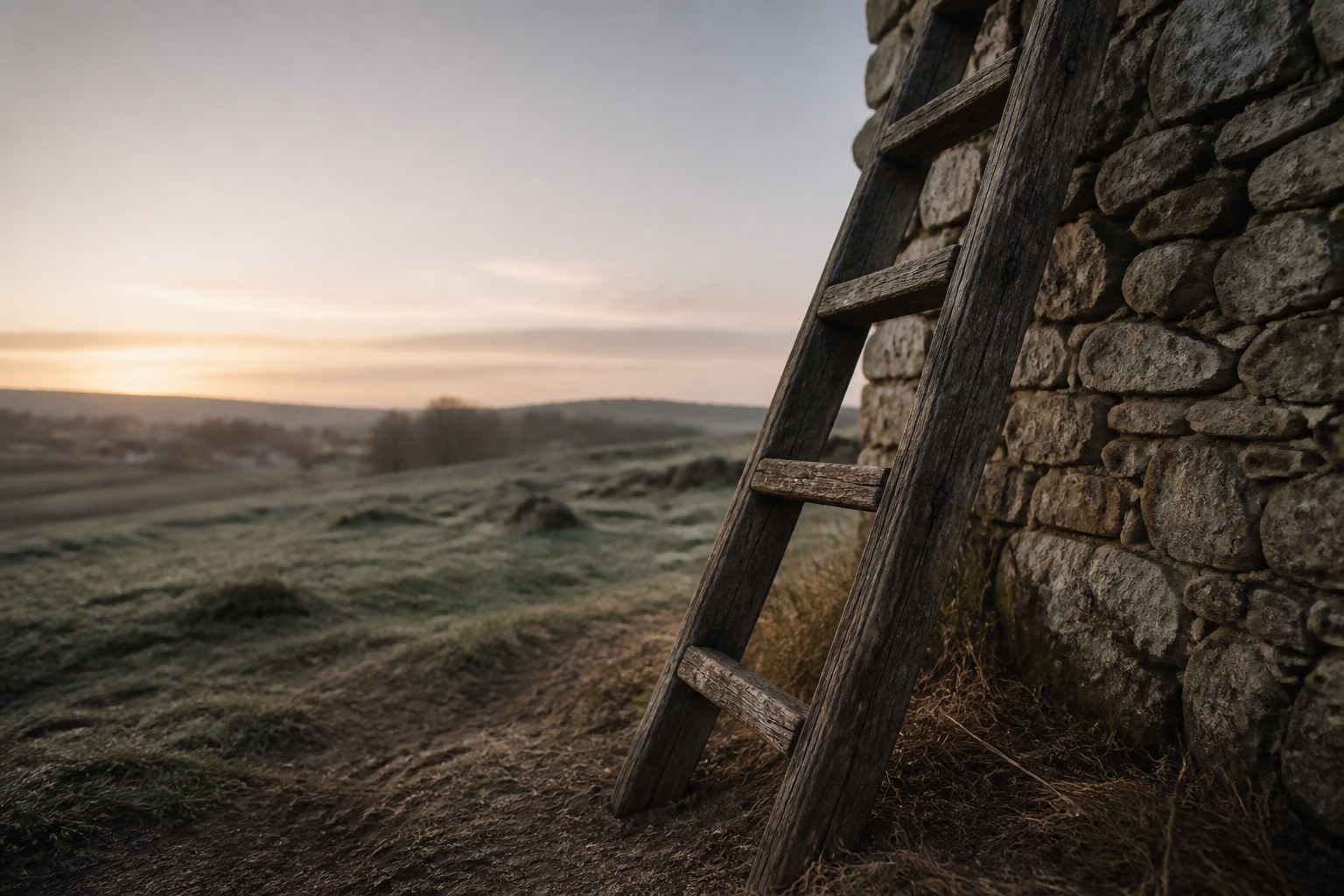
In Genesis 28:10-22, Jacob stops for the night, uses a stone near his head, and dreams of a structure set on the earth with its top reaching heaven. Angels ascend and descend on it while Jacob lies asleep.
English translations vary between ladder and stairway. The USCCB note to Genesis 28:12 says the Hebrew sullam is traditionally but inaccurately rendered as ladder and says the image may draw on a Babylonian ziggurat or temple tower with steps.
That is a textual note about the ancient image, not a claim that every modern stairs dream shares its meaning.
The movement in the passage belongs to the angels and runs in both directions, while Jacob remains below until he wakes, recognizes the place as sacred, and names it Bethel.
This reverses the common idea that upward movement must praise the dreamer's progress and downward movement must announce decline. The passage presents access and divine presence within its own religious narrative, while the sleeping human remains where he was.
Why 'up means success' is a convention, not a finding
Many popular interpretations map climbing to progress and descending to setback. That can be a useful reflection prompt, but it is a convention: the direction does not prove that a promotion, breakup, spiritual advance, or loss is coming.
Older interpretive systems also disagree. In the 1913 English edition of The Interpretation of Dreams, Sigmund Freud treated stairs, ladders, and rhythmic climbing as sexual symbolism.
This documents Freud's historical theory; it does not establish a clinical meaning for your dream.
| Framework | What it emphasizes | What it cannot establish |
|---|---|---|
| Genesis 28 | Angels moving between earth and heaven while Jacob sleeps | The meaning of an unrelated modern dream |
| Freud's historical theory | Rhythmic climbing as sexual symbolism | A current diagnosis or a universal symbol |
| Popular progress reading | Up as progress and down as setback | A prediction about work, love, health, or faith |
Choose a framework openly and keep its limits attached, because a personal reflection can ask what the climb resembles without borrowing the authority of scripture, psychoanalysis, or medicine to turn that resemblance into fact.
Falling on stairs and jolting awake: consider a hypnic jerk
A sudden sensation of missing a step or falling, followed by a body jolt as you drift off, can accompany a hypnic jerk. NHS Borders describes hypnic jerks as sudden jumping sensations during the transition between wakefulness and sleep and notes that their cause is not entirely clear.
Sleep Foundation likewise describes them as involuntary twitches at sleep onset that can come with a falling sensation. It says stress, fatigue, and excessive caffeine may make them more frequent, but those factors do not identify the cause of any one episode.
If the dream and jolt happened together, begin with that ordinary sleep explanation instead of treating the fall as a warning, because the timing alone cannot show whether the image preceded the movement or was experienced alongside it.
Occasional sleep-start jerks are generally described as normal. NHS Borders advises further assessment when jerks also occur often during ordinary wakefulness or continue repeatedly through the night; seek personal medical advice if movements are frequent, worsening, distressing, injurious, or disrupting sleep.

How to read climbing, descending, endless, and blocked stairs
Use each variation to form a question, not a verdict. The useful connection is the one you can test against your actual circumstances rather than the one that sounds most dramatic.
| Dream detail | A grounded question | Avoid claiming |
|---|---|---|
| Climbing easily | What currently feels manageable, and what support makes it so? | Success is guaranteed |
| Climbing with effort | Which task feels costly, and is the destination still worth that effort? | An obstacle has been divinely assigned |
| Descending | Were you returning, exploring, escaping, or simply changing floors? | Loss or spiritual decline is coming |
| Endless or repeating stairs | Where do you feel busy without reaching a clear stopping point? | The dream diagnoses anxiety |
| Blocked or broken stairs | What route feels unavailable, and what other route exists in waking life? | You should abandon the goal |
A staircase and an escalator assign agency differently, so compare that distinction with the control and altitude questions in flying dreams only when those features were actually present.
Finish with one observable waking-life check. Name the task, relationship, or decision the image reminded you of, then ask what evidence supports the connection and what evidence would make you reject it.
Can a ladder or stair dream be an angel message?
A ladder or staircase in a dream does not verify angel contact. Genesis 28 is a particular scriptural narrative in which the text names angels; seeing a similar object in a modern dream does not transfer that identification to the dreamer.
If your dream included a figure you understood as an angel, keep the figure, words, emotional tone, and actions separate from the staircase. The guide to angels appearing in dreams explains why a visual resemblance is still not proof of the figure's identity.
Religious readers may compare the dream with their tradition, pray, or discuss it with a trusted leader who knows their context. The comparison should remain named as interpretation, especially before calling a dream prophetic or using it to make a high-stakes choice.
A recurring dream can still guide reflection without claiming a sender when you record the pattern, compare it with ordinary explanations, and use the page on warning dreams to separate a felt alarm from evidence of an external warning.
Keep the final conclusion modest: this dream gave you an image worth examining. It did not, by itself, tell you what will happen or who caused it.
Frequently Asked Questions
What does it mean to dream about climbing stairs?
There is no fixed meaning. Record whether the climb was easy or difficult, where it led, who was present, and how it ended, then compare those details with a real waking-life situation without treating the dream as a prediction.
What does Jacob's ladder mean in Genesis 28?
Genesis 28 describes angels ascending and descending while Jacob sleeps on the ground. The passage presents a connection between earth and heaven within Jacob's religious story; it does not portray Jacob climbing toward success.
Why did I dream of falling down stairs and wake with a jolt?
A falling sensation and sudden twitch while drifting off can accompany a hypnic jerk, also called a sleep start. The cause is not entirely clear, and the timing cannot prove that the dream carried a warning.
When should repeated sleep-start jerks be assessed?
NHS Borders recommends further assessment when jerks also happen often during ordinary wakefulness or continue repeatedly through the night. Seek personal medical advice if they are frequent, worsening, distressing, injurious, or disrupting sleep.
Is dreaming of going down stairs a bad sign?
No direction guarantees a positive or negative outcome. Ask whether you were returning, exploring, escaping, being led, or simply changing levels; those scene details support a more useful reflection than treating descent as a forecast.
What do endless or blocked stairs in a dream mean?
They can prompt questions about effort, stopping points, or an unavailable route, but they do not diagnose anxiety or prove that a goal will fail. Connect the image only to circumstances you can actually identify and check.
Can a ladder dream be a message from an angel?
The image alone cannot verify angel contact. A religious reader may compare the dream with a named tradition, but Genesis 28 is a specific narrative and does not make every later ladder or staircase dream an angel message.
Sources
- (n.d.). Genesis, Chapter 28. New American Bible, Revised Edition. Link
- (1913). The Interpretation of Dreams, Third Edition. Project Gutenberg; translated by A. A. Brill. Link
- (2015). Hypnic Jerks: A Scoping Literature Review. Sleep Medicine Clinics via PubMed. Link
- (2025). Hypnic jerk. Right Decisions, NHS Scotland. Link
- (2025). Hypnic Jerk: Why You Twitch When You Sleep. Sleep Foundation. Link
About Our Editorial Process
Every KnowTheAngels guide separates calculation method, tradition context, and personal reflection. We cite where interpretations come from, present more than one view, and never present symbolic reading as prediction.
Read our editorial policy