What Does a River Dream Mean, From Crossing to Muddy Water?
A source-grounded way to read the bank, current, crossing, helper, and grief context without turning a dream into a forecast.

A river dream can frame movement, separation, risk, or a hoped-for crossing, but no source establishes one fixed meaning for every dreamer. The useful starting point is the scene itself: your position, the river's movement, the means of crossing, the other people present, and the ending.
Biblical and classical texts use rivers as boundaries in specific stories. Modern dream research can connect dream emotion with waking well-being, yet it does not show that muddy water, a bridge, or a far bank carries a universal message.
This guide keeps those layers separate. It uses Joshua 3, Virgil's Aeneid, a documented Christian hymn, and dream studies to provide context without calling the dream a prophecy or proof of contact.
Quick Facts
- First detail
- Your position in relation to the river
- Crossing detail
- Bridge, stones, boat, swimming, or no available route
- Water detail
- Visibility, speed, depth, direction, and sound
- Source boundary
- Historical river imagery is context, not a dream dictionary
- Grief boundary
- Dreams of the deceased can matter emotionally without proving contact
- Best next step
- Write the scene down before choosing an interpretation
What Does a River Dream Mean?
A river dream is best read as a scene with movement and boundaries, not as a symbol with one automatic definition. Crossing, waiting on a bank, swimming against a current, and watching someone leave are different events even when each dream contains the same river.
The dream's emotional tone matters, but it does not decode the image by itself. Fear beside a shallow river asks a different question from relief after reaching a far bank.
A three-week diary study of healthy adults found that waking anxiety was associated with more negative dream affect, while peace of mind was associated with more positive dream affect. The study measured emotional relationships, not the meaning of river symbols, so it supports checking waking context without turning the river into a diagnosis.
The dream gives you a scene to examine, not a verdict you have to obey.
A grounded interpretation therefore uses three separate questions. What literally happened in the dream, which cultural images resemble it, and what current experience makes that resemblance useful to you?
How Did You Meet the River: At the Bank, Crossing, or in the Current?
Your position identifies the action the dream actually staged. It prevents a generic water meaning from replacing the event you remember.
| Dream position | What happened in the scene | A useful waking question |
|---|---|---|
| Standing on one bank | You faced a boundary without entering it | What decision, distance, or risk am I observing but not yet taking? |
| Crossing | You moved from one side to another | What made movement possible, and did I reach the destination? |
| Swimming or wading | Your body supplied the effort | Did the current assist, resist, or overwhelm that effort? |
| Carried by the current | The river controlled speed and direction | Where do events currently feel faster or less controllable than I expected? |
| Walking beside it | You followed the river without crossing | Was I accompanying a change, searching for a route, or simply observing movement? |
These are prompts, not predictions.
A scene can also borrow from a recent trip, film, flood report, conversation, or familiar landscape, so ordinary memory belongs in the interpretation before any spiritual claim.
The ending often changes the whole reading. Reaching the far bank, turning back, waking midstream, and losing sight of another person leave different problems unresolved.
Why Do Rivers Become Boundary Images in Scripture and Myth?
Joshua 3 presents the Jordan as a real boundary in a specific biblical narrative. The priests carrying the ark stand in the riverbed while the people cross, and verse 17 keeps them there until the whole nation has completed the crossing.
The chapter describes entry into the land promised to Israel and echoes the earlier sea crossing in Exodus.
It does not provide a rule for interpreting modern dreams.
Virgil's Aeneid, Book 6 places Charon at the underworld waters and describes him ferrying the properly buried dead while the unburied remain at the shore. This is a classical Roman literary picture of passage after death, not the same tradition or theology as Joshua's Jordan crossing.
Later Christian hymnody could use Jordan in an afterlife frame.
In Charles Austin Miles's 1903 hymn “I Love Him,” crossing Jordan leads to the golden shore and an eternal home.
This documents one particular Christian use rather than a universal river code.
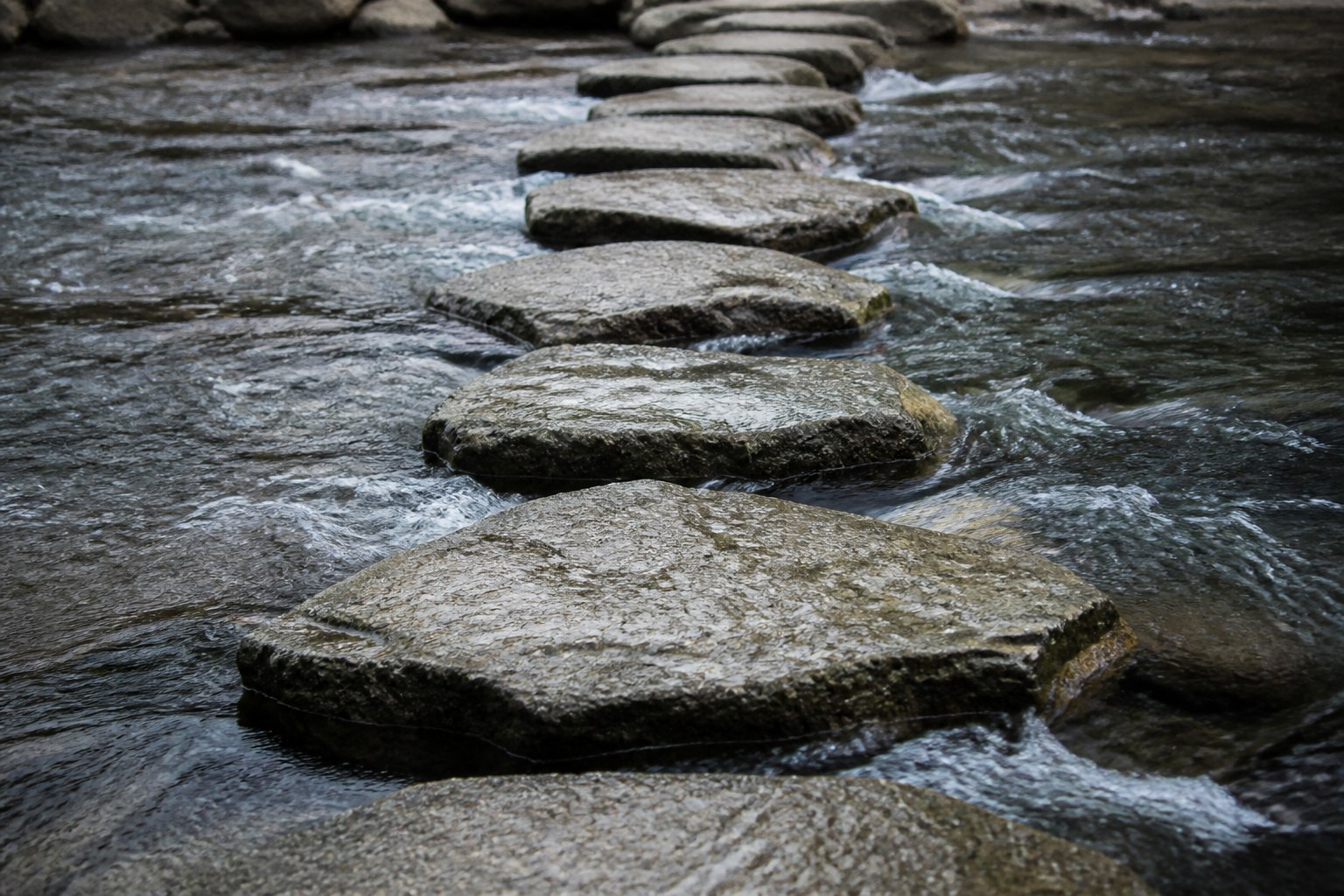
These sources help explain why a river can feel like a threshold to readers formed by biblical, classical, or hymn traditions.
They establish the history of the image, not who sent a dream or what will happen next.
What Can Clear, Muddy, or Fast Water Tell You?
The water's condition tells you what the dream made visible, difficult, or threatening. Clear water may let you see the bottom, muddy water may hide depth or obstacles, and a fast current may reduce your control inside the scene.
Those physical differences support questions, not fixed meanings.
Muddy water can prompt you to ask what felt unclear, but it does not prove deception, illness, financial loss, or danger.
- Clear water: What could you see, and did visibility make you calmer or more exposed?
- Muddy water: What could you not judge, such as depth, footing, direction, or what lay below?
- Fast water: Were you resisting the current, moving with it, or watching it from safety?
- Deep water: Did depth matter because you entered it, because someone else did, or because it blocked a crossing?
- A dry riverbed: Was the missing water a relief, a loss, or simply a route that had become passable?
Dream studies can compare waking and dream emotion, but the cited research does not assign meanings to clear, muddy, deep, or fast water. Treat any symbolic reading as an editorial possibility that must fit the full scene and your own associations.
This distinction matters because a frightening river can still end with a successful crossing, while a beautiful river can remain uncrossable. The event and the emotional tone may point in different directions.
How Does the Way You Cross Change the Question?
A crossing method shows where the dream placed effort, support, and control. A bridge already exists, stepping stones demand repeated choices, a boat depends on a vessel, and swimming leaves the work with the dreamer.
A helper deserves separate attention because the person's role may be more important than the water.
Record whether the helper guided, carried, waited, refused, watched, or disappeared, and whether you knew them.
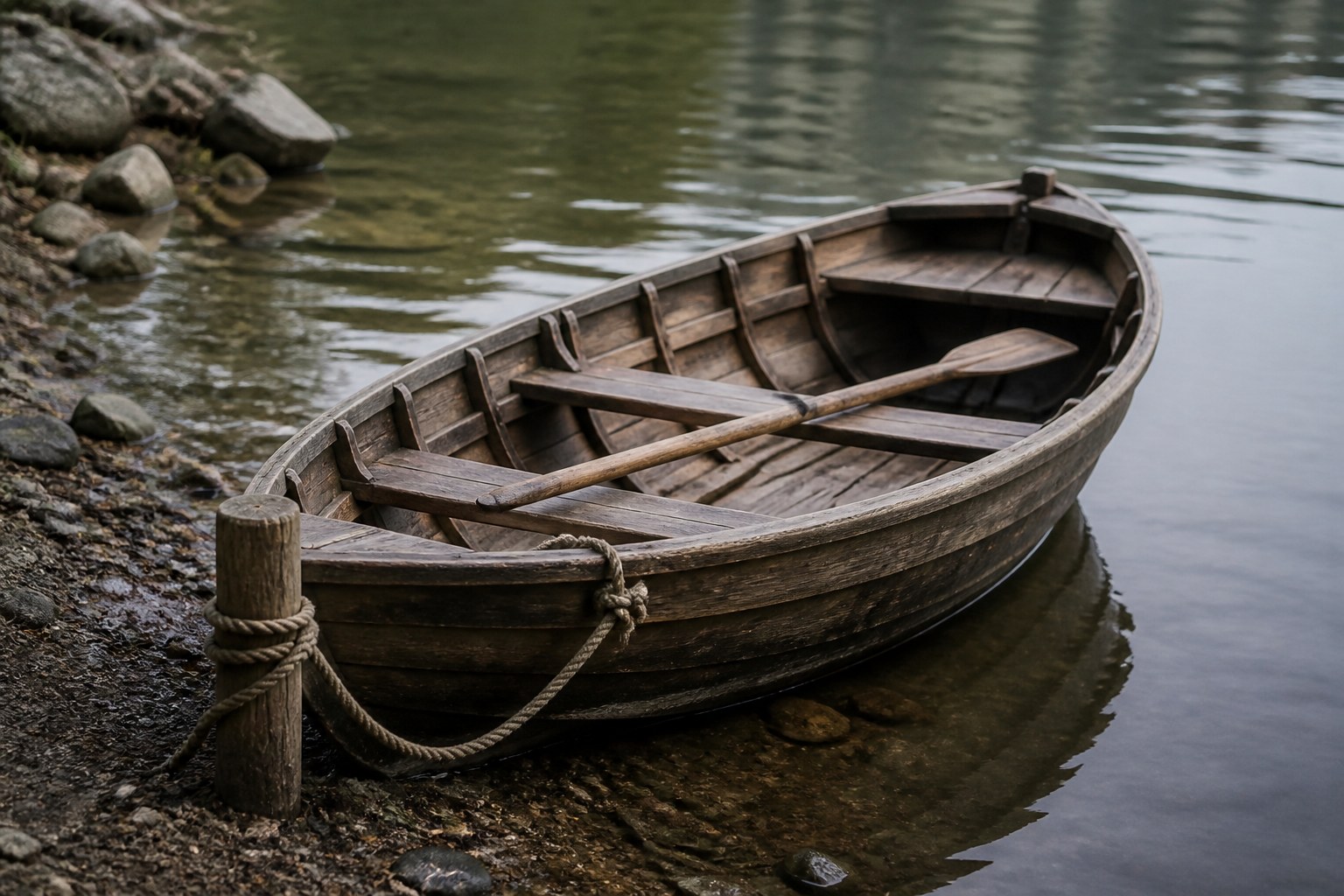
Do not force a ferryman reading onto every boat dream. Charon belongs to a named classical source, while your boat may come from a childhood memory, a recent image, a local river, or the simple need for transport.
The far bank also needs description. A visible person, building, road, light, or empty landscape gives the crossing a destination; fog or darkness may leave the destination unknown even if movement is possible.
The strongest interpretation is the one that accounts for the method, the helper, the destination, and the ending together.
A meaning built from only one detail will usually ignore the dream's actual action.
Can a River Dream Be About Someone Who Died?
Yes, a river dream can be part of grieving, especially when the deceased person appears or the scene centers on separation and passage.
That emotional relevance does not establish supernatural contact.
A 2026 systematic review examined 110 publications about dreams of deceased people and found recurring themes of comfort, guidance, and continued connection across cultures. Most of the reviewed literature was qualitative, so the review describes reported experiences and meanings rather than proving where the dreams came from.
River imagery may enter a grief dream through biblical language, classical stories, hymns, family beliefs, memorial speech, or personal memory. A specific source can explain why the image was available to the mind without deciding whether the dream was a message.
Details to hold separately after a grief dream
- What you observed
Where each person stood, who moved, what was said, and how the scene ended.
- What you felt
Comfort, fear, longing, guilt, relief, confusion, or another emotion during and after the dream.
- What you believe
Your religious or spiritual interpretation, named as belief rather than presented as proof.
- What remains uncertain
The origin of the dream and any claim that it predicts an event or confirms contact.
You can keep the dream's personal or sacred value without making it carry more certainty than the evidence allows.
If recurring dreams are disrupting sleep or making daily grief harder to manage, a licensed clinician or grief counselor can help with the distress while respecting your beliefs.
How Should You Record a River Dream Before Interpreting It?
Write the scene before reading a meaning into it.
Interpretation changes memory, so a plain first record gives you something stable to revisit.
A seven-part river dream record
Use short factual notes first, then add possible interpretations in a separate line.
- Set the banks
- Input
- Your starting place and the far side
- Action
- Write where you stood and what, if anything, you could see across the water.
- Result
- The boundary remains clear before interpretation begins.
- Track movement
- Input
- Standing, walking, crossing, swimming, floating, or being carried
- Action
- Record your movement and the river's direction separately.
- Result
- Your action is not confused with the current's action.
- Name the method
- Input
- Bridge, stones, ford, boat, rope, another person, or no route
- Action
- Note exactly what made crossing possible or impossible.
- Result
- Support and effort stay attached to the scene.
- Describe the water
- Input
- Clarity, color, depth, speed, temperature, and sound
- Action
- List only what you remember seeing, hearing, or feeling.
- Result
- Observable detail is separated from symbolic meaning.
- Place the people
- Input
- Known people, strangers, animals, or absent companions
- Action
- Write who was on each side and what each figure did.
- Result
- The relationship pattern remains available for review.
- Capture the ending
- Input
- Arrival, retreat, interruption, rescue, loss, or waking
- Action
- Record the last action before the dream stopped.
- Result
- The unresolved or completed action is preserved.
- Add waking context
- Input
- Recent events, media, travel, stress, grief, and personal associations
- Action
- List plausible ordinary and symbolic connections without choosing one immediately.
- Result
- Several explanations can be compared without forcing certainty.
If the river returns, compare the records instead of assuming repetition means urgency. Changes in the bank, current, helper, destination, or ending may be more informative than the fact that a river appeared again.
A record is useful when it preserves uncertainty as well as detail.
It should help you notice patterns, not pressure you to produce a spiritual answer.
Frequently Asked Questions
What does it mean to dream about a river?
A river dream may frame movement, separation, risk, or transition, but it has no proven universal meaning. Start with your position, the current, the crossing method, the people present, and the ending.
What does crossing a river in a dream mean?
Crossing can be used as a reflective image for change because the dream moves from one side to another. The method, destination, and outcome matter more than the label “transition” by itself.
What does muddy river water mean in a dream?
Muddy water limits visibility in the dream, so it can prompt questions about uncertainty, footing, or hidden depth. It does not prove danger, deception, illness, or a future loss.
What does being swept away by a river mean?
Being swept away places control with the current rather than the dreamer. Compare that loss of control with current waking pressures, while also checking recent memories or media that may have supplied the scene.
Can a river dream be connected to someone who died?
Yes, river boundaries can fit grief, separation, and passage, and dreams of deceased people are widely reported. The dream can hold emotional or spiritual value without proving contact or predicting another death.
Is a river dream a spiritual sign?
A person may interpret it within a religious or spiritual tradition, but the historical sources cited here do not identify modern river dreams as signs. Keep belief, personal meaning, and evidence clearly labeled.
What should I write down after a river dream?
Record the banks, your movement, the crossing method, the water's visible condition, each person's position, the ending, and relevant waking context. Add interpretations only after the factual scene is on the page.
Sources
- (n.d.). Joshua, Chapter 3. New American Bible, Revised Edition. Link
- (19 BCE). Aeneid, Book 6. Perseus Digital Library; translated by Theodore C. Williams. Link
- (1903). I Love Him. Songs of Christian Service, no. 107 via Hymnary.org. Link
- (2018). Peace of Mind and Anxiety in the Waking State Are Related to the Affective Content of Dreams. Scientific Reports via PubMed. Link
- (2026). Dreams of the Deceased: A Scoping and Mixed-Methods Systematic Review. Sleep via PubMed. Link
About Our Editorial Process
Every KnowTheAngels guide separates calculation method, tradition context, and personal reflection. We cite where interpretations come from, present more than one view, and never present symbolic reading as prediction.
Read our editorial policy