Does Buddhism Have Guardian Angels?
Why guardian angel is only a rough comparison for Buddhist protectors, devas, refuge, and protective chanting
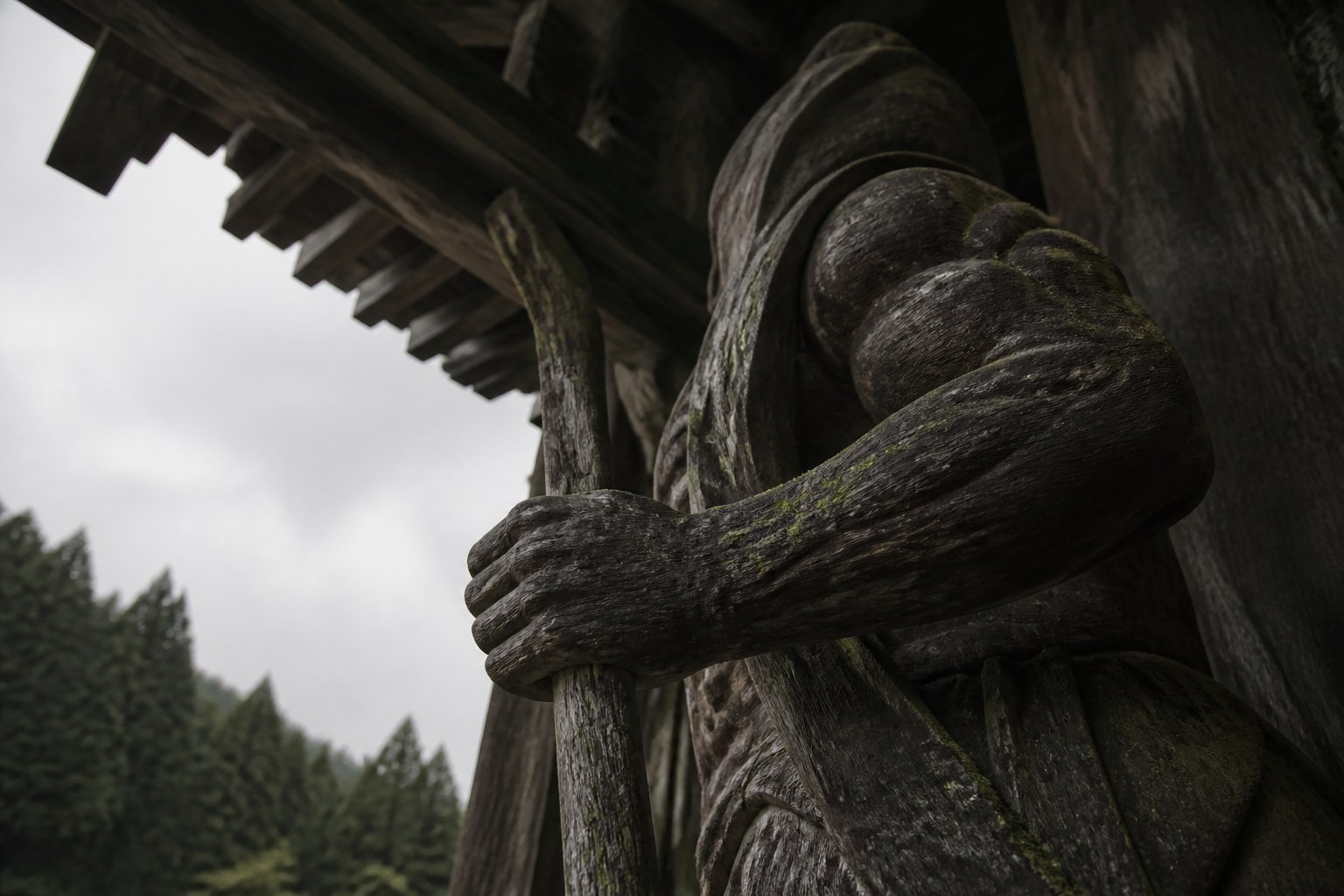
A Buddhist guardian angel is not a standard figure with one agreed role. Buddhism developed across many cultures, and its traditions describe protection in different ways: refuge in the Three Jewels, chants called paritta, devas and guardian kings, bodhisattvas, and Dharma protectors.
Some of those beings are believed to protect practitioners. Others guard the Buddhist teaching, a temple, a direction, a lineage, or a community.
That makes "guardian angel" a rough comparison rather than a direct translation. The useful question is which Buddhist tradition and kind of protection a person means.
Quick Facts
- Short answer
- There is no single Buddhist guardian-angel doctrine
- Dharmapala
- A protector of the Dharma and, in some traditions, its practitioners
- Deva
- A celestial being within Buddhist cosmology, not a creator god
- Theravada practice
- Paritta texts are recited or heard for protection and blessing
- Four guardian kings
- Protectors of the cardinal directions found across Buddhist cultures
- Best comparison
- Name the exact figure or practice instead of treating all protectors as angels
Does Buddhism believe in guardian angels?
Buddhism does not have one universal teaching that every person is assigned an angel at birth. The familiar guardian-angel model comes from other religious histories, so applying it to Buddhism can create a false one-to-one match.
That does not mean Buddhism has no protective beings. Early Buddhist texts include devas and the Four Great Kings.
Mahayana traditions include bodhisattvas and protective deities. Tibetan Buddhist traditions give Dharma protectors a developed ritual role.
Theravada communities recite protective discourses known as paritta. That practice does not require a personal supernatural companion.
These forms are not interchangeable. A figure may protect the Dharma, support practitioners, guard a direction or temple, or be invoked within a specific practice.
For that reason, the most accurate short answer is: Buddhism has protective beings and practices, but "guardian angel" is not their shared Buddhist name or job description.
What is a dharmapala, and whom does one protect?
The Sanskrit term dharmapala means a protector of the Dharma. The Metropolitan Museum of Art describes Tibetan dharmapalas as defenders of the Buddha's teachings and guardians against spiritual dangers.
That definition already differs from an angel assigned to accompany one individual.
The category is not uniform. In Tibetan explanations, protectors may be understood as highly realized beings, emanations of awakened figures, or worldly beings bound by an oath to protect the teachings and practitioners.
Their ritual roles also vary by school and lineage. It is unsafe to turn that range into a single rule about what every Buddhist believes.
Some protectors are connected to particular institutions or lineages. The Rubin Museum, for example, identifies Black Cloak Mahakala as the personal protector of the Karmapas.
Here "personal" describes a specific historical and lineage relationship; it does not establish a guardian assigned to every Buddhist at birth.
The Four Guardian Kings provide another clear case. Buddhist art places them at the four directions, and images of them often stand at temple entrances.
Their directional and communal role is closer to guarding a sacred space or Buddhist world than quietly accompanying one person through daily life.
If a source calls a dharmapala a "Buddhist guardian angel," read that as explanatory shorthand. Then check the protector's name, tradition, object of protection, and ritual context before carrying the comparison further.
Are devas the Buddhist equivalent of angels?
Devas are celestial beings in Buddhist cosmology, which makes them tempting to translate as angels or gods. Neither English word is exact.
Devas remain within samsara, the cycle of birth and death, and they are not the all-powerful creator of the Buddhist cosmos.
Buddhist texts do sometimes describe a protective relationship between devas and human beings. In the Ratana Sutta preserved in a Theravada paritta collection, assembled terrestrial and celestial beings are asked to show goodwill toward people who make offerings and to protect them diligently.
That is stronger evidence than saying Buddhism places all protection inside the practitioner's mind.
It still does not create a universal assignment system. The passage addresses a group of beings and a community in danger; it does not say that each person owns or receives one deva for life.
A careful comparison can therefore say that devas share some angel-like features in English: they are nonhuman celestial beings, and some texts give them protective roles. It should also state the limit: deva and angel belong to different cosmologies and cannot be substituted without qualification.
Readers comparing traditions may also find our Christian guardian angel guide useful, because it shows why the word "assigned" carries a more specific claim in that setting.
How does paritta protection work in Theravada Buddhism?
Paritta is a Pali term commonly translated as protection or safeguard. It refers both to particular Buddhist discourses and to the practice of reciting or listening to them for protection and blessing.
This is a Theravada context, not a label for every Buddhist protective ritual.
Piyadassi Thera's Book of Protection gathers texts such as the Ratana, Mangala, Karaniya Metta, Khandha, and Dhajagga suttas. Its introduction explicitly distinguishes paritta from magical incantation, while presenting attentive recitation or listening, confidence, ethical conduct, loving-kindness, and truth-speaking as part of how the tradition understands protection.
The collection also preserves traditional narratives about protective recitation. In the commentary attached to the Karaniya Metta Sutta, forest-dwelling monks respond to frightening beings by cultivating loving-kindness.
In the Ratana Sutta narrative, Ananda recites the discourse in Vesali during a public crisis. These are communal and practice-based settings, not stories of a private angel appearing to deliver a prediction.
Modern scholarship likewise describes protection in the Pali world as broader than self-reliance alone: moral conduct can be protective, while other practices draw on sacred words, blessings, merit, or external beings. This matters because the old claim that Buddhist protection always runs only from the practitioner outward was too absolute.

How do Buddhist protection traditions differ?
A useful comparison keeps the tradition, protector, and purpose in the same row. It avoids claiming that Theravada, East Asian Mahayana, and Tibetan Vajrayana all use the same categories.
| Figure or practice | Documented setting | What guardian angel misses |
|---|---|---|
| Paritta recitation | Theravada discourses recited or heard for protection and blessing | The practice can work without a personal celestial companion |
| Four Guardian Kings | Early Buddhist cosmology and temple traditions across Asia | They guard directions, places, communities, or the Buddhist order |
| Dharmapala | Especially developed in Tibetan Buddhist ritual and art | The category includes different kinds of protectors with lineage-specific roles |
| Deva | Celestial beings found in Buddhist texts and cosmology | A deva is not automatically assigned to one human being |
| Bodhisattva invocation | Mahayana devotional and contemplative traditions | A widely invoked compassionate figure is not the same as a private guardian |
Even within one tradition, learned explanations and popular devotion may emphasize different things. Some practitioners speak of external help in quite literal terms.
Others explain protector practice as creating supportive conditions for training the mind. Both are part of the material a responsible overview must acknowledge.
This is why neither "Buddhism has guardian angels" nor "Buddhism has no personal protection at all" is a good site-wide answer. Each erases evidence found in particular texts, practices, and lineages.
Can a Buddhist also believe in a guardian angel?
A person's beliefs may combine family culture, another religion, and a Buddhist practice. A website cannot decide whether that person is authentically Buddhist, and Buddhist communities do not all draw the boundary in the same place.
What can be said more precisely is that an assigned guardian angel is not a teaching shared across Buddhist schools. If the belief matters to your practice, ask which tradition you are following and whether its teacher or community treats that language as compatible, metaphorical, or misleading.
For a specifically Buddhist practice, begin with the form your tradition actually transmits: refuge, ethical conduct, metta, a named paritta, a bodhisattva practice, or a protector practice taught in its proper ritual setting. Do not improvise restricted Vajrayana practices from an image or a short web article.
If an experience felt protective, you can describe what happened without forcing an identity onto it. Record the event, how you interpreted it, and which parts are observation rather than belief.
That leaves room for spiritual meaning while avoiding a claim that Buddhism itself guarantees who or what was present.
The respectful conclusion is modest: Buddhist traditions offer many ways to understand and seek protection, but they should be named on their own terms.
Frequently Asked Questions
Does Buddhism believe in guardian angels?
There is no universal Buddhist doctrine that assigns one angel to every person. Buddhist traditions do include devas, guardian kings, Dharma protectors, bodhisattvas, protective texts, and rituals, but their roles differ.
What is the closest Buddhist equivalent to a guardian angel?
There is no exact equivalent: a deva may seem angel-like, a dharmapala may protect the teachings and practitioners, and a bodhisattva may be invoked for compassionate aid. The closest comparison depends on the tradition and the kind of protection meant.
What is a dharmapala?
A dharmapala is a protector of the Dharma. The category includes different protectors and is especially developed in Tibetan Buddhist traditions; some protect teachings, lineages, places, or practitioners.
What is paritta chanting?
Paritta is a Theravada term for protective discourses and their recitation or listening. Collections include the Ratana, Mangala, Karaniya Metta, Khandha, and Dhajagga suttas.
Are devas the same as angels?
No; devas and angels belong to different religious cosmologies. Some Buddhist texts give devas protective roles, so the comparison can clarify one feature without turning the terms into synonyms.
Can a Buddhist believe in a personal protector?
Individual beliefs and Buddhist lineages vary. Some traditions have protectors connected to particular practitioners or lineages, but that is not the same as a universal teaching that everyone receives a guardian angel at birth.
Sources
- (1999). The Book of Protection: Paritta. Access to Insight / Buddhist Publication Society. Link
- (1994). Khuddakapatha: The Short Passages. Access to Insight. Link
- . Dharmapala Standing on a Lion. Collection record 38216. Link
- (2009). Japanese Mandalas: Emanations and Avatars. Exhibition gallery. Link
- . What Are Dharma Protectors?. Study Buddhism. Link
- (2021). A Journey Through Himalayan Art. Masterworks interpretive labels. Link
- (2022). Practices of Protection in the Pali World. Oxford Research Encyclopedia of Religion. Link
About Our Editorial Process
Every KnowTheAngels guide separates calculation method, tradition context, and personal reflection. We cite where interpretations come from, present more than one view, and never present symbolic reading as prediction.
Read our editorial policy