What Does Angel Uriel Mean Across Traditions?
A name-focused study of Uriel in Hebrew, the Bible, Second Temple texts, and later Jewish and Christian traditions

Angel Uriel is a figure in Jewish and Christian angel traditions whose Hebrew name is most often read as "God is my light" or "my light is God." The competing translation "fire of God" comes from the same cluster of Hebrew light and flame language, but the grammar and source history deserve more care than a list of spiritual keywords usually gives them.
The name also creates a common Bible-search problem. Several human beings named Uriel appear in Chronicles, while the angel is absent by name from the Hebrew Bible and enters the written record through Second Temple and later literature.
This distinction gives the name its real history. Uriel can be biblical as a personal name without making the angel a named figure in every biblical canon.
Quick Facts
- Hebrew form
- Uri'el, written with the elements for light or flame and El
- Common meaning
- God is my light or my light is God
- Other translation
- Fire of God or flame of God in some dictionaries and traditions
- Hebrew Bible
- Uriel names human figures in Chronicles, not a named angel
- Angelic texts
- 1 Enoch and 2 Esdras are major early witnesses
- Reader boundary
- Name history and archangel role history answer different questions
How is the name Uriel formed in Hebrew?
The Hebrew form Uri'el combines a word connected with light and the divine element El. The same El ending appears in many Hebrew names, where it identifies God as part of the name's meaning.
The vowel and consonant pattern supports a possessive sense, so scholars commonly render the whole name as "my light is God" or reverse the English order to "God is my light."
This grammatical reading gives the most direct answer to "Uriel meaning." It starts with the name itself instead of importing roles that later religious texts assign to the angel.

Etymology establishes a linguistic starting point without establishing Uriel's rank, duties, symbols, or place in a particular angel list.
Why do translations say light, fire, or flame?
The Hebrew word behind the first part of Uriel belongs to a cluster of terms for light, brightness, and burning illumination, so English reference works do not preserve a single translation.
"My light is God" keeps the possessive relationship visible. "Light of God" reads more smoothly in English but makes that relationship less precise, while "fire of God" or "flame of God" emphasizes the root's hotter range.
| Translation | What it preserves | What to watch |
|---|---|---|
| My light is God | The possessive force of the Hebrew form | English word order sounds less familiar |
| God is my light | The same basic relationship in natural English | It reverses the order of the Hebrew elements |
| Light of God | The core light association | It can hide the possessive reading |
| Fire or flame of God | The root's burning-light range | Later fiery imagery may influence the choice |
These overlapping renderings make different claims because the light translations explain the name most directly while the fire translations highlight one possible shade of the root.
The boundary also matters when readers move from etymology to visual symbolism. Traditions may use light or gold imagery to express illumination, but those symbols interpret Uriel rather than translate his name.
Later interpreters often connect that fiery shade with Uriel's roles in apocalyptic or mystical writing. Readers should keep the direction of evidence clear: the name helps later symbolism make sense, but later symbolism does not settle the name's grammar.
Which Uriels are human figures in the Hebrew Bible?
Chronicles uses Uriel as a human personal name, although modern search results often mix these men with the later angel.
| Passage | Identity | What the passage establishes |
|---|---|---|
| 1 Chronicles 6:24 | A member of a Kohathite Levitical line | Uriel functioned as an Israelite personal name |
| 1 Chronicles 15:5 and 15:11 | A Kohathite chief in David's Ark procession | The bearer has a human office and family setting |
| 2 Chronicles 13:2 | The father of Micaiah and grandfather of Abijah | Another human family carries the same name |
Bible dictionaries debate whether the references in 1 Chronicles preserve the same Levitical family memory, but the text presents every bearer in those passages as a person rather than an angel.
Second Chronicles 13:2 names another Uriel as the father of Micaiah and maternal grandfather of King Abijah. His appearance confirms that the name could circulate in an ordinary genealogy as well as a priestly line.
Uriel is therefore a biblical Hebrew name, but the Hebrew Bible does not use it for a named angel. That distinction separates the human evidence from the angelic evidence without denying either one.
Where does Uriel first appear as an angel?
The angelic Uriel enters the surviving written record through Jewish apocalyptic literature, with First Enoch naming him among the prominent angels in chapters 9, 10, and 20.
Those passages connect Uriel with warning, judgment, cosmic oversight, and hidden knowledge, although individual descriptions vary across the work. First Enoch supplies early angelic evidence, not a single timeless biography assembled from every later tradition.
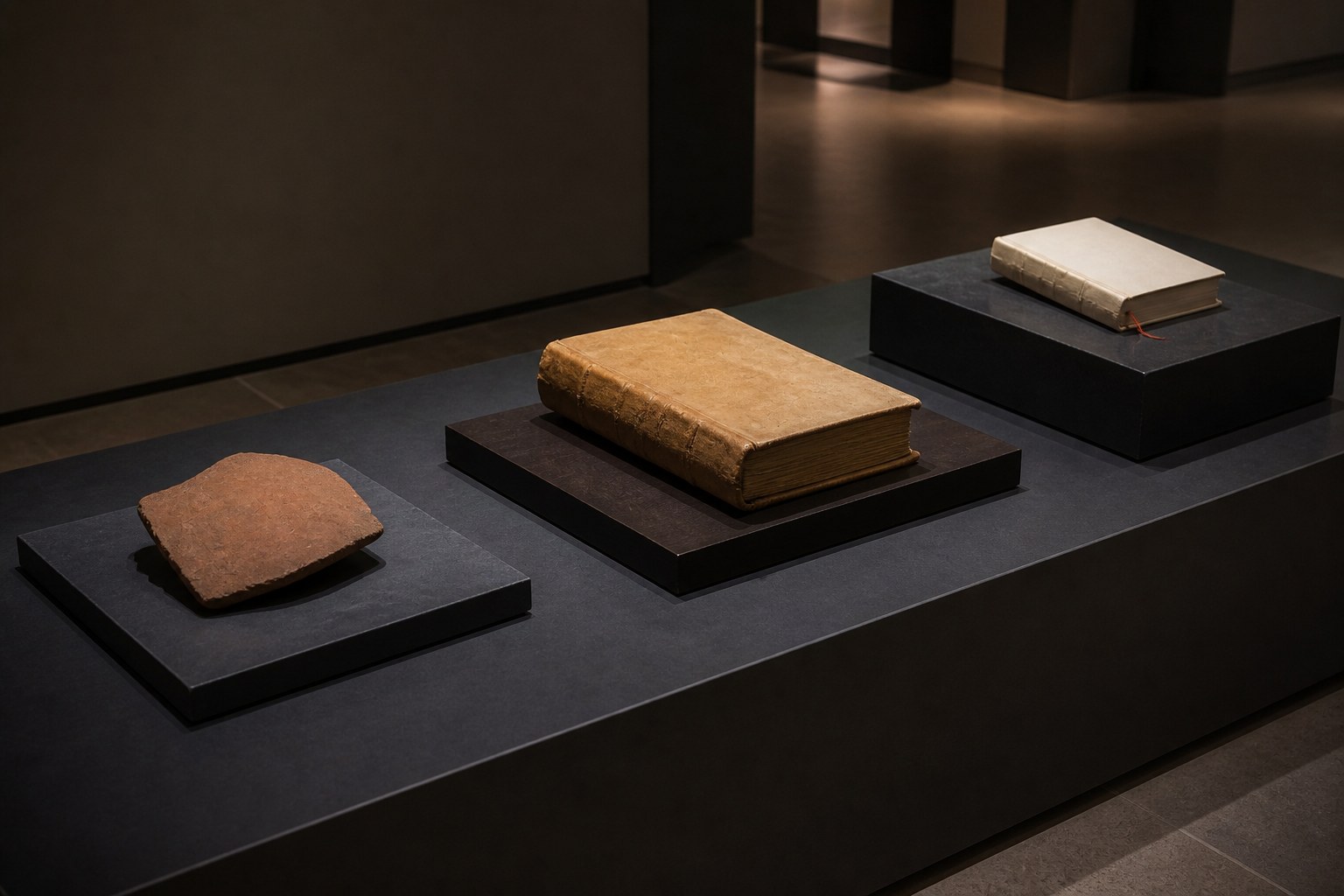
Second Esdras, also known as 4 Ezra in scholarship, gives Uriel a different literary task. He meets Ezra as a heavenly interlocutor, challenges the limits of Ezra's reasoning, and interprets visions through chapters 4 to 10.
These sources establish Uriel as an ancient named angel through textual scenes, which also explains why later readers associate him with insight, warning, and difficult questions.
Their canonical status varies. The Ethiopian Orthodox Tewahedo Church includes 1 Enoch in its biblical canon, while many other Jewish and Christian communities receive Enochic and Esdras material as important ancient literature outside their primary canon.
The phrase "biblical angel" must therefore name the collection: Uriel is absent as a named angel from the Hebrew Bible and most Protestant Bibles, but he appears in texts that some Christian traditions include within a broader biblical canon.
Why do traditions recognize Uriel differently?
A tradition's view of Uriel depends first on which texts it receives and then on how its worship, commentary, and later teaching use the name. One ancient name can therefore carry different levels of authority without requiring one community to erase another's sources.
Jewish reception preserves Uriel in apocalyptic lists, interpretation, prayer poetry, mystical writing, and folklore, although a particular source may place him differently or give his position to another angelic name.
| Source or tradition | Status of Uriel | Responsible reading |
|---|---|---|
| Hebrew Bible | A human personal name | Do not turn the men in Chronicles into angels |
| 1 Enoch and 2 Esdras | An ancient named angel | Describe the role each text actually gives him |
| Eastern Orthodox reception | One of a wider company of archangels | Recognize the tradition-specific liturgical setting |
| Roman Catholic public devotion | Outside the three scripturally named archangels | Follow the Church's narrower naming guidance |
| Modern spiritual writing | Often linked with wisdom, light, or fire | Do not backdate new attributes into ancient texts |
Eastern Orthodox sources can include Uriel in a wider company of archangels, and the Orthodox Church in America calls him an enlightener in its account of the November 8 Synaxis.
Roman Catholic guidance takes a narrower approach to public devotion. The Directory on Popular Piety and the Liturgy discourages assigning angel names beyond Michael, Gabriel, and Raphael, whose names occur in Catholic scripture.
Modern spiritual writing often combines light, fire, wisdom, and practical guidance into one profile, but these later associations should not replace the source labels that explain where each claim began.
Do Ouriel, Auriel, Oriel, and Nuriel name the same angel?
Ouriel usually represents the Greek form of Uriel, while Uriel became the standard English spelling. Auriel and Oriel often reflect later spelling or pronunciation habits rather than separate ancient figures.

What each form can establish
Spelling history can show how a name traveled, but the source must establish whether two names identify the same figure.
The clearest general spelling for the Hebrew name and angel
Usually a language form of Uriel
Context determines whether the writer means Uriel
Some sources connect the names while others keep them distinct
Nuriel requires a different decision because the initial consonant changes the name itself, and later Jewish sources disagree over whether fire, severity, or two aspects of one angel connect Nuriel with Uriel.
The same source-first test applies to Phanuel, Sariel, and Jeremiel. Similar duties or positions in an angel list can explain why interpreters compare them, yet resemblance alone cannot merge their textual histories.
Use Uriel as the standard English form, accept Ouriel, Auriel, or Oriel as variants when the source supports that reading, and keep Nuriel distinct unless the text explicitly identifies the two.
Frequently Asked Questions
What does the name Uriel mean in Hebrew?
The Hebrew form combines a light element with the divine name El, giving a possessive sense most often rendered "God is my light" or "my light is God." "Fire of God" comes from the same root's hotter range, so the choice between light and fire depends on which shade of the Hebrew word a translator emphasizes.
Who is Angel Uriel?
Uriel is a named angel in ancient works such as 1 Enoch and 2 Esdras and an archangel in several later Jewish and Christian traditions. His recognition varies because those texts and later devotional lists do not hold the same status in every community.
Is Uriel named in the Bible?
The name Uriel appears in the Hebrew Bible for human figures in Chronicles, not for an angel. The angel Uriel appears in 1 Enoch and 2 Esdras, which belong to different scriptural or non-scriptural collections depending on the tradition.
Are Uriel and Auriel the same angel?
Auriel is usually treated as a spelling variant of Uriel in later English-language sources. A spelling alone cannot establish identity, so check whether the source explicitly equates the names before carrying over roles or symbols.
How is Uriel pronounced?
English speakers commonly say YUR-ee-el.
Modern Hebrew pronunciation is closer to oo-ree-EL, with the stress on the final element.
Pronunciation varies because the name passed through Hebrew, Greek, Latin, and several modern languages.
Sources
- (1906). A Hebrew and English Lexicon of the Old Testament. Clarendon Press
- (ancient). Uriel as a personal name in Chronicles. Hebrew Bible
- (Second Temple period). Uriel in chapters 9, 10, and 20. Early Jewish apocalyptic literature
- (late 1st century CE). The dialogues of Ezra and Uriel. Jewish apocalyptic literature and later Christian transmission
- (1906). Uriel. The Jewish Encyclopedia
- (1994). Synaxis of the Archangel Michael and the Other Bodiless Powers. Lives of the Saints
- (2001). Directory on Popular Piety and the Liturgy. The Holy See
About Our Editorial Process
Every KnowTheAngels guide separates calculation method, tradition context, and personal reflection. We cite where interpretations come from, present more than one view, and never present symbolic reading as prediction.
Read our editorial policy