Christian Boy Names Starting With I: Who Named Isaac and Ishmael, and Which Ignatius or Isidore
Who gave Isaac and Ishmael their names, which Saint Ignatius or Saint Isidore a name honors, and the verses that identify Isaiah, Israel, Ira and Ithamar.
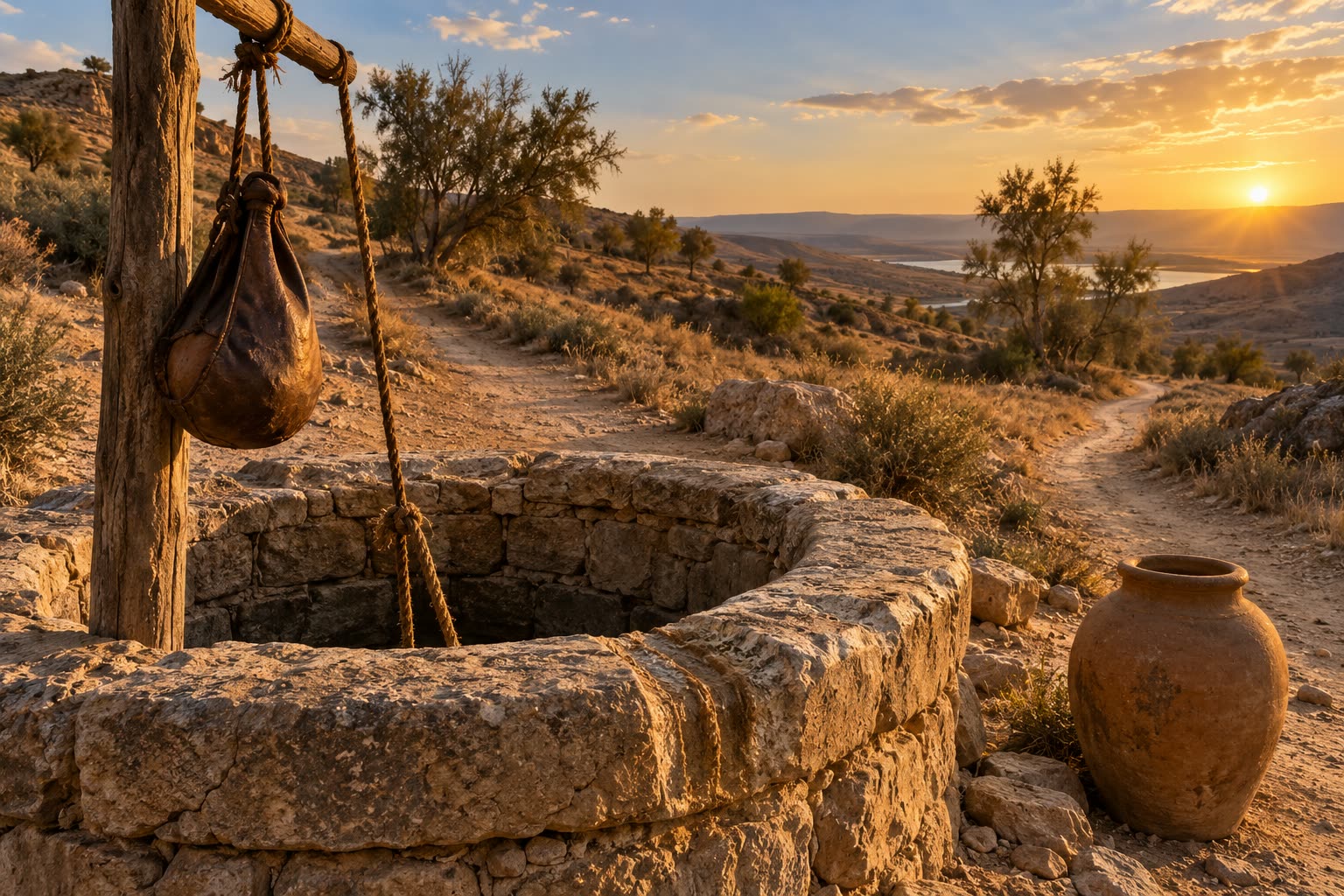
Abraham's two sons received their names in different scenes. Abram named Ishmael himself when Hagar bore him, at eighty-six (Genesis 16:15-16), while Isaac's name was commanded by God after Abraham laughed at the promise of a son at a hundred (Genesis 17:17-19).
Ignatius was the name of several saints and Isidore of at least two, and one ceremony links them: on 12 March 1622 Gregory XV canonized Isidore the Labourer of Madrid together with Ignatius of Loyola.
Isaiah, Israel, Ira and Ithamar also come from the Hebrew Bible with a verse that identifies each man. Irenaeus was an early bishop of Lyons, and Ian and Ivan are forms of John.
Quick Facts
- Ishmael named by
- Abram, aged eighty-six, at the birth (Genesis 16:15-16)
- Isaac's name commanded
- Genesis 17:19, with the NRSVUE note "That is, he laughs"
- The brothers together
- Burying Abraham in the cave of Machpelah (Genesis 25:9)
- Same canonization day
- Isidore the Labourer and Ignatius of Loyola, 12 March 1622
- Isidore in Greek
- Isidoros, "gift of Isis"
- Ian and Ivan
- Ian: Scottish form of John; Ivan: the Slavic, Italian and Estonian form
Who named Isaac and Ishmael?
Ishmael was named by his father at his birth. Genesis 16:15-16 says that Hagar bore Abram a son, "and Abram named his son, whom Hagar bore, Ishmael," when Abram was eighty-six years old.
The name had been announced to his mother first, in Hagar's meeting with an angel in the wilderness, where Genesis 16:11 explains it as "God hears." Abram then gave the boy that name himself.
Isaac's name arrives as a command, after a laugh. In Genesis 17:17 Abraham "fell on his face and laughed" at the thought of a son born to a man of a hundred and a wife of ninety, and in 17:19 God replies, "you shall name him Isaac," which the NRSVUE notes as "That is, he laughs."
In Genesis 17:18 Abraham first pleads for the son he already had: "O that Ishmael might live in your sight!" God answers with the promise of Sarah's son and says the covenant will be established with Isaac, so both brothers' names appear in the same exchange.
At the birth, in Genesis 21:3-6, Abraham gives the name as he was told and Sarah takes up the laugh: "God has brought laughter for me; everyone who hears will laugh with me." The laughter that began as Abraham's disbelief in chapter 17 is Sarah's joy by chapter 21.
The brothers appear together again at their father's grave. Genesis 25:9 says, "His sons Isaac and Ishmael buried him in the cave of Machpelah."
Two Saint Ignatiuses, two Saint Isidores, and one canonization day
Neither name began as a Christian word: in Behind the Name's derivations, Ignatius goes back to an Etruscan family name and Isidore to an Egyptian goddess, so the Christian weight of each comes from the saints who carried it.
| Saint | When | Known for | What the name records |
|---|---|---|---|
| Ignatius of Antioch | Reign of Emperor Trajan | Third bishop of Antioch, thrown to wild beasts by Trajan | Roman family name Egnatius, of Etruscan origin and unknown meaning |
| Ignatius of Loyola | 1491-1556; canonized 12 March 1622 | Founder of the Jesuits | Birth name Íñigo, according to Behind the Name |
| Isidore of Seville | 6th century | Archbishop, historian and theologian | Greek Isidoros, "gift of Isis" |
| Isidore the Labourer | About 1070-1130; canonized 12 March 1622 | Farm labourer near Madrid; patron of peasants, day-labourers and Madrid | The same Greek name; Spanish Isidro |
The "fiery" gloss that many name lists give Ignatius reverses the history. According to Behind the Name, the meaning of Egnatius is unknown, and the spelling "was later altered to resemble Latin ignis 'fire'," so the fire association arrived through spelling.
Isidore's meaning is clear and pre-Christian: Greek Isidoros joins the goddess's name Isis to doron, "gift." The same source adds that the name never became popular among English-speaking Christians, while Jewish families in America used it as a form of Isaac, Israel and Isaiah.
The two pairs meet in one ceremony. The Catholic Encyclopedia records that Gregory XV canonized Isidore the Labourer on 12 March 1622 together with Ignatius, Francis Xavier, Teresa and Philip Neri, so Ignatius of Loyola and the farm worker from Madrid became saints on the same day.
The story of an angel ploughing while Isidore the Labourer prayed before work carries the encyclopedia's own qualifier, "so runs the legend." The same entry states plainly that he worked for Juan de Vargas on a farm near Madrid, died on 15 May 1130, and is honored with a feast on 15 May.
Isaiah son of Amoz and the four kings of his book
The prophet Isaiah is identified by his father and by four reigns in the first verse of his book: "The vision of Isaiah son of Amoz, which he saw concerning Judah and Jerusalem in the days of Uzziah, Jotham, Ahaz, and Hezekiah, kings of Judah" (Isaiah 1:1).
The father, Amoz, and the four kings are the identifying details the book itself supplies. The first king on the list, Uzziah, is also a boy's name, with his own reign recorded in 2 Chronicles 26.
Isaiah's temple vision in chapter 6 is dated "the year that King Uzziah died," which ties it to the first king named in 1:1.
Israel, a name Genesis gives Jacob twice
Israel is a man's name before it is the name of a people, and Genesis gives it to Jacob twice. The first giving follows the night of wrestling at Peniel in Genesis 32:28.
The second comes at Bethel, where God says in Genesis 35:10, "Your name is Jacob; no longer shall you be called Jacob, but Israel shall be your name." The verse ends, "So he was called Israel," and the NRSVUE cross-references it to 32:28, tying the two passages together.
Ira, Ithamar and Irenaeus: David's priest, Aaron's son and a bishop of Lyons
- Ira: 2 Samuel 20:26 reads, "and Ira the Jairite was also David's priest." The "watchful one" meaning given on some name lists cites no source, so the verse is what the name securely carries.
- Ithamar: Exodus 6:23 names him as the fourth son of Aaron and Elisheba, after Nadab, Abihu and Eleazar, and Exodus 28:1 sets the four sons apart as priests with their father.
- Irenaeus: the Greek original is Eirenaios, "peaceful," and Behind the Name identifies Saint Irenaeus as an early bishop of Lyons, for whom the Greek island of Santorini is named.
Ian and Ivan are forms of John
Ian and Ivan are John in other languages. Behind the Name lists Ian as the Scottish form, frequently used in the English-speaking world, and Ivan as the form in Belarusian, Bulgarian, Croatian, Czech, Estonian, Italian and other languages.
The "God is gracious" gloss that name lists attach to both is John's meaning, which Behind the Name gives for the Hebrew Yohanan as "Yahweh is gracious." The name goes back to John the Baptist and the apostle John, who are told apart among the J names.
Frequently Asked Questions
What biblical names start with I?
Isaac, Ishmael, Israel, Isaiah, Ira and Ithamar are men in the Bible, found in Genesis 16-35, Isaiah 1:1, 2 Samuel 20:26 and Exodus 6:23. Ignatius, Isidore and Irenaeus are saints' names from later Christian history, and Ian and Ivan are forms of John.
Does Ignatius mean fire?
Not in origin. Ignatius comes from the Roman family name Egnatius, of unknown meaning, and Behind the Name says the spelling was later changed to look like Latin ignis, "fire."
Is Ivan a biblical name?
Ivan does not appear in English Bibles, but it is a form of John, the name of John the Baptist and the apostle John. Behind the Name lists Ivan as the form used in Belarusian, Bulgarian, Croatian, Czech and other languages.
Sources
- (2021). Genesis 16:15-16; 17:17-19; 21:3-6; 25:9; 35:10; Isaiah 1:1; 2 Samuel 20:26; Exodus 6:23 (NRSVUE). Bible Gateway. Link
- (1910). St. Isidore the Labourer. The Catholic Encyclopedia (New Advent). Link
- (n.d.). Ignatius: Meaning and History. Behind the Name. Link
- (n.d.). Isidore: Meaning and History. Behind the Name. Link
- (n.d.). Irenaeus: Meaning and History. Behind the Name. Link
- (n.d.). John: Meaning and History. Behind the Name. Link
About Our Editorial Process
Every KnowTheAngels guide separates calculation method, tradition context, and personal reflection. We cite where interpretations come from, present more than one view, and never present symbolic reading as prediction.
Read our editorial policy