What Does Life Path 11 and 2 Compatibility Mean in Numerology?
What one published reading says about Life Path 11 paired with its own root number 2, where the asymmetry appears, and why two major sources stay silent on this pair
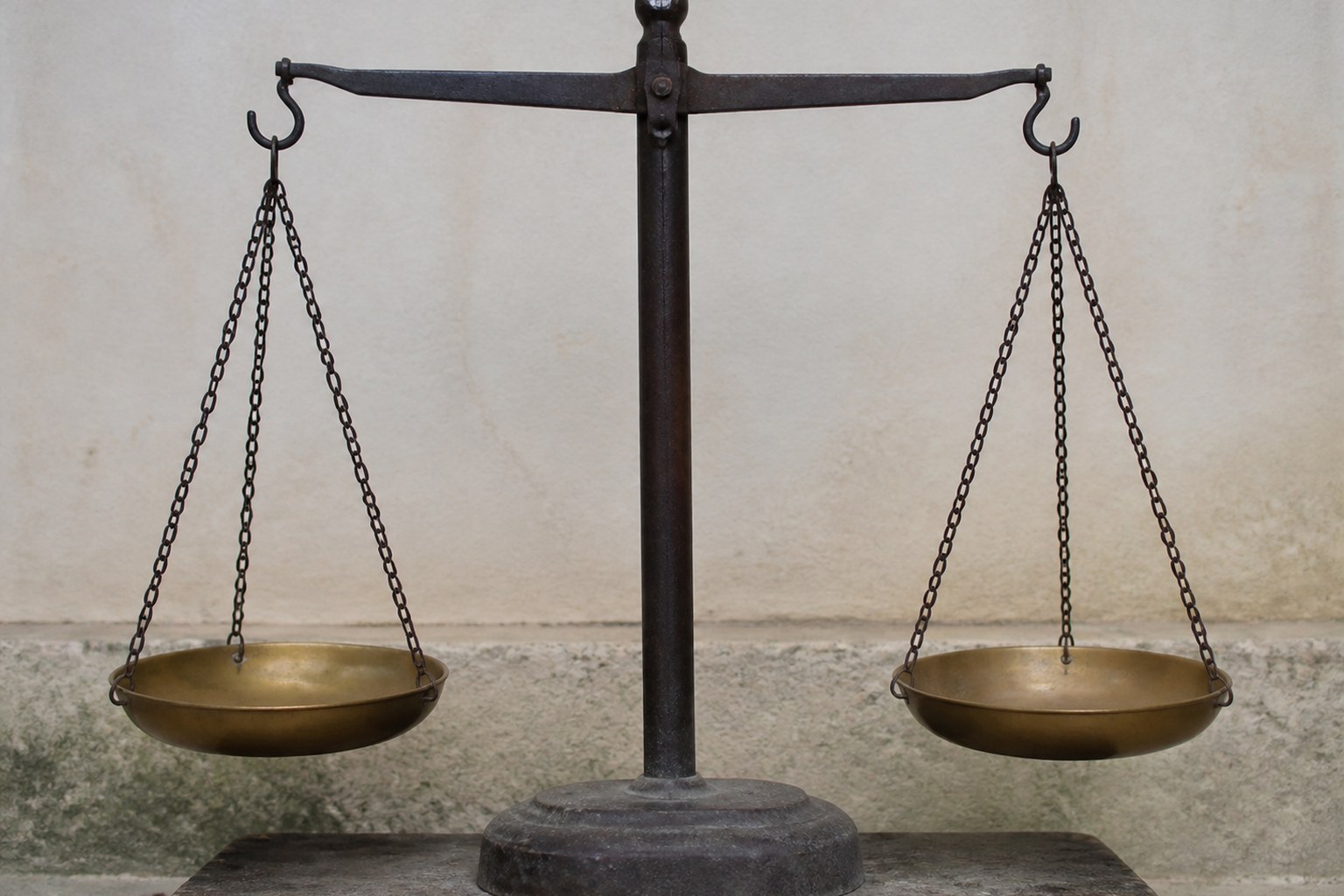
This pair is structurally unusual: Life Path 11 carries Life Path 2 as its root number. Andrews at Numerologist.com, the only publisher in this evidence set who covers the pair directly, calls it a relationship where "the 2 understands the 11’s emotional architecture at a depth that other partners have to spend years working toward."
Numerology.com and Decoz publish no Life Path 11 compatibility reading. Their pair sections cover 1 through 9 only (checked October 5, 2026).
Andrews frames the central question as whether shared sensitivity produces balanced partnership or quiet imbalance. Andrews argues the 11’s intensity can gradually become the organizing principle of the relationship while the 2’s own needs go consistently unnamed.
Quick Facts
- Published coverage
- Only Andrews at Numerologist.com covers this pair directly (as of October 5, 2026)
- Structural feature
- 11 is built from 2, so the pair shares the same emotional wiring at different intensities
- Andrews’ framing
- Fast understanding from shared sensitivity, with a risk of gradual asymmetry
- The other two publishers
- Numerology.com and Decoz publish no Life Path 11 sections; their pair pages cover 1–9
- Calculation question
- Whether the birth date holds at 11 or reduces to 2, which would make this a 2-and-2 reading
- Limit
- A single-publisher reading has no cross-source verification
What makes an 11 paired with its own root number unusual
Andrews opens with the structural point: "the 11 is partnered with its own root number." The 2 is "the foundation the 11 is built from," which means the 2 partner "already lives in that architecture."
The shared wiring creates fast understanding. Andrews writes that the sensitivity, "the genuine capacity to feel what someone else is feeling before a word has been spoken," is "native to both people."
The 11 "just carries them at higher voltage," Andrews adds.
The consequence is a relationship where emotional recognition arrives quickly. Andrews describes the 2 as being "genuinely known here in a way that may feel unprecedented," because the 11’s perception is focused on someone whose emotional life it structurally understands.
How Andrews reads shared sensitivity at different voltage
Andrews distinguishes between the two partners by intensity, not by kind. The 2 "faces toward the relationship."
The 11 "faces toward something larger, with the relationship as one crucial part of a wider field of attention."
Andrews describes the 11’s perception as operating at "a level that most people find disorienting," detecting "the unspoken dynamics in a room, the gap between what someone says and what they mean."
When the 11 oscillates to root 2 expression, the dynamic shifts. Andrews writes that the relationship "becomes a 2+2 dynamic: two exquisitely sensitive people, both tuned to each other, both creating warmth."
Andrews calls these periods "the most intimate version of the relationship" but adds that they carry risk: "nobody leads. Both people accommodate."
Important things go unsaid, Andrews writes, because "neither wants to disrupt the warmth."

Where the gradual asymmetry appears
Andrews identifies the primary risk as gradual asymmetry. "The 11’s luminance tends to fill the available space," Andrews writes, "not aggressively, not intentionally, but consistently."
The 2’s instinct to support and accommodate means it "may gradually organize their life around the 11’s needs without either person noticing when that shift became the default."
Andrews locates the mechanism in attention. The 11’s concerns (calling, intensity, inner processing) naturally draw focus, while the 2’s "quieter needs can go consistently unnamed" because the 2 "who waits to be asked what they need will wait a long time."
Andrews also describes the 11’s idealism as a factor. The 11 "holds a vision of what the relationship could be," and the 2, "sensing the 11’s disappointment when reality falls short of the ideal, may quietly exhaust themselves trying to close a gap that no real person could close entirely."
The practical recommendation Andrews makes is direct. The 2 should "practice saying what you want without framing it as a suggestion."
The 11 should "ask your partner what they need," Andrews writes, and not just once but regularly.
Why the other two publishers leave this pair uncovered
Numerology.com’s compatibility pages cover Life Path numbers 1 through 9. No page for Life Path 11 exists (checked October 5, 2026).
Decoz’s World Numerology relationship page follows the same range. Decoz's compatibility sections do not include master-number pairings.
Their silence does not discredit Andrews’ reading, but it means the specific claims about 11-and-2 dynamics (the asymmetry, the oscillation, the root-number structure) have no independent confirmation or challenge from these two sources.
If the 11 reduces to 2 under Decoz’s calculation method, the reading becomes a 2-and-2 pairing. That is a different comparison, and the sources that cover it address different questions.
What shared emotional architecture cannot guarantee
Andrews’ reading is internally consistent and identifies specific mechanisms (the root-number structure, the asymmetry, the double-accommodation problem) that go beyond generic advice.
What it cannot establish is whether any particular 11-and-2 couple will experience the patterns Andrews describes. A number label does not prove sensitivity, accommodation, idealism, or quiet exhaustion.
Confirm both dates through the birth-date calculator under Decoz’s method (reduce month, day, and year separately, preserve 11, 22, and 33, then sum and reduce again) before applying the reading.
The useful question Andrews’ reading leaves you with is whether shared understanding has produced shared voice, or whether one partner’s needs quietly organized the relationship while the other’s went unspoken. That question is worth asking regardless of the numbers.
Frequently Asked Questions
Is an 11-and-2 pairing the same as 2 and 2?
Andrews says sometimes. When the 11 is in root 2 expression, the dynamic "becomes a 2+2" with mutual warmth and accommodation.
When the 11 is in master expression, the pair operates at a different level of intensity and vision. The full relationship includes both states.
Why do only some numerology sites cover Life Path 11?
Numerology.com and Decoz’s World Numerology cover Life Path 1 through 9 only in their pair sections. Only Numerologist.com publishes dedicated master-number compatibility readings (checked October 5, 2026).
What is the asymmetry Andrews describes?
The 11’s larger concerns (calling, vision, intensity) naturally fill the available space. The 2’s instinct to accommodate means its own needs can go unnamed, gradually making the 11’s priorities the organizing principle of the relationship.
What should I expect from a reading based on one source?
One practitioner’s detailed interpretation, not a verified consensus. Andrews’ reading identifies specific mechanisms worth considering, but no second source confirms or challenges their claims about this particular pair.
Sources
- (2026). Life Path 2 and 11 Compatibility: Root Meets Master. Numerologist.com, full article. Link
- . Life Path 2 Compatibility. Numerology.com (no Life Path 11 section; covers 1–9 only). Link
- . Relationship Compatibility for Life Path 2. World Numerology (no 11 section; covers 1–9 only). Link
- . Life Path Number. World Numerology, calculation method. Link
About Our Editorial Process
Every KnowTheAngels guide separates calculation method, tradition context, and personal reflection. We cite where interpretations come from, present more than one view, and never present symbolic reading as prediction.
Read our editorial policy