What Does a White Dove in a Dream Actually Mean?
Why the action in the dream matters more than the bird, where the peace reading came from, and what a dove dream cannot be asked to predict
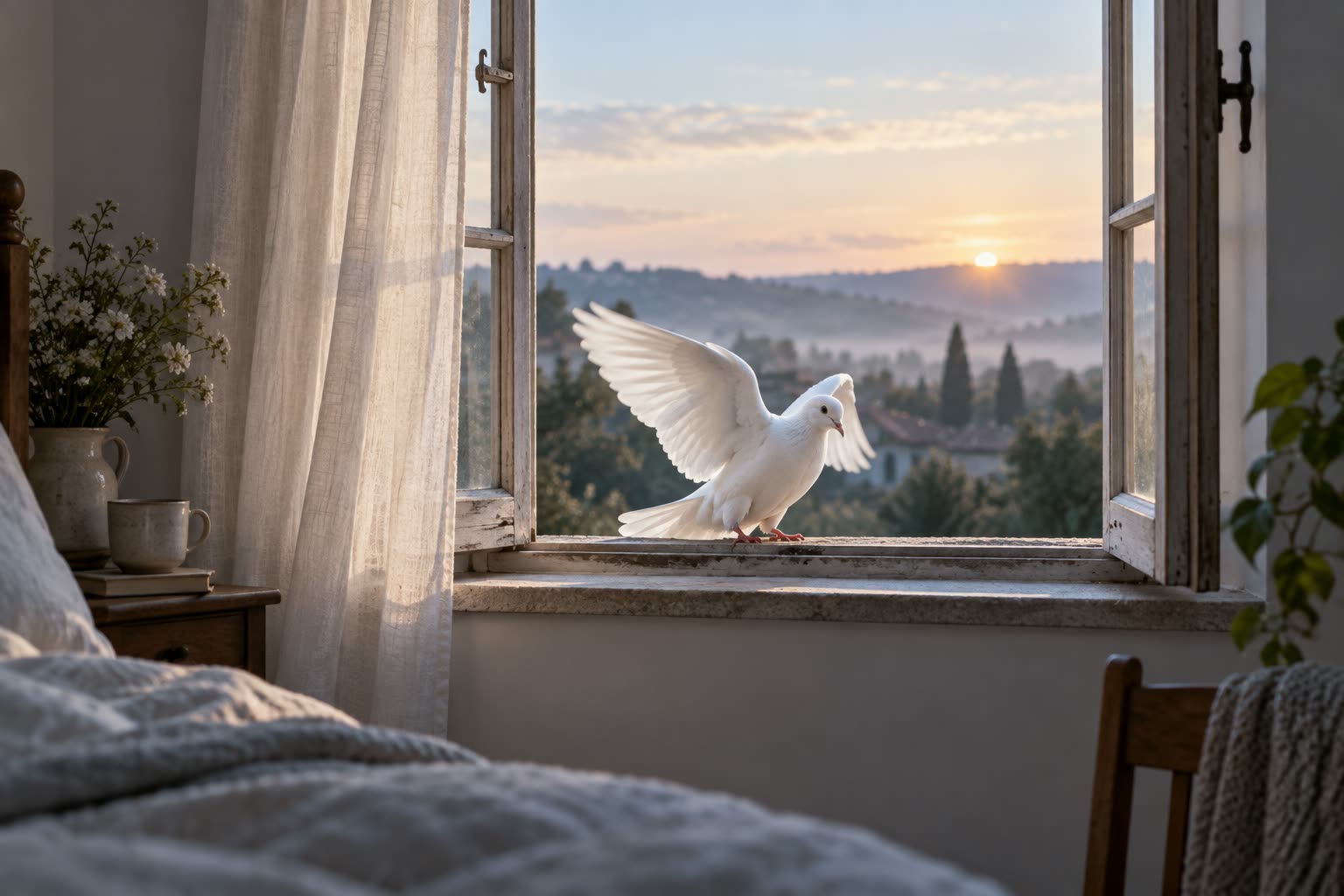
Most people remember one detail from a dove dream with unusual clarity, and it is rarely the bird. It is the moment: the window it came through, the weight of it in two hands, the second it lifted off.
That detail is where interpretation should start.
A dove that arrives and a dove that leaves have almost nothing in common as dream scenes, whatever they share as symbols, and the traditions that read them treat the two situations differently.
This page works outward from the scene. What the bird did, where the peaceful reading came from, what older dream books said before angel writing existed, and which ordinary parts of a life put a white bird into a night's sleep.
Quick Facts
- First question
- What the dove was doing, not what it was
- Biblical anchors
- Genesis 8 after the flood, and the gospel baptism accounts
- Oldest dream book
- Artemidorus, Oneirocritica, around AD 200
- Classical association
- Fidelity and the household, before the peace reading dominated
- Common ordinary source
- Recent funerals, weddings, and city pigeons
- What it does not do
- Predict events or confirm a death
What was the dove doing in your dream?
Before any meaning is assigned, describe the scene. Traditions that read dove dreams seriously all key on the action rather than the bird.
Arriving, leaving, being held, and being released are four different dreams that happen to contain the same animal.
| What the dove did | Usual reading | What it does not establish |
|---|---|---|
| Arrived, landed, or came through a window | Something concluding or settling, following the Genesis pattern | That anything has been decided or promised |
| Flew away or would not stay | Often read as release, or as a departure being processed | That a loss is coming |
| Was held in the hands | Care, responsibility, or something fragile in the dreamer's keeping | Who or what the fragile thing is |
| Was injured or dead | Distress in the dreamer more often than a message about anyone | Anything about another person's health or safety |
The right-hand column offers possible directions for attention, not statements about what happened. That distinction matters when interpreting a dream symbol.

If more than one of those rows fits, that is normal. Dreams rarely arrange themselves into a single clean action, and a mixed scene is not a failed one.
Does it matter how many doves there were?
Readers ask about pairs more than any other variation, and here the older traditions genuinely do distinguish.
A single dove carries the scriptural associations: the bird sent from the ark, the descent at the baptism, the solitary messenger. A pair carries something much older and much more domestic.
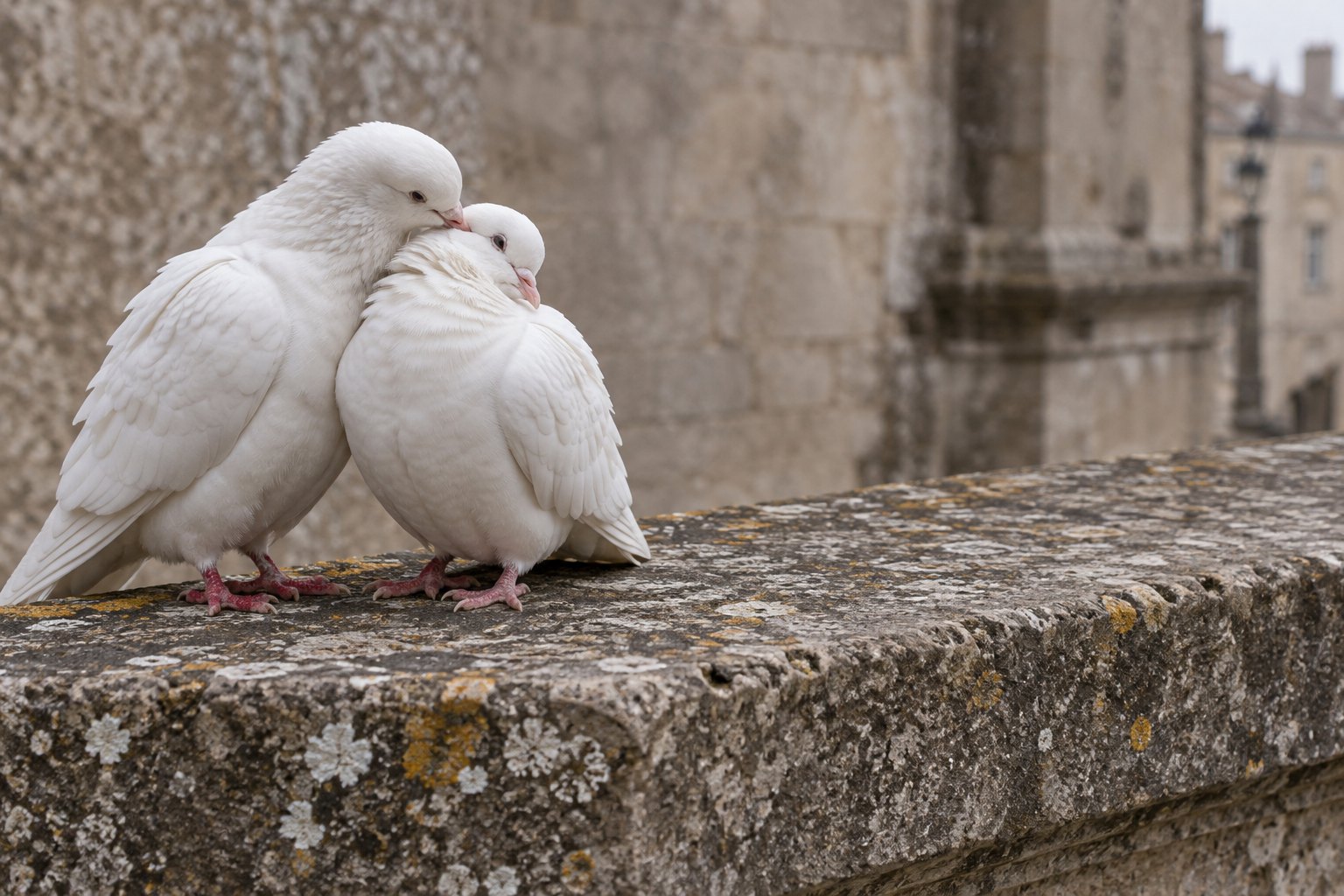
Doves were the bird of Aphrodite in the Greek world and of Venus in the Roman one, and they were shown in pairs because the pairing was the point.
Mated pairs are conspicuous in life too.
Doves and pigeons are socially monogamous, they preen one another, and they are usually seen together, which is exactly the behaviour that made them a symbol of fidelity long before they became a symbol of peace.
| What you saw | Older association | What it does not settle |
|---|---|---|
| One dove | Message, conclusion, or descent | Who the message is from |
| A pair | Fidelity, partnership, affection | Anything about a specific relationship |
| A flock | Ordinary and rarely singled out in tradition | That the number carried intent |
| A dove and something else | Usually read from the other element | That the dove was the active part |
The last row is worth holding on to. When a dream contains a dove and a door, or a dove and a name, the dove is often the setting rather than the subject.
Nothing in either tradition assigns a number a fixed value. What the count does is point at which of the two old associations, the sacred or the domestic, is closer to the scene you actually had.
Where does the peaceful dove reading come from?
Two scenes carry most of it, and they are specific enough to name. In Genesis 8 a dove sent out from the ark returns with a freshly picked olive leaf, and the flood is understood to be receding.
The second is the baptism of Jesus, where the gospels describe the Spirit descending like a dove.
How the association was assembled
The modern shorthand sits at the end of a long sequence, not at its start.
- Genesis 8A dove returns with an olive leaf
Ties the bird to an ending of danger and to reliable news.
- Classical worldThe dove belongs to Aphrodite
Carries love and fidelity long before it carries peace.
- The gospelsThe Spirit descends like a dove at the baptism
Adds a heavenly and specifically divine association.
- 20th centuryThe dove becomes a political peace emblem
Fixes peace as the dominant everyday meaning.
The last row explains why the association feels so obvious now. Peace is the most recent layer, not the oldest one, and it arrived largely through poster art rather than religion.
One distinction is worth keeping from the gospel scene. The text says the Spirit descended like a dove, which is a comparison rather than an identification, and it does not make the dove an angel in any tradition.
What did dream books say about doves before modern angel writing?
The oldest surviving dream manual from the Greco-Roman world is the Oneirocritica of Artemidorus, written around AD 200. It reads doves in a register most modern readers would not expect.
The dove is a fortunate dream, denoting happiness and fidelity at home, and the cooing of doves promises love returned.
Artemidorus, Oneirocritica, in the traditional summary
Nothing heavenly appears in that reading. The dove is domestic, and the dream is about a household and its affections.
Artemidorus also separates the birds carefully, giving the turtledove's voice a mournful sense while ordinary doves stay fortunate. That level of discrimination is a reminder that dream traditions were once far more specific than the summaries that survive.
Setting this beside the modern reading shows how much interpretation depends on period. A dove dream meant marital fidelity in the second century and means a departed loved one in a great deal of writing today, with the same bird doing both jobs.
Was it a dove or a pigeon, and does the difference exist?
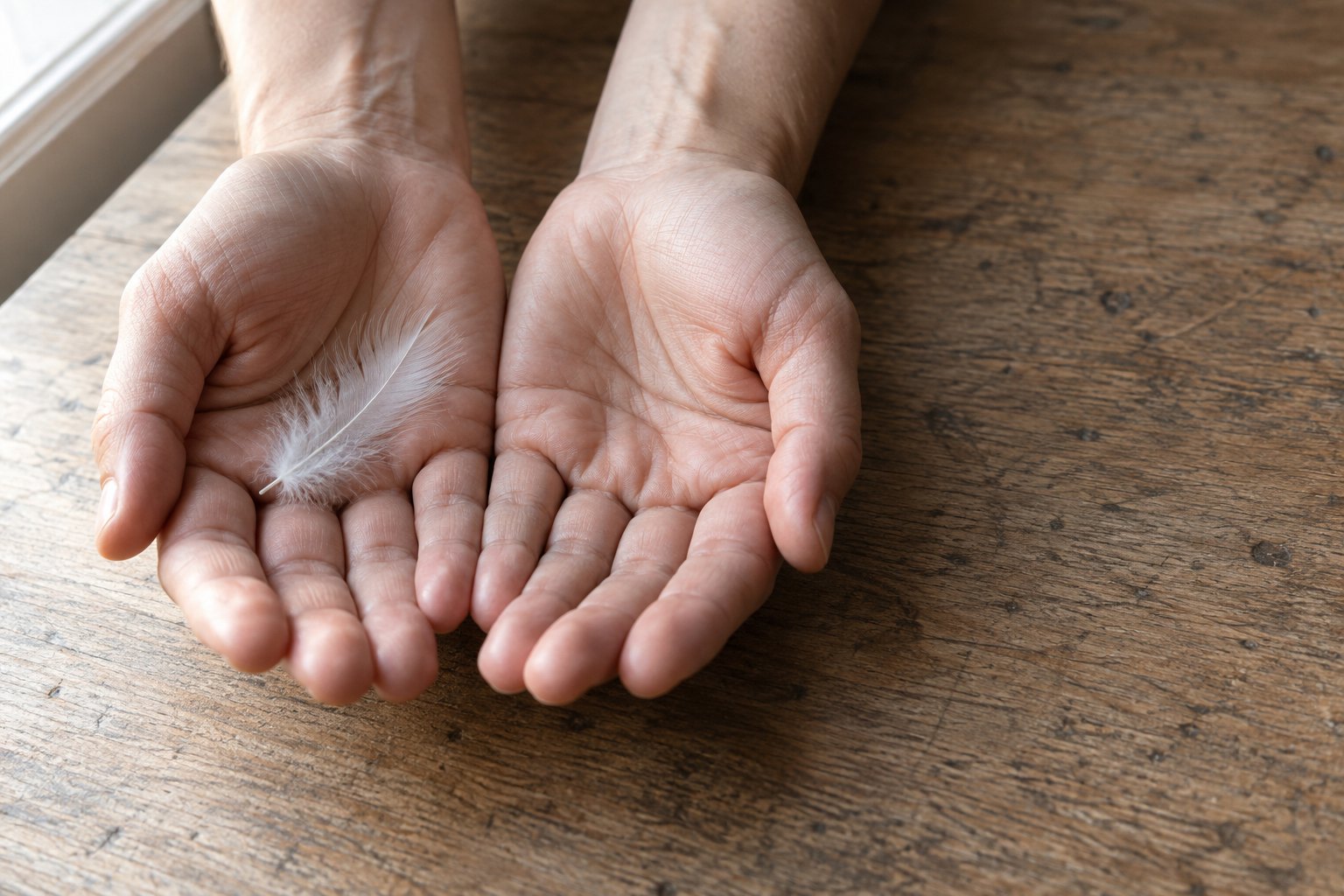
Biologically the distinction does not hold up. Doves and pigeons are the same family, Columbidae, and which word gets used is a matter of language and size rather than taxonomy.
The white dove released at weddings is a domestic rock pigeon, bred for colour.
That fact unsettles people, and it is worth sitting with rather than hurrying past. The bird carrying eight hundred years of sacred association is the same bird that gets called vermin on a station platform.
For a dream this matters less than it might. What the dreaming mind used was the image and its associations, and those attach to the white bird of the wedding and the ark rather than to a species.
If your dream bird was grey, scruffy, or in a city, that is worth noting rather than correcting. A dream that reached for a pigeon and not a dove may be saying something about ordinariness that a tidied memory would lose.
How is a dove read in Islamic dream interpretation?
Western pages rarely mention it, but there is a large and old tradition of dream interpretation in Islamic scholarship, and doves appear in it repeatedly.
The manuals attributed to Ibn Sirin, an eighth-century figure whose name attaches to much of this literature, read birds by their behaviour and their household associations rather than as heavenly signs.
A dove in those readings tends toward the domestic. Marriage, a wife, a household, and news arriving are the recurring senses, and the bird is treated as part of ordinary life.
Two things stand out for a reader comparing traditions.
The classical Greek and the classical Islamic readings agree with each other more than either agrees with modern Western angel writing, and both anchor the dove in the household rather than in the sky.
| Tradition | Where the dove sits | Typical sense |
|---|---|---|
| Greco-Roman (Artemidorus) | The household | Fidelity, affection, news between people |
| Islamic dream literature | The household | Marriage, family, and arriving news |
| Modern Western angel writing | The sky | A departed person, or a message from beyond |
That is not a reason to prefer one over another. It is a reason to notice that the reading which feels most obvious today is also the most recent and the least widely shared.
Does a white dove in a dream mean someone has died?
This is the question that brings most people to the subject, and it usually arrives after a death rather than before one. The honest answer separates two things that popular writing tends to merge.
Dreaming vividly of birds after a bereavement is common and well described. Treating that dream as confirmation about where someone now is asks it to carry something it cannot.
What a dove dream after a loss can support
Both columns are worth holding, and the second does not cancel the first.
What the evidence supports
- Grief shapes dreams
Vivid dreams involving the person who died, or symbols connected to them, are a normal part of bereavement.
- The imagery is available
Doves appear at funerals, in cemetery art, and in condolence cards, so they are close to hand.
- Comfort is real
Many people find such dreams genuinely consoling, and that consolation is not an error.
What remains limited
- No verification
A dream cannot establish anything about another person's state or whereabouts.
- No timing
Nothing in the imagery indicates when anything happened or will happen.
- No identity
The bird is not the person, and traditions that use it as a symbol do not claim otherwise.
A dove dream that brings comfort is worth having and worth keeping. It is when it starts to function as evidence, or as a reason to expect something, that it has been asked to do the wrong job.
What if the dove was caged, released, or would not fly?
These variants come up often and they change the scene more than the bird's colour does, because each one is about constraint rather than about a dove.
A caged dove puts something valued behind a barrier. Dream traditions read confinement scenes through what is being held rather than through the animal holding still.
Releasing one reverses it.
The release scene carries an act by the dreamer, which most interpretive traditions treat as more significant than anything the animal does on its own, because the dreamer chose.
- Caged: attention usually goes to the cage and to who put the bird there, not to the dove.
- Released by you: an action taken rather than observed, commonly read through what you were willing to let go of.
- Unable to fly: a frustration scene, often reported during periods of illness, exhaustion, or stalled decisions.
- Refusing to leave: the inverse, and readers frequently describe it as comforting rather than confining.
The Genesis scene sits behind several of these without being noticed. Noah's dove is sent out and comes back twice before it finally does not return, so departure and return are both part of the oldest dove story in the tradition.
A dream that repeats that shape is not necessarily quoting scripture. It does mean the image has been carrying leaving and returning for a very long time.
What ordinary things put a dove in a dream?
Dream imagery draws on recent material far more than most interpretation admits. Before reaching for symbolism it is worth asking where the bird could have come from.
- A recent funeral or wedding: doves are released at both, and the image sits ready for use afterwards.
- Birds outside the window: cooing carries into light sleep, and city pigeons are the same family as the dove of the imagery.
- Cards and flowers: condolence and sympathy design leans heavily on white birds.
- Something you were reading or watching: religious imagery, films, and news photography all supply the picture.
- The colour rather than the species: many remembered dreams involve a white bird that the waking mind names as a dove.
That last point is worth pausing on. The identification often happens on waking, which means the dove may be an interpretation of the dream rather than a content of it.
None of this reduces the dream. Knowing where an image came from tells you nothing about why your mind selected it, and the selection is usually the more interesting question.
What if the same dove dream keeps coming back?
Recurrence changes the question. A single vivid dream invites interpretation; a dream that returns is usually pointing at something unfinished in waking life rather than delivering a repeated message.
Dream researchers treat recurring content as a signal about an ongoing situation, and the content itself often stays fixed while the emotional tone shifts.
That shift is the part worth tracking.
- The tone is easing: the same scene arriving with less distress each time usually tracks something settling in waking life.
- The tone is sharpening: a scene that grows more urgent tends to follow a situation that is being avoided.
- The scene is changing slightly: small variations, a different room or a different outcome, often accompany a decision being worked through.
- Nothing changes at all: a fixed, frequent, distressing dream is the version worth raising with a professional.
Grief is the most common setting for the last of those. Recurring dreams after a death are ordinary, and they usually loosen over months rather than needing to be solved.
If they are not loosening, or they are disrupting sleep badly, a bereavement counsellor or a doctor is the better next step. The imagery will still be there to think about afterwards.
How to work with a dove dream without turning it into a forecast
A reflective method keeps the dream useful without asking it to predict anything. The aim is a better question at the end, not a verdict.
A short way through a dove dream
Written down, this takes a few minutes and can be revisited later.
- Record
- Input
- What you can still recall
- Action
- Write the scene before any meaning: the action, the setting, the light, the sound.
- Result
- A description you can return to without it drifting
- Locate
- Input
- The last few days
- Action
- Note anything that could have supplied the image, without treating it as a debunking.
- Result
- The ordinary sources are accounted for
- Feel
- Input
- The emotional tone on waking
- Action
- Name it plainly: relief, grief, unease, tenderness.
- Result
- The part of the dream most likely to matter
- Ask
- Input
- The scene and the tone together
- Action
- Turn it into a question about your own situation rather than an answer about the future.
- Result
- Something you can actually sit with or act on
The fourth step is the one that keeps the practice honest. A dream that produces a question stays yours, while a dream that produces a prediction starts making decisions on your behalf.
If the dreams are recurring and distressing, particularly after a loss, a bereavement counsellor is a better resource than any interpretation guide. That is not a spiritual failure, and the imagery will still be there afterwards.
Frequently Asked Questions
What does it mean to dream of a white dove?
Most traditions read it through what the bird was doing, with arrival, departure, holding, and release carrying different senses. The peaceful reading draws on Genesis 8 and the gospel baptism scene, and is a direction of attention rather than a prediction.
Does dreaming of a dove mean someone died?
No. Vivid bird dreams are common during bereavement, and dove imagery is close to hand because it appears at funerals and in condolence design.
A dream cannot establish anything about another person's state.
Is a dove in a dream an angel?
No tradition identifies the dove as an angel. The gospels say the Spirit descended like a dove, which is a comparison, and Genesis uses an ordinary bird sent from the ark.
Why do I keep dreaming about birds after a death?
Vivid dreams involving birds, and dove imagery in particular, are common in the months following a death. Grief keeps the person cognitively close, and dove imagery is close to hand from funerals and condolence design, so the two meet easily in sleep.
What did ancient dream books say about doves?
Artemidorus, writing around AD 200, treated the dove as a fortunate and domestic sign connected with fidelity and affection at home. He gave the turtledove's voice a mournful sense, which shows how specific these traditions once were.
What if the dove flew away in my dream?
Departure scenes are often read as release or as a leaving being worked through, rather than as a warning. What the dreamer was living through at the time shapes it far more than the direction of flight.
Sources
- (ancient). Genesis 8:8-12. Hebrew Bible
- (c. AD 200). Oneirocritica, on birds. Greco-Roman dream interpretation
- (2020). An Ancient Dream Manual: Artemidorus' The Interpretation of Dreams. Oxford University Press
- (1st century). Mark 1:10, and parallels in Matthew, Luke, and John. New Testament
About Our Editorial Process
Every KnowTheAngels guide separates calculation method, tradition context, and personal reflection. We cite where interpretations come from, present more than one view, and never present symbolic reading as prediction.
Read our editorial policy