What Does Seeing a Dove Mean Spiritually?
How peace, the Holy Spirit, grief, white plumage, and ordinary bird behavior produce different readings of the same encounter
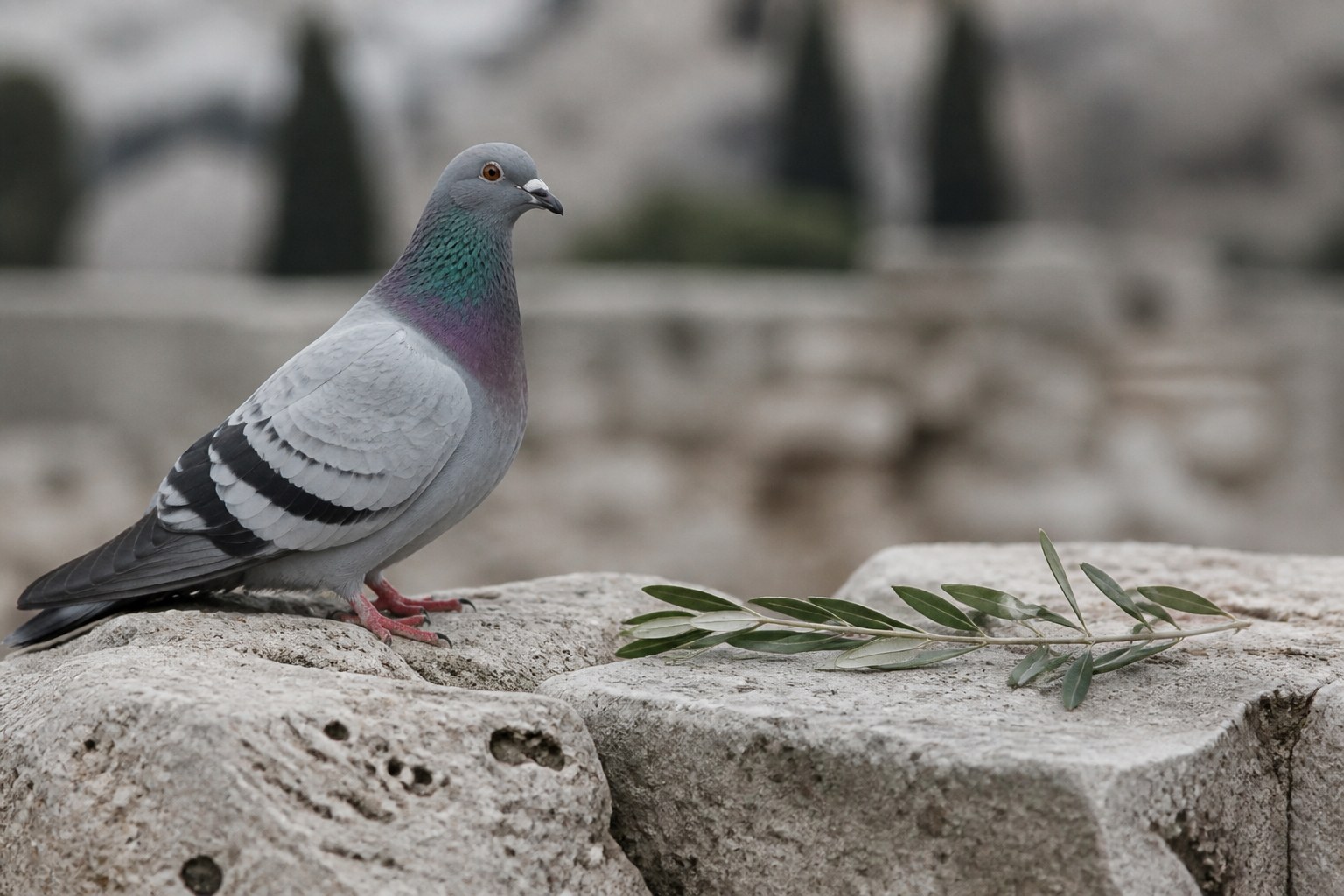
Seeing a dove is commonly read as a sign of peace, hope, love, or comfort. In Christian contexts the bird can also recall the Holy Spirit or the soul at rest, while modern grief practice sometimes turns an unexpected sighting into a private memorial moment.
Those readings are symbolic conventions, not evidence that the bird carried a supernatural message. The useful question is not simply what doves mean, but which source of meaning fits the bird, image, and situation you actually encountered.
That distinction matters because a dove with an olive branch, a white domestic bird, and a mourning dove calling from a roof do not present the same evidence. Their meanings overlap in popular culture, yet their histories and ordinary explanations differ.
Quick Facts
- Common modern reading
- Peace, hope, love, and gentle comfort
- Bird family
- Columbidae includes birds called both pigeons and doves
- Biblical olive leaf
- Genesis 8 says the floodwater had receded
- Christian baptism image
- The Holy Spirit descends in bodily form like a dove in Luke 3
- Mourning dove call
- The familiar perch-coo is given mainly by unmated males
- Interpretive limit
- A meaningful sighting is not proof of angelic contact
What does a dove mean spiritually?
In contemporary spiritual writing, a dove usually represents peace, hope, love, reconciliation, or comfort after loss. These are interpretive associations, so they can frame a moment without predicting what will happen next.
The peace reading has several layers behind it.
Genesis gives readers the returning bird and olive leaf, Christian art develops the bird as a religious symbol, and modern political art makes the dove legible far beyond a church setting.
Love and fidelity also appear in popular dove symbolism, especially when people see a pair. A pair can be a fitting image for companionship, but the sighting does not promise a marriage, reunion, or particular outcome.
What the symbolism can and cannot establish
What the evidence supports
- Documented symbolism
Doves have roles in biblical texts, Christian art, political peace imagery, and funerary symbolism.
- Reflective use
A reader may use an encounter as a prompt for prayer, remembrance, reconciliation, or quiet attention.
What remains limited
- No verified sender
The bird's presence cannot verify that an angel or deceased person arranged the encounter.
- No universal code
Color, number, and timing do not create a message that applies to every observer.
A restrained spiritual reading keeps the part that helps: the dove can direct attention toward peace or memory. It drops the unsupported claim that the encounter proves who sent it or what must happen next.
Is there a real difference between a dove and a pigeon?
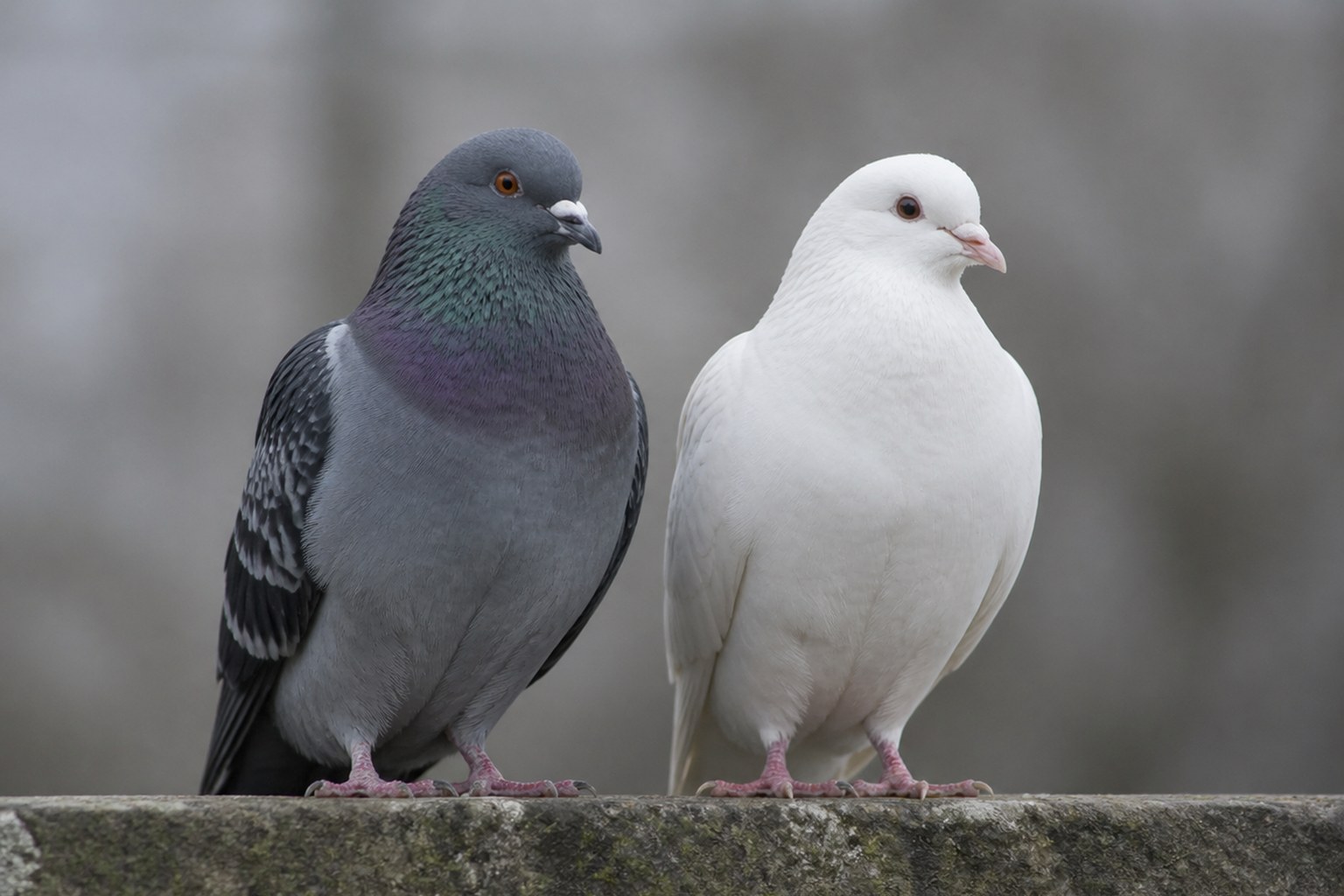
Dove and pigeon are common names within the same bird family, Columbidae.
The British Trust for Ornithology notes that the distinction is not taxonomic, although English often uses dove for smaller, more delicate-looking species.
That naming habit explains why a pale bird may feel sacred while a gray city bird feels ordinary. Biology does not support a clean spiritual species on one side and a mundane species on the other.
A white dove is a color description, not a separate spiritual category. White symbolism may strengthen a reader's association with purity, peace, weddings, or funerals, but it does not make the sighting more supernatural.
Before interpreting a white bird, look for a leg band, unusual tameness, or difficulty feeding and flying.
Those details may indicate a domestic or released bird that needs practical help, which should take priority over symbolic interpretation.
Where did the dove and olive branch become a peace symbol?
Genesis 8 supplies the scene but gives it a narrower first meaning. Noah releases a dove to learn whether the floodwater has fallen, and the bird returns with a fresh olive leaf, showing that exposed land and plant life have reappeared.
The passage does not call the bird a universal peace emblem.
Later Christian interpretation joined the dove, olive branch, forgiveness, and peace, and the combined image appeared in funerary and devotional art long before the twentieth century.
A 2022 history of the symbol traces political uses of the phrase dove of peace to the seventeenth century and finds purely political uses by the eighteenth.
Picasso did not invent the peace dove in 1949.
Picasso's lithograph still changed the symbol's reach. The Musée national Picasso-Paris records that Louis Aragon chose it for the 1949 Paris Peace Congress poster, after which the image circulated internationally in postwar peace movements.
How one image accumulated several meanings
- Genesis 8A dove returns to Noah with an olive leaf.
The immediate sign is that the floodwater has receded.
- Early Christian artDoves and olive branches appear in religious and funerary settings.
The image gains associations with peace, forgiveness, and the soul at rest.
- 17th to 19th centuriesDove-of-peace language enters political and pacifist use.
The emblem extends beyond a specifically biblical scene.
- 1949Picasso's dove is selected for the Paris Peace Congress poster.
An established symbol gains a powerful modern international form.
This history corrects two common shortcuts. The olive-bearing bird did not mean political peace in the Genesis scene, and the peace association did not begin with Picasso.
Why does Christianity connect the dove with the Holy Spirit?
Luke 3:22 says the Holy Spirit descended upon Jesus in bodily form like a dove at his baptism.
The comparison became one of Christianity's most recognizable images for the Spirit.
In this scene the dove points to the Holy Spirit, not to an angel. Calling every dove an angel sign blends two distinct categories that the gospel account does not combine.
Other biblical dove references have different jobs. In Leviticus 5:7, two turtledoves or pigeons are an allowed offering when a person cannot afford an animal from the flock; if the birds are also unaffordable, verse 11 permits flour.
Luke 2:24 records a pair of birds at the presentation of Jesus, echoing that offering law. This can support an inference about modest means, but it does not turn the dove itself into a general symbol of poverty.
| Passage | What the dove or pigeon does | Interpretive boundary |
|---|---|---|
| Genesis 8:8-12 | Tests whether the floodwater has receded | The olive leaf reports conditions on the land |
| Leviticus 5:7-11 | Provides an affordable offering option | The law does not define all doves as poverty symbols |
| Luke 3:21-22 | Describes the Spirit descending like a dove | The bird image refers to the Spirit, not an angel |
A Christian reader may reasonably let a dove prompt prayer about peace or the Spirit. The biblical texts still do not guarantee that a particular wild bird was dispatched as a private instruction.
Does a dove mean a loved one is at peace?
Dove imagery has a genuine historical connection with the dead, but a live sighting cannot report a specific person's condition.
Early Christian funerary art used doves, sometimes with an olive branch, to represent the departed soul and peace after death.
That history is more precise than saying the grief meaning was invented by modern funeral releases. It also sets a boundary: an image placed on a tomb carries an intended symbol, while a bird arriving in a garden has not supplied an interpretation of its own.
You can receive comfort from the encounter without treating comfort as proof.
If the bird brought someone to mind, the memory is real even when the cause of the sighting remains ordinary or unknown.
A proportionate response is to name what the moment prompted: perhaps a prayer, a story you want to write down, or a person you want to contact. That keeps the meaning connected to your life and avoids claiming knowledge about the dead that the sighting cannot provide.
A dove can hold a memory without carrying a verifiable message.
Why do mourning doves sound sad, and what do repeat visits mean?
The mourning dove's low coo sounds sorrowful to many human listeners, which is how the bird received its English name.
Cornell's All About Birds identifies the familiar song as a perch-coo given mainly by unmated males.
The call therefore belongs to courtship behavior rather than avian grief. Your emotional response can still matter, but the sound itself is not evidence that the bird is mourning with you.
Repeated visits also deserve context before symbolism. Note whether the bird returns to the same branch, feeder, patch of bare ground, nest area, or time of day, because a stable resource or routine can make the pattern intelligible.
A grounded way to read the encounter
- Identify the bird
Record color, markings, call, and location instead of assuming every pale or cooing bird is the same species.
- Describe the behavior
A bird feeding, courting, nesting, resting, or seeking help gives you different practical information.
- Name the symbolic source
Distinguish Genesis, Christian Holy Spirit imagery, funerary art, political peace symbolism, and a private family association.
- Keep the conclusion proportional
Use the moment for reflection without turning it into a prediction, command, or proof of contact.
This method leaves room for spiritual meaning and for the bird to remain a bird. It is especially useful when repeat sightings feel urgent, because frequency alone does not establish who caused them.
Frequently Asked Questions
Does seeing a dove mean an angel is near?
No sighting can verify that an angel is near. In Christian imagery the dove at Jesus's baptism represents the Holy Spirit, not an angel, while contemporary spiritual readers may still use a dove as a personal prompt toward peace or prayer.
What does seeing a white dove mean?
A white dove commonly suggests peace, purity, hope, or remembrance in modern symbolism. White plumage does not create a separate species or prove a supernatural message, so the bird's condition and behavior still matter.
Is a dove a sign from someone who died?
Christian funerary art gives doves a historical association with the departed soul and peace after death. A live bird can therefore feel meaningful during grief, but its appearance cannot confirm that a particular person sent it.
What does it mean when two doves appear together?
Pairs are often read as symbols of love, companionship, or reconciliation. That is a fitting personal metaphor, not a promise about a relationship or evidence that the pair arrived for a specific observer.
Are pigeons and doves different birds?
The names do not mark a taxonomic division. Both refer to members of Columbidae, and common usage tends to call smaller, more delicate-looking species doves even though the naming is inconsistent.
Why does a mourning dove sound sad?
Humans hear sadness in its low, drawn-out coo. Ornithologists identify that sound as a perch-coo given mainly by unmated males, so its biological function is connected with courtship rather than mourning.
Sources
- . Columbidae: Pigeons. BTO Bird Families. Link
- . Genesis, Chapter 8. New American Bible, Revised Edition. Link
- . Leviticus, Chapter 5. New American Bible, Revised Edition. Link
- . Luke, Chapter 2. New American Bible, Revised Edition. Link
- . Luke, Chapter 3. New American Bible, Revised Edition. Link
- (2022). Symbolism of the Peace Dove from Antiquity to Modern Times. Herald of Culturology. Link
- (1909). Dove. New Advent. Link
- (1949). La Colombe. Collection record MP3414. Link
- (2009). I Found a Pigeon or Dove That Seems Tame and Has Colored Bands on Its Legs. What Should I Do?. All About Birds. Link
- . Mourning Dove Sounds. All About Birds. Link
About Our Editorial Process
Every KnowTheAngels guide separates calculation method, tradition context, and personal reflection. We cite where interpretations come from, present more than one view, and never present symbolic reading as prediction.
Read our editorial policy