When Is an Animal Encounter Interpreted as a Spiritual Sign?
A field method for separating species behavior, season, and attention from the encounters that carry meaning

A repeated animal sighting is worth reading when the animal was doing something unusual for its species, its season, or that place.
Most repeats stop looking unusual once those three are checked.
That check is available here in a way it is not for other signs.
A feather, a coin, or a song has no habitat and no breeding season, while a cardinal, a hawk, and a coyote each have both.
This page is about the encounter rather than a meaning list for each creature. An animal can carry a message for the person who saw it without carrying that message for everyone.
Quick Facts
- First question
- Was the animal doing something unusual for its species, its season, or that place?
- Ordinary layer
- Breeding season, food sources, migration, and dawn or dusk activity move animals into view on a schedule
- Strongest case
- The same species in unrelated settings, close to a question the reader had already named
- Main caution
- One species does not mean one thing for everyone. Readings differ by tradition, memory, and place.
- Safety boundary
- A night-active animal out in daylight and untroubled by people is a call to animal control, not a sign to interpret
How to tell an unusual sighting from ordinary animal behavior
Start with the species rather than the feeling. A barred owl on a suburban fence at noon and a robin on a lawn in April are not the same event, even when both arrive during the same hard week.
Five details decide almost every reading, and all five can be written down in a minute.
- Species. name the creature exactly. Hawk, owl, and falcon behave differently, and so do the readings built on them.
- Setting. a garden, a roadside, a window, an indoor room, or somewhere the animal has no reason to be.
- Season. breeding, migration, and food scarcity each push animals into human view on a schedule.
- Time of day. many mammals move most at dawn and dusk, which is also when people drive and walk.
- Repetition. the same species across unrelated places carries more weight than the same species in one habitat.
Unusual means unusual for the animal, not unusual for you. A deer in a field at dusk in November is ordinary, while a deer standing still on a lit street at midday is worth recording.
The same test separates two hawk encounters that feel identical. A hawk on a highway pole, along a road where hawks are a regular sight, is a different observation from a hawk on a city balcony rail twice in a week.
This is also where most disagreements about signs actually sit. One person is arguing that the encounter felt significant, and the other is arguing that the animal was behaving normally, and both can be right at once.
Separating the two questions early keeps the conversation from collapsing into belief against skepticism.
What the species already explains about a repeat sighting
Two of the most commonly reported messengers have well-documented habits, and those habits account for a large share of repeat sightings.
Neither set of facts argues against meaning. They set the baseline the encounter has to stand out from.
| Animal | Documented habit | What that changes |
|---|---|---|
| Northern cardinal | A permanent resident across its range that readily comes to feeders and favors sunflower seed, which may have aided its northward spread | A cardinal in the same yard through the year is expected, so the unusual version is one that appears away from cover, food, or its normal range |
| White-tailed deer | Crepuscular, most active around dawn and dusk, with a breeding peak in mid-November set primarily by decreasing day length | A November dusk sighting is the baseline, while daytime stillness near people, where deer usually turn nocturnal, is the outlier |
Check the animal's own calendar before checking the symbolic one. If the sighting sits inside the species baseline, the encounter may still matter to the reader, but it is not evidence of anything.
The remaining cases are the interesting ones.
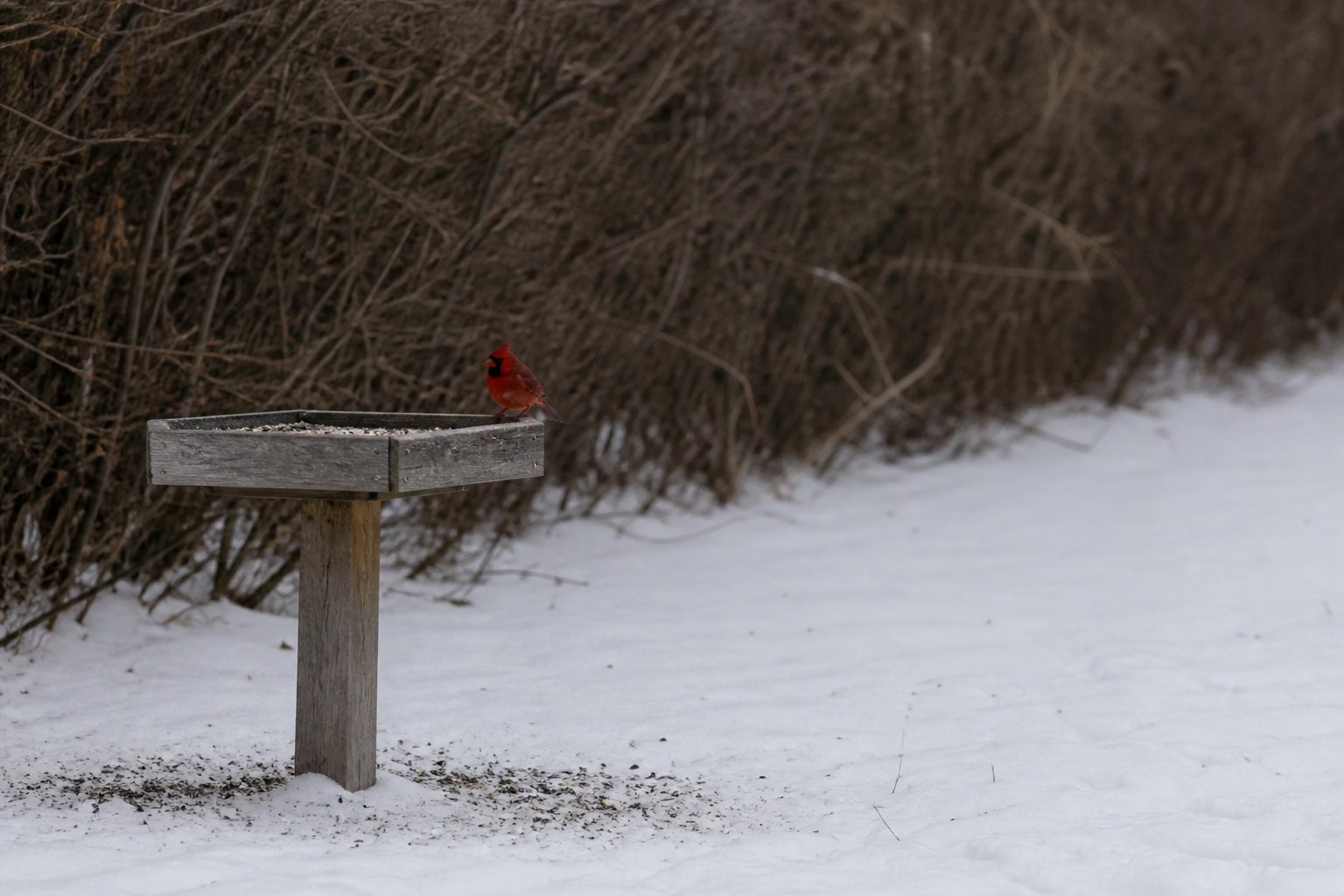
Does a cardinal, a hawk, or a deer carry a fixed meaning?
No. The associations that circulate most widely, a cardinal as a visit from someone who died or a hawk as a call to look further ahead, are devotional conventions rather than fixed definitions.
They can still be useful. A convention gives a reader shared language for something felt, as long as it is labeled as language rather than as proof.
Traditions also disagree with each other, and the disagreement is the point. The same bird can be a herald in one culture's stories and a warning in another's, which shows that the meaning is assigned by the tradition rather than carried by the animal.
A page that flattens those into one entry is inventing a consensus that does not exist.
Personal memory usually outweighs any published meaning. A heron means something particular to someone who watched herons with a parent, and no dictionary entry reaches that.
Name what the creature already meant to you before reading what it is supposed to mean.
The per-species meaning list stays popular because it is easy to publish and easy to search. It is also the format most likely to tell two readers with opposite situations the same sentence.
A list can still be a starting point. Treat an entry as one tradition's reading rather than as the answer, and check it against the setting you actually saw.
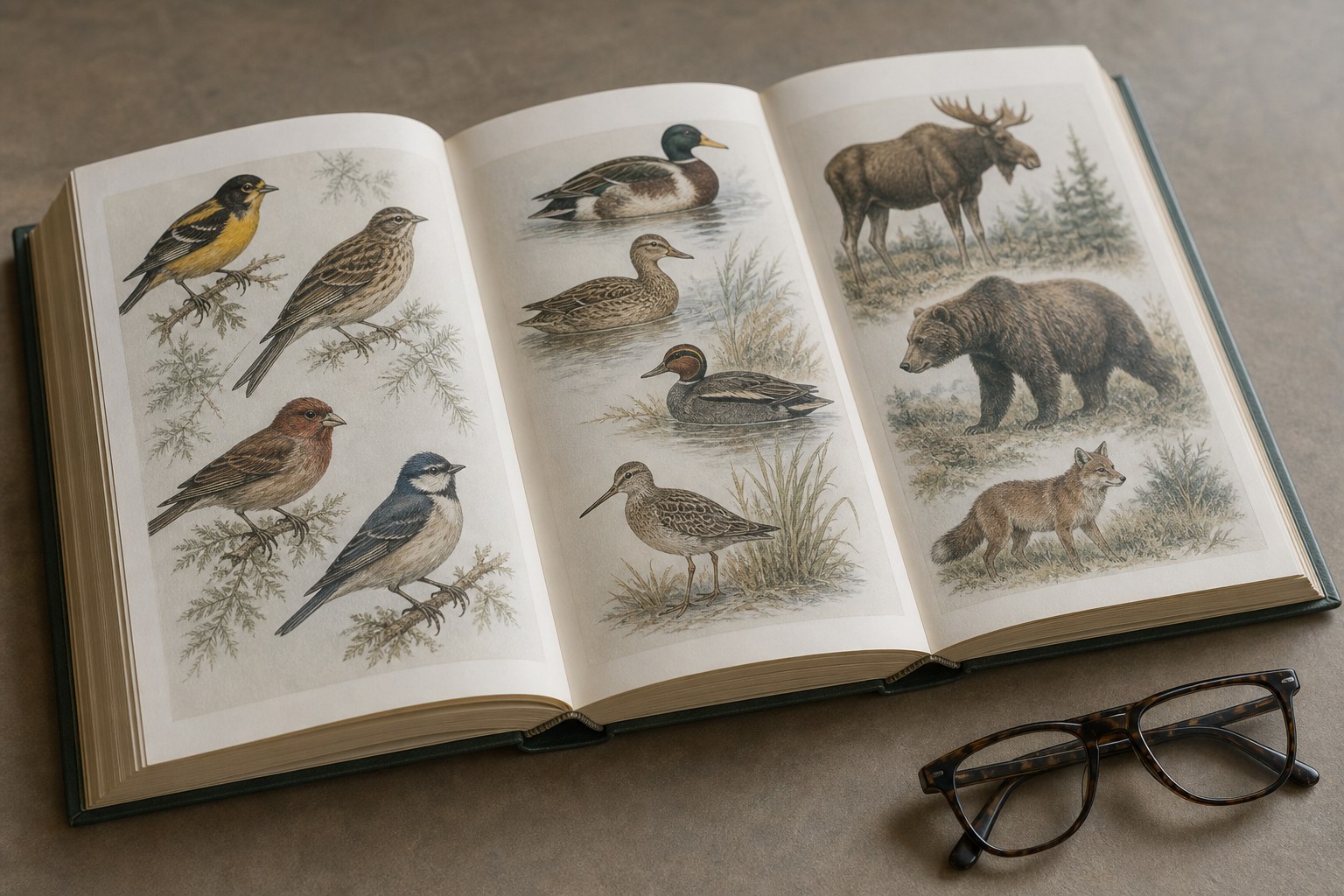
Why the animal messengers in scripture are narrative rather than a code
Scripture does contain animals that carry a message, and the two clearest cases are worth reading closely. In Numbers 22, Balaam's donkey sees what the prophet does not and turns aside three times before speaking.
In Genesis 8, Noah sends out a raven and then a dove, and the dove returns with an olive leaf that reports the state of the water.
In both scenes the meaning belongs to the story, not to the species. The donkey is not a general symbol of stubborn wisdom, and the dove is doing reconnaissance rather than announcing peace to every later reader.
That is the difference between citing a tradition and borrowing its authority. A passage can show that animals have carried messages without licensing a claim about the bird outside your window.
Citing well is mostly a matter of keeping the frame visible. Name the passage, say what happens in it, and stop before turning the scene into a rule about animals in general.
The same discipline applies to every tradition this page touches. A reading is stronger, not weaker, when a reader can see exactly where it came from and how far it reaches.
Attention can multiply sightings without a single extra animal
The most common failure here is not gullibility. It is the frequency illusion, where a concept noticed recently seems to appear everywhere afterward, although it is only more salient.
Two ordinary processes drive it. Selective attention makes the mind scan for matches, and confirmation bias counts the matches it finds as evidence that the thing is genuinely more common.
Applied to animals, the sequence is easy to trace. Someone reads that hawks carry a message, then notices hawks on three drives that week, on roads where hawks hunt verges every week of the year.
The honest response is not to dismiss the week. It is to notice that the pattern began with the reading rather than with the birds.
Knowing the mechanism does not settle the question, and it is worth being clear about that. The illusion explains why a pattern appears without showing that any particular encounter was ordinary.
What it does supply is a fair test. If the sightings started after the idea did, the idea is the better explanation for the count.
There is a simple way to use this without arguing with yourself. Write down the date you first heard that a species carries meaning, then count only the sightings that came before it.
Most people find a few. That number is the honest baseline for how often the animal was already around you.
Which practice fits an animal encounter that still stands after those checks
Some encounters survive every check above. The animal was out of season, out of place, or unusually still, and the timing landed on a question already in the reader's mind.
Record the encounter before interpreting it
Four notes made the same day, so the memory is not doing the interpreting later.
- Name the species
- Input
- The exact creature, not a category
- Action
- Write down the animal and how confident the identification is
- Fix the setting
- Input
- Place, date, time, weather
- Action
- Note where it happened and what the animal was doing when you saw it
- Name your question
- Input
- The decision or grief already present
- Action
- Write the question you were carrying before the encounter, in one sentence
- Wait a week
- Input
- The same notebook
- Action
- Reread the note and mark what actually changed in how you acted
The waiting step does most of the work. An encounter that still reads as meaningful a week later, without growing new details, is on firmer ground than one that expanded in the retelling.
Let the response stay the size of what you actually saw. Gratitude, attention, and a decision revisited are all proportionate responses, while a promise about the future is not.
Grief deserves a gentler version of the same rule. A bird at the window on the morning of a funeral can be worth keeping in the story of that day without being turned into proof about where someone now is.
The comfort survives the check. What does not survive is the pressure to make one encounter answer a question that large.
An animal encounter can change what a person pays attention to without proving who sent it.
Frequently Asked Questions
What does it mean when the same animal keeps appearing?
Check the species first. Habitat, breeding season, food sources, and dawn or dusk activity explain most repeat sightings, so the encounter carries more weight when the animal was out of place or out of season and the timing met a question you had already named.
How many sightings make a pattern?
There is no established number. The rule of three that circulates widely is a convention rather than evidence, and one genuinely unusual encounter in an unlikely setting says more than three sightings in the habitat where that species lives.
Does seeing a cardinal mean a loved one is near?
The cardinal is widely associated with a visit from someone who died, and that association can be a real comfort. It is also a permanent resident across its range that comes readily to feeders, so a cardinal in the yard is expected rather than exceptional.
Are animal messengers in the Bible?
Two scenes come closest. Balaam's donkey in Numbers 22 perceives what the prophet cannot, and the raven and dove in Genesis 8 report on the receding flood.
In both, the meaning belongs to that story rather than to the species in general.
Should I use the phrase spirit animal?
It is better to say what you mean, such as an animal that carries meaning for you. The phrase points to specific practices in specific nations, including Eastern Shawnee clan relationships and Heiltsuk crests, and using it as a general term flattens those traditions into one stereotype.
When is an animal encounter a safety matter rather than a sign?
When a normally night-active animal such as a raccoon or bat is out in daylight, or when a wild animal moves slowly, seems tame, or lets you approach. Public health guidance treats unusual tameness as a reason to keep away and call animal control rather than a reason to interpret.
Sources
- (2025). Northern Cardinal. Audubon Field Guide. Link
- (2025). White-tailed Deer: Species Information. Maine Department of Inland Fisheries and Wildlife. Link
- (2025). Frequency Illusion. Psychology Today. Link
- (2002). Numbers 22. The Holy See. Link
- (2002). Genesis 8. The Holy See. Link
- (2022). The Term 'Spirit Animal' Means More Than Your Favorite Animal. Discover Magazine. Link
- (2024). Animals and Rabies. CDC. Link
About Our Editorial Process
Every KnowTheAngels guide separates calculation method, tradition context, and personal reflection. We cite where interpretations come from, present more than one view, and never present symbolic reading as prediction.
Read our editorial policy