What Do Angel Wings, White Wings, and Broken Wings Mean in Dreams?
Your own wings, an angel's wings, and damaged wings each raise a different question. Here is what dream books, scripture, early Christian art, and dream research actually say.

Wings in a dream have no single agreed meaning. The readings people find come from three places: old dream books, Christian art, and the dreamer's own memory of birds and pictures.
Dream books from Artemidorus in the 2nd century to Gustavus Miller in 1901 tied wings to rising, travel, or fear for someone far away, and they do not agree with each other.
So the useful first question is practical: whose wings were they, and did they work? This page treats a wing dream as material for reflection, never as a forecast.
Quick Facts
- Winged beings in the Bible
- Seraphs with six wings (Isaiah 6:2) and cherubim with four (Ezekiel 1:6, 10:20)
- Angels described as men
- Genesis 18:2, Judges 13:6, Hebrews 13:2
- First winged angels in art
- Late 4th century, modelled on the goddess Nike (Victoria)
- Oldest dream-book reading
- Artemidorus: flying with wings is good for everyone
- Research on wings
- Studies count flying dreams; none isolates wings as an image
Whose wings were they: yours, an angel's, or a bird's?
Ownership changes a wing dream faster than color or size does. Your own wings put your body and your ability to move at the center, while an angel's wings shift attention to what that figure did.
A bird's wings bring in distance, migration, or a creature you have watched while awake. Costume wings, the kind sold for school plays and fancy-dress parties, tend to raise questions about a role someone is playing.
| Owner | What the dream often puts in front of you | What not to assume |
|---|---|---|
| You | Your wish or ability to leave, rise, or carry weight | That a change in your body means an angel visited |
| An angelic figure | What the figure did: shielded, spoke, stood still, left | That the wings alone carry a message |
| A bird | Travel, distance, or an animal you know from waking life | That every winged image belongs to angels |
| Costume or detached wings | A role, a performance, or a borrowed identity | That the beauty of the wings is the point |
Once the owner is clear, function comes next. Wings that lift, wings that stay folded, and wings that fail tell three different stories.
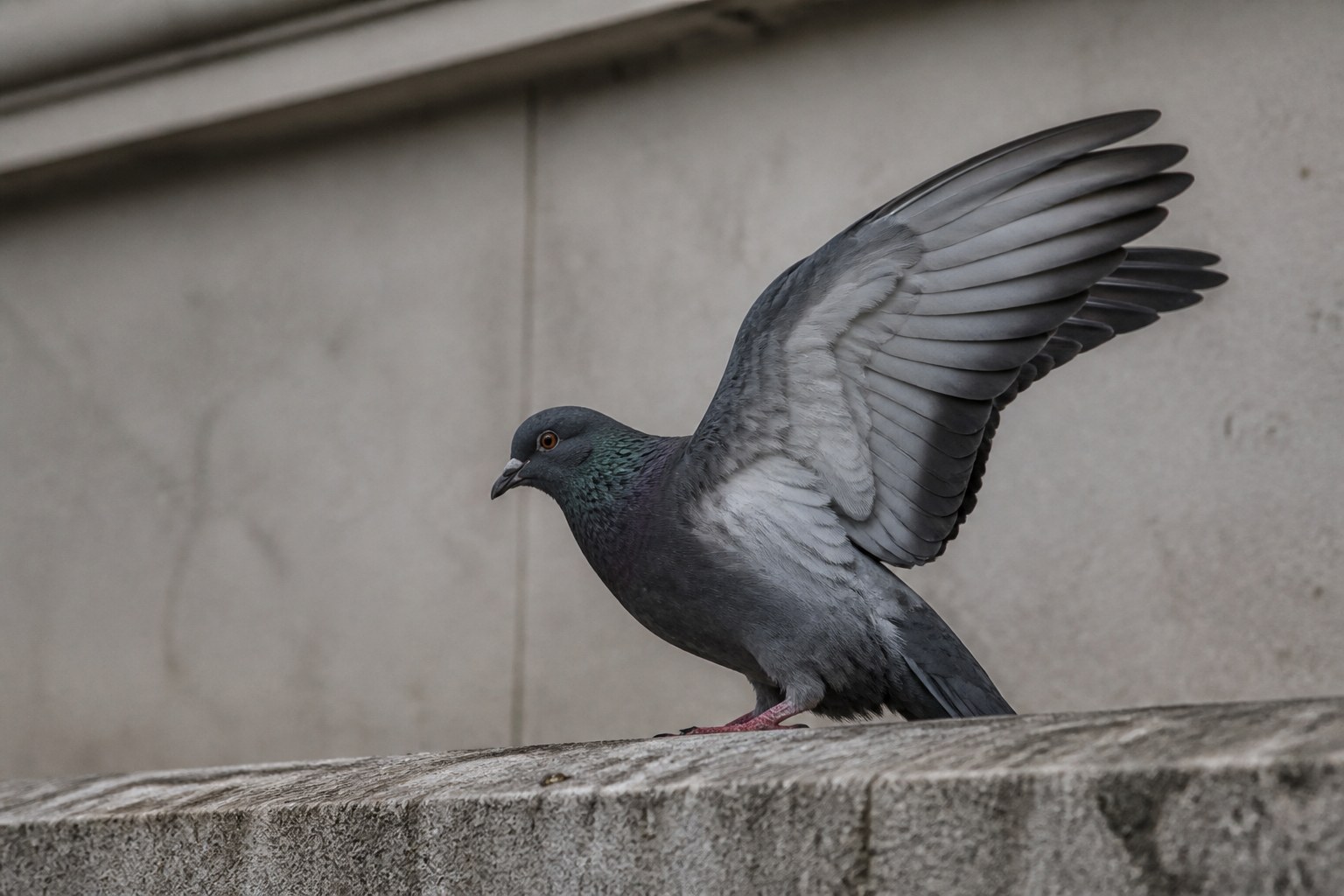
Artemidorus, Ibn Sirin, Miller, and Crisp: four dream books on wings
Dream dictionaries are folk interpretation.
Each entry records one author's convention, and the four best-known sources on wings disagree about almost everything except that wings matter.
Artemidorus of Daldis, a Greek diviner of the 2nd century, wrote that flying with wings is good for everyone: freedom for a slave, riches for the poor, office for the rich. In the 1656 English edition of his Oneirocritica, flying very high without wings means “fear and danger.”
The book published in English as Ibn Seerin's Dictionary of Dreams, translated by Muhammad M. al-Akili in 1992, is a later compilation carrying the name of Ibn Sirin, an 8th-century scholar of Basra. Its entry on wings reads flying with them as travel and reads wings in general as a person's children.
| Author and book | Having or flying with wings | Other wing details |
|---|---|---|
| Artemidorus, Oneirocritica (2nd century) | Good for all: freedom, wealth, or office, depending on the dreamer | Flying high without wings: fear and danger |
| Ibn Seerin's Dictionary of Dreams (al-Akili, 1992) | Travel; feathered wings as prosperity; flying on someone else's wings as receiving their help | A broken wing as illness in one's son; a wing that cannot fly as a wound that slows progress |
| Gustavus Hindman Miller, 10,000 Dreams Interpreted (1901) | “grave fears for the safety of some one” who has travelled far from you | Seeing birds' wings: overcoming adversity and rising to wealth and honor |
| Tony Crisp, Dream Dictionary (dreamhawk.com) | The desire to rise above things and to become independent | A broken wing: lacking “the full confidence” needed to keep flying |
Side by side, the same image means good fortune for Artemidorus, worry for Miller, and a child's welfare for the Ibn Sirin compilation. That spread is the best reason to read any single entry as a prompt for your own associations rather than a finding about you.
Miller's book also shows how these readings age: he wrote for readers in 1901, and his entries on travel, courtship, and business rivals reflect that world more than yours.
What does it mean to dream that you have wings?
When the wings are your own, the dream usually concerns your own reach: a place you want to leave, a height you want to reach, or a weight you have been carrying. Crisp's modern entry reads the image as a wish for independence, and many dreamers recognise that before they look anything up.
Growing wings is a different scene from using them.
A dream where wings sprout and you never take off leaves the question open: the ability is there, but nothing in the dream tests it.
The Ibn Sirin compilation gives that exact case its own reading, where having wings and not flying means gaining worldly wealth. A reflective reading asks something plainer: what can you already do in waking life that you have not yet tried?
- Did they lift you? Wings that work point toward ability; wings that only appear point toward possibility.
- Did they fit? Wings too heavy, too large for the room, or hidden under a coat add strain, size, or secrecy to the picture.
- Who saw them? Other people's reactions in the dream, admiring or alarmed, often mirror how you expect a change to be received.
- Did you want them? Wings that arrive unasked can feel like a burden or an expectation placed on you.
When the flight itself filled the dream, with its height, speed, and fear of dropping, flying dreams have their own research and readings. In that case the wings are one detail inside a larger experience.
What do broken, clipped, or injured wings mean in a dream?
A broken wing usually points the dreamer toward something that stopped working, such as a plan, a friendship, health, or confidence. The dream books agree there is a loss and disagree about what was lost.
Crisp reads any damaged wing, whether on a bird or an aircraft, as missing the confidence needed to stay in the air. The Ibn Sirin compilation ties a broken wing to a son's illness, a reading from its own symbol system that no parent needs to take as a medical forecast.
Clipped wings add a second person, because someone did the cutting.
That detail makes it worth asking who limits your movement right now: an employer, a family rule, an illness, or your own caution.
Wings that ache, molt, or shed feathers describe slower change. A dreamer in the middle of a long recovery or a drawn-out move may see that kind of wear, which is a different picture from a sudden snap.
Why do white wings, or black ones, stand out?
White wings in a dream usually come from pictures seen while awake.
Church windows, Christmas cards, and memorial art tend to paint angels' wings white or pale gold, so a white wing often carries that devotional memory into sleep.
The color white has its own history in Christian worship, from baptismal garments to Easter vestments, and that history can color the dream as much as the wings do.
A single white feather falling from a wing is a separate image. It sits closer to the modern belief about white feathers as signs than to the wing as a whole.
Black or dark wings have no separate entry in any of the four dream books above. In recent films and games they usually belong to fallen angels or ravens, so a dark wing may say more about stories the dreamer has watched than about an older tradition.
Do angels have wings in the Bible?
Most angels in the Bible are not described with wings. Abraham sees “three men” at his tent in Genesis 18:2, and Hebrews 13:2 says some people “have entertained angels without knowing it.”
The winged figures belong to two classes seen in visions. In Isaiah 6:2 the seraphs each have six wings, two of them used only for flying.
In Ezekiel 1:6 each living creature has four wings, and Ezekiel 10:20 later names these creatures as cherubim, the same class carved in gold on the ark in Exodus 25:20.
| Passage | Figure | What the text says |
|---|---|---|
| Isaiah 6:2 | Seraphs | Six wings: two cover the face, two cover the feet, two are for flying |
| Ezekiel 1:6, 1:24 | Living creatures, named cherubim in 10:20 | Four wings each, with a sound “like the sound of mighty waters” |
| Exodus 25:20 | Golden cherubim on the ark | Wings spread above, “overshadowing the cover” |
| Daniel 9:21 | Gabriel | Came “in swift flight”; the Hebrew is uncertain |
| Revelation 14:6 | An angel | “Flying in midheaven,” with no wings described |
| Genesis 28:12 | Angels of God | Ascending and descending on a stairway |
Daniel 9:21 is the verse most often cited for a winged Gabriel, and its wording is the least secure. The Latin Vulgate and the Greek of Theodotion read the phrase as flying, while the NASB renders it as Daniel's own “extreme weariness.”
In Genesis 28:12 the angels of Jacob's stairway go up and down on steps. The dream gives them a stairway to climb, not wings.
Scripture also gives wings to God: Psalm 91:4 says “under his wings you will find refuge,” so a dream of being sheltered beneath great wings may echo that psalm more closely than any angel passage.
When did angels get wings in art?
The earliest Christian artists painted angels without wings. An Annunciation scene in the Catacomb of Priscilla in Rome, dated to the 3rd century, is often cited as the first picture of an angel, and it shows the messenger as a wingless man.
Winged angels appear fairly suddenly in the late 4th century. Art historian Therese Martin argues that artists modelled them on Nike, the Greek goddess of victory whom Romans called Victoria, a winged figure already familiar from coins and monuments.
A marble sarcophagus found at Sarıgüzel in Istanbul in the 1930s, dated to the reign of Theodosius I (379 to 395), shows winged angels carrying the monogram of Christ. By the time of the mosaics in Santa Maria Maggiore in Rome, made between 432 and 440, wings had become the normal way to show an angel.
Theologians treated the wings as a symbol rather than anatomy, and Pseudo-Dionysius, writing around the year 500, says in The Celestial Hierarchy 15.3 that “the wing displays the elevating quickness and the heavenly progress towards higher things.”
For a dreamer, the consequence is plain: the winged angel in your dream almost certainly takes its shape from art you have seen, which explains where the picture came from without deciding what it means to you.
Why do sleep studies count flying but not wings?
Dream researchers count flying dreams, not wing dreams, and wings appear in their studies only as one way the flying happens.
In a series of 6,701 dreams recorded by one person, psychologist Michael Schredl found unaided flying in 115, about 1.7 percent, and the method of flying varied from dream to dream. Wings are one method among several, which places a wing dream inside the wider flying research rather than beside it.
The continuity hypothesis offers a better frame for meaning. Dream researcher William Domhoff argues that dream content is “continuous with waking conceptions and emotional preoccupations,” and that dreams can draw on the figures of speech people already use.
English talks about wings all the time: people spread their wings when they leave home, take a newcomer under their wing, and complain that their wings were clipped. A dream that turns one of those phrases into a picture fits Domhoff's account without any hidden code.
What the research can and cannot say
The studies describe how often and why people dream of flight. They say nothing about angels.
What the evidence supports
- Dreams follow waking concerns
Domhoff's content studies find dreams continuous with the dreamer's conceptions and worries (Domhoff, 2001).
- Flight takes many forms
Unaided flying appeared in 115 of 6,701 dreams in one long series, with varied methods (Schredl, 2011).
What remains limited
- No study of wings
No published content study located for this page treats wings as a separate image.
- No spiritual verdict
Content research cannot confirm or rule out a religious reading of a dream.
Can you read a wing dream without a dream dictionary?
Write the dream down before you look up any meaning, because a dictionary's words tend to replace your own. Four details carry most of the reading: owner, condition, action, and how you felt on waking.
A four-line record of a wing dream
Write each line in your own words before opening any dream book.
- Owner
- Input
- Whose wings they were
- Action
- Name the body or figure, even if it was unclear
- Result
- The image stays attached to the right person
- Condition
- Input
- Color, size, weight, damage
- Action
- Describe how the wings looked and how they worked
- Result
- A beautiful wing that failed is not read as success
- Action
- Input
- What the wings did
- Action
- Record lift, shelter, folding, falling, or shedding
- Result
- The verb shows the question the dream was asking
- Waking feeling
- Input
- The first minutes after waking
- Action
- Name relief, fear, grief, pride, or confusion
- Result
- The emotion anchors any later reading
Keeping a dream journal over several weeks shows whether wings return when the same waking situation does. A pattern like that tells you more than any one entry in a dream book.
If you pray, you can bring the image to prayer as you would any other thought.
The Catechism of the Catholic Church (2115 to 2116) warns against using signs to unveil the future, which is one reason these readings stay reflective.
Dreams of broken or torn wings that return often, wake you in fear, and leave you tired the next day are a sleep matter. The American Academy of Sleep Medicine advises seeing a doctor or sleep specialist when nightmares keep you from restful sleep.
Frequently Asked Questions
What do angel wings mean in a dream?
Angel wings usually shift the reading to what the figure did: sheltered you, spoke, or simply stood there. The wings themselves come from Christian art, which has shown angels with wings since the late 4th century.
Is dreaming of wings a sign from an angel?
Nothing in the dream can confirm that. Most angels in the Bible appear without wings, and the winged image comes from art, so a wing dream is better read as reflection than as proof of contact.
What does it mean to dream of white wings?
White wings usually borrow from church art and memorial images, where angels' wings are painted white or pale gold. Many dreamers link them with purity, protection, or someone who has died.
What does it mean to dream of growing wings?
Dream books read having wings as rising, travel, or independence. Growing wings without flying leaves the question of what you are able to do, but have not yet tried.
Does a broken wing in a dream mean something bad will happen?
No dream book reading can forecast an event. Tony Crisp reads a broken wing as lost confidence, and the Ibn Sirin compilation as a son's illness, which shows how far the conventions differ.
Which angels have wings in the Bible?
The seraphs of Isaiah 6:2 have six wings and the cherubim of Ezekiel 1:6 and 10:20 have four. Gabriel's “swift flight” in Daniel 9:21 rests on an uncertain Hebrew phrase.
Sources
- (2021). Isaiah 6:2; Ezekiel 1:6, 1:24, 10:20-21; Exodus 25:20; Daniel 9:21; Revelation 14:6; Genesis 18:2, 28:12; Hebrews 13:2; Psalm 91:4. Bible Gateway. Link
- . Translation commentary on Daniel 9:21. TIPs. Link
- (2001). The Development of Winged Angels in Early Christian Art. Espacio, Tiempo y Forma, Serie VII, Historia del Arte 14: 11-30. Link
- . Angels in art: early Christian depictions, Catacomb of Priscilla and the Sarıgüzel sarcophagus. Wikipedia. Link
- (1897). The Celestial Hierarchy, chapter 15, section 3. tertullian.org. Link
- (1656). The Interpretation of Dreams (English edition), on flying; book 2, chapter 68 in modern editions. Internet Archive. Link
- (1992). Ibn Seerin's Dictionary of Dreams According to Islamic Inner Traditions, entry “Wings,” p. 478. Pearl Publishing House, Philadelphia
- (1901). 10,000 Dreams Interpreted, entry “Wings”. Internet Archive. Link
- . Dream Dictionary: Wing. dreamhawk.com. Link
- (2011). Frequency and nature of flying dreams in a long dream series. International Journal of Dream Research 4(1). Link
- (2001). A New Neurocognitive Theory of Dreams. Dreaming 11: 13-33. Link
- (1993). Paragraphs 2115-2116, Divination and magic. Holy See. Link
- (2020). Nightmares. Sleep Education. Link
About Our Editorial Process
Every KnowTheAngels guide separates calculation method, tradition context, and personal reflection. We cite where interpretations come from, present more than one view, and never present symbolic reading as prediction.
Read our editorial policy