Who Is Gadreel, and Why Does 1 Enoch Blame Him for Eden?
The charge sheet in 1 Enoch 69, the earliest text to give the Eden serpent an angelic name, and the weapons list that comes with it
Genesis never says what the serpent was. It says the serpent was more subtle than any beast of the field, and it leaves the question there for several centuries.
1 Enoch answers it with a name.
In chapter 69 a list of rebel angels is read out with their offences attached, and one of them is charged with leading Eve astray and with showing humanity how to kill each other. His name is Gadreel.
That single passage is the whole record, which makes this an unusually contained subject: there is no devotional tradition to sort through, only a short accusation and the questions it raises.
Quick Facts
- Only source
- 1 Enoch 69:6, in the Book of Parables
- First charge
- Led Eve astray
- Second charge
- Showed humanity the weapons of death
- The list given
- Shield, breastplate, sword, instruments of death
- Significance
- Earliest surviving text naming the Eden serpent as an angel
- Canon status
- Ethiopian Orthodox only; outside every other canon
What does 1 Enoch 69 actually say about Gadreel?
The chapter reads like a docket. A series of rebel angels is named, and each name is followed by what that angel taught or did to human beings.
Gadreel occupies one entry, and it is unusually loaded.
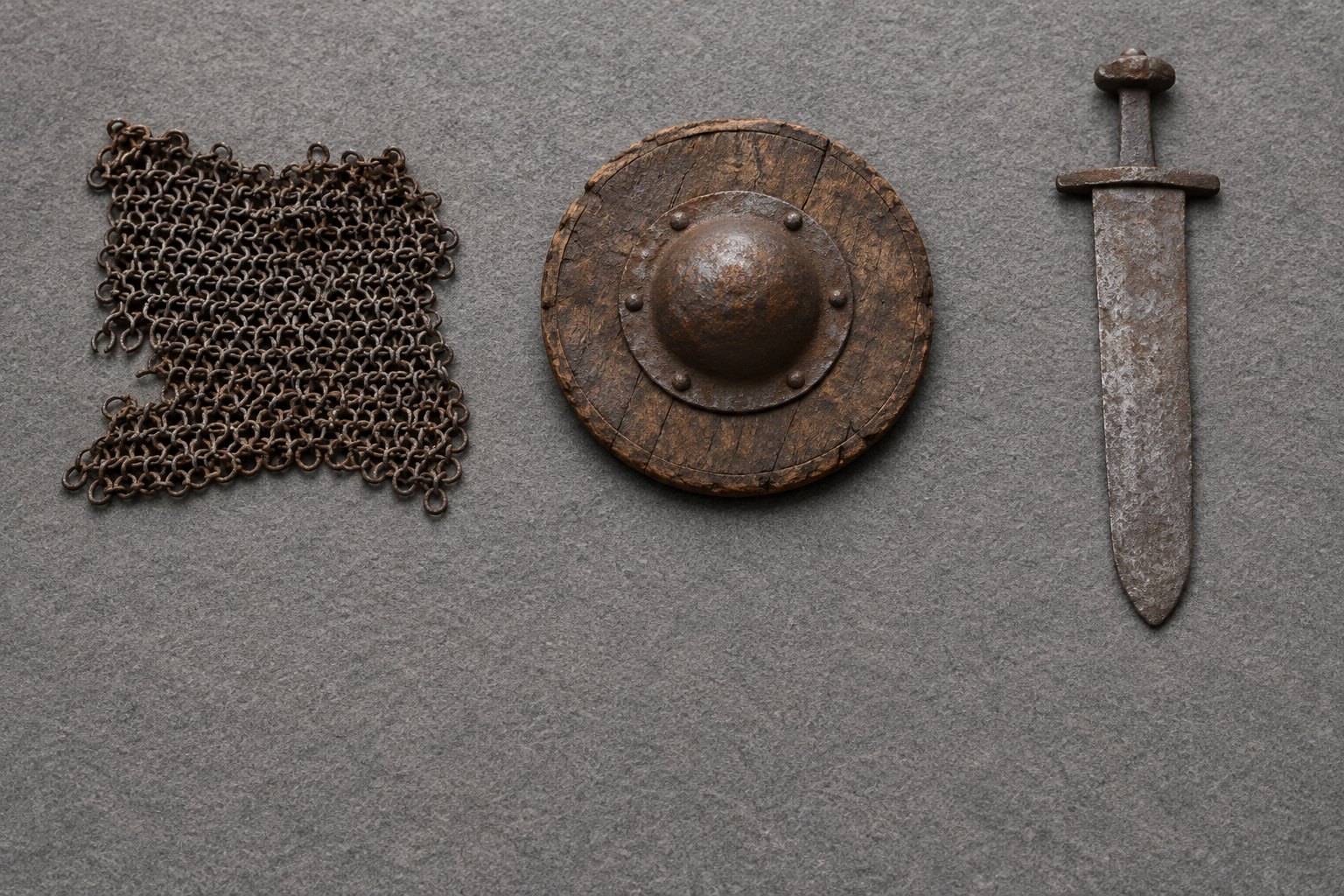
The third was named Gadreel: this is he who showed the children of men all the blows of death, and he led astray Eve, and showed the weapons of death to the sons of men, the shield and the coat of mail, and the sword for battle.
1 Enoch 69:6, in the standard English rendering
Two separate accusations are packed into one sentence, and they are not obviously related. Deceiving one woman in a garden and arming the human race are different kinds of act.
The chapter's logic joins them anyway. In the Book of Parables the rebellion is measured by what it put into human hands, so an angel who both introduced the first deception and the first weapon is being charged with opening the same door twice.
The passage sits inside a distinct section of 1 Enoch, and knowing which section changes how the entry should be read. Chapters 37 to 71 are called the Book of Parables or the Similitudes, and they are the latest major part of the collection, absent from the Aramaic fragments recovered at Qumran.
That absence is significant. Every other major division of 1 Enoch is represented among the Qumran finds, so the Parables are generally dated later than the rest, which places the Gadreel entry at some distance from the older watcher material it summarises.
| Section | Chapters | Found at Qumran? |
|---|---|---|
| The Book of the Watchers | 1 to 36 | Yes, in Aramaic |
| The Book of Parables | 37 to 71 | No |
| The Astronomical Book | 72 to 82 | Yes |
| Dream Visions and the Epistle | 83 to 108 | Yes |
The chapter's form follows from its position. It is not narrating the rebellion; it is listing its participants with their offences attached, in the manner of a later summary.
That is why the Gadreel entry reads as a charge rather than a story, and why it can attach the Eden deception to a watcher list without explaining how the two connect.
Is Gadreel the serpent who led Eve astray?
This is the claim that gives the passage its reputation. Genesis 3 has a serpent and no explanation of what the serpent is, and 1 Enoch supplies a name for it.
It is the earliest surviving text to do so, which makes it historically important regardless of what a reader believes about it.
The identification also has a consequence the passage does not spell out. If the serpent was a rebel angel, then the fall of Genesis 3 and the angelic descent of Genesis 6 become one story with two episodes rather than two unrelated events.
What the identification supports
It is a genuinely early reading, and it is still a reading.
What the evidence supports
- An ancient interpretation
The connection is at least as old as the Book of Parables, not a modern invention.
- A named alternative to the serpent
It answers a question Genesis leaves entirely open.
- A unified narrative
It joins the Eden account to the watcher tradition in one arc.
What remains limited
- Genesis says nothing of it
The Hebrew text names no angel and offers no identification of the serpent.
- Other traditions differ
Later Jewish and Christian readings variously name Samael, Satan, or no figure at all.
- One passage only
No other part of 1 Enoch repeats or develops the claim about Eve.
The last limit is easy to miss and worth stating plainly. This is a single sentence in a long book, and the book does not build on it.
The priority claim is worth stating carefully, because two other texts are often produced against it and neither quite does the same thing. Wisdom of Solomon 2:24 says that death entered the world through the envy of the devil, which identifies an agent behind the story without naming an angel.
Revelation 12:9 goes further and calls the dragon that old serpent, the Devil and Satan, but those are titles rather than a watcher's personal name.
| Text | What it supplies | What it withholds |
|---|---|---|
| Wisdom of Solomon 2:24 | An agent, described as the devil | Any name, and any link to Eden's serpent by name |
| Revelation 12:9 | An explicit serpent-devil identification | A personal name from an angel list |
| 1 Enoch 69:6 | A personal name, Gadreel, from a watcher list | Any account of how the deception happened |
Read together, the careful formulation is narrow. 1 Enoch is the earliest surviving text to attach a specific angel's name to the Eden deception.
The dating keeps that claim honest rather than settling it, since the Book of Parables cannot be fixed precisely and the range scholars give it overlaps both of the others. What survives the caution is still substantial, because no other ancient text puts the deceiver on a list of named rebel angels with an offence written beside him.
Why does the charge name Eve and not Adam?
The charge names one person, and the choice is not incidental to how the passage has been read since. Genesis 3 has the serpent address the woman, so 1 Enoch is following the narrative rather than adding a judgment of its own at that point.
What it adds is the identification of the speaker, not a reassignment of blame. That distinction has often been lost in reception, where the verse has been used to support readings that Genesis and 1 Enoch both decline to make explicit.
What naming Eve does and does not do
The text follows Genesis; later readers went further.
What the evidence supports
- It matches the Genesis scene
The serpent speaks to the woman in Genesis 3:1-5, and 1 Enoch keeps that arrangement.
- It identifies the deceiver
The contribution of the verse is a name for the serpent, not a new account of the fall.
- It is one clause
The Eve reference occupies four words inside a longer charge about weapons.
What remains limited
- No verdict on Adam
The passage says nothing about him, which is silence rather than exoneration.
- No account of the method
How the deception happened, and in what form, is not described.
- No moral commentary
The chapter is a list of offences by angels, not an assessment of human responsibility.
Keeping that boundary is the difference between reporting an ancient text and using it to support a much later argument. The same restraint applies to everything else readers want the verse to settle.
1 Enoch 69:6 is one sentence long, and most of the questions readers bring to Gadreel are questions that sentence does not answer.
Four things the text leaves open
Each is filled in by later writers rather than by 1 Enoch.
- Was Gadreel the serpent, or behind it?
The text says he led Eve astray and does not describe how, or in what form.
- Is he the same figure as Satan?
The identification is made by later readers; the Book of Parables does not make it.
- What happened to him?
No punishment, binding, or judgment is recorded for Gadreel anywhere.
- Why a protective name?
The proposed derivations both suggest help or shelter, and the text never comments.
Filling those four gaps is what most writing about Gadreel actually does, usually without saying that 1 Enoch left them open. The passage itself is narrower and more interesting than the material built on it: a compressed accusation that quietly links the oldest story about human disobedience to the oldest story about human violence.
What are the weapons of death, and why that order?
The weapons list looks decorative until you notice its order. It does not begin with the sword.
- The shield: defensive, and the first item named.
- The coat of mail: also defensive, worn rather than wielded.
- The sword for battle: the first purely offensive item, and named third.
- The blows of death: the general phrase, given before the specifics as a heading for them.
Read in that sequence the list makes an argument. Protection comes first, and the sword arrives to answer the armour.
Whether the author intended that reading cannot be settled from the text, and it is the kind of detail a translation can easily reorder, so a careful page notes the order without leaning too hard on it.
What is clear is that the charge concerns manufacture rather than violence. Gadreel is not accused of killing anyone; he is accused of showing people how.
The phrase that opens the charge is the strangest thing in it, and English translations vary more here than anywhere else in the verse. Renderings include the blows of death, the strokes of death, all the deadly blows, and the smiting of death, all attempting the same underlying expression.

The variation matters because the phrase functions as a heading for the list that follows.
If it means blows in the sense of strikes delivered in combat, the entry is about technique. If it means the means of dealing death, it is about manufacture, and the shield and mail that follow fit that reading better.
Most translators lean toward the second, which is why the weapons list is usually printed as an explanation of the phrase rather than as a separate charge.
For a reader the practical consequence is small but real: Gadreel is charged with equipping violence, not with teaching how to fight, and pages that describe him as a war instructor have chosen the less-supported reading.
How is Gadreel different from Azazel?
Gadreel is one entry among several, and the neighbours make the logic of the list visible. Each named angel is credited with introducing a specific human capacity, and in every case the capacity is a technology of some kind.

- Yeqon: named first, credited with leading the angels themselves astray.
- Asbeel: credited with giving the sons of God the counsel that corrupted them.
- Gadreel: the deception of Eve, and the weapons of death.
- Penemue: taught writing with ink and paper, which the text treats as a harm.
- Kasdeja: taught the harms associated with spirits, and with the wounding of the womb.
The Penemue entry is the one modern readers find strangest, because writing sits in the same list as weapons and is criticised in the same terms.
The chapter explains that human beings were not created to confirm their faith with pen and ink, which tells you what kind of argument the whole list is making.
Seen in that company, Gadreel's entry is less about Eden than it first appears. He is one of several angels charged with putting a permanent capacity into human hands, and the deception is listed alongside the weapons rather than above them.
Readers who know the watcher material often merge these two, because both are charged with something like weapons. The texts keep them apart.
Azazel's charge in 1 Enoch 8 concerns metalwork, ornament, and cosmetics: the technology and the vanity that come with it.
| Azazel | Gadreel | |
|---|---|---|
| Passage | 1 Enoch 8:1 | 1 Enoch 69:6 |
| What he taught | Metalworking, ornaments, dyes, cosmetics | The blows of death and the weapons for them |
| The harm named | Godlessness and corruption of the earth | Deception, and the means of killing |
| Punishment recorded | Bound in the desert, the earth healed after him | None given in the passage |
| Linked to Eden? | No | Yes, explicitly |
The punishment row is the sharpest difference. Azazel's fate is narrated at length and Gadreel's is not mentioned at all, which is another sign that the Gadreel entry is a compressed note rather than a developed story.
Anyone writing about the name Azazel and reaching for Eden has crossed between two entries that the book keeps separate.
Why does a name meaning God is my helper sit on a destroyer?
The name resists a settled derivation, which is common for the watcher names, and two proposals circulate.
Two readings of the name
Neither is secure, and both sit oddly against the charge.
Uses a root associated with fortune and with help
From a root for a wall or a fence
Standard, unlike Metatron or Sandalphon
Watcher names are transmitted through Greek and Ge'ez
Either reading produces a protective name, which is a strange fit for the angel accused of arming the world.
That tension may be deliberate, and it may be an accident of a name list assembled from several sources. The honest position is that the text gives no explanation and no other passage helps.
It is worth noticing that Gadreel keeps the -el ending that Metatron and Sandalphon lack. This places him among the conventionally formed Hebrew angel names, even while the tradition treats him as a rebel.
The spelling varies more than most angel names, and the reason is the route the book travelled to reach modern readers.
None of those forms indicates a different angel. They indicate a different editor.
The Qumran Aramaic fragments of Enoch are the closest surviving witness to the original language, and they preserve parts of the watcher material, which is why scholarly editions cite them even where the passage itself is not among the recovered pieces.
Is the Gadreel in Supernatural based on a real text?
Readers frequently arrive at this name from television rather than from a text, and it is worth saying where that version comes from. Gadreel appears as a recurring character in the ninth season of Supernatural, where the writers drew the name from 1 Enoch and built a backstory the text does not contain.

Nothing in that portrayal should be read back into the passage. The fictional Gadreel has a biography, motives, and a redemption arc, none of which exists in a single-verse entry on a list of offences.
This matters more for Gadreel than for better-attested names, because the fiction is longer and more detailed than the source. A reader searching the name will meet several thousand words of television plot before reaching one sentence of 1 Enoch.
Frequently Asked Questions
Who is Gadreel?
He is a rebel angel named in 1 Enoch 69:6, charged with leading Eve astray and with showing humanity the weapons of death. That single verse is essentially the entire record.
What does 1 Enoch say about Gadreel?
Chapter 69 lists rebel angels with an offence written beside each name, and the entry for Gadreel charges him with leading Eve astray and with showing men the shield, the coat of mail and the sword for battle.
That entry is the whole of it. No other passage in the book returns to him, records a punishment, or explains how the deception happened.
Is Gadreel the serpent in Genesis?
1 Enoch says he led Eve astray, which makes it the earliest surviving text to identify the Eden deceiver with a named angel.
Genesis itself names no angel and offers no identification, so this is an ancient reading rather than a biblical statement.
Is Gadreel in the Bible?
No. 1 Enoch is canonical only in the Ethiopian Orthodox tradition and sits outside every other canon, and the name appears nowhere in the Hebrew Bible or the New Testament.
What is the difference between Gadreel and Azazel?
Azazel is charged in 1 Enoch 8 with teaching metalwork, ornament, and cosmetics, while Gadreel is charged in chapter 69 with the deception of Eve and with the weapons of death.
Only Azazel's punishment is narrated.
What does the name Gadreel mean?
No derivation is settled. The two usual proposals give something like God is my helper or wall of God, both of which read oddly against the charge the text brings against him.
Sources
- (3rd century BCE to 1st century CE). 1 Enoch 69:6, in the Book of Parables. Second Temple Jewish literature
- (3rd to 2nd century BCE). 1 Enoch 8:1, on Azazel. The Book of the Watchers
- (ancient). Genesis 3:1-7. Hebrew Bible
- (2012). 1 Enoch 2: A Commentary on the Book of 1 Enoch. Hermeneia, Fortress Press
About Our Editorial Process
Every KnowTheAngels guide separates calculation method, tradition context, and personal reflection. We cite where interpretations come from, present more than one view, and never present symbolic reading as prediction.
Read our editorial policy