Is Lucifer in the Bible, and Who Is Isaiah 14 Actually About?
A Latin common noun for the planet Venus, a chapter that names its own subject three times, and a devil reading that arrives three centuries later

The word Lucifer appears once in the King James Bible, at Isaiah 14:12, and it is not a name there. It is a Latin common noun.
Jerome used it to translate a Hebrew phrase meaning shining one, son of dawn, and in Latin it was the ordinary word for the planet Venus when it rises ahead of the sun. Isaiah 14 also states three times who the passage is about, and the answer is a human king.
None of that decides whether a fallen angel exists. It decides what this particular verse is doing, which turns out to be a question about translation rather than about angels.
Quick Facts
- Occurrences in the King James Bible
- One, at Isaiah 14:12
- Hebrew behind it
- helel ben shachar, shining one, son of dawn
- What lucifer means in Latin
- The morning star, the planet Venus before sunrise
- Who the chapter names as its subject
- The king of Babylon, at verses 4, 16 and 20
- The word in the Latin New Testament
- Once, at 2 Peter 1:19, of the morning star rising in the heart
- Where the devil reading comes from
- Christian writers from Tertullian and Origen onward
How a Latin common noun became an English proper name
The chain has four links, and each one is documented.
The Hebrew of Isaiah 14:12 reads helel ben shachar. Helel is built on a root for shining, and the phrase means something close to shining one, son of dawn.
Greek translators of the Septuagint rendered it heosphoros, the dawn-bringer, which was their ordinary name for the morning star.
Jerome, translating at the end of the fourth century, reached for the Latin equivalent. That word was lucifer, light-bringer, which Romans used for the planet Venus the way English speakers say morning star.
The fourth link is the one that changed the meaning. English translators inherited the Latin form, kept it, and capitalised it.
A capital letter in English marks a name, and that is the whole of the transformation.
What Isaiah 14 says its subject is, in its own words
The chapter does not leave the question open.
It introduces the poem as a taunt to be taken up against the king of Babylon, then returns to that subject twice more in terms that only fit a human ruler.
- Verse 4. The passage opens by naming what it is, a taunt to take up against the king of Babylon.
- Verse 16. Those who see him stare and ask whether this is the man who made the earth tremble.
- Verse 20. He is refused burial with the other kings, because he ruined his own land and killed his own people.
Verse 16 is the one that decides it for most readers. The onlookers ask whether this is the man who shook the earth, and man is the word the text chooses.
Verse 20 adds a detail that no angelology accommodates. The subject is told he will not be joined with other kings in burial, because he destroyed his country.
A being who was never born and cannot die does not have a burial problem.
The contrast with the rest of the book is worth noticing.
Isaiah 6 describes the seraphim as unmistakably heavenly beings, and the Hebrew says so plainly rather than leaving the question to a translator.
Why the language sounds too cosmic for a human king
The obvious objection to all of that is that the passage does not sound political.
Its subject says he will ascend above the stars, take a seat on the mount of assembly, and make himself like the Most High, and is then brought down to the pit. Kings are not usually described in those terms.
The answer most scholars give is that Isaiah is borrowing, and that the borrowing is the point.
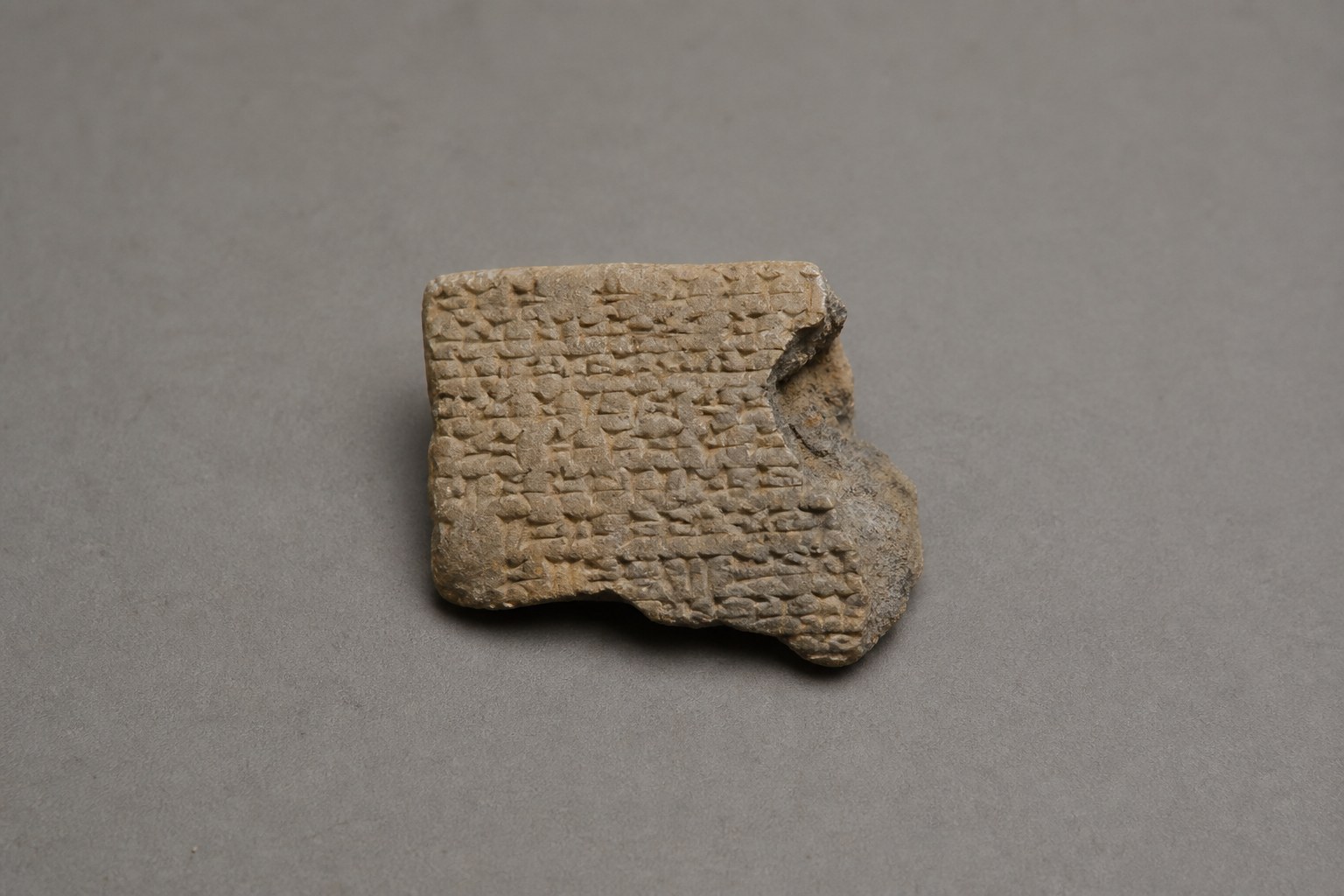
Texts recovered at Ras Shamra preserve a Canaanite dawn deity called Shachar, and a figure named Athtar who is associated with the morning star and who makes an unsuccessful bid for the high god's throne.
Helel ben Shachar sits comfortably in that world. The parallels run through the ascent, the claim on a throne above the gods, and the fall to the underworld.
Reading it as borrowed myth does not weaken the taunt. It sharpens it, because the poem is telling a Babylonian king that his career has the shape of a story his own region already knew, and that in the story the claimant ends up on the floor.
The cosmic register is the insult.
Is Lucifer a name in the Hebrew text?
No, and the reason is grammatical rather than theological.
Helel is a noun formed from a common root, and the phrase after it, ben shachar, means son of dawn. Both halves describe rather than identify.
Meaning alone would not settle it either way, since Hebrew names usually carry meaning too.
What marks a name is repeated use. A figure who has one turns up again under it, and helel appears here and nowhere else.

The rest of the Hebrew Bible never refers back to this word as anybody's name, which is a strong silence for a being supposedly this important.
This is not the only Hebrew term that has been promoted into a name.
Azazel in Leviticus 16 is a ritual designation whose grammar is still argued over, and it became a named demon in later literature by much the same route.
Recognising the pattern matters more than settling this one case, because the same question applies wherever a description has hardened into a proper noun.
Why the same Latin word appears in the New Testament for Christ
This is the part most summaries leave out, and it is the part that settles the matter.
The word lucifer occurs in the Latin New Testament exactly once, at 2 Peter 1:19. The writer tells his readers to hold to prophecy until the day dawns and the morning star rises in their hearts.
That morning star is Christ, and the Latin word for it there is lucifer.
Revelation 22:16 makes the same identification with different vocabulary. Jesus calls himself the bright morning star, which Jerome rendered stella splendida et matutina rather than with the noun itself.
| Verse | What it says | Latin |
|---|---|---|
| 2 Peter 1:19 | The morning star rises in the hearts of believers | lucifer, the noun itself |
| Revelation 22:16 | Jesus calls himself the bright morning star | stella splendida et matutina |
| Isaiah 14:12 | Addressed to the king of Babylon | lucifer, the same noun |
So the Latin Bible uses the word once, approvingly, of Christ, and never once as a name for the devil.
The name is an English convention laid over a Latin common noun that pointed the other way.
The devil reading arrives with the Church Fathers, not with Isaiah
The identification is genuinely old, which is why it feels biblical.
Tertullian, writing against Marcion around the turn of the third century, applies the boast of Isaiah 14:14 to the devil. Origen, a generation later, reads the passage as an account of Satan falling through pride.
They were not inventing from nothing.
Second Temple Jewish literature already carried fallen-angel narratives, and Luke 10:18 has Jesus say he watched Satan fall like lightning from heaven, which gave the Isaiah image somewhere to attach itself.
What these writers did was read one text through another. That is a normal interpretive move with a long history behind it.
Reading one text through another is a normal interpretive move. It is a different claim from saying that Isaiah wrote about the devil.
KnowTheAngels editorial principle
Keeping the two apart is what lets a reader hold the tradition's reading without having to claim that Isaiah meant it.
That distinction is what a reader is really asking about when they ask whether Lucifer is in scripture. The word is, once, in one Latin translation of one verse, and the identification with the devil arrives afterwards from writers reading that verse through another.
The same test applied to Ezekiel 28
Isaiah 14 rarely travels alone.
Ezekiel 28 is the other chapter paired with it in accounts of a fallen angel, and it repays exactly the same question.
That chapter addresses the prince of Tyre from verse 2 and the king of Tyre from verse 12, and both titles are stated in the text rather than inferred.
The second half is the harder one. It places its subject in Eden, covered in precious stones, and calls him an anointed cherub on the holy mountain of God.
That is more than a taunt against a Phoenician ruler strictly needs, and readers who find a second layer there are not being careless.
- Both name a human ruler. Isaiah says king of Babylon at verse 4, Ezekiel says prince of Tyre at verse 2 and king of Tyre at verse 12.
- Only one has a known source for its imagery. Isaiah's ascent language has Ugaritic parallels, while Ezekiel's Eden and cherub material has no agreed background.
- The second half of Ezekiel 28 is genuinely harder. Precious stones, the holy mountain and an anointed cherub go further than a taunt against a Phoenician king requires.
The honest position is that the two chapters are not in the same condition. Isaiah names a human king and reaches for borrowed cosmic imagery, while Ezekiel names a human king and uses imagery that specialists still argue about.
Tertullian linked Ezekiel 28 to the devil in the same work where he read Isaiah 14 that way, so the pairing is as old as the reading itself.
Which translations still print the word, and what the rest put there
The word survives in one translation family and has left the others.
| Version | Rendering | Translating from |
|---|---|---|
| Hebrew Masoretic text | helel ben shachar | The source |
| Septuagint, Greek | heosphoros, the dawn-bringer | Hebrew |
| Vulgate, Latin | lucifer, an ordinary noun | Hebrew and Greek |
| King James Version | Lucifer, capitalised as a name | The Latin form |
| Most modern English versions | day star, morning star, or shining one | Hebrew |
The split is not a modern innovation set against a traditional reading. It is a return to the Hebrew, made possible by translating from it rather than through the Latin.

Readers raised on the King James wording sometimes experience the change as a removal.
Nothing was removed. The underlying phrase is present in every version, and only the decision about capitalisation has altered.
What to do before trusting a claim about a single verse
The method that produced everything above is short enough to reuse on the next disputed verse.
It needs an interlinear and two translations from different families, and it takes about ten minutes.
Four checks that settle most verse arguments
In this order, because each one narrows what the next has to consider.
- Read the chapter, not the verse
- Input
- The surrounding passage
- Action
- Look for the sentences that state what the passage is and who it addresses.
- Result
- Isaiah 14 supplies three of them, at verses 4, 16 and 20
- Compare translation families
- Input
- Two or three versions
- Action
- Set a version translated from the source beside one translated through Latin.
- Result
- Where they diverge, somebody made a decision rather than the source being unclear
- Count the occurrences
- Input
- A concordance
- Action
- Check whether the disputed word appears anywhere else, and of whom.
- Result
- Used once it describes, used repeatedly of one figure it names
- Ask what the receiving language added
- Input
- The English text
- Action
- Separate features of English from features of the source.
- Result
- Capitalisation, and therefore the whole idea of a proper name here, is English
The fourth check is the one people skip, and it is usually the one that matters.
A translation cannot avoid making decisions the source never made. English has to choose whether to capitalise, so it has to decide whether a word is a name, and Hebrew never put that question to the translator.
Knowing which layer a feature belongs to is most of the skill.
What this settles and what it leaves open
Two things are settled here, and one large thing is not.
Settled: the word is Latin, the chapter names a human king three times, and the capital letter is an English addition.
Not settled: whether there is a fallen angel, and whether the Christian teaching about one is true.
Those questions rest on other passages and on doctrine developed across centuries, and none of it stands or falls on this verse.
What changes and what does not
Losing a proof text is not the same as losing a teaching.
Latin lucifer, the morning star, capitalised into a name by English translators
Isaiah names the king of Babylon at verses 4, 16 and 20
A separate question resting on other passages and later doctrine
A reader can accept every point here and hold it without contradiction
What comes off the list is one proof text, not a doctrine.
Frequently Asked Questions
Is Lucifer in the Bible?
The word is, once, in the King James Bible at Isaiah 14:12.
It is a Latin common noun meaning morning star, which English translators inherited from the Vulgate and then capitalised into a name.
What does the Hebrew word helel actually mean?
Shining one, from a root meaning to shine.
It is followed by ben shachar, son of dawn, and the pair describes the morning star as it appears before sunrise. The word occurs nowhere else in the Hebrew Bible.
Is Lucifer the same as Satan?
In later Christian tradition the two were identified, but Isaiah 14 does not make that identification.
Tertullian and Origen applied the passage to the devil from the early third century onward, reading it alongside Luke 10:18. The chapter itself names the king of Babylon three times.
Why do modern Bibles not use the word Lucifer?
Because they translate the Hebrew rather than the Latin.
Renderings such as day star, morning star, and shining one follow helel directly. The King James wording reached English through Jerome's Latin, where lucifer was simply the word for Venus at dawn.
Does the Bible really call Jesus the morning star?
Yes, in two places and with two different words.
At Revelation 22:16 Jesus calls himself the bright morning star, which Jerome rendered stella splendida et matutina. The noun itself carries the same image at 2 Peter 1:19, where it rises in the hearts of believers.
Does this mean there is no devil?
No. That is a separate question, and nothing here answers it.
Christian teaching about a fallen angel draws on several passages and on centuries of doctrinal development. Removing Isaiah 14 from the list of proof texts leaves that teaching where it already stood.
Sources
- (Masoretic text). Verses 4, 12, 16 and 20. Hebrew Bible
- (c. 405). Isaiah 14:12 and 2 Peter 1:19. Biblia Sacra Vulgata
- (c. 208). Adversus Marcionem, book 5. Ante-Nicene Fathers
- (c. 230). De Principiis, book 1. Ante-Nicene Fathers
- (2026). Lucifer. Encyclopaedia Britannica
About Our Editorial Process
Every KnowTheAngels guide separates calculation method, tradition context, and personal reflection. We cite where interpretations come from, present more than one view, and never present symbolic reading as prediction.
Read our editorial policy