Why Do I Keep Seeing the Same Numbers Everywhere?
How often clocks show repeating times, what the frequency illusion and apophenia add, where the angel-number idea came from, and when counting becomes a health question
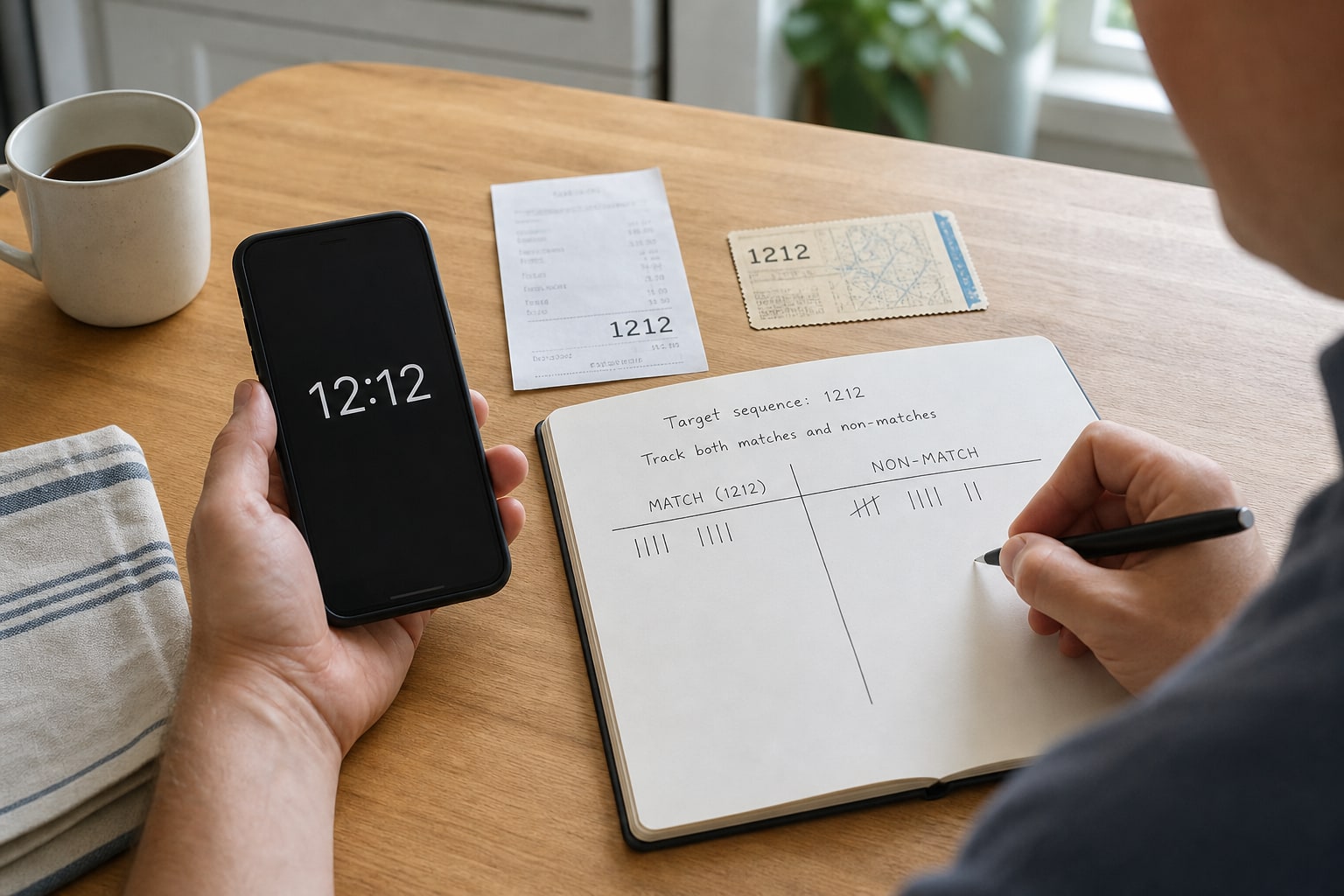
You keep seeing the same numbers mostly because your day is full of number displays and your attention has learned to catch one pattern among them. A phone clock in the 12-hour format shows a repeating, mirrored or straight-run time on 128 of the 1,440 minutes in a day.
Psychology has names for the rest of the effect: the frequency illusion, also called the Baader-Meinhof phenomenon, and apophenia, the pull to see meaning in unrelated things.
The belief that the numbers are messages from angels is modern. It traces mainly to the books of Doreen Virtue, above all Angel Numbers 101 (2008), and Virtue renounced that teaching after 2017.
Noticing numbers is ordinary. Counting or checking that you cannot stop is a separate matter with a medical name, and the last section sets out the signs.
Quick Facts
- 12-hour clock
- 128 of 1,440 minutes a day show a same-digit, mirror, doubled or straight-run time
- 24-hour clock
- 40 of 1,440 minutes a day show one of the same patterns
- Frequency illusion
- Named by Stanford linguist Arnold Zwicky in 2005; popularly the Baader-Meinhof phenomenon, from a 1994 newspaper letter
- Apophenia
- Coined by psychiatrist Klaus Conrad in 1958 for seeing connections that carry an abnormal sense of meaning
- Angel-number idea
- Popularised by Doreen Virtue, from a chapter in Healing with the Angels (1999) to Angel Numbers 101 (2008)
- Health marker
- NIMH lists compulsive counting among OCD compulsions; more than an hour a day on them is one sign
Why do I keep seeing the same numbers everywhere?
Three ordinary things usually work together: a day crowded with number displays, attention that has been tuned to one pattern, and a memory that keeps the hits and drops the misses.
None of the three needs a sender.
Count the displays in a normal weekday. A phone lock screen, a microwave, a car dashboard, a receipt total, a gate number and an order number all put digits in front of you, often dozens of times before lunch.
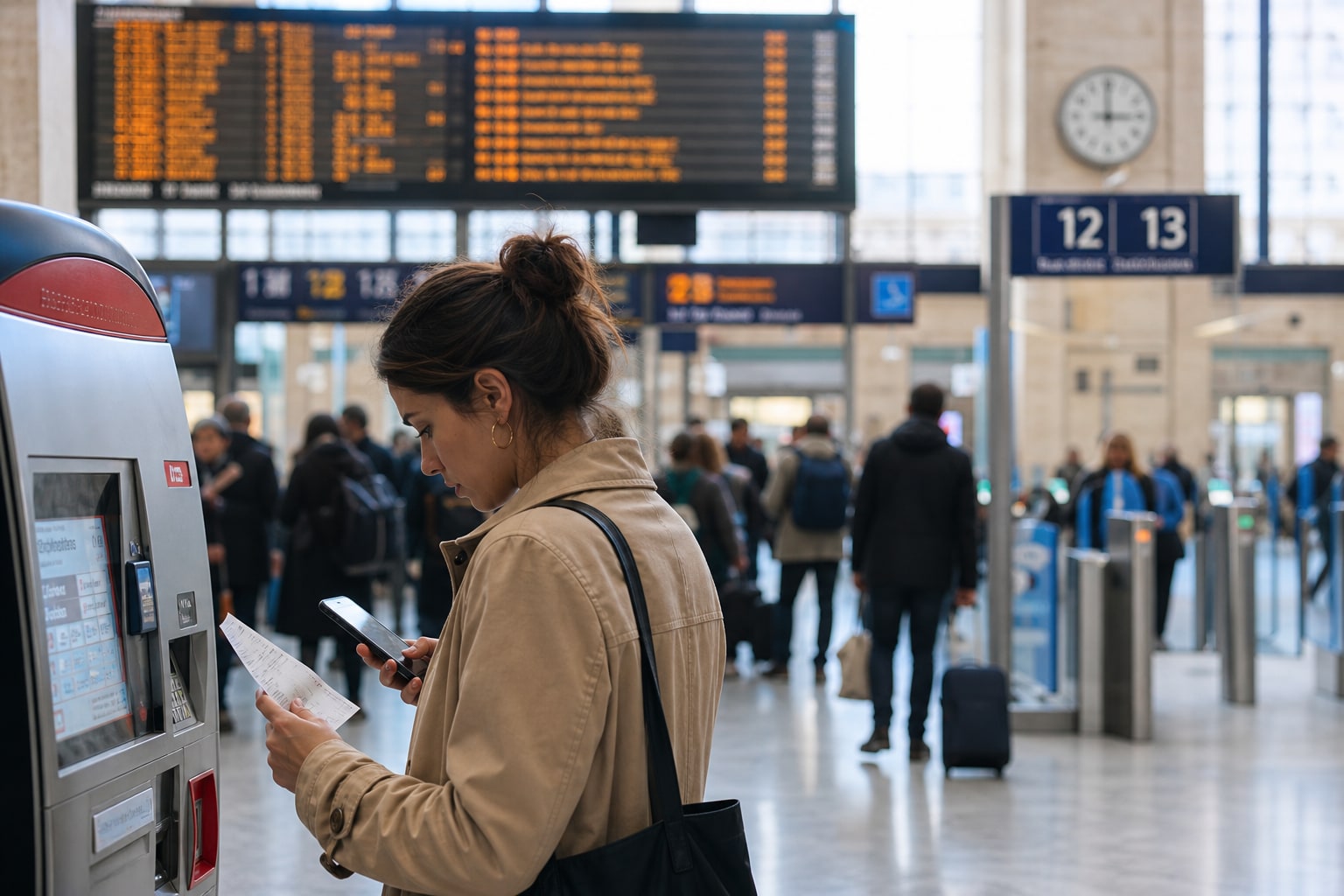
Attention does the second part. Once one sighting has felt charged, the eye picks that pattern out of the stream faster, so a 2:22 on an oven clock now registers where last month it slid past.
Memory does the third. The evening the clock said 11:11 gets retold to a friend, while the forty other glances that day showed times like 10:47 and 3:08 and left no trace at all.
Put together, the three explain why the sense of "everywhere" can keep growing while the real rate stays flat. Many readers also hold a spiritual reading of the same sightings, and the two can sit side by side once each is clear about what it claims.
How often does a digital clock show a repeating time?
A 12-hour digital clock shows a repeating, mirrored, doubled or straight-run time on 128 of the 1,440 minutes in a day.
That is 8.9 percent, or roughly one minute in every eleven.
The count below uses the phone-style 12-hour display without a leading zero, where each time from 1:00 to 12:59 appears twice a day, once in the morning and once at night.
| Pattern | Examples | Distinct times | Minutes per day |
|---|---|---|---|
| Same digit throughout | 1:11, 2:22, 11:11 | 6 | 12 |
| Mirror time, reading the same backward | 1:21, 4:34, 10:01 | 57, including the six above | 114 |
| Doubled pair not already counted | 10:10 and 12:12 | 2 | 4 |
| Straight run of digits | 1:23, 3:45, 12:34 | 5 | 10 |
| Any of these patterns | All of the above, overlaps removed | 64 | 128 |
A 24-hour clock gives a smaller total. It has 24 doubled times from 00:00 to 23:23, 16 mirror times and three straight runs, and once the three times that fall in two groups are removed, they come to 40 minutes a day, or 2.8 percent.
So the clock format alone changes how often you meet a pattern by a factor of about three.
Now add how often you look. A person who glanced at a 12-hour clock 50 times a day at random moments would expect about 4.4 patterned times every day, because 50 multiplied by 128 and divided by 1,440 comes to 4.44.
Narrow it to one time and the rate drops sharply. 11:11 fills 2 minutes of the day, so those same 50 glances would land on it about once every two weeks, and on one of the six same-digit times about three times a week.
Real glances are not random, and that pushes particular times higher.
Someone who checks the phone at the end of the same class, the same commute or the same late-night feed looks at the same stretch of the clock each day, so one time can recur far more than these averages suggest.
A week of plain notes on when you looked can show whether one routine is feeding the pattern, and a number journal keeps that record without turning it into constant checking.
What is the frequency illusion, or Baader-Meinhof phenomenon?
The frequency illusion is the impression that something happens all the time once you have started to notice it. Stanford linguist Arnold Zwicky named it on the Language Log blog on August 7, 2005, as a selective attention effect: "once you've noticed a phenomenon, you think it happens a whole lot, even 'all the time.'"
The popular name is older.
In a letter printed in the St. Paul Pioneer Press on October 16, 1994, a reader later identified as Terry Mullen described meeting the name of the West German militant group the Baader-Meinhof Gang again soon after first hearing it, and wrote, "I have dubbed it The Baader-Meinhof Phenomenon."
The group has nothing to do with the effect, which is why researchers prefer Zwicky's term. Both names describe the same two steps.
First comes selective attention. A pattern that now matters to you is picked out of a crowded visual field, while the thousands of unremarkable numbers around it are processed and dropped.
Then comes confirmation bias. Each hit feels like proof that the pattern is special, and the misses are never counted, so the running tally in your head can only climb.
Zwicky's own examples came from language, such as a usage that suddenly seems to appear everywhere. Applying his term to clock times is an explanation by comparison, and we found no controlled study that counts repeat-number sightings directly.
The illusion concerns how often something seems to happen. It leaves the clock unchanged, and it does not settle whether a sighting can mean something to you.
Is seeing meaning in repeating numbers a form of apophenia?
Apophenia is the tendency to see meaningful connections between unrelated things. German psychiatrist Klaus Conrad coined the word in 1958, in his study of the early stages of schizophrenia, for an unmotivated seeing of connections that comes with a specific feeling of abnormal meaningfulness.
In Conrad's use the term belonged to psychosis. Today it is used far more loosely, and Britannica files everyday forms under it, such as the gambler's fallacy and pareidolia, the face seen in a cloud or a power socket.
That split matters for numbers. Feeling a jolt of meaning at 11:11 is the everyday form that a great many people share, while a fixed conviction that the numbers carry instructions meant only for you sits closer to what Conrad described.
Stress changes how strongly the pull works.
In six experiments reported in Science in 2008, Jennifer Whitson and Adam Galinsky found that people made to feel a lack of control saw more illusory patterns, from images in random visual noise to superstitions.
What the pattern research supports
The findings explain the pull toward patterns; they do not test any spiritual claim.
What the evidence supports
- Attention narrows
Zwicky's frequency illusion describes a noticed pattern seeming to occur far more often than before.
- Stress raises pattern-seeing
Whitson and Galinsky's participants who lacked control saw more patterns in noise and random data.
- The effect can shrink
The same 2008 study found the effect fell after participants affirmed their own values.
What remains limited
- No number study
None of these studies counted clock times or angel-number sightings.
- Silent on meaning
A psychological cause for noticing says nothing about whether a sighting is spiritually significant.
- Clinical word, loose use
Calling everyday pattern-seeing apophenia stretches a term first used for psychosis.
The study fits a common reader report: the numbers seem to multiply during a breakup, a job search or a bereavement. A season with less control can make the mind hunt harder for order, which is a reason for patience with yourself rather than alarm.
When the coincidence involves a song, a name or a film instead of digits, the wider idea of meaningful coincidence takes over from number patterns.
Are repeating numbers a sign from angels?
No test can show that an angel sent a repeating number, and none can show that one did not.
The belief that the numbers are messages is a modern, popular one, and its main author can be named.
The Bible uses symbolic numbers such as seven and twelve, but it never teaches that angels speak through number sequences a person happens to see. The idea as most readers meet it comes from the books of Doreen Virtue, published by Hay House.
How the angel-number idea spread and was later renounced
Each step is dated to a book or a public statement by Virtue.
- 1999Healing with the Angels includes a short chapter on sequences such as 111 and 444
Virtue's publisher says the question of repeated numbers came up constantly at her workshops.
- 2005Angel Numbers, written with Lynnette Brown, lists meanings for numbers from 0 to 999
The chapter becomes a pocket reference book.
- 2008Angel Numbers 101 expands the guide to 111, 123, 444 and other sequences
This is the version of the idea most widely sold.
- 2017Virtue announces she has become a Christian and stops teaching New Age angel practice
Her 2020 book Deceived No More tells the story of leaving the New Age.
- 2026In a Servants of Grace interview she says the number meanings came through meditation and automatic writing
She now warns Christians to reject angel-number reading as divination.
The writer whose books gave most readers the idea now teaches against it. That does not decide the question for everyone, but it does show that the familiar meanings trace back to one author's method rather than to an old tradition.
Her reversal belongs to the wider story of the New Age guardian angel movement, whose teachers say angels answer through signs a person has to learn to notice.
Believers today divide on what to do with a repeated number. Some Christian writers, Virtue among them, treat angel-number reading as divination; many other readers use a number they keep seeing only as a prompt to pause and pray, without reading a message into it.
If the numbers still mean something to you, nothing here asks you to stop. What the history changes is their standing: the meanings are one writer's modern teaching, so they can be weighed and questioned rather than obeyed.
What does it mean if I keep seeing 111, 222 or 1111?
Each of these sequences has its own reading in angel-number writing, with its own sources and cautions, so this answer covers only where and how often each one turns up.
Ones are the most common case because a 12-hour clock gives them two same-digit times, 1:11 and 11:11, while digits 2 to 5 get one each. That is four minutes a day for ones against two for 2:22, 3:33, 4:44 or 5:55.
Sixes through nines never appear as a same-digit time at all, since no hour has 66 minutes. A reader who keeps seeing ones more than any other digit may be seeing the shape of the clock rather than a pattern of their own.
Angel-number writers read three ones as a different sequence from four.
Their readings of 1111 lean on the clock more than most. The time 11:11 is treated on its own, since it is the only way a clock can show four ones.
For twos, the only same-digit time is 2:22, twice a day. The sequence 222 turns up far more widely in prices, page numbers and house numbers, where no clock limits it.
Mirror times such as 12:21 read the same in both directions and make up the largest group on the clock. Doubled times such as 12:12 repeat the hour as the minutes.
A straight run like 12:34 belongs to a small group of five distinct times, which together fill ten minutes a day.
Whatever the sequence, the angel numbers library lists each number by its digits, so the reading you look up matches the one you actually saw.
When does noticing numbers become a concern?
Noticing repeated numbers is common and is not a symptom by itself.
It becomes a health question when the numbers start to steer what you do: counting you cannot stop, checking the clock to catch a time, or fear of what happens if you miss one.
The National Institute of Mental Health lists compulsive counting among the common compulsions of obsessive-compulsive disorder (OCD), alongside repeated checking and silently repeating words. It also notes that everyone double-checks sometimes, and that not every ritual or habit is a compulsion.
Counting compulsions have an older clinical name, arithmomania. A 2026 paper in Clinical Neuropsychiatry by Francesco Brigo uses the word for numerical compulsion and links it with obsessive-compulsive symptoms.
Signs worth raising with a doctor
- More than an hour a day
NIMH names this amount of time spent on obsessions or compulsions as one marker of OCD.
- You cannot stop
Counting or checking continues even when you know it is excessive.
- Rules and dread
You feel something bad will happen unless you count to a set number, repeat an action, or catch a certain time.
- Daily life suffers
Sleep, work, driving or relationships give way to the numbers.
- Private instructions
Numbers seem to carry coded orders meant only for you, especially alongside poor sleep or trouble telling what is real.
In England, the NHS says people with OCD can refer themselves directly to an NHS talking therapies service or see a GP, who can prescribe medicine or make a referral. In the US, NIMH advises talking with a health care provider.
The last sign on that list needs quicker action. NIMH's guidance on psychosis names unusual or overly intense ideas, disrupted sleep and difficulty telling reality from fantasy as early warning signs, and advises reaching a health care provider if they intensify or do not go away.

Most readers will recognise none of this and simply find the checking tiresome. A clock face turned to the wall or a phone left in a drawer during work removes the cue, and it cuts the number of glances that the clock arithmetic above depends on.
Frequently Asked Questions
Is it normal to keep seeing the same numbers?
Yes. A 12-hour phone clock shows a repeating, mirrored or straight-run time for 128 minutes a day, and the frequency illusion makes a pattern you care about stand out once you have noticed it.
What are the odds of seeing 11:11 on a clock?
On a 12-hour clock, 11:11 fills 2 of the 1,440 minutes in a day, so a random glance has a 1 in 720 chance of landing on it. On a 24-hour clock it appears once a day, a 1 in 1,440 chance.
Who came up with angel numbers?
The modern idea comes mainly from Doreen Virtue, through Healing with the Angels (1999), Angel Numbers (2005) and Angel Numbers 101 (2008). She left New Age teaching in 2017 and now calls angel-number reading divination.
Does the Bible mention angel numbers?
No. The Bible gives some numbers symbolic weight, such as seven and twelve, but it does not teach that angels communicate through number sequences seen on clocks or receipts.
Is seeing repeating numbers a sign of OCD?
Not on its own. NIMH lists compulsive counting as an OCD compulsion, and the concern is counting or checking that you cannot control, that takes more than an hour a day, or that disrupts daily life.
Sources
- (2005). Just between Dr. Language and I. Language Log, August 7, 2005. Link
- (2019). "Frequency illusion" in the OED. Language Log, March 19, 2019. Link
- (2006). Why are we so illuded? Section 3: Frequency Illusion. Stanford University, September 2006 abstract. Link
- . Apophenia. Britannica. Link
- (2008). Lacking Control Increases Illusory Pattern Perception. Science 322 (5898): 115-117, doi:10.1126/science.1159845. Link
- (2005). Angel Numbers: The Angels Explain the Meaning of 111, 444, and Other Numbers in Your Life. Hay House, ISBN 978-1-4019-0515-6. Link
- (2008). Angel Numbers 101: The Meaning of 111, 123, 444, and Other Number Sequences. Hay House, ISBN 978-1-4019-2001-2. Link
- (2017). Doreen Virtue's conversion to Christianity sparks debate. The Wild Hunt, September 2017. Link
- (2020). Deceived No More: How Jesus Led Me out of the New Age and into His Word. Thomas Nelson, ISBN 978-0-7852-3410-4. Link
- (2026). The Biblical Truth About Angel Numbers with Doreen Virtue. Servants of Grace, July 1, 2026. Link
- . Obsessive-Compulsive Disorder: When Unwanted Thoughts or Repetitive Behaviors Take Over. NIMH. Link
- . Symptoms: Obsessive compulsive disorder (OCD). NHS. Link
- . Understanding Psychosis. NIMH. Link
- (2026). A 16th Century Description of a Ritualized Avoidance Behavior. Clinical Neuropsychiatry. Link
About Our Editorial Process
Every KnowTheAngels guide separates calculation method, tradition context, and personal reflection. We cite where interpretations come from, present more than one view, and never present symbolic reading as prediction.
Read our editorial policy