Why Are Found Pennies and Dimes Seen as Signs From Heaven?
The 1936 song behind the phrase, the dime custom in grief groups, the coin the Greeks buried with their dead, and the plain reason change keeps turning up underfoot
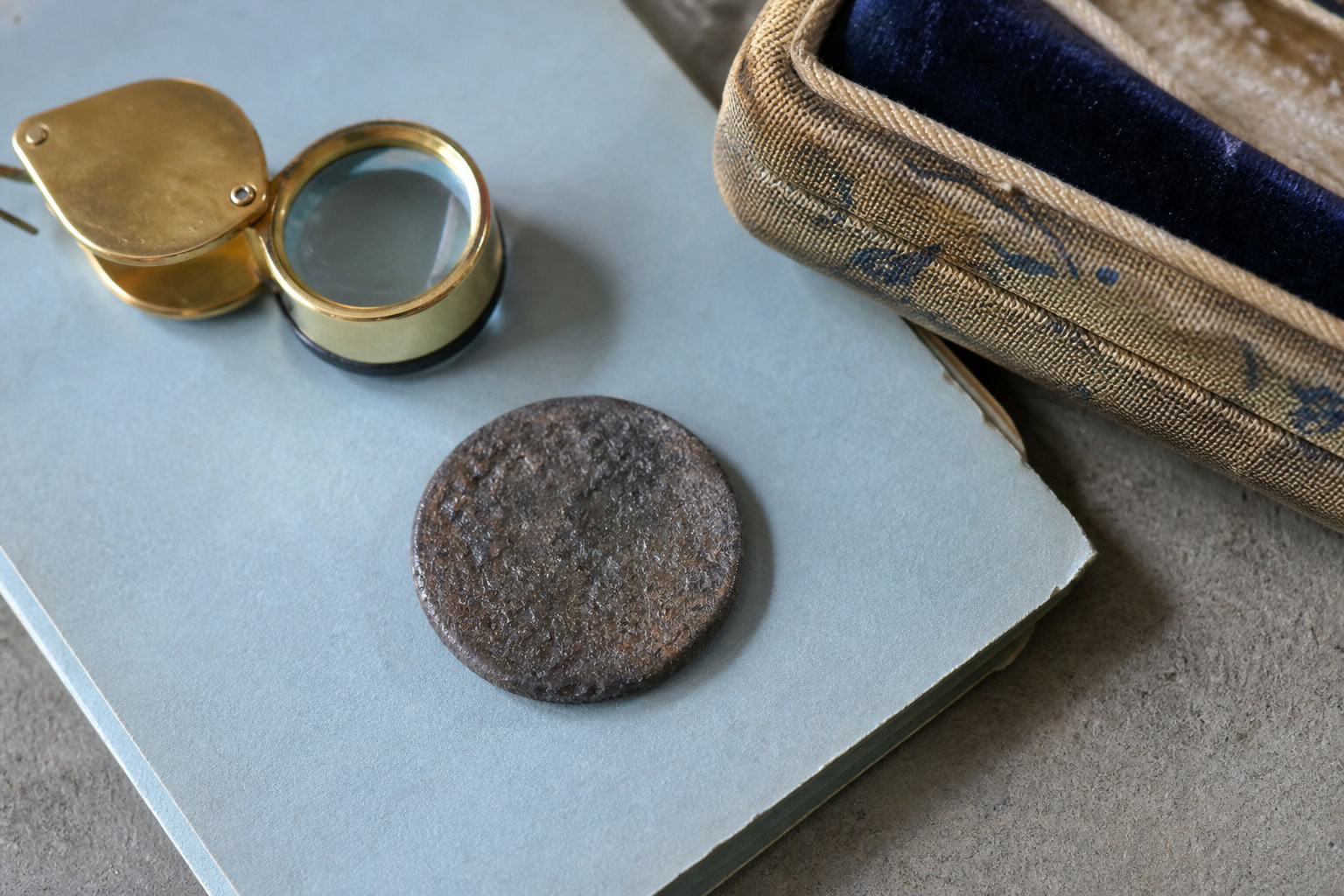
Finding a penny or a dime is read in popular belief as a small greeting from someone who has died, or, in some angel books, as a sign from a guardian angel.
The name people use for it, pennies from heaven, began as the title of a 1936 song about luck in hard times.
The grief meaning came later, and nobody has traced it to a founding text.
The ordinary side is well recorded. In 2020 the Federal Reserve and the US Mint estimated that about $48 billion in coins was sitting mostly idle in American homes, and air travelers left $939,814 at airport checkpoints in 2024, most of it in coins.
A coin found on a hard day can still bring a person to mind. That experience is real, and it does not need to prove who dropped the coin.
Quick Facts
- Popular meaning
- A greeting from someone who has died, or in angel books a sign from a guardian angel
- Where the phrase began
- "Pennies from Heaven," a 1936 song by Arthur Johnston and Johnny Burke, sung by Bing Crosby
- Angel reading
- Chapter 4, "Pennies from Heaven," in Doreen and Charles Virtue's Signs from Above (2009)
- Idle change
- About $48 billion in US coins, most of it dormant in homes (US Coin Task Force, 2020)
- The coin's year
- A US coin typically stays in use about 30 years, so family years turn up by chance
- Pennies now
- The last circulating penny was struck November 12, 2025; pennies remain legal tender
What does finding a penny or dime mean: luck, a hello, or an angel?
In current popular belief, a found penny or dime is a small hello from someone who has died, a sign that they are still close.
Some angel writers extend the same reading to guardian angels.
Three separate ideas travel under that belief, and each one has a different owner and makes a different claim.
| Reading | Who says so | What it claims |
|---|---|---|
| Lucky penny | An English folk rhyme, first told about a pin and later about a penny | Picking the coin up brings good luck for the day |
| Pennies from heaven | Grief groups, sympathy cards, and memorial poems | Someone who has died left the coin as a greeting |
| Angel sign | New Age angel books, such as Doreen and Charles Virtue's Signs from Above (2009) | A guardian angel placed the coin to reassure or answer a request |
None of the three comes from the Bible or from church teaching on angels.
The lucky-penny rhyme is about luck, not the dead, which is why a penny on a sidewalk and a dime on a grave can feel so different to the person who picks them up.
Coins sit on a longer list of guardian angel signs alongside feathers and repeating numbers. That list grew out of popular angel books from the 1990s onward, and each item on it has its own history.
Who wrote Pennies from Heaven, and how did it become a grief saying?
The phrase comes from "Pennies from Heaven," a 1936 song with music by Arthur Johnston and words by Johnny Burke. Bing Crosby introduced it in the film of the same name.
The song was nominated for best original song at the Academy Awards on March 4, 1937, and lost to "The Way You Look Tonight."
It is a Depression-era cheer-up number in which rain brings coins down, so hard times carry some luck inside them.
Nothing in the song concerns the dead.
The move from windfall to greeting happened later and informally, and no book, sermon, or author has been traced as its starting point.
How a found coin picked up its meanings
From an old proverb about small finds to a grief custom and an angel-book chapter.
- 1667Samuel Pepys records the proverb "He that will not stoop for a pin, will never be worth a pound"
Picking up a small found object is already an old piece of folk wisdom, later kept in the nursery rhyme "See a pin and pick it up".
- 1936Bing Crosby sings "Pennies from Heaven" in the film of that name
The phrase enters everyday speech as a word for an unexpected windfall.
- 1937The song is nominated at the 9th Academy Awards
Its popularity keeps the phrase in use for decades of cover recordings.
- Later decadesSympathy cards, memorial poems, and grief groups tell of coins found after a death
The phrase shifts from luck to a greeting from someone who has died.
- 2009Doreen and Charles Virtue title chapter 4 of Signs from Above "Pennies from Heaven"
Found coins join feathers and numbers as signs from angels in New Age writing.
The grief custom spread through word of mouth, and its stories tend to follow one pattern: a penny by the car door on a hard morning, or a dime in a coat pocket after the funeral. It is usually about a parent, a spouse, or a child rather than an angel.
Angel writers adopted the phrase next. The Virtues' book presents found coins as one way angels answer a person who has asked for a sign.
What is the dimes from heaven belief in grief groups?
In grief groups the dime has become the coin most often read as a hello.
The reason people give is that a dime is small, silver-colored, and worth more than a penny, so finding one feels chosen rather than dropped.
That reasoning belongs to the people who hold the belief. No religious tradition assigns the dime a meaning of its own.
Some add a numerology layer and read the dime's value as the number 10, which modern numerology treats as a completed cycle of 1 through 9 returning to 1. That layer is recent and separate from the grief custom.
That history ties the dime to a nation mourning one president. It says nothing about who left a particular dime on a particular step.
Have coins always been linked with the dead?
Coins and death met long before the 1936 song. In Greek myth Charon ferried the souls of the properly buried across the Styx and Acheron, and, as Encyclopaedia Britannica puts it, he received as payment the coin placed in the mouth of the corpse.
Greek and Latin writers named that coin an obol, one of the small change coins of the Greek world.
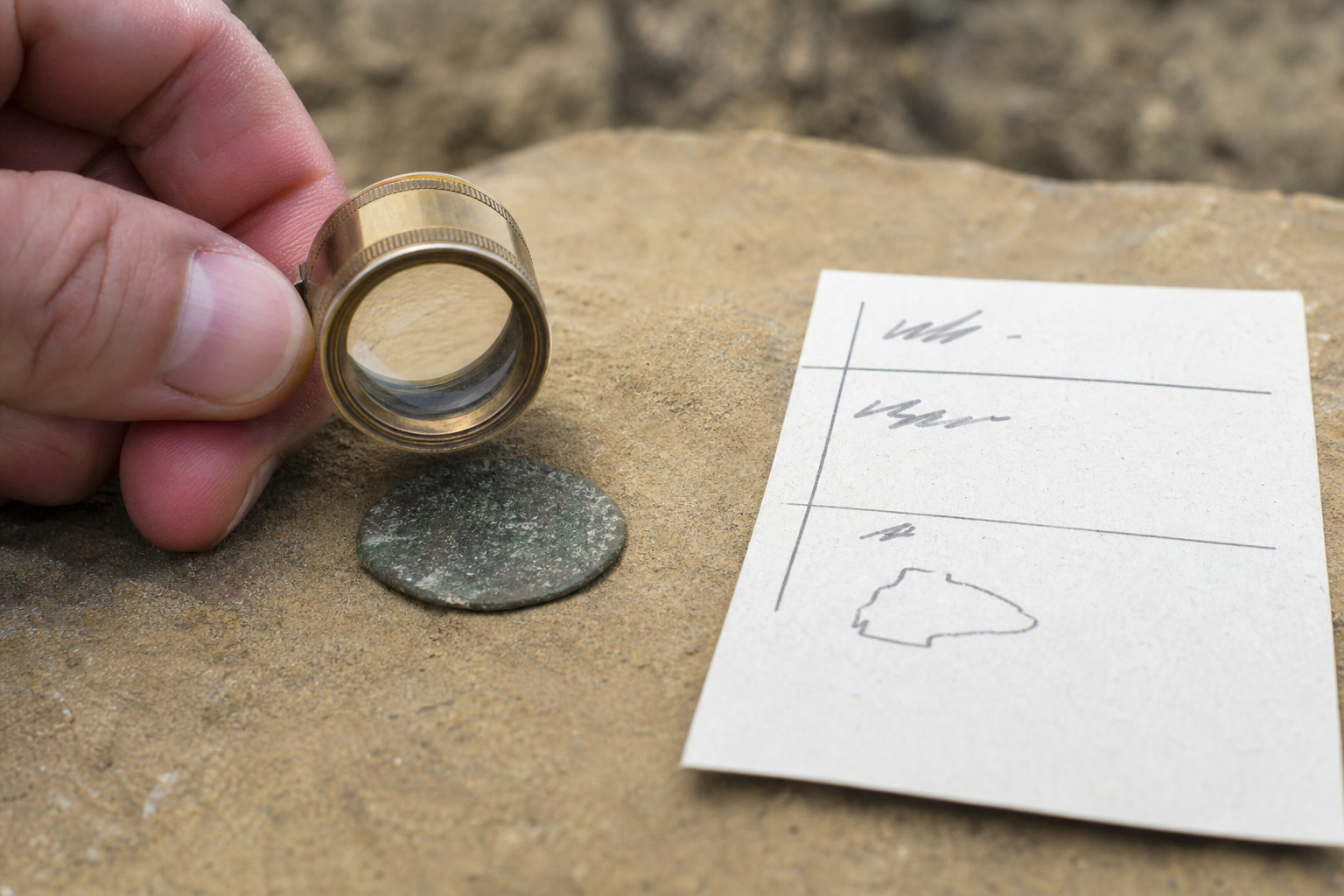
Excavation shows a looser custom than the myth. Susan Stevens's survey of coins in ancient burials found them in some graves and not others, and placed in the mouth, in the hand, or elsewhere, so no single rule held across the Greek and Roman world.
The ancient custom also ran the opposite way from pennies from heaven. The living gave a coin to the dead for the crossing, while the modern belief pictures the dead handing a coin back to the living.
Why do people find so many coins?
People find coins often because a vast amount of change is loose at any moment. When coins stopped moving during the 2020 pandemic, the US Coin Task Force, formed by the Federal Reserve and the US Mint, said about $48 billion in coin was already in circulation.
Most of it, the Task Force said, was "sitting dormant" inside America's 128 million households, pooling in change jars, car cup holders, and closed shops. Those are the same places people later describe finding a sign.
Coins also leave pockets every day.
In fiscal year 2024 the Transportation Security Administration collected $939,814.20 left behind at airport checkpoints, and its report to Congress says that in most cases the money is coins passengers took from their pockets during screening.
The penny adds its own volume.
The Treasury estimates that roughly 114 billion pennies still exist, and by 2024 each new one cost 3.69 cents to make, which is why the Mint struck its last circulating penny on November 12, 2025.
A coin worth so little is the one people are least likely to stoop for, so pennies tend to stay where they fall.
Someone who has just heard that coins are signs will then notice every one, while the many days with no coin are never counted.
Does the year on the coin mean anything?
Reading the date is part of the custom. Many people who keep found coins look for a year that matches a birth, a death, a wedding, or a year they spent with the person they miss.
No tradition gives the year a fixed meaning, and matches are more common than they feel.
The US Mint puts a coin's typical life at about 30 years, and older coins keep turning up, so the change in one jar can span four or five decades.
Take someone with ten meaningful family years between 1975 and 2020. If the pennies in use are spread across about fifty years, each one has roughly a one-in-five chance of showing one of those ten years, so a handful of twenty will usually hold several.
- The date tells you the year the coin was struck, which may be decades before it reached you.
- The mint mark, a small letter near the date, tells you where it was struck: P for Philadelphia, D for Denver, S for San Francisco.
- The wear shows roughly how long it has been handled, since a coin fresh from the bank keeps its sharp edges.
A match can still be worth noticing. It tells you the coin was made in a year that matters to you, and it cannot tell you who dropped the coin or why.
From 2026 on, change will carry no new pennies. Apart from collector issues, every penny you find will be dated 2025 or earlier.
Is a found coin a message from a loved one or an angel?
Nothing about a found coin can show that someone who died, or an angel, placed it there. Neither the angel stories of the Bible nor church teaching on angels describes an angel leaving money, so the angel reading rests on modern books alone.
What the coin can do is bring a person back to mind.
Grief researchers call an ongoing inner relationship with someone who has died a continuing bond, and treat it as an ordinary part of mourning rather than a problem to fix.
Nigel Field and colleagues, writing in Death Studies in 2005, argue that such bonds can help or hurt depending on how they are used. A reminder that sits alongside accepting the death tends to help, while one that stands in for accepting it can keep grief stuck.
In practice, a coin that makes you smile and then lets you carry on with the day is doing the first kind of work.
If you find yourself searching the ground for the next coin, or needing one before you can believe the person is at peace, talk it over with someone you trust.
The NHS advises that grief usually eases slowly with time. If you feel increasingly low or anxious, or the loss still weighs on your mood many months later, it suggests speaking to a GP or a talking therapies service.
What should you do with coins you find?
Keep it light: return anything that plainly belongs to someone, keep one coin if it means something to you, and let the rest go back into use.
- Return what is clearly owned. A coin purse, a dropped wallet, or a stack of change on a café table belongs to someone nearby.
- Keep one coin with a note. Write the date, the place, and who came to mind, and keep both in a small jar or envelope.
- Donate the rest. A jar of found change emptied once a year into a charity the person cared about turns small finds into a gift in their name.
- Spend it if you prefer. The Treasury confirms that pennies remain legal tender even though no new ones are made for circulation.
The note matters more than the coin. A year later it tells you where the coin turned up and what the day was like, details that memory tends to smooth over.
Even the coins travelers abandon go back into use: by law, the change the TSA collects at checkpoints is kept and spent on civil aviation security.
Frequently Asked Questions
Is finding a penny good luck?
In folk belief, yes. The rhyme "Find a penny, pick it up, all day long you'll have good luck" grew from an older rhyme about a pin, and it is a luck superstition that makes no claim about the dead or angels.
What does it mean to find a dime after someone dies?
In grief groups a dime is read as a hello from the person who died. The belief has no founding text and the coin cannot show who left it, but many people keep it as a reminder.
Does a heads-up penny mean something different?
American folk custom says a heads-up penny is lucky and a tails-up one should be turned over and left for the next person. It is a luck superstition with no link to angel belief.
Are pennies still being made?
Not for everyday change. The US Mint struck its last circulating penny on November 12, 2025, and the Treasury says existing pennies remain legal tender.
Is it wrong to spend a coin that felt like a sign?
No. Many people keep one coin with a note of the date and place and spend or donate the rest, and no tradition asks you to hoard found money.
Sources
- (1937). The 9th Academy Awards: Music (Song) nominees, "Pennies From Heaven," music by Arthur Johnston, lyrics by Johnny Burke. Oscars.org. Link
- . See a pin and pick it up, all the day you'll have good luck. The Phrase Finder. Link
- (2009). Signs from Above: Your Angels' Messages about Your Life Purpose, Relationships, Health, and More (chapter 4, "Pennies from Heaven"). Hay House. Link
- . Dime: Roosevelt design, released January 30, 1946. US Mint. Link
- . Charon. Britannica. Link
- (1991). Charon's Obol and Other Coins in Ancient Funerary Practice. Phoenix 45(3): 215-229. Link
- (2020). Statement from the U.S. Coin Task Force on the Coin Circulation Issue (July 27, 2020). FMI, The Food Industry Association. Link
- (2025). Unclaimed Money at Airports in Fiscal Year 2024, report to Congress (June 9, 2025). US Department of Homeland Security. Link
- (2025). Penny Production Cessation FAQs. Treasury.gov. Link
- (2025). United States Mint Hosts Historic Ceremonial Strike for Final Production of the Circulating One-Cent Coin. US Mint press release. Link
- . Penny FAQs (typical coin lifespan of 30 years). US Mint. Link
- (2005). Continuing Bonds in Bereavement: An Attachment Theory Based Perspective. Death Studies 29(4): 277-299. Link
- . Get help with grief after bereavement or loss. NHS. Link
About Our Editorial Process
Every KnowTheAngels guide separates calculation method, tradition context, and personal reflection. We cite where interpretations come from, present more than one view, and never present symbolic reading as prediction.
Read our editorial policy