Which Archangel Is Most Closely Associated With Healing?
Raphael in Tobit, 1 Enoch and the Talmud, Michael's healing springs in the early Christian East, and how prayer sits beside medical care

Raphael is the archangel most closely associated with healing, and the association rests on a story. In the Book of Tobit, God sends him to cure a blind man and to free a young woman from a demon, and the cure comes through a remedy he teaches and a human hand applies. His name is usually translated "God heals."
Whether a reader meets Raphael at all depends on their Bible: Tobit is Scripture for Catholic and Orthodox Christians and sits among the Apocrypha for most Protestants. Other traditions answer the healing question differently. Early Christians in the Greek East brought their sick to Michael, Islam attributes healing to God without naming an angel, and the green light linked to Raphael comes from modern angel books.
Quick Facts
- Direct answer
- Raphael is the archangel most strongly associated with healing
- Main sources
- Tobit 3:17; 1 Enoch 40:9; Bava Metzia 86b
- Tradition difference
- Catholic and Orthodox traditions receive Tobit differently from many Protestant traditions
- Second healing figure
- Michael, in early Christian Phrygia and the Orthodox feast of September 6
- Islam
- No angel of healing is named; Qur'an 26:80 credits healing to God
- Health boundary
- Prayer may accompany treatment but must not replace diagnosis, medicine, or emergency help
Which sources give Raphael his healing role?
Healing is the reason Raphael enters the story at all. In the Book of Tobit, Tobit and Sarah pray on the same day, and "Raphael was sent to heal both of them" (3:17): Tobit by removing the white films from his eyes, Sarah by setting her free from the demon Asmodeus. He works through a remedy, telling Tobias to keep a fish's gall, heart and liver, and the gall that Tobias applies restores his father's sight (Tobit 6; 11).
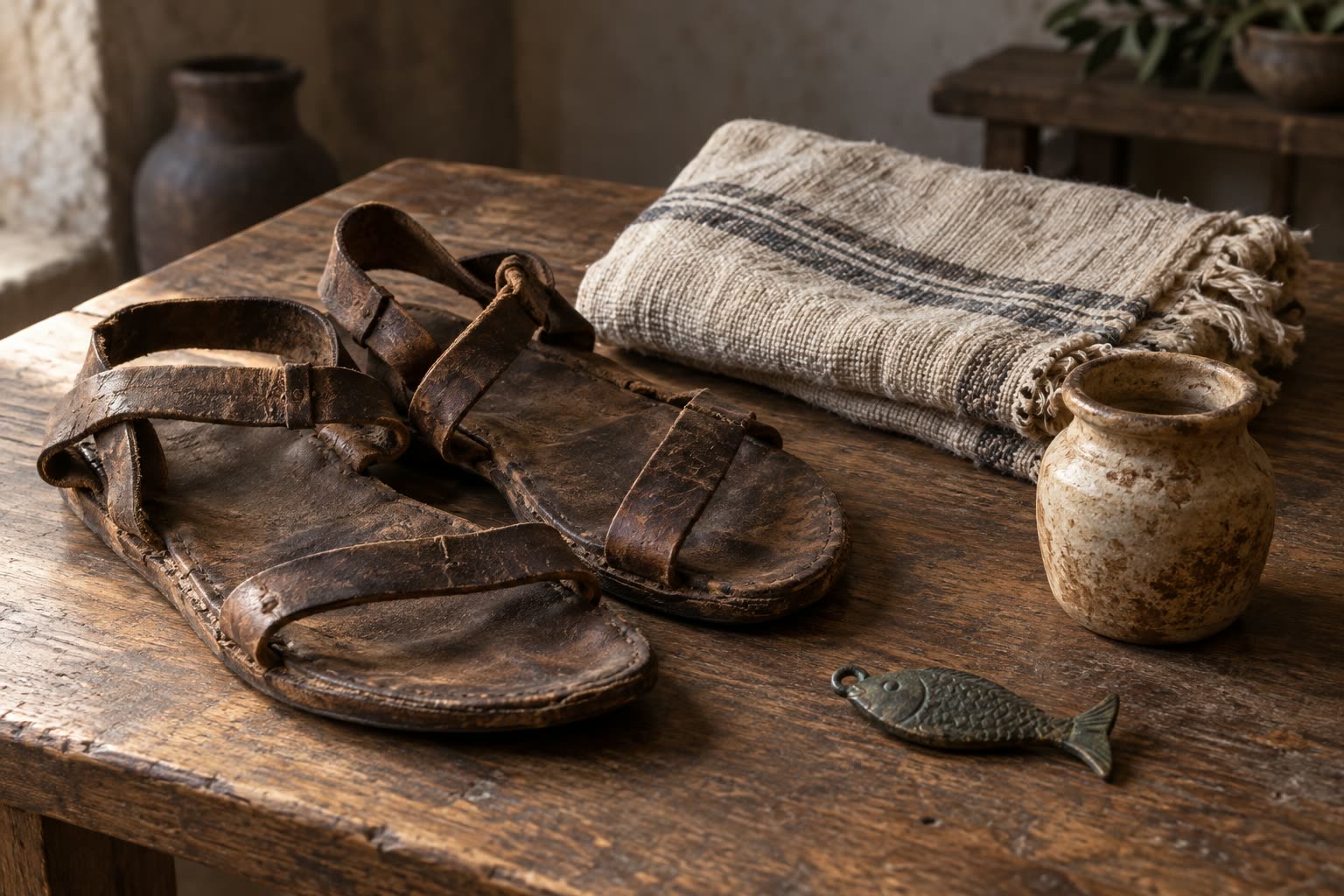
Tobit also sets the terms later devotion kept. At the end Raphael says, "I was not acting on my own will but by the will of God" (12:18), so the book credits the cure to God, and the angel's name makes the same division. Later sources outside the Bible repeat the healing role, each in its own tradition.
| Source | Tradition | What it says about healing |
|---|---|---|
| Tobit 3:17; 12:15 | Scripture for Catholic and Orthodox Christians | God sends Raphael "to heal both of them"; he names himself one of seven angels before the Lord |
| 1 Enoch 40:9 | Jewish apocalyptic writing | Raphael is set "over all the diseases and all the wounds of the children of men" |
| Bava Metzia 86b | Babylonian Talmud | Raphael is the visitor who comes "to heal Abraham" after his circumcision |
| Synaxis of the Bodiless Powers, November 8 | Orthodox calendar | "The healing of God, the curer of human infirmities" |
| Homily of 29 September 2007 | Catholic, Benedict XVI | Tobit presents him as "the Angel to whom is entrusted the task of healing" |
The sources differ in date and authority, and they agree on the role. What they add stays close to Tobit: Catholic devotion made Raphael patron of the blind, the sick, physicians and nurses, and each patronage goes back to a scene in the book.
Why isn't Raphael named in every Christian Bible?
Raphael is missing from many familiar Bibles because Tobit is the only biblical book that names him, and Christian traditions classify Tobit differently. The New Testament names Gabriel and Michael but never Raphael.
Catholic Bibles include Tobit among the deuterocanonical books of the Old Testament. Orthodox churches also receive Tobit, although their wider Old Testament collections and terminology are not identical in every jurisdiction.
Many Protestant traditions place Tobit in the Apocrypha or exclude it from the canon. Article VI of the Church of England's Thirty-nine Articles, for example, lists Tobias among books read for instruction but not used to establish doctrine.
| Tradition context | How Tobit is commonly received | What that means for Raphael |
|---|---|---|
| Catholic | Deuterocanonical scripture | Raphael's healing mission has a canonical textual basis |
| Eastern Orthodox | Received within the Old Testament tradition | Raphael is honored liturgically and associated with healing |
| Many Protestant traditions | Apocrypha or non-canonical literature | Raphael may be known historically without being used to establish doctrine |
Catholic and Orthodox devotion may include asking Saint Raphael's intercession, while Christians who do not treat Tobit as canonical do not derive that practice from the book.
Are Michael, Uriel, or other archangels also linked to healing?
Michael is, and his healing role comes from early Christian shrines; the biblical scenes that name him, in Daniel, Jude and Revelation, show a protector and a warrior. The Catholic Encyclopedia's 1911 entry on Michael records that early Christians took martyrs such as George and Theodore as military patrons, "but to St. Michael they gave the care of their sick." In Phrygia, where his cult began, "his prestige as angelic healer obscured his interposition in military affairs."
The same entry describes a medicinal spring at Chairotopa near Colossae, where the sick bathed while invoking the Trinity and Michael, and a church at Sosthenion near Constantinople, where "the sick slept in this church at night to wait for a manifestation of St. Michael." The Orthodox Church keeps that memory on September 6, the Commemoration of the Miracle at Colossae; its account tells of a man from Laodicea whose mute daughter received "the gift of speech after drinking from the water" and who built a church over the spring in gratitude.
No comparable healing tradition belongs to Uriel. The Orthodox account of the November 8 feast glosses his name as "the fire or light of God, enlightener" and asks him to "enlighten those with darkened minds," and his older sources, 1 Enoch and 2 Esdras, make him a guide who answers questions. Gabriel's work in every tradition is announcing and explaining.
| Name | Healing role | Where it comes from |
|---|---|---|
| Raphael | Sent to heal Tobit and Sarah; set over diseases and wounds | Tobit, 1 Enoch, the Talmud, Catholic and Orthodox devotion |
| Michael | Healer of the sick at springs and shrines | Early Christian Phrygia and Constantinople; Orthodox feast of September 6 |
| Uriel | None in these sources; called an enlightener | Orthodox November 8 account; 1 Enoch; 2 Esdras |
| Gabriel | None; a messenger | Daniel, Luke, the Qur'an |
Islam names no angel of healing. The Qur'an names Jibril and Mikail but no Raphael (2:98), and it puts healing in God's hands directly: Abraham says of God, "And He alone heals me when I am sick" (26:80).
Is green light a biblical sign of Raphael?
No. Tobit gives Raphael no color, and neither do 1 Enoch nor the Talmud. Emerald green comes from modern angel books: Doreen Virtue's Archangels & Ascended Masters (2003) gives each archangel a color of light, and Raphael's is green.
The older attributes come from the story itself. The Orthodox account describes Raphael holding "a vessel with healing medications" and leading Tobias, "carrying a fish for healing." In modern green symbolism the color stands for growth and renewal, an association drawn from living plants.
Symbol, tradition, and proof are different claims
A symbol may support reflection without functioning as evidence of a supernatural event.
What the evidence supports
- Growth symbolism
Green can suggest growth or renewal because it is the color of living plants.
- Tobit-linked attributes
Fish, medicine, and Tobias are Raphael motifs tied to Tobit in the Orthodox account of the November 8 feast.
- Private reflection
A person may choose a color as a private reflection aid without calling it a sign.
What remains limited
- No biblical color code
Scripture does not identify green light as Raphael's signature.
- No presence test
An emerald flash cannot confirm an angelic visit.
- No verdict from absence
Not seeing a color does not mean a prayer was ignored.
Can Tobit's fish remedy be used as medical advice?
No. Tobit's fish remedy belongs to an ancient religious narrative and should not be turned into a modern prescription.

The National Center for Complementary and Integrative Health advises against using an unproven practice instead of conventional treatment or as a reason to postpone seeing a health care provider. A devotional reading cannot diagnose a condition or decide whether treatment should change.
The same limit applies to colors, bodily sensations, dreams, visualization, and symbolic objects. None can confirm Raphael's presence or reveal the medical cause of a symptom.
New, severe, or worsening symptoms belong with a qualified clinician or local emergency service. Prayer may remain present, but it does not take over the work of diagnosis and treatment.
How can healing prayer support someone without replacing treatment?
Healing prayer can give words to fear, hope, grief, gratitude, and the need for help. The National Cancer Institute describes spirituality as one resource some people use while coping with serious illness, while also recognizing anger, abandonment, and spiritual distress.
Offer prayer rather than imposing it, especially when the person who is ill holds different beliefs. Consent matters in spiritual care just as it does in other forms of personal support.

A responsible prayer may ask for mercy, wise clinicians, strength, patience, and peace without claiming private knowledge of the outcome. Practical support can include transport, meals, rest, company at an appointment, or help following a clinician's plan.
If recovery does not occur, the conclusion is never that the person lacked faith or used the wrong words. Tobit itself makes no such link: Tobit loses his sight after a night spent burying a dead man (2:9-10), one of the acts Raphael later praises (12:12-13). Grief, uncertainty, and continued care do not need to be forced into a success story.
Frequently Asked Questions
Who is the archangel of healing?
Raphael is the archangel most clearly associated with healing because the Book of Tobit says that God sent him to heal Tobit and Sarah. Later Jewish and Christian traditions preserve that role, although traditions differ over the status of Tobit.
Are there several archangels of healing?
Raphael is the only archangel given a healing mission in scripture, in the Book of Tobit. Michael has a separate healing tradition from early Christian shrines in Phrygia and near Constantinople, while Uriel and Gabriel have other roles.
Why is Raphael not in every Bible?
Raphael is named in Tobit. Catholic and Orthodox traditions receive the book as part of their Old Testament tradition, while many Protestant traditions classify it as Apocrypha or do not treat it as canonical scripture.
Is there an angel of healing in Islam?
The Qur'an names no angel of healing. It names Jibril and Mikail but not Raphael, and it credits healing to God: "And He alone heals me when I am sick" (26:80).
Is green light a sign of Archangel Raphael?
Tobit does not identify green light as Raphael's sign; the color comes from modern angel books. A person may choose green as a private symbol of healing or renewal, but seeing the color cannot confirm an angelic presence, message, or promised recovery.
Can I pray to Raphael for medical healing?
Catholic and Orthodox devotion may ask for Raphael's intercession, while many Protestant Christians direct healing prayer to God. Neither approach makes prayer a replacement for diagnosis, prescribed treatment, or emergency help.
What can I say in a healing prayer?
Ask for mercy, wise clinicians, strength for the person who is ill, patience for caregivers, and help accepting what cannot yet be known. Avoid promising a cure or blaming the person if recovery does not occur.
Sources
- (n.d.). Tobit 2:9-10, 3:17 and 12:12-18. NRSVUE via BibleGateway. Link
- (n.d.). Tobit, chapter 3. USCCB Bible. Link
- (n.d.). Tobit, chapter 6. USCCB Bible. Link
- (n.d.). Tobit, chapter 11. USCCB Bible. Link
- (n.d.). Tobit, chapter 12. USCCB Bible. Link
- (n.d.). Bava Metzia 86b. Sefaria. Link
- (1917). The Book of Enoch, chapter 40. Wikisource. Link
- (2007). Holy Mass with Episcopal Ordinations. The Holy See. Link
- (n.d.). Synaxis of the Archangel Michael and the Other Bodiless Powers. OCA. Link
- (n.d.). Articles of Religion. The Church of England. Link
- . St. Raphael, Saints and Angels. Catholic Online. Link
- (1911). St. Michael the Archangel. Catholic Encyclopedia, vol. 10, New Advent. Link
- (n.d.). Commemoration of the Miracle of the Archangel Michael at Colossae (September 6). OCA Lives of the Saints. Link
- (n.d.). Al-Baqarah 2:98 and ash-Shu'ara 26:80. The Clear Quran translation via Quran.com. Link
- (2003). Archangels & Ascended Masters, entry on Archangel Raphael. Hay House, Carlsbad, California
- (2025). Spirituality in Cancer Care. National Cancer Institute. Link
- (2016). Are You Considering a Complementary Health Approach?. NCCIH. Link
About Our Editorial Process
Every KnowTheAngels guide separates calculation method, tradition context, and personal reflection. We cite where interpretations come from, present more than one view, and never present symbolic reading as prediction.
Read our editorial policy