Who Is Archangel Raphael in Healing and Travel Tradition?
Raphael's mission in Tobit, his tasks in 1 Enoch and the Talmud, his feast days and patronages, the fish and staff of his paintings, and how people pray to him
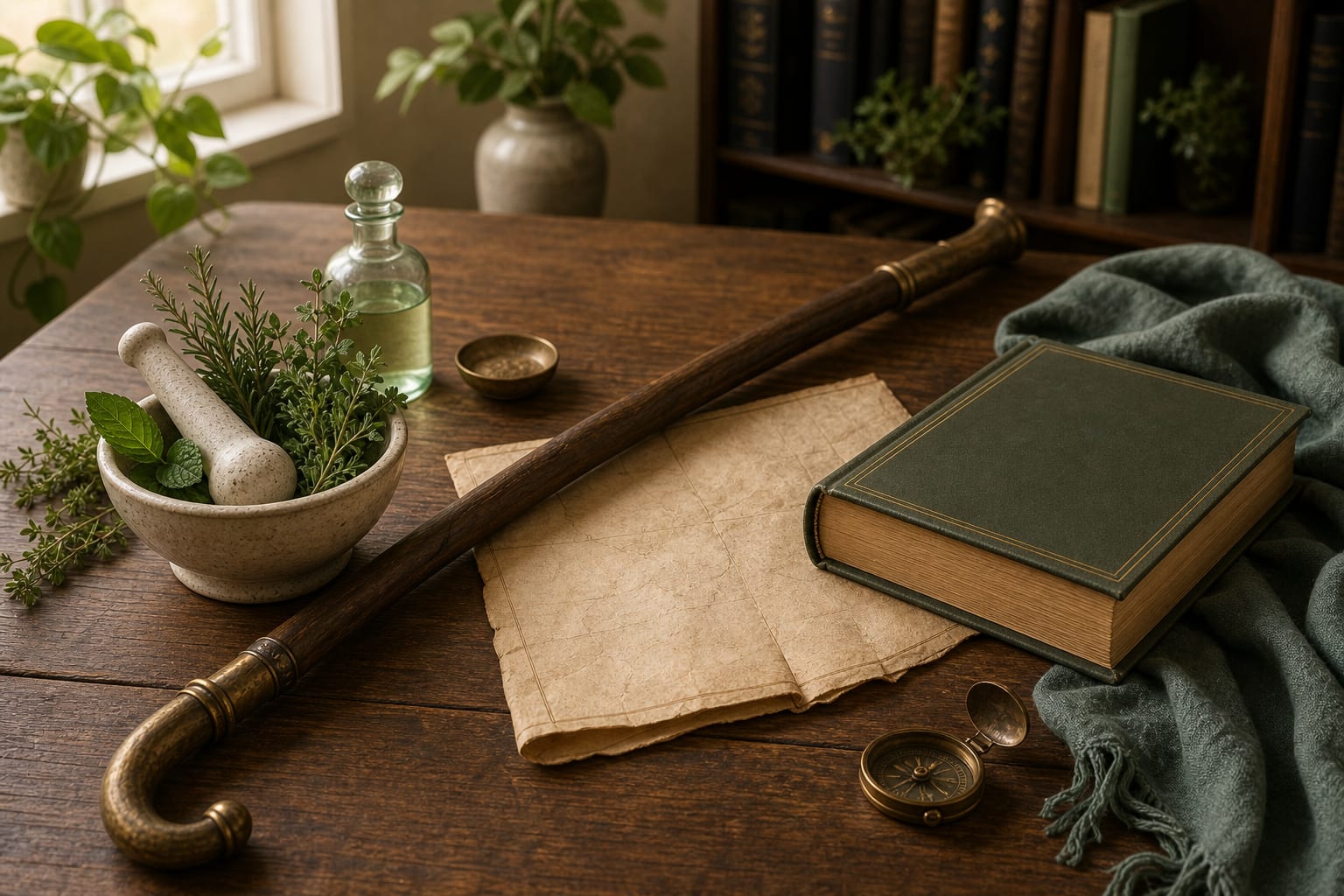
Archangel Raphael is the angel who, in the Book of Tobit, is sent to heal two people at once: Tobit, a blind exile in Nineveh, and Sarah, a young woman in Ecbatana whose seven husbands have each died on the wedding night. He travels with Tobit's son Tobias disguised as a relative named Azariah, shows him how to use a fish as medicine, and gives his real name only when the work is done.
His name is usually translated "God heals," and healing is the task later sources most often give him. Jewish writings outside the Bible add new tasks, Catholic and Orthodox churches give him feast days and patronages, and painters give him a fish and a walking staff. The green light that modern angel books assign him is far younger than any of these.
Quick Facts
- Name meaning
- "God heals" or "God has healed"
- Named in
- Tobit 3:17 and chapters 5-12; 1 Enoch 10:4, 20:3 and 40:9
- Alias in Tobit
- Azariah, son of the elder Hananiah (Tobit 5:13)
- Feast days
- September 29 (Catholic, with Michael and Gabriel); November 8 (Orthodox Synaxis of the archangels)
- Patron of
- Travelers, the blind, the sick, physicians, nurses and medical workers
- Symbols in art
- A fish, a walking staff, a small box of medicine, and the boy Tobias with his dog
Why is Raphael the archangel of healing and travel?
The Book of Tobit gives Raphael both roles in a single mission. On the same day, two people ask God to let them die: Tobit, blind and insulted in exile at Nineveh, and Sarah in Ecbatana, whose seven husbands have died in the bridal chamber. "So Raphael was sent to heal both of them" (Tobit 3:17): Tobit by removing the white films from his eyes, and Sarah by giving her in marriage to Tobit's son Tobias and setting her free from the demon Asmodeus.
The healing depends on a long walk. Tobias needs a guide to Media, where his father left money with a kinsman, and the man he hires calls himself "Azariah, the son of the elder Hananiah" (5:13) and says he knows all the roads. By the Tigris a large fish leaps from the water at Tobias, and his guide tells him to keep its gall, heart and liver because they "are useful as medicine" (6:5). The heart and liver, burned on the incense embers, drive Asmodeus from Sarah's bridal chamber, and Raphael pursues the demon to Egypt and binds him hand and foot (8:2-3). Back in Nineveh, the gall applied to Tobit's eyes peels away the white films (11:7-13).
Only then does the guide say who he is: "I am Raphael, one of the seven angels who stand ready and enter before the glory of the Lord" (12:15). Two other lines in the same speech shaped later devotion. He says he brought the record of Tobit's and Sarah's prayers before God (12:12), the verse behind later requests that he carry prayers. He also says that while he was with them, "I was not acting on my own will but by the will of God" (12:18), so the story credits the cure to God who sent him.
The name Raphael, usually translated "God heals," makes the same division: the angel carries out a healing that belongs to God.
Is Raphael in the Bible, and which other texts name him?
Tobit is the only book of the Bible that names the angel Raphael, so whether he is "in the Bible" depends on which Bible. Catholic and Orthodox Bibles include Tobit in the Old Testament. Most Protestant Bibles leave it out or print it among the Apocrypha, which the Church of England's Articles of Religion allow to be read "for example of life" but not to establish doctrine, so a standard Protestant Bible never mentions the angel. The New Testament names Gabriel and Michael but never Raphael.
| Source | Passage | What Raphael does there |
|---|---|---|
| Book of Tobit | Tobit 3:17; 5:4 to 12:22 | Sent to heal Tobit and Sarah, guides Tobias as Azariah, and names himself one of seven angels before God (12:15) |
| 1 Enoch, chapters 1-36 | 1 Enoch 10:4 | Ordered to bind Azazel hand and foot and cast him into darkness |
| 1 Enoch, chapters 1-36 | 1 Enoch 20:3 | Listed as "one of the holy angels, who is over the spirits of men" |
| 1 Enoch, chapters 37-71 (the Parables) | 1 Enoch 40:9 | Set "over all the diseases and all the wounds of the children of men" |
| Babylonian Talmud | Bava Metzia 86b | One of the three visitors to Abraham in Genesis 18, who comes "to heal Abraham after his circumcision" |
| Gospel of John, by later Catholic identification | John 5:4, a verse missing from the oldest manuscripts | Not named; Catholic tradition linked him with the angel who stirred the healing pool |
Outside Tobit, Raphael's tasks widen. 1 Enoch gives him a second job beside healing. His order to bind Azazel (10:4) matches his binding of Asmodeus in Tobit 8:3, so in both books the healer is also the angel who ties up a demon. The Talmud's passage divides the work among the three visitors to Abraham: Michael brings Sarah news of a son, Gabriel goes on to overturn Sodom, and Raphael tends Abraham's wound.
The Gospel of John supplies an identification rather than a name. Some manuscripts of John 5 describe an angel who stirred the pool of Bethesda so that the first person into the water was healed. The oldest manuscripts lack that verse, and modern Bibles move it to a footnote, but Catholic commentators identified the unnamed angel with Raphael, and John 5:1-4 was the Gospel reading of his October 24 feast.
The Qur'an does not name Raphael either. It names Gabriel and Michael together (2:98), and a night prayer recorded in Sahih Muslim adds a third name, Israfil, the angel Islamic tradition assigns to blow the trumpet at the end of the world. Some modern writers equate Israfil with Raphael, although the Qur'an names neither.
What is Saint Raphael the patron of, and when is his feast day?
Roman Catholics keep Raphael's feast on September 29, shared with Michael and Gabriel. The shared date comes from the 1969 revision of the General Roman Calendar; before that, Raphael had his own feast on October 24, which entered the universal calendar only in 1921. Eastern Orthodox churches remember him at the Synaxis of the Archangel Michael and the Other Bodiless Powers on November 8. An Orthodox Church in America reflection for that feast names seven archangels, Michael, Gabriel, Raphael, Uriel, Barachiel, Jegudiel and Salathiel, and calls Raphael "a bringer of divine healing."
Catholic saint references list Raphael as patron of travelers, the blind, bodily illness, nurses, physicians and medical workers, and "happy meetings." Each patronage goes back to a scene in Tobit:
- Travelers. He walks with Tobias from Nineveh to Media and back, after promising Tobit that "the way is safe" (5:16).
- The blind. Tobit's blindness ends when the fish gall is applied to his eyes (11:11-13).
- The sick and those who treat them. He heals through a prepared remedy, the fish organs kept "as medicine" (6:5), and he tells Tobias exactly how to apply each one.
- Happy meetings. He brings Tobias to the house of Raguel in Ecbatana, where the young man meets and marries Sarah (Tobit 6-7).
The travel patronage also shaped a medieval custom recorded by Vatican News: young people leaving home for the first time carried a picture of themselves as Tobias, with the archangel beside them.
St Raphael is presented to us, above all in the Book of Tobit, as the Angel to whom is entrusted the task of healing.
Pope Benedict XVIHomily on the feast of the archangels, 29 September 2007
In that homily Benedict drew two healings from Tobit. Raphael heals "the disturbed communion between a man and a woman," as he does for Tobias and Sarah, and he heals sightless eyes, which Benedict extended to people who have become "blind to God." In Catholic preaching, then, Raphael's healing covers marriage and faith as well as the body.
Why is Raphael painted with a fish, a staff, and a young traveler?
European painters usually show Raphael on the road with Tobias, a subject known as Tobias and the Angel. In the version from Andrea del Verrocchio's workshop in the National Gallery, London, painted about 1470-75, a winged Raphael walks beside the boy, who carries the fish, while Raphael holds its organs in a small box and the family dog trots at their feet. The dog comes from the text as well: it leaves home with Tobias (Tobit 6:2) and follows the two of them back to Nineveh (11:4).
- Fish. The source of the remedy that frees Sarah and restores Tobit's sight, and the attribute taken most directly from the story.
- Staff and travel clothes. The guide who tells Tobias he has often traveled to Media and knows all the roads (5:6).
- Box or jar. The gall, heart and liver kept as medicine, shown in the Verrocchio painting as a small box in Raphael's hand.
- The boy Tobias and a dog. The companions from Tobit 6:1-2, who place the picture inside the journey story.
Emerald green, Raphael's color in modern angel books, has a different origin. New Age writers such as Doreen Virtue, in Archangels & Ascended Masters (2003), give each archangel a color of light, and Raphael's is green. Tobit mentions no color, so Raphael's green belongs to modern green symbolism and has no source in Jewish or early Christian texts.
How do people pray to Raphael for healing and safe travel?
Catholic and Orthodox Christians ask Raphael to pray for them and to present their prayers to God, as he says he did for Tobit and Sarah (12:12). The intentions follow his patronages: a safe trip, recovery from illness, skill and steady judgment for doctors and nurses, and sight for someone losing it. Raphael prayers are one strand of Christian healing prayers, which ask for recovery and strength during treatment and are said alongside medical care.
| Situation | What the prayer asks | What the tradition does not support |
|---|---|---|
| Illness or recovery | Courage, good care, and healing according to God's mercy | A promise that a cure will come if the prayer is said correctly |
| Medical decisions | Clear thinking, skilled practitioners, and steady judgment | Using the prayer in place of professional advice |
| Travel | Guidance and protection on the road, as Tobias had | Treating devotion as a reason to ignore normal travel risk |
| Long illness or grief | Company and strength to keep going | Pressure to feel hopeful on command |
The Tobit story itself gives no support to the idea that illness proves weak faith. Tobit loses his sight on the night he buries a dead man, when sparrow droppings fall into his eyes as he sleeps by his courtyard wall (2:9-10), and burying the dead is one of the acts Raphael later praises (12:12-13). He then stays blind for four years. The National Cancer Institute's summary of research on spirituality in cancer care reports that many patients rely on religious practice to cope and that some feel they are being punished by God. Read with Tobit in mind, a Raphael prayer can offer that support without suggesting the illness is a punishment.
How is Raphael different from Michael, Gabriel, and a guardian angel?
Raphael, Michael and Gabriel are the three archangels named in the Catholic Bible, and each is remembered for a different kind of work. Michael fights, as the prince who stands guard over Israel in Daniel 12:1 and leads the war in heaven in Revelation 12:7. Gabriel speaks, explaining visions to Daniel and announcing two births in Luke 1. Raphael travels with a family, prescribes a remedy and carries prayers.
| Archangel | Main passages | Remembered for | Contrast with Raphael |
|---|---|---|---|
| Michael | Daniel 10:13, 12:1; Jude 9; Revelation 12:7-9 | Defending God's people and fighting the dragon | Raphael also binds a demon, but his story ends in a wedding and a cure |
| Gabriel | Daniel 8:16, 9:21; Luke 1:19, 1:26 | Explaining visions and announcing births | Gabriel appears, speaks and leaves; Raphael stays with Tobias for the whole journey |
| Uriel | 1 Enoch 20:2; 2 Esdras 4:1 | Guiding Enoch and answering Ezra's questions | Uriel explains the world; Raphael acts inside one family's crisis |
| Raphael | Tobit 3:17 to 12:22; 1 Enoch 10:4, 40:9 | Healing, guiding travelers, and carrying prayers | Heals by teaching a remedy that a human hand applies |
Tobit also comes up in discussions of guardian angels, because an angel protects Tobias on a dangerous road. The two ideas differ in scope. Raphael is a named archangel sent on one mission, and he ascends to God as soon as it is finished (12:20). The Catechism of the Catholic Church describes the guardian angel as a lifelong companion: "Beside each believer stands an angel as protector and shepherd leading him to life" (336).
Frequently Asked Questions
What does the name Raphael mean?
Raphael is usually translated "God heals" or "God has healed," from the Hebrew verb rapha, "to heal," and El, "God." In the Hebrew Bible the name belongs only to a man, a Levite gatekeeper called Rephael in 1 Chronicles 26:7; the angel carries it in Tobit and 1 Enoch.
Is Raphael one of the seven archangels?
Yes, by his own words in Tobit 12:15, where he calls himself one of the seven angels who stand before the glory of the Lord. The other six names differ by source: 1 Enoch 20 lists Uriel, Raguel, Michael, Saraqael, Gabriel and Remiel, while Orthodox lists give Michael, Gabriel, Uriel, Barachiel, Jegudiel and Salathiel.
Did Raphael heal Tobit himself?
Not with his own hands. Raphael tells Tobias to have the fish gall ready and explains how to use it, and Tobias blows the gall into his father's eyes and applies it until the white films peel away (Tobit 11:4-13).
What is Archangel Raphael known for?
Healing and safe travel. In the Book of Tobit he guides Tobias to Media and back, frees Sarah from the demon Asmodeus and restores Tobit's sight, and 1 Enoch sets him over all diseases and wounds (40:9).
Is Raphael mentioned in the Qur'an?
No. The Qur'an names Gabriel and Michael (2:98) but no angel called Raphael. Some modern writers identify him with Israfil, the angel Islamic tradition assigns to the trumpet at the end of the world, but neither the Qur'an nor the hadith gives Israfil the name Raphael.
What color is Archangel Raphael?
Emerald green, in modern angel books such as Doreen Virtue's Archangels & Ascended Masters (2003). Tobit, 1 Enoch and the Talmud give Raphael no color.
Sources
- (2021). New Revised Standard Version Updated Edition (NRSVUE). Bible Gateway. Link
- (2011). Book of Tobit: Introduction. New American Bible. Link
- (1917). The Book of Enoch, chapters 10, 20 and 40. Wikisource. Link
- . Bava Metzia 86b, William Davidson translation. Sefaria. Link
- (1906). Raphael. JewishEncyclopedia.com. Link
- (2021). New Revised Standard Version Updated Edition (NRSVUE). Bible Gateway. Link
- (1911). St. Raphael. Catholic Encyclopedia, vol. 12. Link
- (1571). Articles of Religion, Article VI. Church Society. Link
- (7th century). Surah al-Baqarah 2:98. Quran.com. Link
- (9th century). Sahih Muslim 770, the night prayer naming Jibril, Mikail and Israfil. Sunnah.com. Link
- (2021). The Feast of the Archangels, Michael, Gabriel and Raphael, Michaelmas for Short. Catholic Culture. Link
- (2025). Reflection on the Synaxis of the Archangel Michael and the Other Bodiless Powers. Orthodox Church in America. Link
- . St. Raphael, Saints and Angels. Catholic Online. Link
- . Saints Michael, Gabriel, and Raphael. Saint of the Day. Link
- . St. Raphael, Archangel. Saint of the Day. Link
- (2007). Holy Mass with Episcopal Ordinations, 29 September 2007. The Holy See. Link
- (about 1470-5). Tobias and the Angel (NG781). National Gallery, London. Link
- (2003). Archangels & Ascended Masters, entry on Archangel Raphael. Hay House, Carlsbad, California
- (2025). Spirituality in Cancer Care (PDQ), Patient Version. National Cancer Institute. Link
- (1997). Paragraph 336. St. Charles Borromeo Catholic Church. Link
About Our Editorial Process
Every KnowTheAngels guide separates calculation method, tradition context, and personal reflection. We cite where interpretations come from, present more than one view, and never present symbolic reading as prediction.
Read our editorial policy