Who Is Archangel Zadkiel, and Why Is He Linked to Mercy and Forgiveness?
Zadkiel's name, his Chesed and Jupiter seat, the Abraham ascription, and the violet-flame devotion, each traced to the source that introduced it

Archangel Zadkiel is the angel of mercy and forgiveness in later angel tradition, though his name, Tzadkiel in Hebrew, means "righteousness of God." He is not named in any book of the Bible. Medieval Jewish sources set him over the planet Jupiter, whose Hebrew name, Tzedek, shares his name's root, and Agrippa's tables of 1533 seat him at Chesed, the sefirah of mercy.
The rest of the modern profile arrived later and from other places. Genesis 22 names no angel at the binding of Isaac, and the claim that Zadkiel stopped Abraham's hand is known from a 1925 art handbook that credits it to unnamed "some writers." The violet flame comes from an American religious movement of the 1930s.
Separating those layers also settles what a prayer for mercy can ask. The Jewish and Christian texts on repentance quoted below put the apology or repayment owed to a wronged person before any release from guilt, and a mercy angel whose name means righteousness fits that order.
Quick Facts
- Name meaning
- "Righteousness of God," from Hebrew tzedek (righteousness) and El (God); also spelled Tzadkiel
- Primary role
- Angel of benevolence, mercy, and memory in rabbinic lore as Davidson summarizes it; angel of forgiveness in modern devotion
- Core source context
- The Zohar and medieval planetary lists name him; Agrippa (1533) and the Golden Dawn give him Chesed; no book of the Bible names him
- Authority caution
- Genesis 22 names no angel at the binding of Isaac; the credit to Zadkiel goes back only to "some writers" reported in 1925
- Common symbols
- Violet flame and amethyst from the Summit Lighthouse; the planet Jupiter from medieval and Renaissance tables
- Devotional use
- Prayers and violet-flame decrees for forgiveness, mercy, and release from resentment
What Is the Abraham Association Behind Zadkiel's Mercy?
The association rests on one scene. In Genesis 22:11-12, as Abraham takes the knife to sacrifice Isaac, "the angel of the LORD" calls to him from heaven and tells him not to lay his hand on the boy. The text gives that angel no name, and later writers filled the gap with different candidates.
Arthur de Bles's 1925 handbook How to Distinguish the Saints in Art lists Zadkiel, "Righteousness of God," among seven archangels and reports that "some writers" ascribe to him "the holding of Abraham's arm"; in the next sentence de Bles adds that the Christian Church gives the credit to St. Michael. He does not name those writers. Gustav Davidson's Dictionary of Angels (1967) cites de Bles for the Zadkiel credit, and its Metatron entry lists Metatron, Michael, and Tadhiel as other angels credited with the same act.
| Figure credited | Where the credit appears | What stands behind it |
|---|---|---|
| The angel of the LORD | Genesis 22:11-12 | The biblical text itself, which gives no personal name |
| Michael | Christian Church tradition, as de Bles reports in 1925 | Set against the Zadkiel credit in the same passage of de Bles |
| Zadkiel | "Some writers," per de Bles (1925, p. 52) | Neither de Bles nor Davidson names those writers or an older text |
| Metatron and Tadhiel | Davidson's Metatron entry (1967) | Listed without a named older source |
A Kabbalistic pairing may explain why Zadkiel was drawn into the scene. Davidson's Tsadkiel entry says that in Kabbalah he is the protecting angel of Abraham, and Kabbalists match Abraham with Chesed, the sefirah of loving-kindness, and Isaac with Geburah, the sefirah of severity. An angel seated at Chesed staying Abraham's hand fits that pairing, but none of the sources above states the connection, so it remains a likely route for the idea rather than its documented origin.
The Abraham story is therefore the thinnest-sourced part of Zadkiel's profile: an unnamed biblical angel, several later names for him, and a 1925 report that cannot be traced further back. De Bles also repeats Anna Jameson's finding that only Michael, Gabriel, and Raphael appear in church pictures, so a picture of Zadkiel holding Abraham's knife does not come from the church painting Jameson surveyed.
Why Is an Angel Named for Righteousness Called the Angel of Mercy?
Davidson's Dictionary of Angels opens its Zadkiel entry by calling him, "in rabbinic writings, the angel of benevolence, mercy, memory, and chief of the order of dominations," an order it equates with the Hebrew hashmallim. The entry does not say which rabbinic writings it means, so this part of the mercy role rests on Davidson's reading rather than on a passage a reader can open.
The benevolence office is shared. Davidson records that Hasdiel, whose name is built on hesed, the Hebrew word for kindness, holds it with Zadkiel, citing The Book of the Angel Raziel, and that Hasdiel is named as the angel of benevolence on a German-type mezuzah. In that pairing the kindness sits in Hasdiel's name and the righteousness in Zadkiel's, which suggests the older lore kept the two ideas side by side instead of turning a righteousness angel into a figure of pure mercy.
Is Tzadkiel the same angel as Zadkiel?
Yes. Tzadkiel is the same name spelled closer to its Hebrew, צדקיאל, the form Agrippa printed in 1533. Davidson's Dictionary of Angels treats Tzadkiel, Tsadkiel, and Zedekiel as forms of Zadkiel and explains the name as "righteousness of God": tzedek, righteousness or justice, joined to El, a Hebrew word for God. A source that spells it Tzadkiel is following the Hebrew more closely, not describing a second angel.
Under either spelling the name has a place in Jewish sources. The Zohar names Tzadkiel beside Kedumiel and Malkiel in its list of angels under the Hebrew vowel signs (Vayera 18:275). A list of planetary governors that Davidson credits to Judah al-Barceloni, a Spanish Talmudist of around 1100 who also wrote a commentary on Sefer Yetzirah, sets Zadkiel over Jupiter.
The Jupiter pairing has a plain linguistic basis. Tzedek is also the Hebrew name of the planet, and the Talmud already plays on the word: "One who was born under the influence of Jupiter [tzedek] will be a just person [tzadkan]" (Shabbat 156a). Davidson calls Tsedeck the "root-source" of the angel's name, and Agrippa's 1533 table of seven planetary angels keeps the same pairing.
The Chesed seat comes from the Tree of Life tables. Agrippa's table of ten puts Zadkiel on the row of Hesed, the fourth sefirah, as ruler of the Hasmallim, the choir Pseudo-Dionysius calls Dominations, with the sphere of Jupiter on the same row. The Golden Dawn, whose lectures translate Chesed as Mercy, repeats the row in its paper on the Tree of Life: Chesed's sphere "is called Tzedek or Justice" and rules Jupiter while "bestowing peace and mercy," and its archangel is "Tsadkiel, the prince of Mercy and Beneficence."
The name and the seat therefore say different things: Tzadkiel means righteousness of God, and Chesed adds the mercy that modern devotion puts first. On the Tree of Life, Chesed stands opposite Geburah, the sefirah of severity, which the same tables give to Camael, so charts built on Agrippa and the Golden Dawn present Zadkiel's mercy as one side of a balance with judgment on the other. The seat itself is documented in Agrippa's Christian Kabbalah and in the Golden Dawn; the Jewish sources named above give the angel a name and a planet without placing him on the Tree.
How Do You Pray After Doing Harm When Repair Is Still Owed?
The older texts on repentance send the first step to the person who was harmed, not to an angel. Mishnah Yoma 8:9 teaches that Yom Kippur atones for sins against God, but not for wrongs against another person until the wrongdoer has appeased that person. In Matthew 5:23-24, a worshipper who remembers that his brother has something against him is told to leave his gift at the altar and be reconciled first.
For transgressions between a person and God, Yom Kippur atones; however, for transgressions between a person and another, Yom Kippur does not atone until he appeases the other person.
Mishnah Yoma 8:9William Davidson translation, Sefaria
Whether to address Zadkiel at all depends on the tradition. In the Jerusalem Talmud, Rabbi Judan contrasts God with a human patron: a person in trouble "should cry neither to Michael nor to Gabriel" but to God directly (Berakhot 9:1). The Catholic Church's 2001 Directory on Popular Piety and the Liturgy (paragraph 217) discourages assigning names to angels other than Gabriel, Raphael, and Michael, whose names are in Scripture, so a Catholic prayer to Zadkiel by name runs against that guidance. The Summit Lighthouse, by contrast, names him archangel of its violet ray and teaches violet-flame decrees, prayers spoken aloud and repeated, for forgiveness and the release of karma.
In any of these settings, a prayer that asks Zadkiel for mercy after doing harm keeps the order those texts set. The apology, the returned money, or the changed behavior owed to the other person comes first, and the request for release from guilt goes with it rather than in its place.
Does Zadkiel Promise Instant Absolution?
No. The name joins mercy to righteousness, tzedek, so the tradition that grows from it keeps forgiveness tied to moral order. A promise that wrongdoing is wiped clean at once removes the part the name insists on.
Mercy in this sense also asks nothing of the person who was wronged. The Mishnah puts the work of appeasing on the wrongdoer, so asking Zadkiel for a forgiving heart does not require a wounded person to reconcile with someone who is still a danger to them.

When Did Each Part of Zadkiel's Profile Appear?
Zadkiel has no story of his own in any sacred text. What survives is a name to which Jewish, Christian, and esoteric writers kept assigning new offices, and the order in which they did so separates the old parts of the modern profile from the new ones.
When each part of Zadkiel's profile appears
The earliest dated source for each role, from the Talmud to the Summit Lighthouse.
- Talmud, Shabbat 156aOne born under Tzedek, the planet Jupiter, "will be a just person"
The planet and the word for righteousness already share a name, though no angel is mentioned.
- About 1100A planetary list that Davidson credits to Judah al-Barceloni sets Zadkiel over Jupiter
The earliest dated office for the angel.
- Late 13th centuryThe Zohar names Tzadkiel among the angels of the vowel signs (Vayera 18:275)
The Hebrew form of the name in the central text of Jewish mysticism.
- 1533Agrippa's Three Books of Occult Philosophy seat Zadkiel at Chesed and over Jupiter
The mercy seat enters, through Christian Kabbalah.
- 1678Benjamin Camfield, an English rector, names Zadkiel ruler of Jupiter's sign in A Theological Discourse of Angels
A Protestant clergyman keeps the planetary office.
- 1925Arthur de Bles lists Zadkiel among seven archangels and reports that some writers credit him with stopping Abraham
The earliest checkable witness to the Abraham story.
- Early 1930sGuy and Edna Ballard's I AM Activity teaches decrees to a violet flame, credited to Saint Germain
The practice later tied to Zadkiel begins.
- 1937Israel Regardie publishes the Golden Dawn papers naming Tsadkiel "the prince of Mercy and Beneficence"
The mercy title appears in print in English esoteric teaching.
- After 1958The Summit Lighthouse, founded by Mark Prophet, names Zadkiel and Holy Amethyst archangels of the seventh, violet ray
Zadkiel becomes a violet-flame and forgiveness figure.
The roles modern devotion leans on hardest, forgiveness and the violet flame, have the shortest record, and the planet has the longest. A Zadkiel profile that opens with the violet flame starts from the newest layer.
Which Angels Get Confused with Zadkiel, and Why?
Michael overlaps with Zadkiel at the binding of Isaac. The Christian Church, as de Bles notes, credits Michael with stopping Abraham, so the one biblical scene tied to Zadkiel is claimed for an angel who is named in Daniel 10:13 and 12:1.
The justice vocabulary Zadkiel shares with Raguel comes from a different text. 1 Enoch 20:4 lists him among seven holy angels as the one who "takes vengeance on the world of the luminaries." Raguel's justice in that verse is punishment on a cosmic scale, while Zadkiel's righteousness is the root of a mercy role.
The link between Chamuel and Zadkiel is modern. De Bles's seven archangels of 1925 put Chamuel, Jophiel, Uriel, and Zadkiel beside Michael, Gabriel, and Raphael, and the Summit Lighthouse gives the same seven its seven rays, with Chamuel on the third ray of love and Zadkiel on the seventh, violet ray. The two share these lists, not a scripture.
| Figure | Earliest text naming him | Where he meets Zadkiel |
|---|---|---|
| Michael | Daniel 10:13 and 12:1 | Credited by the Christian Church with stopping Abraham (de Bles, 1925) |
| Raguel | 1 Enoch 20:4 | Justice language, in a list of seven that leaves Zadkiel out |
| Chamuel | No biblical book; later angel lists | Third ray of love in the Summit Lighthouse seven, beside Zadkiel's violet seventh |
| Raphael | Tobit 12:15, "one of the seven holy angels" | Counted among seven archangels too, but named in Tobit, where Zadkiel appears in no biblical book |
When Did the Violet Flame Enter Zadkiel Tradition?
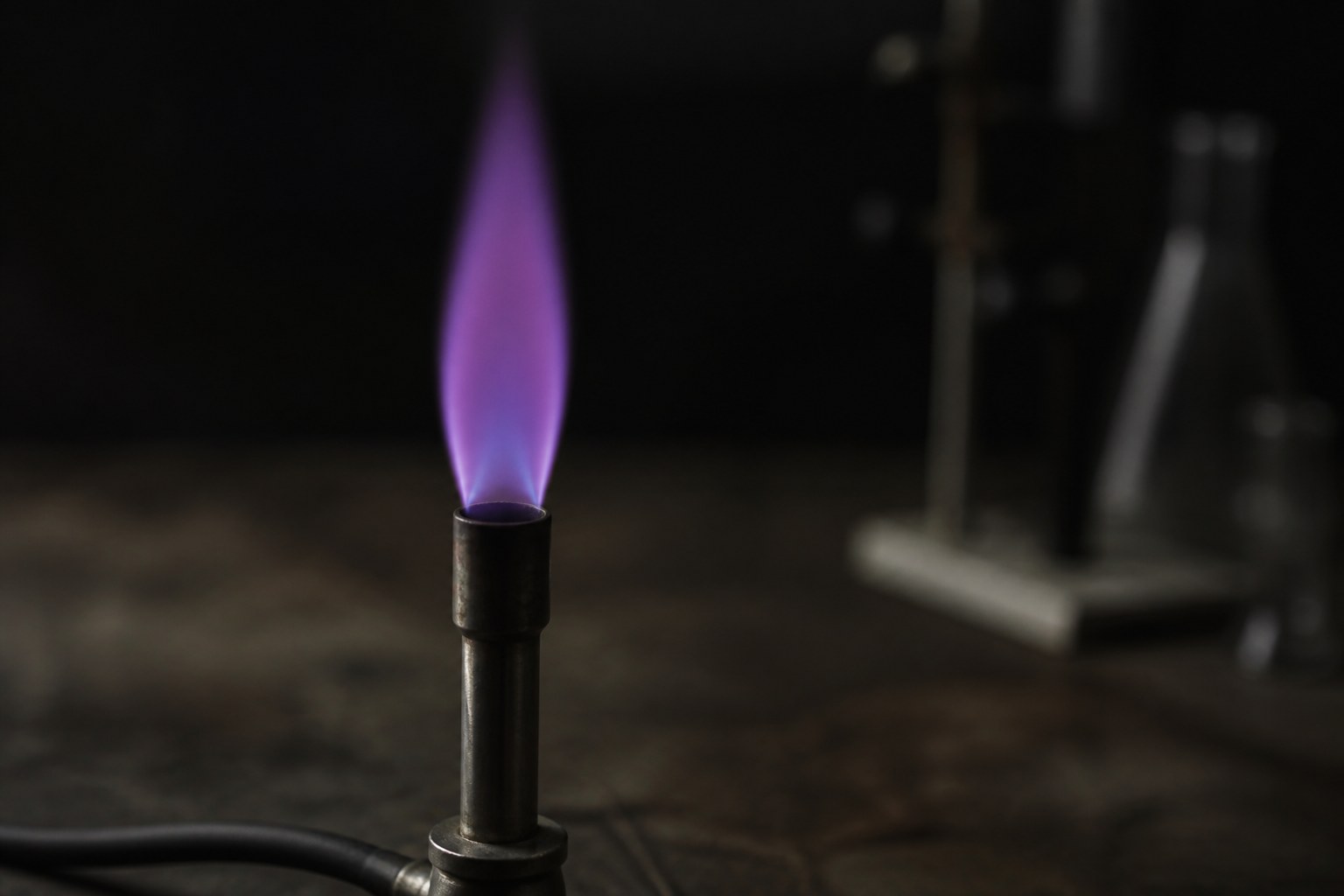
The violet flame came into Zadkiel devotion through American ascended-master teaching in the twentieth century. The Encyclopedia of American Religions traces the practice to the I AM Religious Activity that Guy and Edna Ballard began in the early 1930s, whose prayers call on "the Violet Consuming Flame of Divine Love," a teaching Guy Ballard said he received from Saint Germain.
Zadkiel's place in it comes from the Summit Lighthouse, which Mark Prophet founded in Washington, D.C., in 1958. Its teaching names Zadkiel and Holy Amethyst "archangels of the seventh ray of violet flame transmutation and spiritual alchemy," places their retreat, the Temple of Purification, "over the island of Cuba," and calls the violet flame "a forgiving flame." The modern pairing of Zadkiel, forgiveness, and the color violet starts there.
| Symbol | Earliest source | What it stands for there |
|---|---|---|
| Violet flame | Summit Lighthouse, after 1958, building on the I AM Activity of the 1930s | Transmutation, forgiveness, and the release of karma |
| Amethyst and violet | Summit Lighthouse, which names Holy Amethyst as Zadkiel's partner | The color of the seventh ray |
| Jupiter | Planetary list credited to Judah al-Barceloni (about 1100); Agrippa (1533) | Tzedek, the planet whose Hebrew name shares Zadkiel's root |
| Knife or dagger | Devotional pictures that follow the Abraham credit reported by de Bles (1925) | The blade stopped at the binding of Isaac |
Of the four, only Jupiter has a medieval witness. The flame and the stone come from twentieth-century teaching, and the knife depends on an Abraham credit whose own source is unnamed.
Why Does Zadkiel's Mercy Get Reduced to Spiritual Bypass?
The psychologist John Welwood coined the term spiritual bypassing in 1984 for using spiritual ideas and practices to sidestep unresolved emotional wounds and unfinished personal work. Zadkiel devotion invites it at one point in particular: the Summit Lighthouse teaching that violet-flame decrees transmute karma and that the flame is "a forgiving flame."
Someone who has wronged another person can treat a round of decrees as settling the matter. Someone who was wronged can be told by others that a forgiving flame means their anger should already be gone. In both cases the decree is asked to do something that, in Mishnah Yoma 8:9, not even Yom Kippur does: clear a wrong against another person before that person has been appeased.
Frequently Asked Questions
Who is Archangel Zadkiel?
Zadkiel is the angel of mercy and forgiveness in later angel tradition. His name, Tzadkiel in Hebrew, means "righteousness of God," and Agrippa's 1533 tables seat him at Chesed, the sefirah of mercy, and over the planet Jupiter.
Is Zadkiel in the Bible?
No. He is not named in any book of the Bible, and 1 Enoch 20 leaves him out of its seven holy angels. The angel who stops Abraham in Genesis 22 is unnamed; some writers later credited Zadkiel, while Christian tradition credits Michael.
What is the violet flame connected with Zadkiel?
It is a practice from American ascended-master teaching. The I AM Activity of the 1930s called on a violet flame, and the Summit Lighthouse, founded in 1958, named Zadkiel the archangel of its seventh, violet ray. It does not appear in the Bible or in the older Jewish sources that name him.
Can Catholics pray to Archangel Zadkiel?
The Church's 2001 Directory on Popular Piety and the Liturgy (paragraph 217) discourages assigning names to angels other than Michael, Gabriel, and Raphael, whose names appear in Scripture. Devotion to the angels is approved, but a prayer to Zadkiel by name goes against that guidance.
Which sefirah and planet are linked with Zadkiel?
Chesed and Jupiter. Agrippa's 1533 table of ten seats Zadkiel at Chesed, the fourth sefirah, beside the sphere of Jupiter, and the Golden Dawn made him Chesed's archangel. The planet also echoes his name, since Tzedek is the Hebrew name for Jupiter.
Sources
- (1967). A Dictionary of Angels, entries "Zadkiel," "Tsadkiel," and "Tsedeck"; appendix, "The Angelic Governors of the Seven Planets," p. 343. Free Press (Internet Archive). Link
- (2010). Angels: A History. Oxford University Press
- (1533; English 1651). Three Books of Occult Philosophy, Book II, chapters 10 (scale of seven) and 13 (scale of ten). Internet Archive. Link
- (1937). The Golden Dawn, vol. 1, "Concerning the Tree of Life" (Chesed paragraph) and the table of the Sephiroth. Internet Archive. Link
- . Vayera 18:275, the angel list under the vowel signs. Sefaria. Link
- . Shabbat 156a (one born under Jupiter, tzedek). Sefaria. Link
- (1904). Judah ben Barzillai. Jewish Encyclopedia. Link
- (1925). How to Distinguish the Saints in Art by Their Costumes, Symbols and Attributes, p. 52 (the seven archangels). New York: Art Culture Publications (Internet Archive). Link
- . Genesis 22:11-12 (the angel of the LORD stops Abraham). Sefaria. Link
- . The Sefirot (Abraham and Chesed, Isaac and Gevurah). Chabad.org. Link
- . Yoma 8:9 (atonement for wrongs against another person). Sefaria. Link
- . Matthew 5:23-24 (be reconciled first). Bible Gateway. Link
- . Berakhot 9:1 ("neither to Michael nor to Gabriel"). Sefaria. Link
- (2001). Directory on Popular Piety and the Liturgy, paragraph 217 (names of angels). Holy See. Link
- . The Book of Enoch, chapter 20 (the seven holy angels; Raguel at 20:4). Wikisource. Link
- . Daniel 10:13 and 12:1 (Michael). Sefaria. Link
- . Tobit 12:15 (Raphael, one of the seven). United States Conference of Catholic Bishops. Link
- . I Am Groups (I AM Religious Activity; Church Universal and Triumphant). Encyclopedia.com. Link
- . Archangel Zadkiel and Holy Amethyst. The Summit Lighthouse. Link
- . What Is the Violet Flame? ("a forgiving flame"; karma). The Summit Lighthouse. Link
- . The Seven Archangels (rays one to seven). The Summit Lighthouse. Link
- (1901-1906). Zohar. Jewish Encyclopedia. Link
- . Zadkiel (dagger iconography and the Abraham ascription). Wikipedia. Link
- (1984). Principles of Inner Work: Psychological and Spiritual. Journal of Transpersonal Psychology 16 (1). Link
About Our Editorial Process
Every KnowTheAngels guide separates calculation method, tradition context, and personal reflection. We cite where interpretations come from, present more than one view, and never present symbolic reading as prediction.
Read our editorial policy