Who Is Eremiel, the Angel Set Over the Abyss?
The scene in the Apocalypse of Zephaniah, the mercy buried in the name, and why Eremiel, Jeremiel, Jerahmeel, and Ramiel keep changing places

A man on a tour of the afterlife sees a figure so bright that he falls down to worship him. The angel stops him, and the sentence he uses to do it is the reason we have his name at all.
That scene is from the Apocalypse of Zephaniah, and the angel is Eremiel.
Almost everything a reader can know about this name comes from that one passage, which is unusual and clarifying: there is very little tradition layered on top, so the text is still doing the talking.
What complicates it instead is the name itself, which appears in at least four forms across four texts, with sources swapping between them as though the differences were spelling alone.
Quick Facts
- Primary text
- Apocalypse of Zephaniah, chapter 6
- Self-description
- The great angel over the abyss and Hades
- Name family
- Jerahmeel, usually read as God has pity
- Related forms
- Jeremiel in 4 Ezra, Ramiel in 2 Baruch
- In the Hebrew Bible
- Jerahmeel appears, but as a man in 1 Chronicles
- Canon status
- Outside the canon of every major tradition
What happens when Zephaniah mistakes Eremiel for God?
The scene is short and it carries the whole profile. The seer, touring the places of the dead, encounters a figure whose appearance overwhelms him and falls on his face to worship.
The angel refuses the gesture and identifies himself, which is the moment the name enters the record.
I am the great angel Eremiel, who is over the abyss and Hades, the one in which all of the souls are imprisoned from the end of the flood until this day.
Apocalypse of Zephaniah 6:15, in the standard English rendering
Three claims sit inside that sentence, and each one does work. He is great, he is over a place rather than a people, and the place has been filling since the flood.
The refusal matters as much as the title. An angel who declines worship and names himself instead is the same move found in Revelation and in Tobit, and it is one of the surest markers that a text means a servant rather than a divine figure.
Eremiel is not the first angelic figure in the tour, and the contrast with the earlier one explains why the seer reacts as he does. Earlier in the text Zephaniah encounters an accusing angel, a figure whose appearance is frightening and whose function is to record and bring charges against the dead.
By the time Eremiel appears, the seer has already learned that a bright figure in this place may not be friendly. That sequence turns his prostration into something more intelligible than confusion.
He has met an accuser, he then meets a figure of overwhelming brightness, and he responds with the only safe posture available to him, which the angel immediately corrects.
Setting the two side by side is the clearest way to see what kind of figure Eremiel is. The book had a vocabulary for a prosecuting angel and did not use it here.
How much of the Apocalypse of Zephaniah actually survives?
The text this angel comes from is one of the more damaged pieces of ancient Jewish literature, and the damage shapes what can be said. It is a first-person tour of the places of the dead, attributed to the prophet Zephaniah, and it survives mainly in Coptic fragments with a short quotation preserved by Clement of Alexandria.
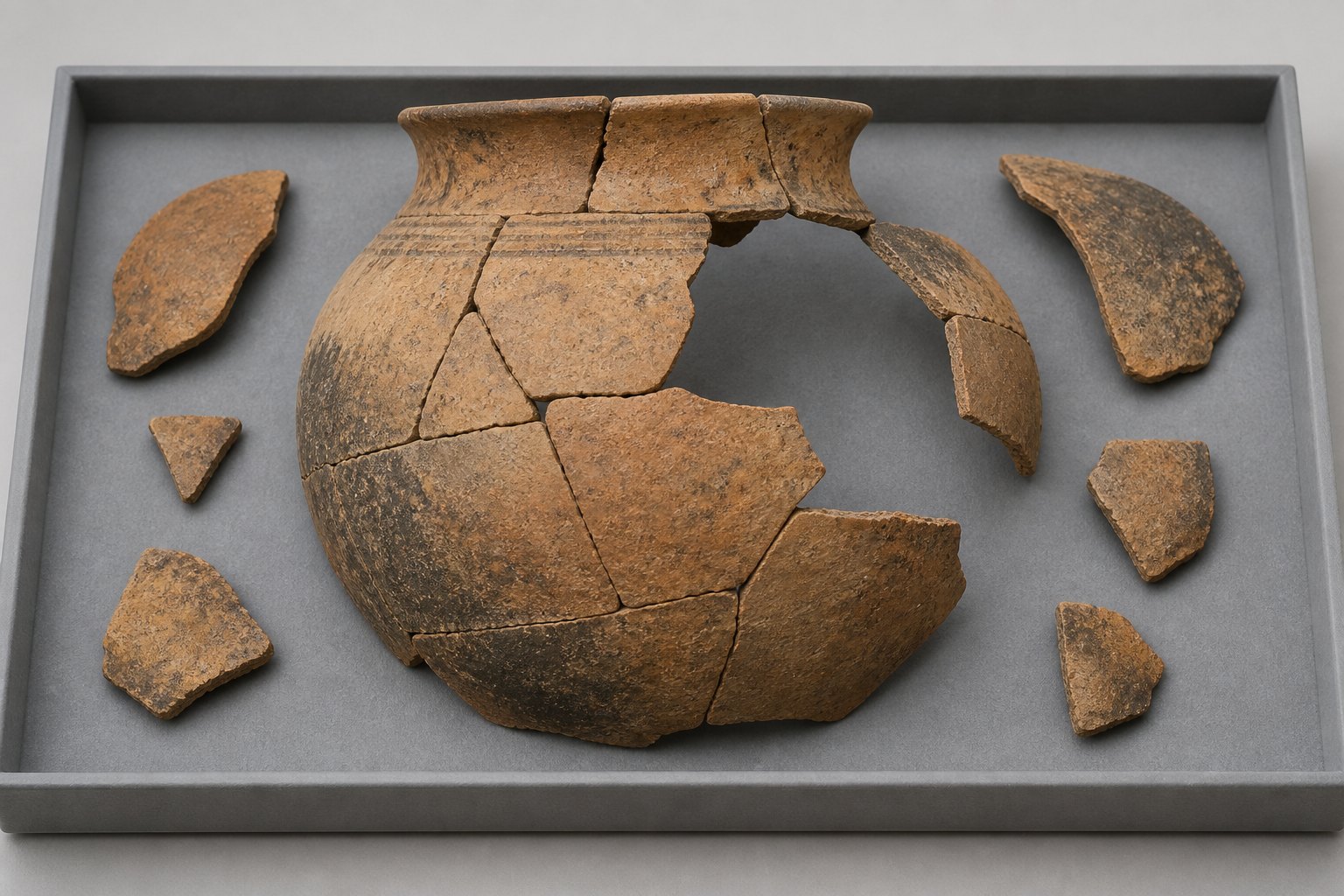
There is no complete manuscript in any language.
The state of the evidence
Every claim about Eremiel rests on this base.
Sahidic and Akhmimic pieces, neither complete
Itself likely rendering a Semitic milieu
Placed by content rather than by manuscript
Shows the book circulated more widely than the fragments suggest
A reader should hold that lightly rather than sceptically. Fragmentary transmission is normal for this literature, and it is how most of what we know about ancient angelology reaches us.
What it does mean is that the Eremiel passage is a surviving piece of a larger book, and questions the fragments do not answer may simply have been answered in the parts we have lost.
Two Coptic witnesses carry this book, and the difference between them explains why the Eremiel scene begins so abruptly.
The longer one is written in Akhmimic, a southern Egyptian dialect, and it is the manuscript that contains the passage. A much shorter Sahidic fragment preserves a different portion.
Neither is complete.
The surviving witnesses
Nothing here is a whole book.
Broken at both ends, found bound with an Apocalypse of Elijah text
Does not overlap the Eremiel scene
A few lines, quoted for another purpose entirely
Greek is generally assumed behind the Coptic
The shared codex is worth knowing about for a practical reason. Because the Zephaniah and Elijah material travelled together, early scholarship confused the two, and older reference works occasionally attribute this scene to the wrong book.
A page citing an Apocalypse of Elijah for Eremiel has inherited that mix-up rather than found a second source.
Why is a mercy name fastened to the warden of the abyss?
The name belongs to the Jerahmeel family, built from a root meaning to have pity or to show compassion, closed with the divine element El. Renderings vary between God has pity, God shows mercy, and may God have compassion, and the differences are matters of tense and mood rather than of meaning.
The name against the office
The tension between them is the most interesting thing about this figure.
The same root behind the personal name Jerahmeel
A statement about God, not a description of the angel
Custody of the imprisoned dead
Reading those two rows together is the point. A mercy name on the warden of the abyss is not an accident of transmission, and the text gives no sign of finding it strange.
It suggests a view in which holding the dead is itself an act of pity rather than of punishment, which is a very different theology from the one most modern summaries assume.
The title is territorial. Eremiel is not described as judging, escorting, or fetching, and no passage has him decide anything about the souls in his keeping.
What the text gives him is the place and its population. The dating detail is easy to skim and worth pausing on: the souls have been there since the end of the flood, which fixes the abyss as a holding place with a start date rather than an eternal condition.
In related Jewish and early Christian material the same region is sometimes called the bosom of Abraham, a waiting place for the righteous rather than a place of torment.
Whether the Apocalypse of Zephaniah means that specific compartment is not settled, and a careful page should say so rather than picking the reading that sounds most comforting.
Eremiel, Jeremiel, Jerahmeel, Ramiel: one figure or four?
This is where most confusion about the name begins. Four forms circulate, each anchored in a different text, and modern writing moves between them as though the choice were cosmetic.
They are close enough to belong to one family and distinct enough that the text should be named.
| Form | Text | What that text has him do |
|---|---|---|
| Eremiel | Apocalypse of Zephaniah 6 | Stands over the abyss and Hades, refuses worship |
| Jeremiel | 4 Ezra 4:36 | Answers a question about the number of the righteous dead |
| Ramiel | 2 Baruch 55:3 | Interprets a vision for the seer |
| Jerahmeel | Hebrew Bible and later Jewish texts | A human name in Chronicles; an angel only in later material |
Read across the rows and a pattern shows itself. In every case the figure stands at the boundary between the living and what has been hidden from them, whether that is the dead, the count of the righteous, or the meaning of a vision.
That shared function is the strongest argument for treating them as one figure under variant names. It is still an argument rather than a fact, and the safest practice is to quote the form the source uses and note which text it comes from.

The name is in the Hebrew Bible, and as with several angel names it belongs there to a person rather than to an angel.
That occurrence matters for the same reason the Rephael occurrence matters on other name pages. It shows the name was ordinary Hebrew before it was angelic.
A reader searching a Bible for Jerahmeel will therefore find a clan in the Negev, and a reader searching for Eremiel will find nothing at all.
Does Eremiel collect the dead, or only hold them?
The dating clause in Eremiel's self-introduction is easy to read past, and it carries a whole framework. He says the souls have been imprisoned there from the end of the flood until this day, which gives the holding place a starting point rather than treating it as eternal.

That start date is not arbitrary. In the wider literature the flood is the great dividing line, the moment when the corruption described in Genesis 6 is answered and the spirits associated with it are confined.
- 1 Enoch ties the binding of rebel angels to the same period, with the earth cleansed afterwards.
- Jubilees has the spirits of the giants confined at that point, with a portion left at large.
- Genesis 6 supplies the event itself without describing any confinement.
- Apocalypse of Zephaniah assumes the reader knows all of this and simply dates the abyss from it.
The last item is the useful one for a reader. The text does not argue for the flood as a boundary; it treats it as common ground, which tells you what audience it expected.
It also quietly limits the claim. Whatever Eremiel holds, it does not include everyone who ever died, only those gathered since a specific catastrophe.
Popular pages regularly file Eremiel with the angels of death, and the text does not support the promotion. Nothing in the passage has him end a life, arrive at a deathbed, or carry anyone anywhere.
What the abyss title can carry
The office is custodial, and the difference changes what a reader can claim.
What the evidence supports
- Authority over a place
He states plainly that he is over the abyss and Hades.
- Responsibility for the imprisoned
The souls held there since the flood are in his charge.
- A boundary role
The related figures all stand between the seer and hidden knowledge.
What remains limited
- No taking of life
The text never has him cause or attend a death.
- No judgment
He decides nothing about the souls he holds.
- No release
Nothing in the passage has him let anyone out, in either direction.
The distinction is the same one that separates a custodian from an executioner, and it is the single most common error made about this name.
Why does Eremiel refuse worship, and does he return?
The moment where Eremiel stops Zephaniah is not unique to this book. It is close to a convention, and recognising it helps a reader place the text.
The same exchange occurs in Revelation, where the seer falls at the angel's feet and is told to worship God instead, and in Tobit, where the angel reveals his identity and directs praise away from himself.
| Text | What the seer does | How the angel answers |
|---|---|---|
| Apocalypse of Zephaniah 6 | Falls down to worship | Names himself and states his office |
| Revelation 19:10 and 22:8-9 | Falls at the angel's feet | Calls himself a fellow servant |
| Tobit 12:15-20 | Prostrates in fear after the revelation | Redirects thanks to God |
The convention is doing theological work. A tradition worried about the veneration of angels builds the correction into the scene itself, so the reader receives the boundary at the same moment as the wonder.
It also explains why we know the name. In each case the angel gives it while declining the honour, which makes the refusal the mechanism of the disclosure.
Eremiel appears once and does not return, which is worth saying because summaries often imply he guides the whole vision. The surviving fragments have Zephaniah continue past this meeting to see the punishment of souls, the recording of deeds, and an intercession scene, none of which involves Eremiel.
He is a threshold figure rather than a companion. That structure is common in tours of the afterlife: a different figure holds each region, and the seer passes from one custodian to the next rather than travelling with a single guide.
Which texts count as scripture here, and which name do they use?
Every text that names this figure sits outside the canon of every major tradition, with one partial exception, and the exception is worth stating precisely.
The texts, and who accepts them
Canon status differs sharply between the four.
- Apocalypse of ZephaniahSurvives only in fragments, chiefly in Coptic
Accepted as scripture by no tradition; the only text naming Eremiel.
- 4 EzraIncluded in the Vulgate appendix and in some Bibles as 2 Esdras
Canonical for parts of the Orthodox world, apocryphal elsewhere.
- 2 BaruchSurvives in Syriac
Outside the canon of the major traditions.
- 1 ChroniclesFully canonical
But the Jerahmeel there is a man, not an angel.
The practical consequence is that no claim about Eremiel can be made on scriptural authority, in any tradition, and a page that implies otherwise has misread its own sources.

That does not make the material worthless. Fragmentary texts are how a great deal of ancient Jewish and Christian angelology reaches us, and reading them as reception rather than as scripture is what keeps them usable.
Because the four forms are interchanged so freely, most practical difficulty with this name is a question of identification rather than of belief.
Four checks that identify which figure is meant
Each one points at the text underneath the claim.
- Which text is cited?
Zephaniah gives the abyss, 4 Ezra the count of the righteous, 2 Baruch the interpretation of a vision.
- Is the abyss mentioned?
The custodial title belongs to the Eremiel passage specifically, not to the whole name family.
- Is it a person?
Jerahmeel in Chronicles is a man and the ancestor of a clan.
- Is a devotional role attached?
Life review, mercy prayer, and vision work belong to later reception rather than to any of the four texts.
Those four questions will resolve almost every disagreement between two pages about this angel, because most such disagreements are two writers quoting different texts under one spelling.
What remains after the sorting is a small, coherent figure: a bright angel at the edge of the place where the dead are held, who refuses worship, gives a mercy name, and says how long the waiting has been going on.
Frequently Asked Questions
Who is Eremiel?
He is known from one scene in a fragmentary Jewish text that survives in Coptic, where a seer touring the places of the dead mistakes him for God.
The angel stops the gesture and names himself, which is the only reason the name reached us at all.
What does the name Eremiel mean?
It belongs to the Jerahmeel family, built from a root meaning to pity or show mercy plus the divine element El. Usual renderings are God has pity or God shows mercy.
Are Eremiel and Jeremiel the same angel?
They are usually treated as one figure under variant forms, alongside Jerahmeel and Ramiel.
Each form is anchored in a different text, so a careful source names the text rather than relying on the spelling.
Is Eremiel an angel of death?
No. The text gives him custody of a place and its souls, and never has him cause a death, escort anyone, or pass judgment.
Is Eremiel in the Bible?
No. The Apocalypse of Zephaniah is outside the canon of every major tradition.
Jerahmeel does appear in 1 Chronicles 2:9, but as a man and the ancestor of a clan.
Sources
- (1st century BCE to 1st century CE). Chapter 6, the meeting with Eremiel. Old Testament pseudepigrapha
- (1st to 2nd century). 4 Ezra 4:36. Jewish apocalyptic literature
- (1st to 2nd century). 2 Baruch 55:3. Syriac Apocalypse of Baruch
- (ancient). 1 Chronicles 2:9, and 1 Samuel 27:10. Hebrew Bible
- (1983). The Old Testament Pseudepigrapha, volume 1. Doubleday
About Our Editorial Process
Every KnowTheAngels guide separates calculation method, tradition context, and personal reflection. We cite where interpretations come from, present more than one view, and never present symbolic reading as prediction.
Read our editorial policy