What Does Angel Number 16 Mean, and Is It a Karmic Debt?
The reduction to 7, Decoz's chart-specific karmic debt, Tower XVI, Cheiro's compound-number warning, and why sightings are a different question
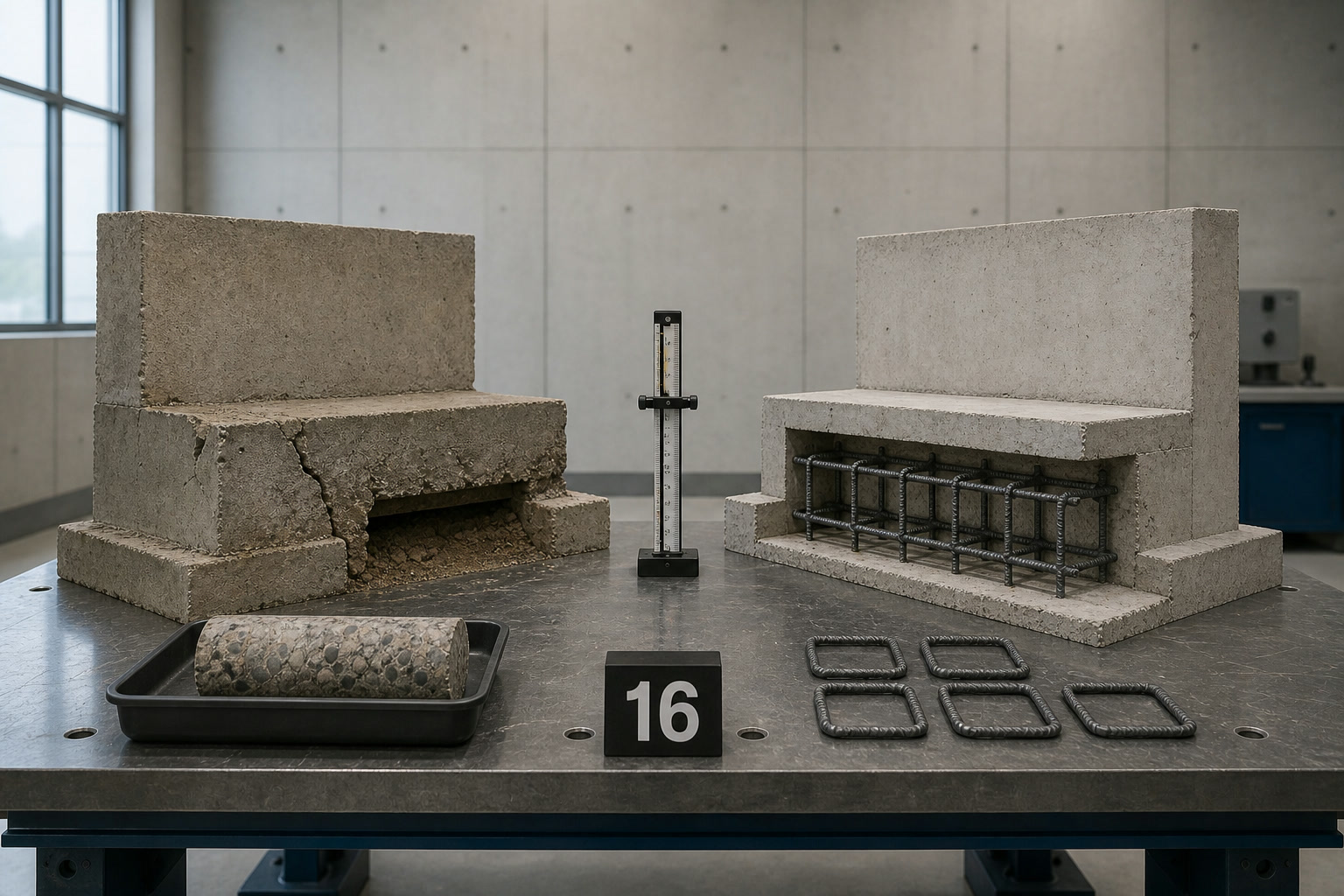
Angel number 16 sits at the meeting point of several traditions. In additive numerology, 1 + 6 produces 7; in Hans Decoz's chart method, 16 can be one of four karmic debt numbers; in tarot, XVI labels The Tower; and Cheiro gave the compound number 16 the title "the Shattered Citadel."
Those claims are easy to blend into one alarming story, although their methods do not share a single rule. The source and the input determine what a 16 can support: a birth date, a calculated chart position, a tarot card, a Hebrew numeral, and an incidental sighting are different kinds of evidence.
Quick Facts
- Reduction
- 1 + 6 = 7
- Karmic debt
- A chart-specific label in Hans Decoz's method
- Tarot
- XVI is The Tower in the Major Arcana
- Cheiro's compound 16
- "The Shattered Citadel"
- Hebrew numeral
- ט״ז, tet-zayin, or 9 + 7
- Sighting limit
- A repeated 16 does not prove a warning or forecast
How 16 reduces to 7, and why the source still matters
The additive calculation is straightforward: 1 + 6 = 7. Numerology.com associates 1 with independence and initiative, 6 with care and responsibility, and 7 with analysis and inquiry.
These profiles explain the ingredients that a modern reader may compare, but the addition alone says nothing about an event sequence.
Four uses of 16 that follow different rules
A calculation performed on the written digits.
A label Decoz applies when a core chart number or birthday carries 16.
Tarot XVI and Cheiro's compound 16 use related images in separate systems.
A writing convention chosen to avoid a sacred letter sequence.
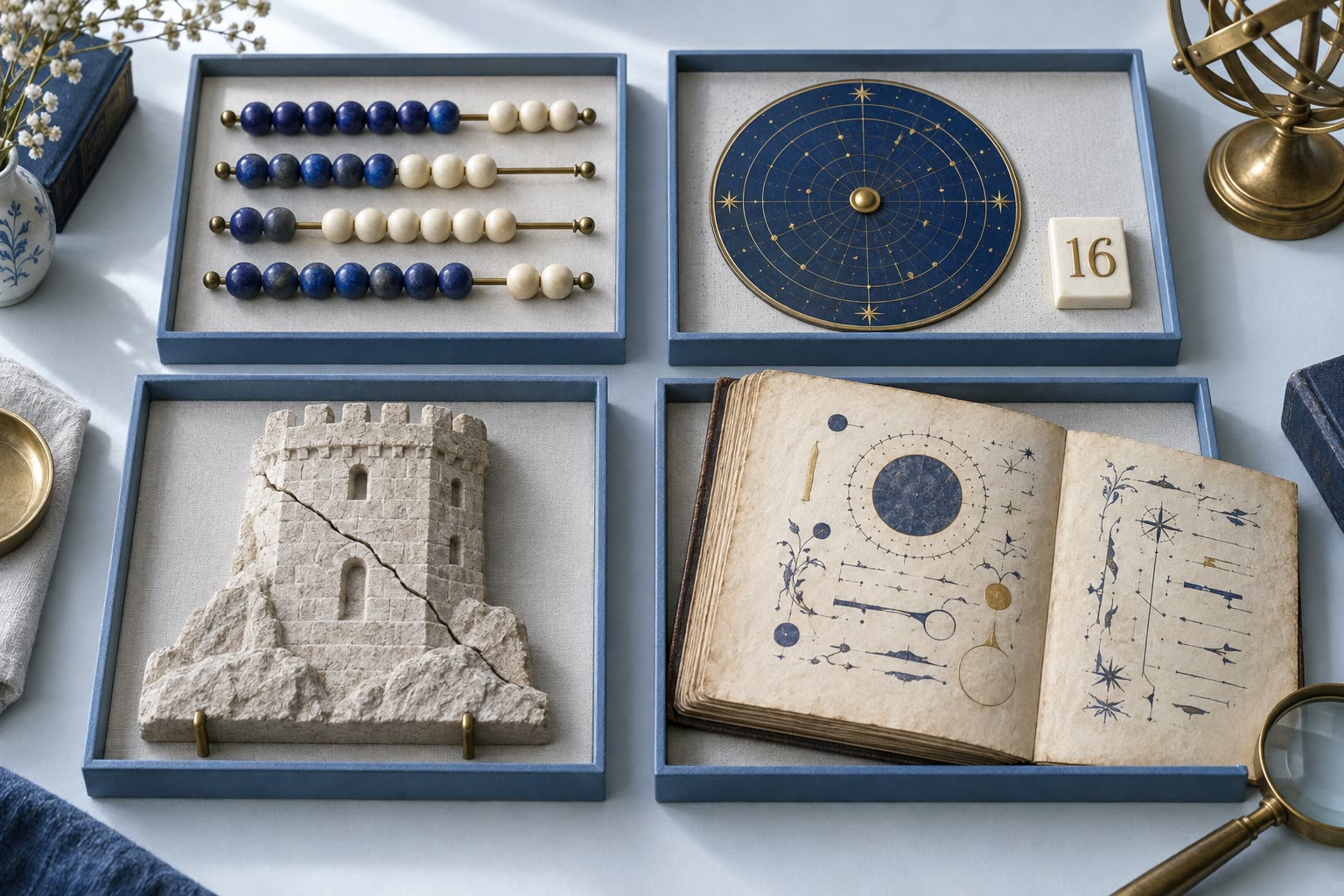
Numbers such as 16, 25, 52, and 61 all reduce to 7. Their equal sum does not make their source histories interchangeable, and reversing 16 to 61 does not create a reliable before-and-after story.
When is 16 a karmic debt in a numerology chart?
Hans Decoz lists 13, 14, 16, and 19 as karmic debt numbers.
His method looks for them in the compound value behind a core chart number and also treats a birthday on the 16th as a Karmic Debt 16 Birth Day. In that framework, 16 reduces to 7 while the unreduced compound remains part of the interpretation.
| Input | What the method can say | What remains outside the method |
|---|---|---|
| Birth day on the 16th | Decoz calls this a Karmic Debt 16 Birth Day | It does not predict a particular punishment or date |
| Core chart number derived from 16 | The compound 16 remains attached to the reduced core number | The full chart still supplies the surrounding interpretation |
| 16 noticed on a clock or receipt | No chart calculation has been performed | The sighting alone does not establish karmic debt |
Decoz describes the 16 lesson through ego, humility, and rebuilding, and he explicitly rejects the idea that karmic debt is a punishment. The premise of debt from a previous existence belongs to this spiritual system; it is not a historical fact that the calculation can prove.
Tower XVI and Cheiro's Shattered Citadel are related images, not one prediction
The Tower is trump XVI in tarot's Major Arcana. The familiar Rider–Waite–Smith image shows lightning striking a tower, while A. E. Waite's 1910 divinatory list includes misery, distress, ruin, and calamity.
Joan Bunning's later teaching expands the card into sudden change, revelation, and the collapse of unstable structures.
Cheiro's 1926 number book gives compound 16 a comparable picture: "a Tower Struck by Lightning" and "the Shattered Citadel." He also tells readers to use the single-digit 7 form when possible and illustrates his warning retrospectively with Abraham Lincoln's name and death date.
| Source | What carries the image | What it does not establish |
|---|---|---|
| A. E. Waite | Tarot card XVI and its divinatory meanings | That every written 16 draws The Tower card |
| Joan Bunning | A modern lesson on disruption and revelation | A guaranteed external crisis |
| Cheiro | The compound number 16 in his number system | A universal rule for clocks, receipts, or addresses |
A shared image is evidence of an interpretive connection, not a common forecasting mechanism. Lincoln's details are a post-hoc example inside Cheiro's argument; they do not show that 16 can predict another person's death, loss, or collapse.
Why Hebrew writes 16 as tet-zayin
Hebrew alphanumeric notation normally builds 16 from the letters for 10 and 6. That spelling would resemble part of the divine name, so the conventional form uses tet and zayin, whose values are 9 and 7.
The resulting numeral is written ט״ז.
| Number | Ordinary sum | Conventional Hebrew form |
|---|---|---|
| 15 | 10 + 5 | 9 + 6, tet-vav |
| 16 | 10 + 6 | 9 + 7, tet-zayin |
This is a convention for writing numbers respectfully. It does not add a second numerology reduction or turn 16 into a prediction; the example matters because it shows how strongly a method's purpose controls the meaning of the same number.
16 in love, career, and luck: where the Tower image stops
Neither the addition 1 + 6 nor an incidental sighting identifies a partner's intentions, an employer's decision, or the outcome of a risk. Numerologist.com's modern angel-number article uses the Tower as a metaphor for structures that no longer hold, but that interpretation supplies no evidence about a particular relationship or workplace.
What the sources support and where they stop
What the evidence supports
- A chart interpretation
Decoz supplies a defined rule for 16 in birthdays and core numerology positions.
- A symbolic image
Tarot and Cheiro both connect 16 with a struck tower or disrupted structure.
- A reflective question
The image can frame an examination of assumptions when the reader already has concrete facts to examine.
What remains limited
- No relationship diagnosis
A number cannot show whether a partner is honest, committed, or about to leave.
- No employment forecast
It cannot establish that a role, contract, or organization will end.
- No proof of bad luck
The sources do not demonstrate a higher rate of harmful events after seeing 16.
In a real decision, the relevant evidence comes from conduct, records, agreements, finances, and direct communication. Sixteen can name a symbolic lens, while those facts determine whether anything is actually unstable.
Why seeing 16 often begins with screens, clocks, and storage
Sixteen has several ordinary routes into view. A 24-hour clock reaches 16:00 every afternoon, widescreen displays commonly use the 16:9 aspect ratio, and digital storage capacities often follow powers of two.
The same label can therefore recur without independent events repeatedly selecting it.
| Example | Why 16 recurs | What the repetition shows |
|---|---|---|
| 16:00 on a clock | The clock uses a fixed 24-hour cycle | A scheduled label returning each day |
| 16:9 on a screen | The device displays an industry-standard ratio | One stable specification seen many times |
| 16 GB or 256 GB | Digital capacities use binary scaling | A product convention rather than a timed message |
| Unrelated receipt totals | Separate transactions happen to share digits | A pattern that needs context before interpretation |
Linguist Arnold Zwicky uses frequency illusion for the experience of noticing something more after attention has been drawn to it. Selective notice explains why a pattern can feel newly abundant without proving that an outside sender arranged it.
Frequently Asked Questions
Is 16 always a karmic debt number?
No. Hans Decoz applies Karmic Debt 16 to a birthday on the 16th or to a core chart value derived from 16.
A 16 noticed in passing has not met that chart rule.
Why is tarot card 16 The Tower?
XVI is The Tower's position in the Major Arcana. Its lightning-struck structure has been interpreted through disruption, ruin, revelation, and the failure of unstable foundations, depending on the source.
Can Tower XVI predict the future of a relationship?
No source examined here demonstrates that prediction. Relationship decisions depend on the people involved and observable facts such as conduct, trust, agreements, and communication.
Is 16 an unlucky number?
No evidence reviewed here shows that 16 causes bad luck. Waite and Cheiro give it severe imagery, while Decoz treats karmic debt as a chart-specific lesson rather than punishment.
Why is Hebrew 16 written as 9 + 7?
Hebrew notation avoids the usual 10 + 6 letter sequence because it resembles part of the divine name. Tet-zayin, 9 + 7, preserves the value 16 without using that sequence.
Sources
- (n.d.). The Number 1 in Numerology. Numerology.com. Link
- (n.d.). The Number 6 in Numerology. Numerology.com. Link
- (n.d.). The Number 7 in Numerology. Numerology.com. Link
- (n.d.). Karmic Debt Numbers. World Numerology. Link
- (n.d.). Karmic Debt Number 16. World Numerology. Link
- (1910). The Pictorial Key to the Tarot, divinatory meanings of trump 16. William Rider & Son
- (1995–2021). The Tower. Learning the Tarot. Link
- (1926). Cheiro's Book of Numbers, compound number 16. Herbert Jenkins; scanned text at Internet Archive. Link
- (2026). Hebrew numerals, section Key exceptions. Wikipedia. Link
- (n.d.). Angel Number 16: The Tower That Opens a Door. Numerologist.com. Link
- (2026). 16:9 aspect ratio. Wikipedia. Link
- (2005). Just between Dr. Language and I. Language Log. Link
About Our Editorial Process
Every KnowTheAngels guide separates calculation method, tradition context, and personal reflection. We cite where interpretations come from, present more than one view, and never present symbolic reading as prediction.
Read our editorial policy