What Does Angel Number 49 Mean After an Ending?
The 4 + 9 = 13 route to 4, the seven weeks counted before the fiftieth day, the Buddhist 49 days after a death, and Cheiro's lonely compound
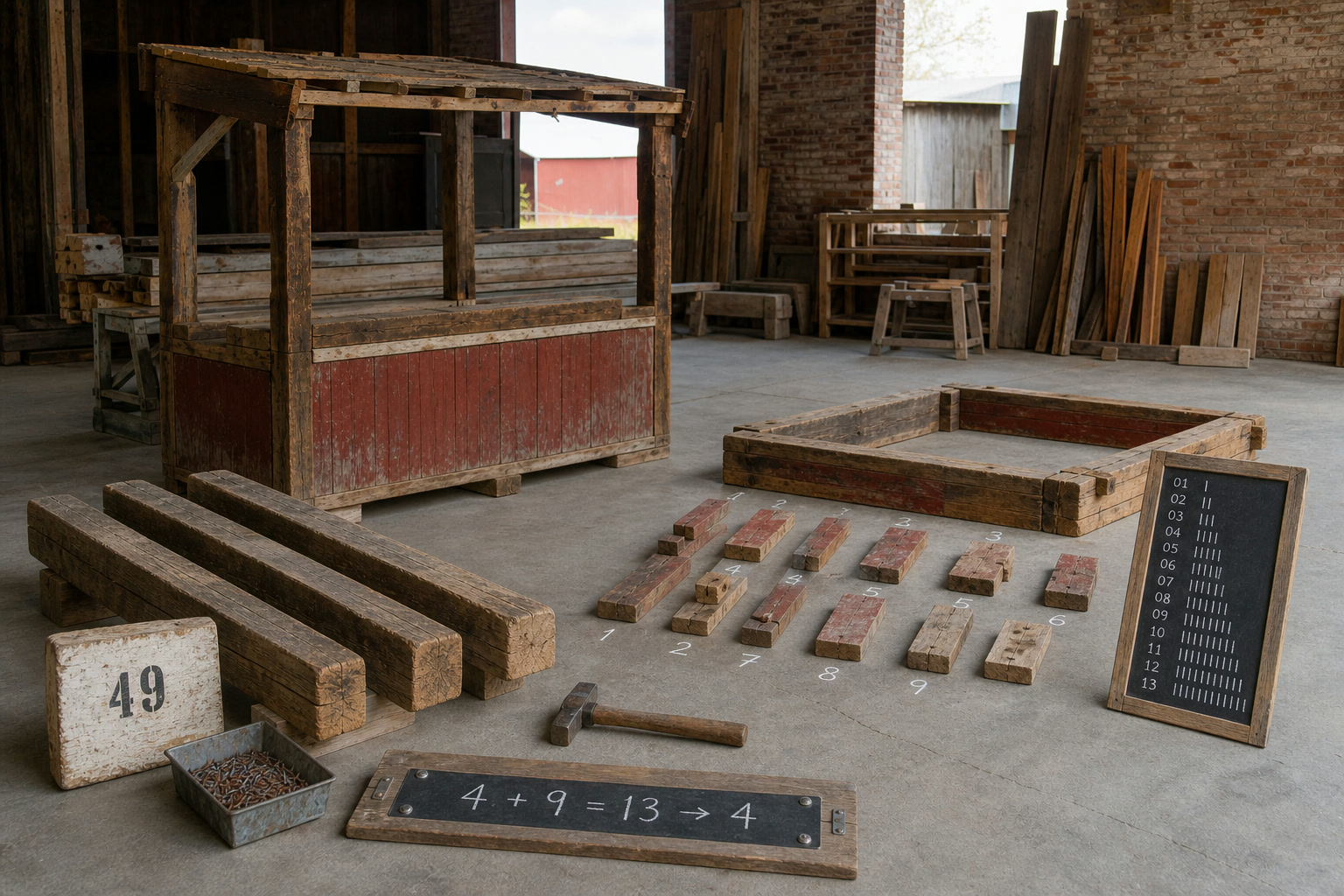
Forty-nine can be reached two ways, and each gives it a different history. Numerology adds the digits: 4 + 9 = 13, and 1 + 3 = 4. Numerology.com describes 9 as "completion, but not finality", the end of one cycle and the room it leaves for another, and 4 as the number of practical, disciplined work, so a 49 reads as an ending that has to be followed by building.
Religious calendars multiply instead. Forty-nine is seven sevens: the days Jewish tradition counts from Passover to Shavuot, the years Leviticus counts before the Jubilee, and the longest span Buddhist scholastic texts give the passage from one life to the next. In each of them 49 marks the end of a count, and something else begins on the day or year that follows.
Quick Facts
- Reduction
- 4 + 9 = 13, then 1 + 3 = 4
- Karmic debt
- 13 appears before the 4, so numerologists read a 49 total as 13/4
- As a product
- 7 × 7
- Bible
- Seven weeks of years before the Jubilee (Leviticus 25:8)
- Buddhist mourning
- Rites every seventh day up to the 49th after a death
- Cheiro
- Same meaning as 31: self-contained and isolated
What does angel number 49 mean when something has just ended?
Modern angel-number writers read 49 in digit order. The 4 comes first, the number Numerology.com associates with practicality, hard work and discipline, and the 9 of completion follows it. Read left to right, 49 describes something built with effort that has now run its course: a job held for years, a shared home, a long project, a way of life.
Blair Andrews at Numerologist.com calls 49 "the ground you come back to" and describes a return to a familiar foundation after a hard ending: "The same floor - but you are not the same person who built it." Her reading rests on the final 4 of the reduction. The ending in the 9 leads back to the work of the 4, taken up again by someone the ending has changed.
The order of the digits carries that reading. A number that opened with the 9 would put the ending first and the building second, while 49 starts from something that already stood. Its neighbour 48 sets the same 4 beside the 8 of power and resources and reduces through 12 to 3, so its readings concern who controls a structure; 49 concerns what happens to a structure once its purpose is complete.

How does 49 reduce to 4, and what does the karmic 13 inside it add?
The reduction takes two steps: the digits total 13, and 1 + 3 = 4 finishes it. Four two-digit numbers reach 4 in a single step (13, 22, 31 and 40); 49 is the smallest of the six whose digits add to 13, followed by 58, 67, 76, 85 and 94, and all six pass through 13 on the way.
That middle step is where numerologists place a karmic debt. Hans Decoz lists 13, 14, 16 and 19 as the karmic debt numbers, and Blair Andrews gives the rule for spotting the first of them: karmic debt 13 "appears whenever the number 13 shows up in your core calculations before being reduced to 4." A birth date or name that totals 49 therefore reads as 13/4. A total of 31 or 40 reaches 4 without the debt, and 22 is kept whole as a master number.
Decoz describes people carrying a 13 debt as working very hard for every result, and he warns that "a temptation with the 13 is to take shortcuts." Applied to 49, that layer changes what the closing 4 means: the ending in the 9 is followed by rebuilding, and the 13 in between says the rebuilding comes slowly and by hand. The fear and folklore attached to 13 belong to a separate history, and the karmic-debt reading does not depend on them.
| Method | Calculation | Where it leads |
|---|---|---|
| Digit sum (numerology) | 4 + 9 = 13, then 1 + 3 = 4 | Karmic debt 13 and the working number 4 |
| Product (biblical and Buddhist counting) | 7 × 7 | A completed count of weeks, years or days, with something new on the fiftieth |
| Cheiro's compound list | 49 read as 31 | A self-contained, isolated person; not materially fortunate |
The sum and the product never meet. Numerology does not use the 7 inside 49, and the religious counts take no interest in its digits, so each tradition's meaning stands on its own arithmetic.
What does 49 mean spiritually? Seven weeks counted to the fiftieth day
The biblical 49 is always a count of sevens that stops one short of fifty. Leviticus 23:15-16 tells Israel to count "seven full weeks" from the day the first sheaf of the harvest is offered, "until the day after the seventh Sabbath, fifty days", and then to bring an offering of new grain. Leviticus 25:8-10 applies the same arithmetic to years: seven sabbaths of years, seven times seven, make forty-nine, and the year after them is hallowed as the Jubilee.
Jewish practice still keeps the first count. The Counting of the Omer is a spoken count of each of the 49 days between Passover and Shavuot, made at nightfall after a blessing and given in days and weeks together: "Today is eight days, which is one week and one day." Kabbalists pair each of the seven weeks with one of the seven lower sefirot, the divine attributes, and each day with one again, so the 49 combinations become a daily programme of work on character. Rabbinic tradition places the giving of the Ten Commandments at Sinai on Shavuot, so the 49 days run from the departure from Egypt to the receiving of the law.
The years raised a question the rabbis argued over. Rabbinic literature records a dispute between the Sages and Rabbi Yehuda over whether the Jubilee fell in the 49th year itself or in the 50th that followed; most classical rabbis held the 50th, and the other view spared the land two fallow years in a row.
E. W. Bullinger's Number in Scripture gives 49 no entry of its own. He reaches it through fifty, which he calls the number of jubilee or deliverance, "the issue of 7 x 7", pointing to "deliverance and rest following on as the result of the perfect consummation of time." In both Leviticus counts, 49 is the waiting period and the offering or the release comes after it. A modern reader who takes 49 as an ending followed by building will recognise the order, but the counts are religious obligations kept on fixed dates, and none of these texts treats a number noticed in daily life as a message.
Why do Buddhists mark the 49th day after a death?
In Buddhist practice, 49 is the length of a mourning period. Two Indian Buddhist scholastic works, the Mahāvibhāṣā and Vasubandhu's Abhidharmakośa, hold that the intermediate state between death and the next birth lasts "seven times seven days" at most. East Asian Buddhism carried the teaching into funeral practice, with memorial rites at seven-day intervals across the whole period, and Tibetan Buddhism calls the same in-between state the bardo.
In Japan the services fall on every seventh day after the funeral up to the 49th, the shijūkunichi, and each is dedicated to a different Buddha or bodhisattva, with the Medicine Buddha assigned to the last. For a reader grieving within a Buddhist family, the 49th day may be the reason the number keeps appearing: it is a date already on the calendar, counted toward from the funeral. The Buddhist count and numerology's 4 + 9 reading are separate systems, and neither borrows from the other.
Did older numerology call 49 unlucky? Cheiro's lonely compound
Cheiro, the pen name of the palmist William John Warner, gave meanings to the compound numbers from 10 to 52 in Cheiro's Book of Numbers, and he gave 49 none of its own. His entry on page 85 says only that 49 "has the same meaning as 31", and his 31 is a person "even more self-contained, lonely, and isolated from his fellows" than the reflective, detached person of his 30. "It is not a fortunate number from a worldly or material standpoint," he adds.
Cheiro built his compounds from letter values in what he called the Chaldean alphabet, added across a name or a date, so his 49 describes a total in a chart. Set beside the modern reading, his isolated figure fits the stretch after an ending, when the people and routines of the old arrangement have gone and the new one is not yet built. He offered no evidence that the number causes loneliness or misfortune, and the karmic-debt reading makes a different claim about the same total: that the work ahead is hard, which is a separate matter from whether it succeeds.
49 meaning in love: what still has to be arranged after a breakup
Relationship readings of 49 attach to the time after an ending: a breakup, a divorce, a grown child leaving home, a friendship that has run its course. The 4 of a shared structure meets the 9 of completion and the reduction returns to 4, so the reading asks what arrangement has to exist once the relationship itself is over: who keeps the lease, how contact about children or pets works, when the shared accounts close.
That part of an ending is often the one that drags on. Grief keeps its own pace while the keys, the deposit and the joint subscription still need a date, and each kind of ending leaves its own list.
| What ended | What still has to be arranged |
|---|---|
| Roommates end a lease | Returned keys, a record of damage, final bills, and who holds the deposit |
| Partners separate | Which belongings, accounts and dates are settled in writing, and what contact continues |
| Co-parents divorce | A schedule, a way of passing on school and medical news, and a date to review both |
| A family finishes an estate | Where tax records, receipts and legal papers are kept, and who answers later questions |
Readings that treat 49 as a sign of reunion, including twin-flame interpretations, sit awkwardly with the arithmetic, which ends on the 4 of a settled arrangement. Whether a breakup was the right decision is a question the number cannot answer; what it frames is the work of settling what the relationship leaves behind.
49 career meaning: closing a project and handing it over
At work, 49 fits the gap between finishing something and handing it to the people who will run it. A launch can meet its deadline while the support contacts, passwords, warranties, training and maintenance schedule are still spread across a team that is about to disband. In the 13/4 reading, that handover is where the slow work sits.
- A software project moves into support. The repositories, deployment steps, credentials, alerts, known faults and rollback instructions pass to a named owner before the delivery team breaks up.
- A building is handed over. The operator receives inspection records, drawings, manuals, warranties, defect contacts and maintenance dates.
- A research study closes recruitment. Data storage, contact with participants and the eventual destruction of identifiable material follow the approved plan.
- A person leaves a role. Active work, deadlines, files, contacts and risks are written down for the successor, and personal copies are limited to what the employer allows.
A handover of this kind is complete when the new owner can carry out the next routine task without calling the person who left. The same test applies to a career change: the old role is finished when someone else can run it.
Why do I keep seeing 49? Clock minutes, prices and a count already running
Forty-nine turns up on ordinary surfaces: the 49th minute of every hour, prices, page numbers, ages, and the countdown of any seven-week period. The linguist Arnold Zwicky coined the term frequency illusion in 2005 for the sense that something noticed recently has started turning up everywhere, when only the noticing has changed.
Two kinds of sighting are easy to tell apart on paper. Some come from a count the reader is already keeping: the Omer between Passover and Shavuot, or the days after a death in a Buddhist family. Others gather around one ending, a job, a lease, a relationship, with loose ends still attached. A number journal that records the date, the setting and what was on your mind shows which kind is happening, and the second kind points to a practical remainder: the thing that ended and the arrangement it still lacks.
Frequently Asked Questions
What does angel number 49 mean?
Numerologists read it through its digits: the practical 4 meets the 9 of completion, and the sum reduces through 13 to 4, so it is read as an ending that has to be followed by patient rebuilding.
Is 49 a karmic debt number?
Not on its own. Its digits add to 13, one of the four karmic debt numbers Hans Decoz lists, so numerologists read a chart total of 49 as 13/4, a 4 reached through the debt.
What does 49 mean in the Bible?
Forty-nine is seven times seven. Leviticus counts seven weeks to the fiftieth day, the Festival of Weeks, and seven sabbaths of years to the fiftieth year, the Jubilee. The Bible gives 49 no symbolic meaning beyond that count.
Why is the 49th day important after a death?
Indian Buddhist scholastic texts put the passage between death and rebirth at seven times seven days at most, and East Asian Buddhist families hold memorial rites every seventh day up to the 49th.
Is 49 a lucky number?
Cheiro gave 49 the same meaning as 31, which he called lonely and "not a fortunate number from a worldly or material standpoint". Modern angel-number writers read it more hopefully, and neither offers evidence that the number affects luck.
Sources
- (n.d.). Number 4 Meaning in Numerology. Numerology.com. Link
- (n.d.). Number 9 Meaning in Numerology. Numerology.com. Link
- (n.d.). Angel Number 49: The Ground You Come Back To. Numerologist.com. Link
- (n.d.). Karmic Debt Number 13 Meaning: The Discipline You Owe. Numerologist.com. Link
- (n.d.). Karmic Debt Numbers. World Numerology. Link
- (n.d.). Karmic Debt Number 13. World Numerology. Link
- (n.d.). Master Numbers 11, 22, 33. World Numerology. Link
- (n.d.). Leviticus 23:15-16 (counting seven full weeks to the fiftieth day). NRSVue via BibleGateway. Link
- (n.d.). Leviticus 25:8-12 (seven times seven years, and the Jubilee). NRSVue via BibleGateway. Link
- (2026). Counting of the Omer (the 49-day count, its blessing and the Kabbalistic sefirot). Wikipedia. Link
- (2026). Shavuot (rabbinic tradition linking the festival to Sinai). Wikipedia. Link
- (2026). Jubilee (biblical): the rabbinic dispute over the 49th or 50th year. Wikipedia. Link
- (1921). Number in Scripture: Its Supernatural Design and Spiritual Significance, 4th edition, part II, entry for fifty. Eyre & Spottiswoode, London (public-domain text). Link
- (2026). Bardo: the intermediate state of seven times seven days in the Mahavibhasa and Abhidharmakosa, and East Asian funerary practice. Wikipedia. Link
- (2022). Funerary and Memorial Practices in Japan. Gleanings in Buddha-Fields. Link
- (n.d.). Cheiro's Book of Numbers: compound numbers 30 and 31 (p. 84) and 49 (p. 85). Herbert Jenkins; scanned text at Internet Archive. Link
- (2019). Frequency illusion in the OED. Language Log account of Arnold Zwicky's 2005 term and the Oxford English Dictionary definition. Link
About Our Editorial Process
Every KnowTheAngels guide separates calculation method, tradition context, and personal reflection. We cite where interpretations come from, present more than one view, and never present symbolic reading as prediction.
Read our editorial policy