What Does Angel Number 80 Mean Beyond Promises of Abundance?
The zero beside the 8: how Walmsley, Decoz and Andrews read it, where the money claim comes from, and where eighty appears in the Bible
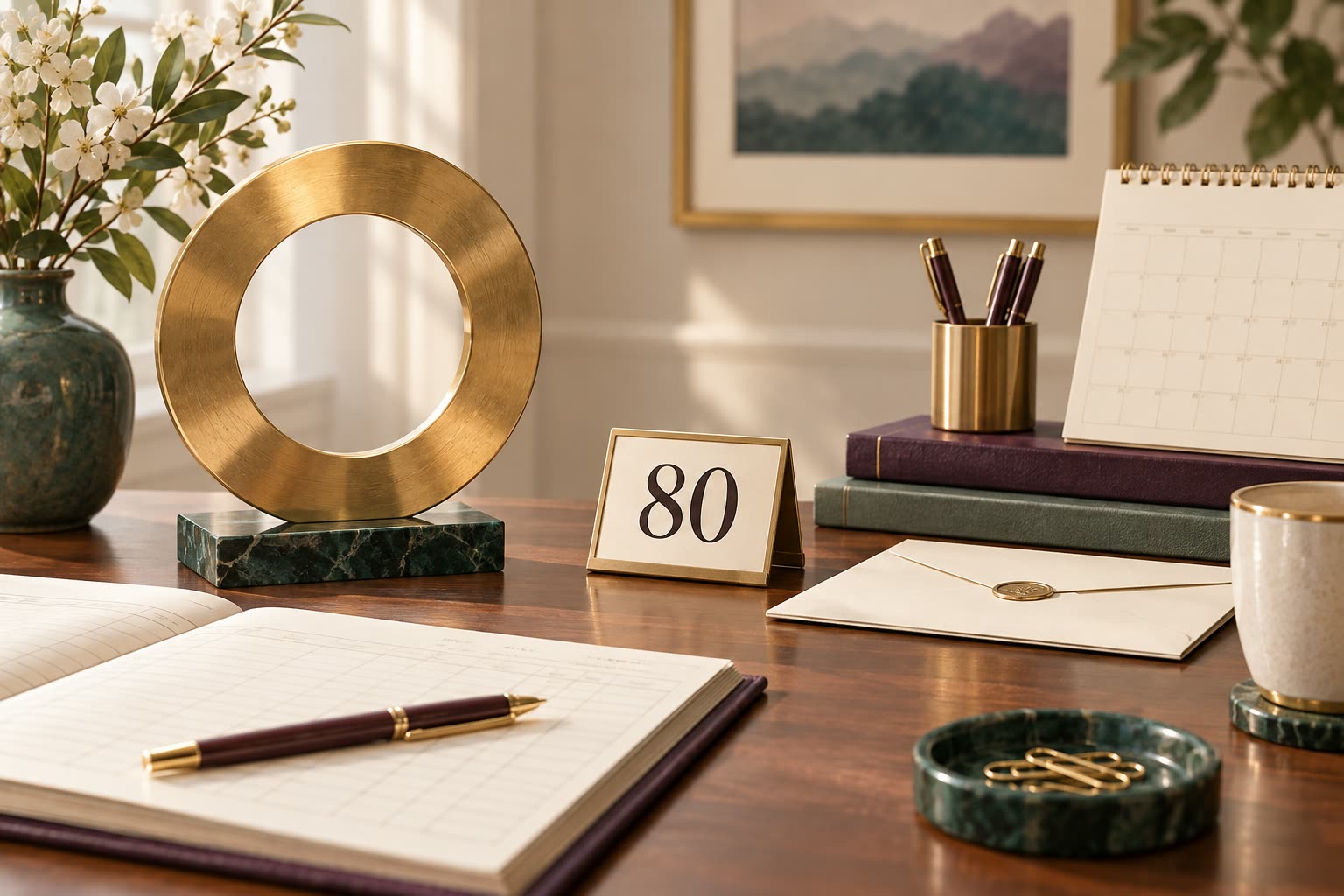
Angel number 80 reduces to 8, because 8 + 0 = 8, so its reading starts from the digit numerology links with achievement, authority and money. Everything that separates 80 from a plain 8 depends on the zero, and three named numerology sources read that zero in three different ways. In her Sacred Scribes entry of July 2011, Joanne Walmsley gives the 0 the "God force" and the idea of continuing cycles; Hans Decoz says a zero has no traits of its own but strengthens the digit beside it; Blair Andrews at Numerologist.com says a zero never multiplies a digit and instead strips away what surrounds it.
The popular claim that 80 means money is on its way does not come from any of them. Walmsley's entry is about using personal power and tenacity to reach success, and Andrews rejects the idea that the zero adds wealth. Readers also ask about the Bible, where eighty is Moses's age when he stood before Pharaoh and a period of rest in the book of Judges, and neither passage treats the number as a sign.
Quick Facts
- Reduction
- 8 + 0 = 8, with no middle step
- Zero, Walmsley (2011)
- "God force" energy, eternity and continuing cycles
- Zero, Decoz
- No traits of its own; strengthens the digit beside it
- Zero, Andrews
- Strips away outside support; never multiplies the 8
- Master number?
- No. Decoz gives master status only to 11, 22 and 33
- Bible
- Moses at 80 before Pharaoh (Exodus 7:7); Barzillai at 80 (2 Samuel 19:32)
Is the zero in 80 a God force, an amplifier or an empty setting?
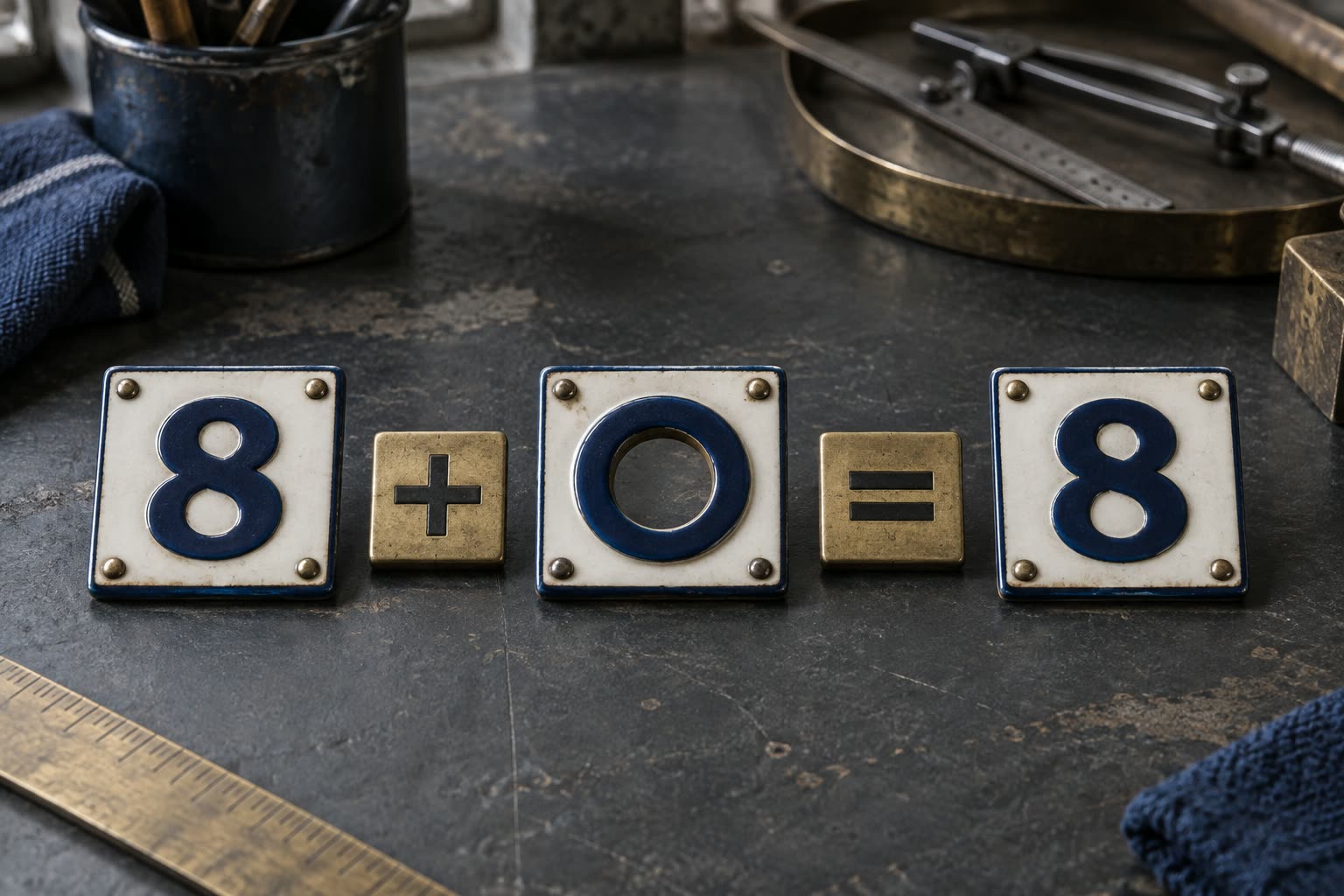
The arithmetic is settled. Zero is the additive identity, the number that leaves any other number unchanged when added to it, so 8 + 0 = 8 and 80 reduces straight to 8 with no middle step. Numerology.com calls the 8 "the achiever" and lists its weaknesses as materialistic, authoritative and entitled. What the zero adds to that 8 is a matter of method, and three named sources answer it differently.
| Source | What the 0 does | What 80 becomes |
|---|---|---|
| Joanne Walmsley, Sacred Scribes (2011) | Relates to the "God force", eternity, continuing cycles and "the beginning point" | Personal power and success joined to a spiritual purpose |
| Hans Decoz, World Numerology | Has "no attributes" of its own but can "empower, fine-tune and enhance" the digit beside it | A strengthened 8, as he reads 10 as a higher octave of 1 |
| Blair Andrews, Numerologist.com (2023) | "Does not multiply the digit"; it strips away the surroundings | An 8 tested with no audience: work that continues when unobserved |
The first two readings add something to the 8 and the third takes something away, so they cannot be averaged into one meaning. Decoz's version is the most restrained: the zero only intensifies what the 8 already means, and 80 stays about management, achievement and money. Walmsley's version brings in a spiritual layer the 8 lacks, which is why her entry calls this a good time to start or expand a spiritual practice. Andrews's version turns the zero into an empty setting around the 8, and the question becomes whether ambition and discipline hold up when praise, deadlines and rewards are missing.
Decoz adds a technical point that limits all three. In his charts a zero can appear only through subtraction, in the Challenge and Bridge numbers, since every core number is reduced to a digit from 1 to 9 or to a master number. The 0 of an angel number is therefore read by analogy with those charts, and each reading of it states one author's convention.
Is 80 a money number, or does the zero only strengthen the 8?
No named source calls 80 a sign that money is coming. Walmsley's 2011 entry lists "manifesting positive abundance and prosperity" among the qualities of 8, but her message for 80 is that "you are to use your personal power, tenacity and intelligence to achieve the successes you desire", which puts the effort on the reader and names no income. Andrews is blunter: "The zero beside 8 doesn't amplify the money."
The idea that 80 is a bigger abundance number than 8 comes from treating the zero as a multiplier, as if 80 were ten eights. Decoz's convention lets a zero strengthen the 8's themes, which include money, but a strengthened theme is still a theme, and Andrews rejects the multiplication outright. The zero changes nothing about a bank balance, a salary offer or the interest rate on a loan, which are the figures a money decision rests on.
Where the 8 does bear on money is in its weaknesses. Numerology.com's materialistic 8 measures success by what it owns, and Andrews's zero asks what remains of that success once nobody is watching. Applied to a household or a small business, 80 points at the gap between looking prosperous and being solvent: whether the savings, bills and debts would hold up without the next pay rise or the next big sale.

Career and angel number 80: does the work continue when nobody is watching?
Andrews builds his reading of 80 around effort and routine. He titles it "Rhythm That Does Not Need to Look Busy" and reads the number as a test of whether steady effort continues when nobody is observing it, which is his account of what the zero strips from the 8. Walmsley's entry reaches a similar place from the other side: the reader already has the skills and talents the work needs, and is asked to use them with truth, honour and integrity.
In a job, the two readings describe the part of the 8's authority that never shows up in a performance review: maintenance done before something breaks, records kept current, a team trained well enough to work while its manager is away. Numerology.com's 8 is a leader who assumes its own way is right, and an 8 working only for recognition tends to favour the visible win over that kind of upkeep.
A promotion or job offer seen through 80 raises one plain question: whether the role comes with the budget, staff and information to do it, or only with the title. Andrews's reading judges the work by whether it continues when unobserved, and makes no promise that it will be rewarded.
Does 80 say anything about love, twin flames or a wealthy partner?
None of the three sources gives 80 a love reading. Walmsley's entry does not mention relationships and Andrews's page stays with work, so the romantic and twin-flame reunion meanings found on other sites have no named origin.
Applied to a couple, the 8 and the zero point at the part of a relationship that runs on money and routine: who pays which bills, who can see the accounts, and whose unpaid work keeps the household going. Andrews's zero fits the quiet stretches, when attention and gifts fall away and what remains is the daily arrangement between two people. For someone single, the same reading concerns what they would bring to that arrangement, and it says nothing about meeting a wealthy partner.

Is 80 in the Bible? Moses at eighty and the angel in the burning bush
Eighty appears in the Bible as a count of years, most famously Moses's age. Exodus 7:7 says that "Moses was fourscore years old, and Aaron fourscore and three years old, when they spake unto Pharaoh." Stephen's speech in Acts 7 divides Moses's life into forties: he was "full forty years old" when he went to visit his people, and "when forty years were expired, there appeared to him in the wilderness of mount Sina an angel of the Lord in a flame of fire in a bush" (Acts 7:23, 30).
By Stephen's count, then, Moses was eighty when the angel of the Lord appeared to him at the bush, the scene Exodus 3:2 describes. Deuteronomy 34:7 gives his age at death as 120, which completes a third period of forty and places the eighty years at the point where his public work began.
Other passages use eighty the same way. After Ehud's victory over Moab "the land had rest fourscore years" (Judges 3:30). Barzillai, who had fed King David's household at Mahanaim, was "fourscore years old" and declined to follow him to Jerusalem, asking, "can I discern between good and evil?" (2 Samuel 19:32, 35). Psalm 90:10 sets a human life at seventy years, or eighty "by reason of strength", and in Luke 16:7 the dishonest steward tells a debtor who owes a hundred measures of wheat to write eighty.
BibleStudy.org reads 80 as a number of liberation, drawing on Moses before Pharaoh and the rest after Ehud. The passages themselves count ages and periods without attaching a meaning to the number. A Christian reader may connect 80 with Moses called late in life, as a devotional choice rather than a teaching of the text.
Why 80 keeps turning up on prices, percentages and speed signs
Eighty is a round number, so it turns up constantly on prices, percentages, speed signs, house numbers and birthday cards. Once 80 has been given a meaning, those ordinary appearances start to register, through the selective attention psychologists describe as focusing on some stimuli while filtering out others.
A short note of where each sighting happened and what was on the reader's mind at the time separates the two cases. If the 80s cluster around one unresolved question about work or money, that question is what the 8 in Walmsley's and Andrews's readings concerns; if they are scattered across receipts and road signs, the note is recording a common number.
Which neighbour shares a root with 80, and how do 8, 79, 81 and 88 differ?
| Number | Arithmetic | What sets it apart |
|---|---|---|
| 8 | Single digit | Achievement, authority and money with no zero to interpret |
| 79 | 7 + 9 = 16, 1 + 6 = 7 | Reflection meeting completion; ends on 7 |
| 80 | 8 + 0 = 8 | The 8 beside a zero whose role depends on the source |
| 81 | 8 + 1 = 9; also 9 x 9 | Established capacity followed by one new step; ends on 9 |
| 88 | 8 + 8 = 16, 1 + 6 = 7 | A doubled 8 that ends on 7 |
Only 8 and 80 share a root, so the comparison that matters is between them. Everything 80 says beyond the plain 8 depends on which reading of the zero a reader accepts, and a reading of 80 that does not name its convention for the zero is a reading of 8.
Frequently Asked Questions
Is there a spiritual meaning of 80 beyond money?
Walmsley's 2011 entry gives the spiritual reading: the 0 carries the "God force" and continuing cycles, and the entry calls this a favourable time to start or expand a spiritual practice. Decoz and Andrews read 80 through the 8's practical themes instead.
Is 80 a master number?
No. In Decoz's system the master numbers are 11, 22 and 33, and 80 reduces in one step to 8.
Does the zero in 80 multiply the 8?
Not in numerological arithmetic, where 8 + 0 = 8. Decoz says a zero strengthens the digit beside it; Andrews says it never multiplies it.
Sources
- (2011). Angel Number 80. Sacred Scribes Angel Numbers. Link
- . Numerology and the Power of Nothing. World Numerology. Link
- (2023). Angel Number 80: Rhythm That Does Not Need to Look Busy. Numerologist.com. Link
- (2026). Number 8 Meaning in Numerology. Numerology.com. Link
- . Master Numbers 11, 22, 33. World Numerology. Link
- . Additive Identity. MathWorld. Link
- . Exodus 3:2; Exodus 7:7; Acts 7:23, 30; Deuteronomy 34:7; Judges 3:30; 2 Samuel 19:32, 35; Psalm 90:10; Luke 16:7. Bible Gateway. Link
- . Meaning of the Number 80 in the Bible. BibleStudy.org. Link
- (2018). Selective attention. APA Dictionary of Psychology. Link
About Our Editorial Process
Every KnowTheAngels guide separates calculation method, tradition context, and personal reflection. We cite where interpretations come from, present more than one view, and never present symbolic reading as prediction.
Read our editorial policy