What a Butterfly Means as an Angel Sign, and Why One Lands on You
The traditions that read a butterfly as one of the dead, the feeding behaviour that explains most landings, and how to hold both at once
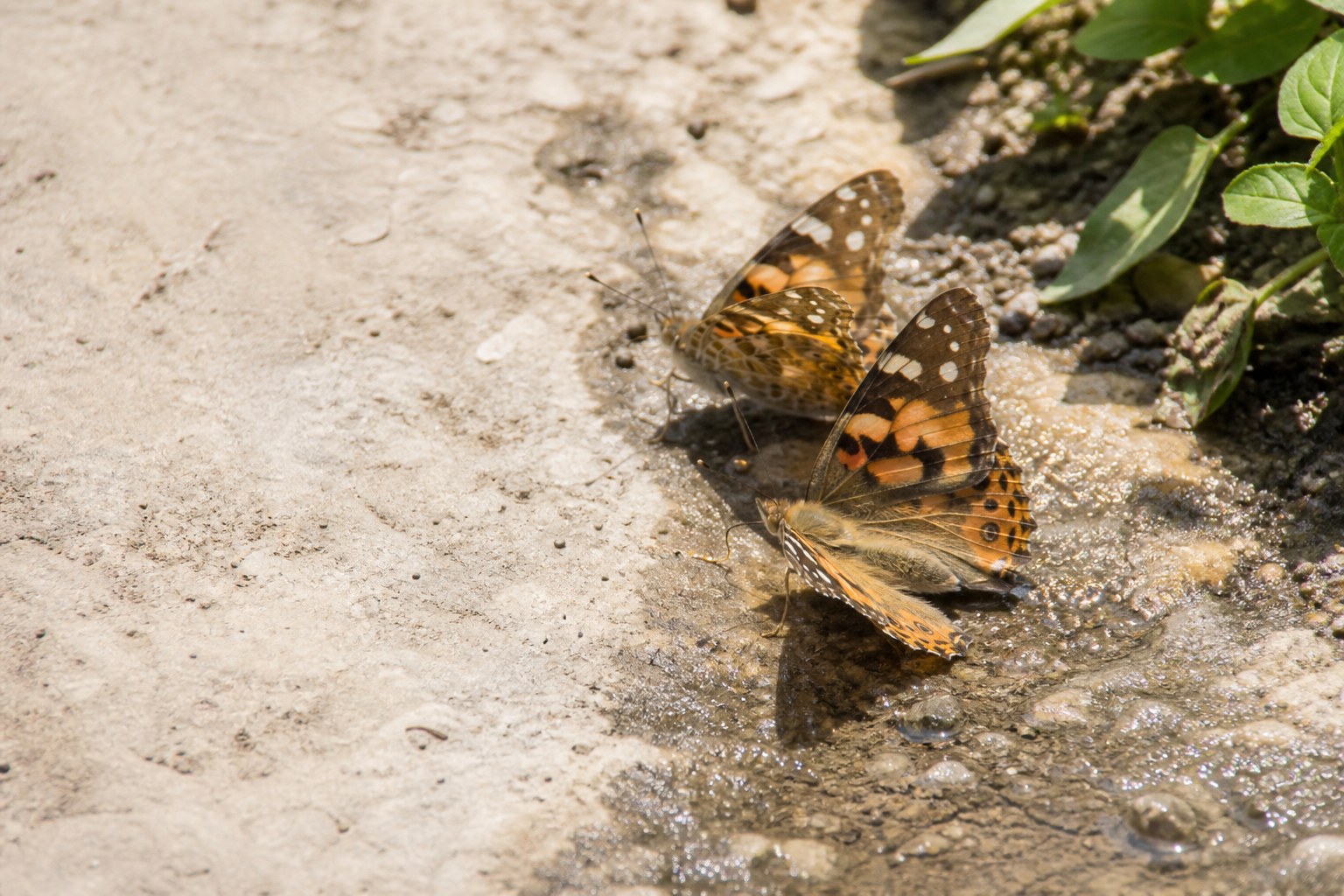
A butterfly landed on you, stayed longer than felt normal, and you have been turning it over since.
That encounter is read across several traditions as contact with someone who has died, and the reading is older and better attested than most pages about it suggest.
It also has an ordinary explanation that is unusually specific. Butterflies land on people to drink sweat, and the conditions that bring them down are warmth, bare skin, and a person standing still.
Both things are true at once, and neither one is improved by pretending the other is not there.
Keeping them apart is what lets you decide which parts to hold on to, without having to argue yourself out of the memory.
Quick Facts
- Traditional reading
- The soul, and in several traditions a specific person who has died
- Oldest anchor
- The Greek psyche, a word meaning both soul and butterfly
- Why it lands on skin
- Puddling, a feeding behaviour that takes sodium from sweat
- Conditions that make it likely
- Warm weather, bare skin, damp with sweat, and a person holding still
- Adult lifespan, most species
- Roughly two to six weeks, so the season limits the encounter
- What it cannot establish
- Who sent it, or that anyone did
What people are describing when they call a butterfly a sign
The reports share a shape. An outdoor gathering, warm weather, a butterfly that comes close and then stays for longer than the person expected.
Very often the setting is a funeral, a burial, or a first visit back to a place that belonged to the person who died.
What makes the encounter land is not the butterfly. It is that the insect chose a direction, held still on somebody, and then left of its own accord.
That is different from the other signs people report. A feather is found, a coin is found, a light or a scent arrives without a body attached to it.
Four things worth noting while it is still fresh
Written down within a day, these are what let you weigh the encounter later instead of re-remembering it.
- Where it settled
- Input
- Skin or fabric
- Action
- Note whether it landed on bare arm, hand or neck, or on clothing, a bag, or a chair.
- Result
- Bare damp skin is the condition puddling predicts
- The weather
- Input
- Temperature and sun
- Action
- Note whether it was warm and sunny and whether you had been standing outside a while.
- Result
- Butterflies fly in warmth and are largely grounded in cool or overcast air
- What you were wearing
- Input
- Colour and pattern
- Action
- Note bright colour, floral print, or strong scent from perfume or flowers you were carrying.
- Result
- Separates an approach to you from an approach to what looked like a flower
- How long, and how it left
- Input
- Duration and exit
- Action
- Note roughly how many seconds it stayed and whether it left on its own or was disturbed.
- Result
- A long settled stay on skin behaves differently from a brief touch-and-go
None of that is a test the encounter has to pass. It is the difference between a memory you can examine in six months and one that has quietly rewritten itself.
Why the link with the dead is older than the grief pages
The oldest anchor is a word rather than a story.
In ancient Greek, psyche meant both soul and butterfly, and the same word carried both senses without anyone having to explain the connection.
That is a stronger piece of evidence than a modern symbolic claim, because a language does not fold two meanings into one word by accident.
The second anchor is a calendar, and it is the most checkable claim in this whole area.
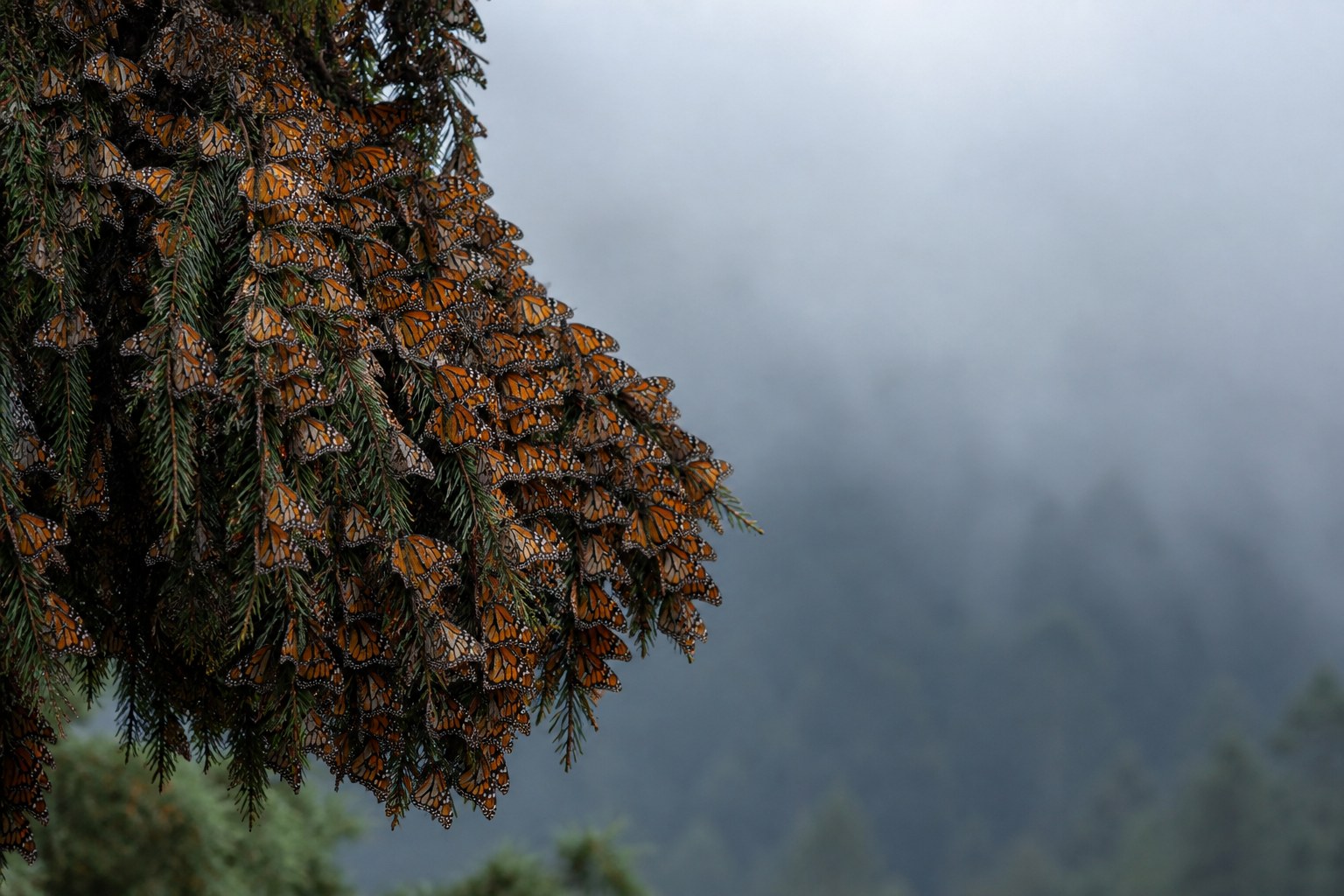
Monarch butterflies arrive in the mountains of Michoacan from late October into early November after a migration of more than two thousand miles. Dia de Muertos falls on the first and second of November.
In the Purepecha and Mazahua traditions of that region the returning monarchs are understood as the returning dead, and the arrival and the observance are the same event rather than two things placed side by side.
| Tradition | What the butterfly stands for | What it does not claim |
|---|---|---|
| Ancient Greek usage | The soul itself, carried in the double sense of the word psyche | Nothing about a message or a particular person |
| Purepecha and Mazahua, central Mexico | Ancestors returning, timed to the monarch arrival | That an individual butterfly is an individual relative |
| Christian funerary art | Resurrection, read from the emergence out of the chrysalis | That an appearance is a communication |
Notice what none of the three does. Each attaches the butterfly to the dead in general and to the idea of a soul, and not one of them says that a butterfly on your arm in July is a named person choosing to visit.
That step is a recent one, and it is the part of the reading with the least behind it.
The older reading is change, and it does not need anyone to have died
Not every butterfly encounter follows a loss, and the tradition never required one.
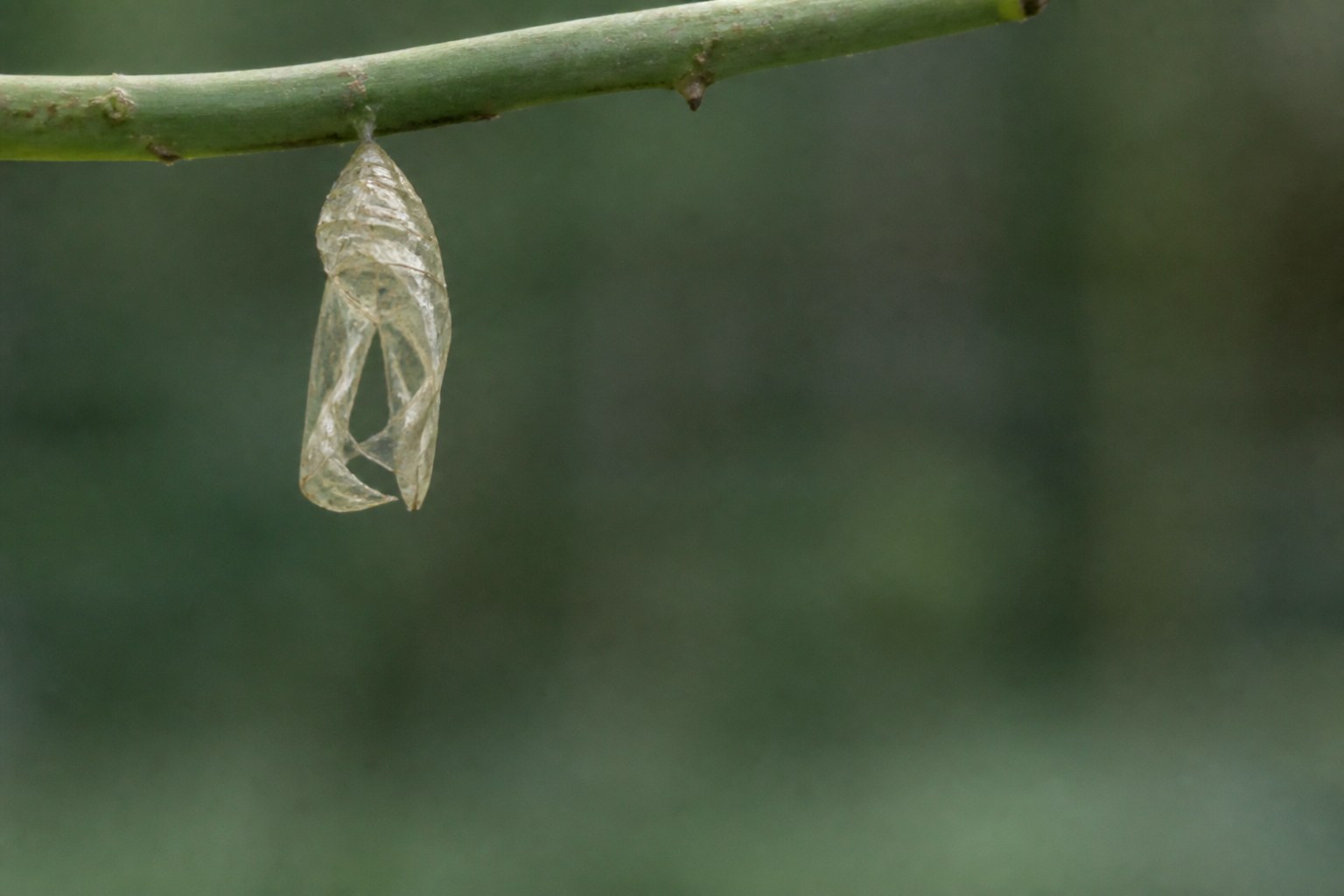
The chrysalis image is about an animal that goes into a sealed container as one thing and comes out as another. Applied to a living reader, that is a claim about change rather than about the dead.
It is the half that gets less attention, because writing about grief travels further than writing about change.
The reading is worth less than it sounds when it is used loosely. A caterpillar does not decide to pupate, and what happens inside the case is not a metaphor for effort or intention.
Used carefully it says something narrower and more usable.
A stretch of being sealed in and unable to act is a stage of the process rather than evidence that the process has failed. That is a reasonable thing to take from an insect, and it is available to a reader who has not lost anybody.
How to tell a butterfly that wanted your sweat from one that did not
Butterflies live on nectar, which is rich in sugar and poor in almost everything else.
To get the sodium and amino acids that nectar lacks, many species gather at damp ground, wet gravel, rotting fruit, dung, and human skin. The behaviour has a name, puddling, and it is well described in the entomological literature.
Human sweat is a good source, and butterflies find it the way they find everything else. They taste through sensors on their feet, so a landing is how the insect samples the surface.
It is mostly the males that do it. In several families the sodium collected this way is passed to the female during mating and improves the survival of the eggs, which is why the behaviour is worth the risk of landing on something as large and warm as a person.
Read that back against the circumstances people describe and the overlap is close to exact.
- Warm and sunny. Butterflies need heat to fly at all, so encounters cluster in the months when memorials and visits happen outdoors.
- Bare skin, damp with sweat. The exact surface puddling looks for, and the exact surface exposed at a summer graveside.
- Standing still. A person who is not moving stops registering as a threat, which is the difference between being landed on and being avoided.
- A long, settled stay. Feeding takes time, so a butterfly that stays for a minute is behaving normally rather than unusually.
A butterfly indoors is a separate case with a duller explanation. They come in through open doors and windows, move toward the brightest surface, and often cannot find the same gap again, which is why one can stay in a room for hours.
One butterfly on one afternoon is also a different question from the same bird at your window all week.
A repeated sighting of a resident species has its own checks, and most butterflies live two to six weeks as adults, so they are rarely around long enough to supply one.
That last point is worth sitting with, because the length of the stay is usually the detail people find most persuasive.
A butterfly that settles and remains is doing the thing it came to do. The stillness that reads as attention is the stillness of an insect eating.
This does not dispose of the encounter. It tells you which parts of it were always going to happen given the weather, and which parts are left over.
Why you have been seeing butterflies everywhere since
A second thing usually happens after the first encounter, and it unsettles people more than the encounter did.
The count goes up. Butterflies start appearing constantly, in places nobody remembers noticing them before.
Part of that is the season doing what it always does.
Most of it is selective attention, which starts reporting instances the mind used to filter out once a category begins to matter. The new instances feel like a change in the world rather than a change in noticing.
There is a test, and it is about order rather than number.
Sightings that predate the idea are evidence of something. Sightings that began the week you started looking are evidence of looking.
None of that is a reason to stop noticing. It is a reason to date the encounters, because the sequence they happened in is the one part of this that can still be checked in a year.
Butterfly colour is a map of where you live
A great deal of the current writing assigns meanings by colour. Blue for communication, purple for insight, red for a strong personality now gone.
The problem is not that the meanings are invented. It is that the colour you are able to see is decided by which species fly where you are standing, in the weeks you happen to be standing there.
A blue butterfly is unremarkable in an English meadow in June and effectively unavailable in most of the same country in October.
So a colour reading is a species-distribution reading wearing different clothes. The message changes with the postcode and the month, which is not how a message behaves.
There is a fairer version of the same interest. Colour is often the detail a person remembers most sharply, and a remembered colour can anchor a memory to a specific afternoon.
Keeping the colour because it fixes the memory is reasonable. Reading the colour as the content of a message is not.
Which of the three honest readings you are choosing between
After the weather and the sweat are accounted for, three readings remain available, and they cost different amounts.
The first is the visit. Somebody who died was present in that butterfly, deliberately, for you.
It is the reading that gives the most comfort and asks for the most, because it requires the insect to have been directed and the timing to have been arranged.
The second is the reminder. The butterfly prompted a thought about the person, and the prompting is what mattered rather than the mechanism behind it.
This is the reading most of the traditions above will actually support, and it survives being told about the sodium.
The third is the season. It was warm, you were outside and still, and an insect fed on your arm.
Choosing the third does not mean the afternoon meant nothing. It means the meaning came from where you were and who you were thinking about, which is not a smaller thing.
Most people who are honest about it hold the second, and reach for the first on bad days. That is a reasonable way to live with an encounter and a poor basis for telling somebody else what happened to them.
Does it matter whether it was really a sign?
It matters for exactly one reason, and the reason is not metaphysical.
A reading you have to defend becomes fragile, and a fragile reading is expensive to hold during grief. If the comfort depends on nobody mentioning the sweat, the comfort has been built on a claim that can be knocked over.
The reading that survives being examined is worth more than the reading that gives the most on the first day.
What each reading costs when someone challenges it
The question is not which is true. It is which one you can still hold in six months.
One conversation about puddling can take the whole thing away
The sodium changes nothing, because the prompt happened either way
Leaves the afternoon intact and puts the meaning where the person already was
None of that decides what happened on the day. It decides what you will still have of it later, which is the part you can actually choose.
Frequently Asked Questions
What does it mean when a butterfly lands on you?
In several traditions it is read as contact with someone who has died, and in entomology it is a feeding behaviour called puddling.
Butterflies take sodium from human sweat, which nectar does not supply, and they taste surfaces through sensors on their feet. Both accounts describe the same landing.
Why are butterflies linked to souls in the first place?
The oldest anchor is linguistic rather than symbolic.
The ancient Greek word psyche meant both soul and butterfly. Separately, the Purepecha and Mazahua peoples of central Mexico read the arriving monarchs as returning ancestors, and Christian funerary art has used emergence from the chrysalis as a resurrection image.
Is a butterfly at a funeral a sign or a coincidence?
The conditions make it likely either way, which is what makes the question hard.
Funerals in warm months happen outdoors, with people standing still, in short sleeves, often carrying flowers. Those are the exact conditions in which a butterfly lands on somebody, so a landing is neither surprising nor evidence against meaning.
Do butterfly colours mean different things?
Contemporary grief writing assigns meanings by colour, but the colours available to you are set by which species live where you are.
A blue butterfly is ordinary in an English meadow in June and mostly absent from the same place in October. A reading that changes with location and season is describing distribution rather than a message.
Why did the butterfly stay so long?
Because feeding takes time.
A butterfly drawing sodium from sweat will settle and remain, sometimes for a minute or more, and will often come back after being brushed away. It tends to leave when you move or when the sun goes behind cloud, which is the same explanation seen from the other end.
Does knowing the science ruin the experience?
It removes one reading and leaves two.
The claim that a specific person directed a specific insect is the one that the explanation makes harder to hold. The reading that the butterfly prompted a thought about someone you loved is untouched by anything entomology has to say.
What does a butterfly mean after a death?
Three readings are available and they cost different amounts. The strongest claim is that the person who died was present in the insect.
The middle reading is that the butterfly prompted the thought of them, and that the prompting is what mattered. The plainest is that a warm afternoon and still skin produced a feeding visit.
The traditions behind the association support the middle reading most comfortably, and it is the one that survives someone mentioning the sodium.
Sources
- (2025). Puddling in butterflies: current knowledge and new directions. Annals of the Entomological Society of America
- (1996). A Greek-English Lexicon, entry for psyche. Oxford University Press
- (2026). Monarchs and Dia de Muertos in Mexico. monarchjointventure.org
- (2026). The phenomenal monarch migration. fws.gov
About Our Editorial Process
Every KnowTheAngels guide separates calculation method, tradition context, and personal reflection. We cite where interpretations come from, present more than one view, and never present symbolic reading as prediction.
Read our editorial policy