What Does Seeing a Dragonfly Mean Spiritually?
A source-led guide to transformation symbolism, Japanese victory imagery, landings, blue color, repeat visits, and grief
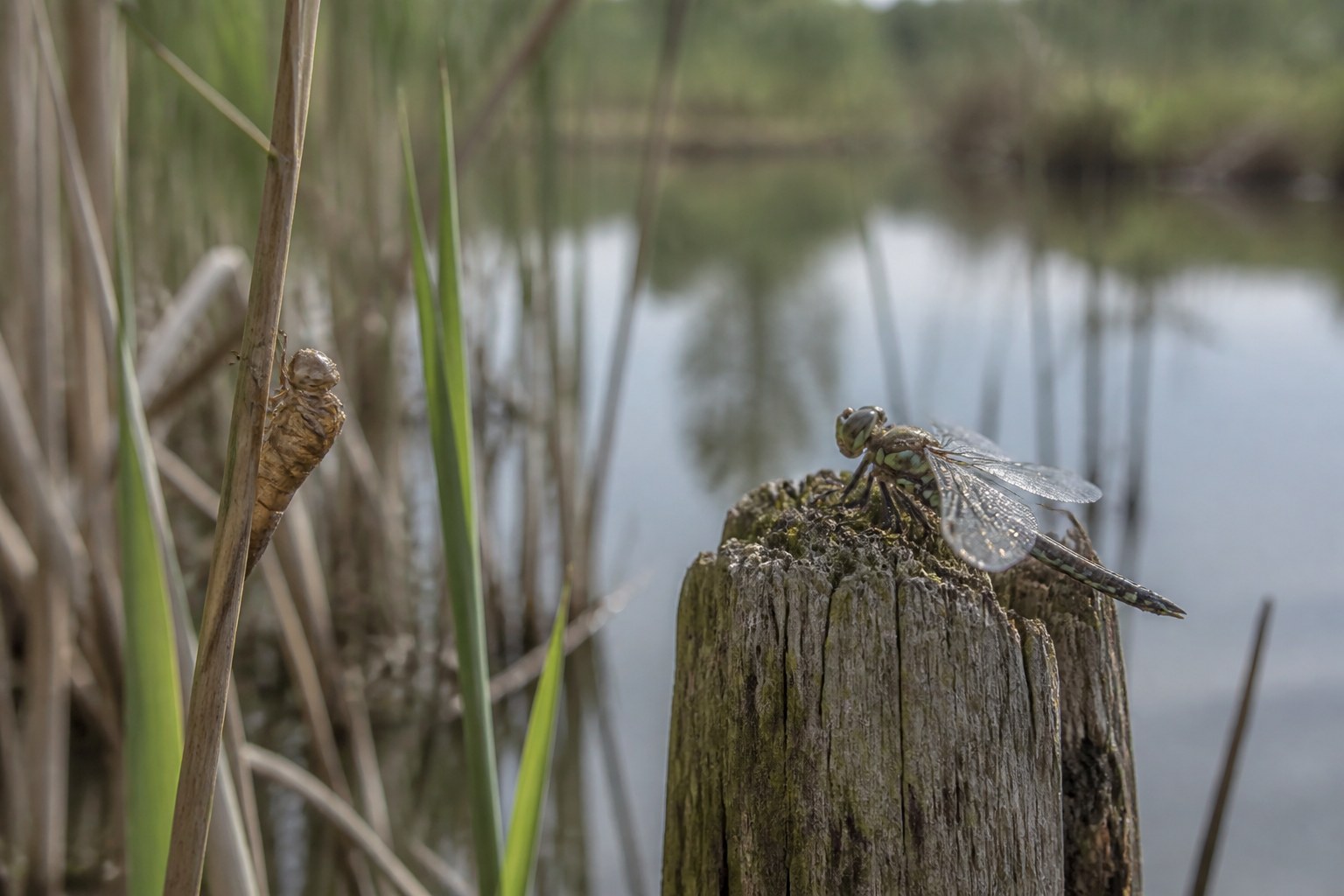
Seeing a dragonfly is often interpreted as a prompt about change, adaptability, perspective, or living with greater attention. Those modern meanings fit the insect's visible life story, but they are symbolic readings rather than proof that a supernatural messenger chose the observer.
The dragonfly also has documented cultural meanings that should not be blended into one universal tradition. A Japanese helmet in the Metropolitan Museum of Art, for example, reflects the dragonfly as kachi-mushi, the victorious insect, while contemporary grief writing often treats a visit as a sign from someone who died.
Behavior supplies a third layer. Dragonflies emerge from water, hunt flying insects, perch repeatedly, migrate, enter buildings, and sometimes accompany moving people, so the details of the encounter often explain why it happened even when the moment still feels personally important.
Quick Facts
- Common modern reading
- Change, adaptability, perspective, and present attention
- Life cycle
- Aquatic larva, emergence without a pupal stage, then winged adult
- Japanese emblem
- Kachi-mushi, the victorious insect, appears on samurai armor
- Following behavior
- Documented in one species, with cause not fully established
- Blue color
- May reflect species, sex, maturity, structure, pigment, or waxy bloom
- Interpretive limit
- A meaningful encounter does not verify spirit contact
What does a dragonfly mean spiritually?
In contemporary spiritual interpretation, a dragonfly commonly represents change, adaptability, clearer perspective, or the brevity of an important moment. It can be a useful prompt when life is changing, but the sighting does not tell you what decision to make.
The meaning works through metaphor.
A dragonfly spends its juvenile life in water and later emerges as a flying adult, so readers connect it with a change of environment, form, and capability.
Other popular readings, including luck, angelic protection, and a visit from the dead, do not follow automatically from that biology. They belong to modern spiritual or personal interpretation and should be named that way.
A careful first reading
What the evidence supports
- Observable life cycle
Dragonflies have a documented aquatic-to-aerial life cycle and appear in specific cultural art and symbolism.
- Reflective use
An encounter can prompt reflection about a real change, loss, or decision already present in your life.
What remains limited
- No verified sender
The insect cannot verify that an angel, ancestor, or loved one caused the encounter.
- No fixed code
A color or landing place does not supply a prediction shared by all traditions.
The strongest interpretation begins with a question you can answer: what change or memory did the encounter bring into focus? That keeps the symbol connected to your context without making the insect responsible for certainty it cannot provide.
Why does a dragonfly symbolize transformation?
Dragonfly transformation symbolism comes from a life divided between water and air.
The British Dragonfly Society explains that the larva develops underwater, climbs onto a support for its final molt, and emerges directly as an adult.
This is incomplete metamorphosis, so there is no pupa or chrysalis between the larva and adult. Comparing the process with a butterfly can be poetic, but the mechanisms are not the same.
The empty larval skin, called an exuvia, remains attached to the stem or surface after emergence. It offers a precise image for leaving one mode of life while retaining evidence of what came before.
The biology supports the metaphor; it does not prove the metaphor was universal or ancient. A current reader can use water, emergence, and flight to think about adaptation without assigning that interpretation to every culture that noticed dragonflies.
A useful application is specific rather than grand. Ask which skill, environment, or responsibility has changed, and what part of the old situation still needs to be carried forward rather than discarded.
What did the dragonfly mean on Japanese samurai armor?
The Metropolitan Museum of Art describes the dragonfly as a favored samurai emblem known as kachi-mushi, the victorious insect. Its curatorial record connects the name with direct flight toward prey and the image with courage and victory.
The museum's eighteenth-century kawari-kabuto places a large dragonfly over the helmet bowl rather than using it as a small crest.
Clouds on the bowl make the insect appear to move through the sky.
This is a documented cultural meaning, not a general promise that seeing a dragonfly guarantees success. The object tells us what its wearer and artistic setting could communicate, not what a wild insect says to a modern observer.
A reader who values the Japanese emblem might use the encounter to examine steadiness or follow-through. The honest link is the remembered quality of decisive movement, while the actual outcome still depends on preparation and action.
A symbol can lend a name to courage without guaranteeing victory.
Why would a dragonfly follow you or land on you?
A dragonfly that follows a walker may be showing a real behavior called accompanying.
In a 2010 field study, Holuša and Holuša recorded Brachythemis leucosticta accompanying a person on 53 walks near the River Barbate in southern Spain.
The longest recorded distances were 89 meters for males and 111 meters for females.
After breaking away, the insects generally returned to shade, which makes the behavior more specific than the vague idea that any dragonfly near a person is following them.
The researchers discussed feeding opportunities around a large moving animal, yet they observed prey capture in only three cases. The study documents accompaniment in one species; it does not prove a single cause for every following report.
Landing needs the same caution.
The Natural History Museum distinguishes perchers, which sit and wait before launching at prey, from hawkers that patrol on the wing; a hand, hat, chair, or fence can simply offer a temporary resting point.
If a landing felt unusually well timed, record the feeling without upgrading it into proof. The behavior may be ordinary, the timing may be meaningful to you, and both statements can remain true.
What changes if the dragonfly is blue, indoors, or part of a swarm?
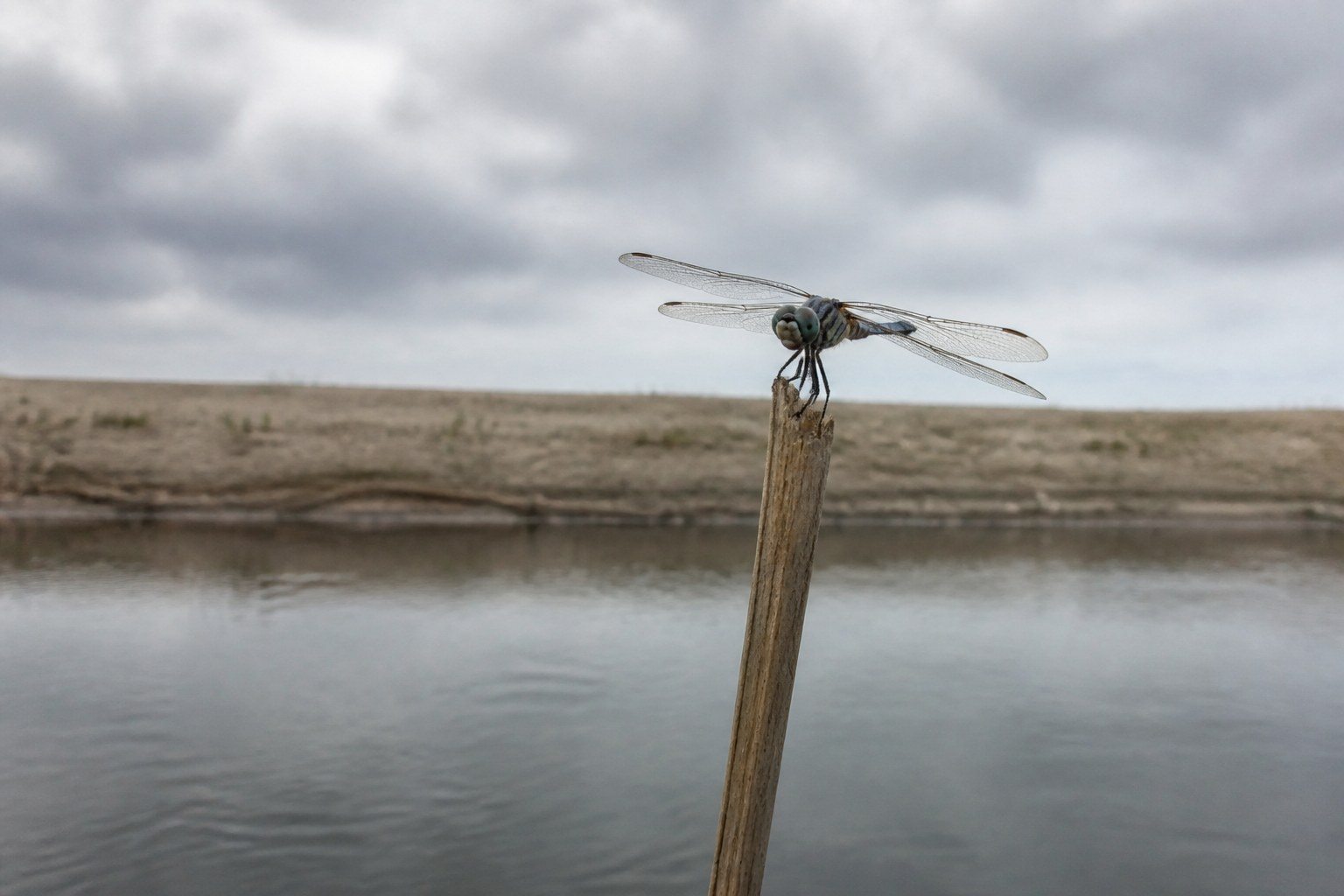
Color and setting change the practical questions before they change the symbolism. Blue, red, green, or gold may be useful for identification, but no color carries one message across thousands of dragonfly and damselfly species.
A 2022 review in the Journal of Zoology found that odonate color can vary between species, between individuals, and across an individual's lifetime.
Pigments, structural reflection, fluorescence, sexual signaling, species recognition, predator avoidance, and adaptation to physical conditions can all matter.
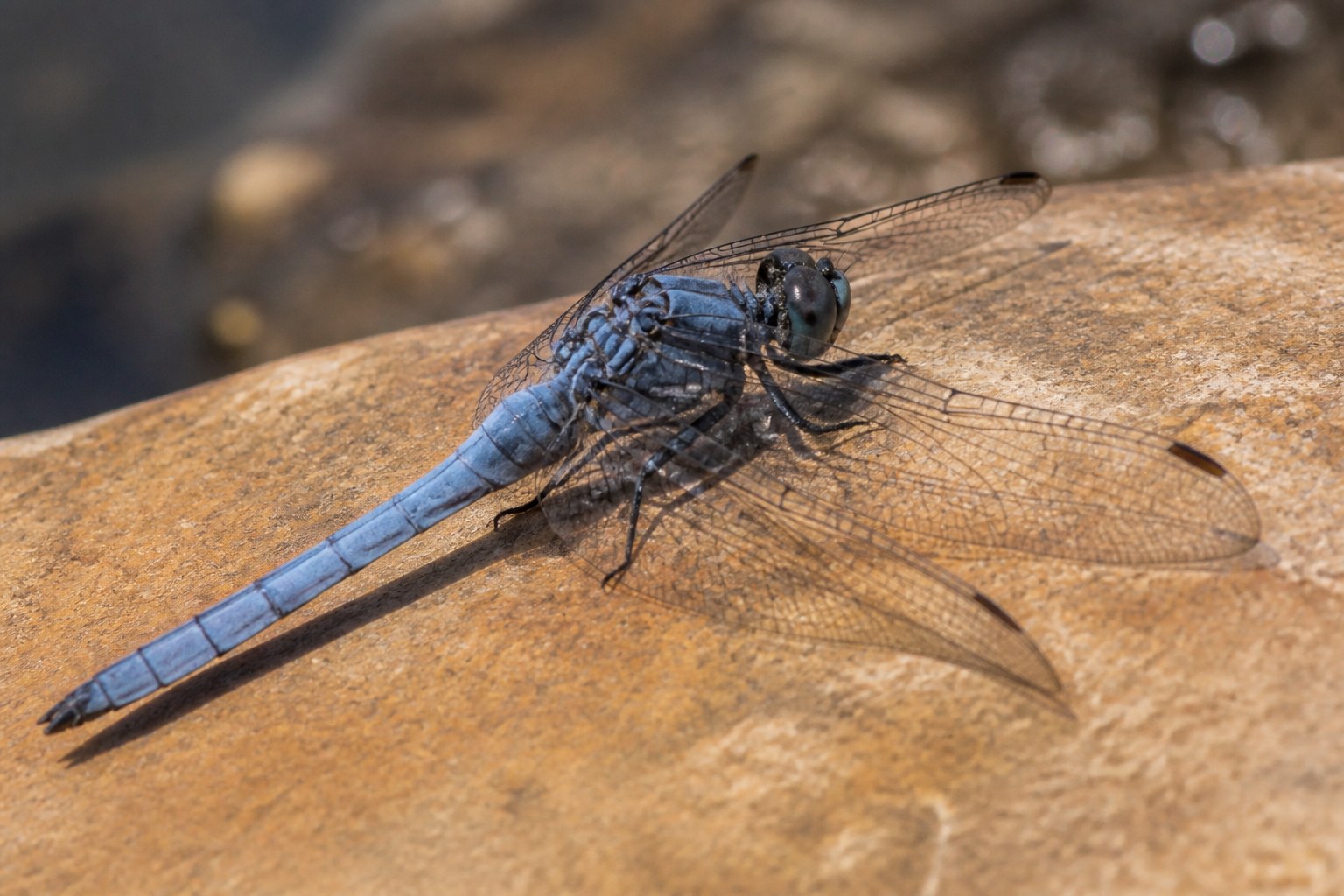
Some adults develop a waxy surface bloom called pruinescence, but it would be inaccurate to say every blue dragonfly is a mature male. Blue is an observation to identify, not a reliable spiritual code.
Start with the encounter type
Each situation offers different evidence and a different practical response.
Use calm or clarity as a personal association only if it genuinely fits your context.
The British Dragonfly Society recommends allowing the insect to find its way out before handling it.
A swarm describes ecological conditions and does not imply a group message.
Repeated behavior can make one location look personally selected.
North American dragonfly migration is real, and the Xerces Society describes citizen-science and isotope work used to trace seasonal movements. That evidence supports migration as one explanation for changing numbers, while local emergence and feeding conditions can produce other concentrations.
Is a dragonfly after a death a sign from a loved one?
A dragonfly seen after a death can become a powerful personal symbol, but the encounter cannot verify that the deceased person caused it.
The visiting-loved-one reading is widespread in contemporary grief stories, memorial writing, and spiritual websites, where it functions as comfort rather than testable evidence.
That modern reading should not borrow authority from the Japanese samurai emblem. Kachi-mushi concerns victory and courage in a specific material tradition; it does not establish that a dragonfly at a graveside carries a soul.
The insect's life cycle helps explain why the metaphor feels apt during bereavement. A life that continues in a radically different visible form can hold ideas of transition and continuity, even though biology does not answer a theological question about what happens after death.
Personal significance and factual certainty are different kinds of claim.
You may choose to receive the moment as a reminder of the person, while still saying honestly that you do not know why the dragonfly appeared then.
How to keep a grief reading grounded
- Name the memory
Write down the person, place, anniversary, or conversation the encounter recalled.
- Name the ordinary context
Notice water, season, warmth, prey, migration, and whether the insect was perching or emerging.
- Choose a response you own
A prayer, memorial action, phone call, or journal entry comes from your values rather than an assumed command.
- Avoid predictions
Do not use the sighting to promise safety, reunion, success, or a fixed future event.
This approach does not dismiss the encounter. It lets the dragonfly mark a meaningful moment without asking a wild insect to prove what no sighting can establish.
Frequently Asked Questions
What does it mean when a dragonfly visits you?
A dragonfly visit is commonly read as a prompt about change, adaptability, perspective, or present attention. The insect may also be hunting, perching, migrating, or emerging nearby, so the setting matters and the visit does not prove a supernatural message.
What does it mean when a dragonfly lands on you?
Spiritually, some readers treat a landing as a personal invitation to notice a change already under way. Biologically, a dragonfly may use a person as a temporary perch, and the landing cannot verify guidance or predict an outcome.
Why did a dragonfly follow me?
Accompanying a moving person has been documented in Brachythemis leucosticta, although that one-species study did not establish one cause for every encounter. Movement, available prey, shade, territory, and the local species may all matter.
What does a blue dragonfly mean?
Blue is often associated with calm or clarity in modern spiritual interpretation. In the insect itself, color can reflect species, sex, maturity, pigment, structural reflection, or pruinescence, so blue does not create a universal spiritual message.
Is a dragonfly in the house good luck?
There is no reliable way to infer luck from a dragonfly indoors. Open doors and windows and let it find a clear exit, because an insect that entered while flying or hunting may simply be unable to navigate back outside.
Can a dragonfly be a sign from someone who died?
It can serve as a private symbol of remembrance, especially when its timing brings someone immediately to mind. The sighting cannot confirm contact with that person, so keep the comfort while treating the cause as unknown.
Sources
- . Life Cycle and Biology. British Dragonfly Society. Link
- . Dragonflies: The Ultimate Hunters. Natural History Museum. Link
- . Helmet (Kawari-kabuto) Surmounted by a Dragonfly. The Met Collection. Link
- (2010). Accompanying Behaviour of Brachythemis leucosticta in Europe. Odonatologica 39(1), 63-70. Link
- (2022). Dragon Colors: The Nature and Function of Odonata Coloration. Journal of Zoology 317(1), 1-9. Link
- . Frequently Asked Questions. British Dragonfly Society. Link
- (2016). Using Technology and Citizen Science to Understand Dragonfly Migration. Xerces Society. Link
About Our Editorial Process
Every KnowTheAngels guide separates calculation method, tradition context, and personal reflection. We cite where interpretations come from, present more than one view, and never present symbolic reading as prediction.
Read our editorial policy