How to Practice Angel Mantra Meditation Carefully
A practical repetition exercise that distinguishes traditional mantra, prayer, and a self-written affirmation
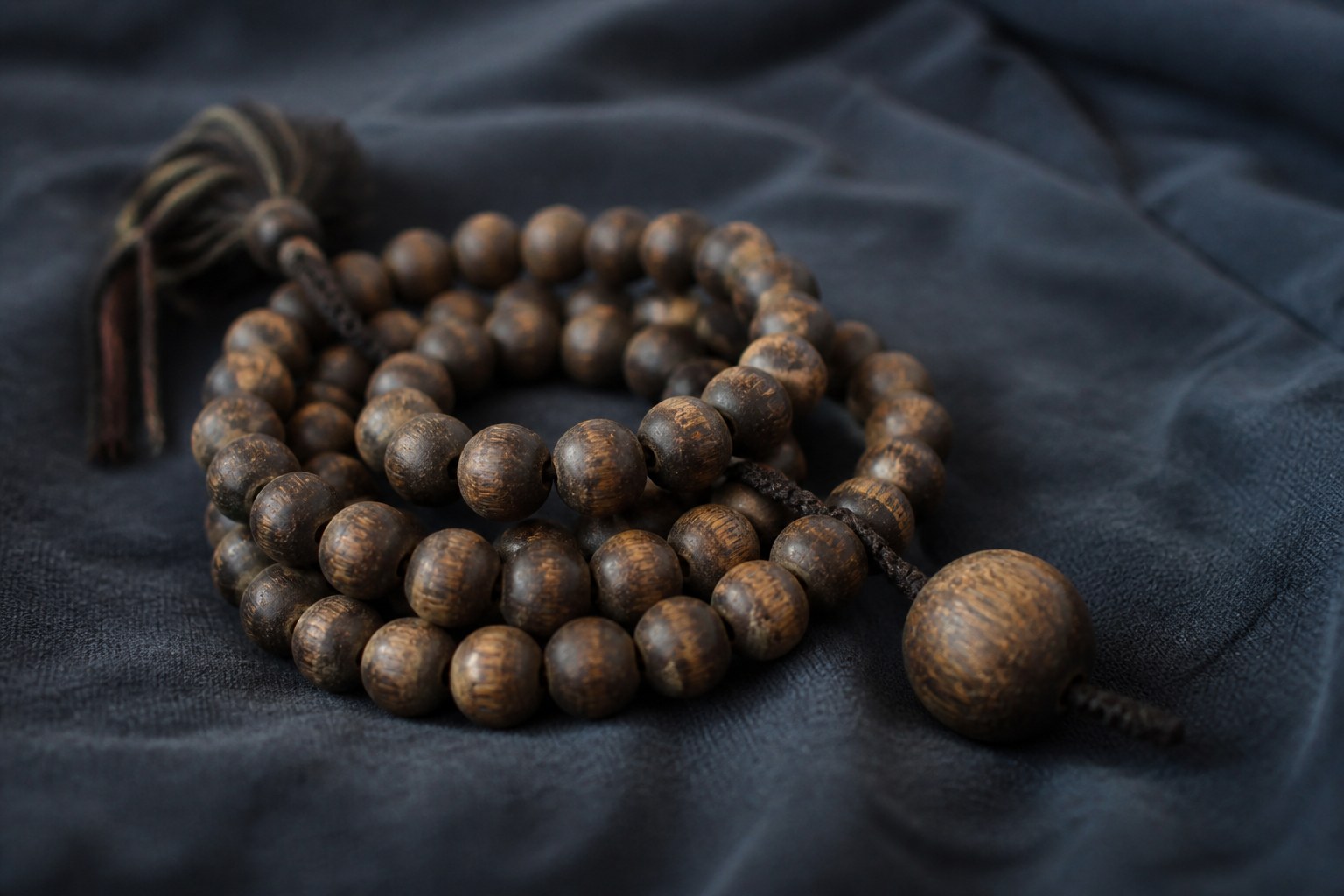
Angel mantra meditation is a modern umbrella term for repeating an angel name, prayer, or short reflective phrase while attending to the words. It does not identify one inherited practice shared by Christian, Hindu, and Buddhist communities.
The exercise here uses a chosen phrase for a few minutes of attention, with a definite ending. Traditional mantra sources are discussed separately so that a personal adaptation is not mistaken for a transmitted religious formula.
Quick Facts
- Angel mantra
- A modern umbrella term with no single canonical text
- Traditional mantra
- A specific formula of words or syllables used in a religious practice
- Affirmation
- A positive statement repeated about the self or a chosen value
- Mala
- A counting aid; 108 beads are common, not mandatory for every practice
- Teacher
- Requirements depend on the exact mantra and tradition
- Boundary
- Repetition can focus attention but does not prove angel contact
What is angel mantra meditation?
The word angel identifies the subject of this modern practice, while mantra is often being used loosely to mean something repeated. That loose use can hide a substantial difference between remembering a name, making a request, and reciting a formula received from a religious teacher.
For example, repeating Michael's name gives attention a name to return to, but the name alone does not specify a prayer or establish a traditional mantra. A source would still be needed for any claim about what that recitation means or how it should be performed.
In the Buddhist translation organization 84000's glossary, a mantra consists of words or syllables whose recitation belongs to a religious practice.
The exercise here cannot establish contact, guarantee protection, produce a prescribed altered state, or promise a health outcome.
A Christian who wants received devotional wording can keep it as prayer; a reader exploring attention can use an openly personal phrase. Neither needs a claim that all religions preserve a single hidden angel formula.
How do you choose an angel name or phrase to repeat?
Choose words you can explain, with a known author or source and a clear purpose for repeating them.
If your interest is Michael, Revelation 12:7 names Michael in a battle scene, but it supplies no instruction to repeat his name as a meditation formula. The passage can explain why the figure matters to a Christian reader without authorizing a newly invented ritual.
For a Christian petition addressed to God, a personal example is: "God, help me act with courage and care." It names the addressee and asks for help with conduct rather than claiming an angel has already answered.
Someone whose tradition permits angelic intercession might instead choose a sourced angel prayer or write a brief request for intercession. A reader whose church directs prayer to God can retain God as the addressee without adding direct address to an angel.
If you do not want to pray, "I can pause before I respond" is a plain attention phrase for a difficult conversation. Calling it angel-inspired would describe your association with it, not a message received from an angel.
Say the phrase once before committing to it. If its length makes you rush, shorten your own wording; if it is a traditional formula, first check whether shortening it would change the practice.

An angel-name list that promises particular powers needs evidence for those promises, even when the names themselves are familiar.
How do you practice aloud or silently, and for how long?
For the personal exercise described here, start with three to five minutes and choose spoken, whispered, or silent repetition according to what feels manageable. This duration is an editorial starting point, not a religious requirement or a threshold for an experience.
For spoken repetition, say the phrase softly enough to hear each word without projecting your voice.
Whispering uses quiet articulation without full voice. There is no need to make it breathy or hold a long exhalation, and you can switch to silent repetition if whispering feels effortful.
Silent repetition means bringing the words to mind at an ordinary speaking pace without moving your lips.
One short repetition session
Use your own phrase or a public prayer whose instructions allow this form of use.
- Prepare
- Input
- A supported seat, one phrase, and a timer
- Action
- Set three to five minutes and decide whether you will speak, whisper, or repeat silently.
- Result
- The words, mode, and ending are chosen before you start.
- Begin
- Input
- The first repetition
- Action
- Read or recall the whole phrase once, then pause briefly before repeating it.
- Result
- You can hear or think the wording clearly.
- Continue
- Input
- Ordinary breathing
- Action
- Let the phrase take the time it needs, even across more than one breath.
- Result
- Speech follows comfortable breathing without a breath-holding task.
- Resume
- Input
- A distraction or forgotten word
- Action
- Return to the start of the phrase at the next comfortable moment.
- Result
- You continue the session without resetting the timer or making up missed repetitions.
- Finish
- Input
- The timer sound
- Action
- Stop repeating, notice the room, and move on to the activity you had planned.
- Result
- Completion depends on the agreed time, not on receiving an answer.
There is no required progression through these modes: a whole session in silence is a complete version of this personal exercise.
Traditional instructions may differ: Pandit Rajmani Tigunait's Himalayan Institute teaching coordinates silent mantra remembrance with each movement of a mala bead. That instruction belongs to his explanation of japa and meditation, not to every use of repeated angel-focused words.
Afterward, note whether the wording was easy to recall and the pace comfortable so you can adjust the next session.
If repeating becomes distressing or stopping feels unsafe, end the exercise and speak with someone you trust before resuming. A longer session is not the required response to a difficult one.
What is the difference between a mantra, an affirmation, and a prayer?
Source and function decide the category, regardless of a phrase's language, pleasing rhythm, or repetition count.
| Form | Where its authority comes from | What repetition is doing |
|---|---|---|
| Traditional mantra | A particular religious text or transmitted practice | Reciting the formula within that practice's understanding and requirements |
| Affirmation | A person or program choosing a statement about the self | Returning to a statement the speaker intends to affirm |
| Prayer | An inherited text or a person's petition, praise, or thanksgiving | Addressing God or another figure as the named tradition permits |
| Personal attention phrase | The person choosing the cue | Giving attention a stable verbal object without claiming a religious transmission |
The American Psychological Association's dictionary includes regularly repeated positive statements about oneself under self-affirmation. An affirmation says something the speaker is adopting as true; a petition asks for something and leaves the answer open.
Compare "I will answer patiently" with "God, help me answer patiently." The intended conduct is similar, but the first is a personal commitment and the second addresses God.
Prayer can also have inherited wording, as in traditional angel prayers, so fixed wording does not distinguish mantra from prayer on its own. Nor does repetition erase the prayer's original addressee.
A traditional mantra may have a translatable meaning, and a person may use a prayer in a language they are still learning. Understanding the words helps informed use, but comprehension alone neither grants permission for a restricted practice nor determines whether a text is a mantra.
Where a source uses overlapping terms, retain its vocabulary and explain what that exact recitation involves.
Do you need 108 mala beads?
Beads are optional when your timer already supplies an ending; choose them if you prefer to count repetitions through touch.
Rolf Sovik's String of Pearls, published by the Himalayan Institute and Yoga International, describes a usual mala of 108 counting beads plus a meru bead marking the circuit. He also notes half-length and quarter-length malas.
In Sovik's account, each counting bead accompanies one recitation, and the meru bead marks the turn rather than another counted repetition. At that point the practitioner reverses direction instead of crossing it.
His convention credits a 108-bead circuit as 100 repetitions, simplifying totals and acknowledging distraction. A separate Himalayan Institute article, Lengthen Your Meditation, explains the extra eight as repetitions given for others.
These explanations belong to a particular yoga teaching context and do not establish a common origin for 108 across religions.
For a different named example, Nichiren Shoshu Basics of Practice, in its chapter on prayer beads, associates the 108 main beads with earthly desires. It describes a different arrangement of large beads and hanging strands, so Sovik's handling directions cannot simply be transferred to it.
The Metropolitan Museum of Art also catalogs a Chinese Buddhist string of 108 bodhi-seed beads dated to the nineteenth or early twentieth century. That object documents a count and material, not a universal instruction about what each bead must mean.
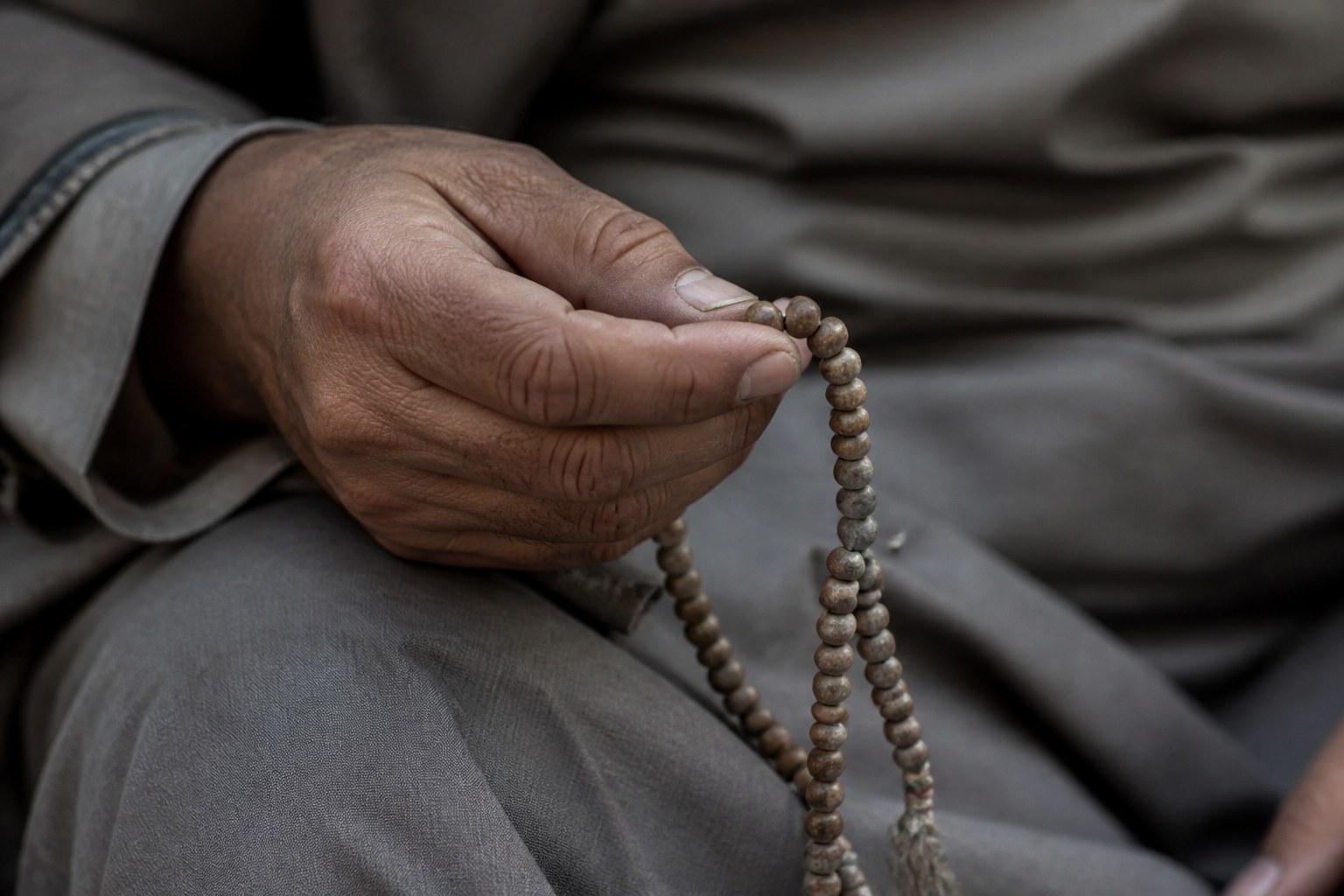
For a personal phrase, leave the beads aside if handling them makes it harder to attend to the words.
A lineage practice may assign counts for its own reasons, so keep the count with that practice's instructions. Do not replace a prescribed count with this article's short timer or assume that completing 108 proves anything about angels.
Do you need a teacher or initiation for a mantra?
FPMT's public mantra guidance distinguishes recitation from a complete deity practice. Some mantras can be recited without initiation, while specific Vajrayana practices have prerequisites.
FPMT expressly requires initiation for self-generation as a deity, a practice of imagining oneself in that deity's form. A publicly available mantra recording does not establish permission to perform every visualization or ritual associated with it.
FPMT describes oral transmission (lung) as receiving a text, mantra, or practice from an authorized holder; teacher permission concerns whether a particular practice may be used. Neither should be assumed to provide the formal ritual initiation required for a restricted deity practice.
The Office of the Dalai Lama provides a concrete example: Kalachakra tantric practice is grounded in receiving the appropriate initiations. That condition belongs to Kalachakra practice; it does not mean someone needs a tantric initiation before composing an English petition.
Hindu yoga sources also differ by practice: the Himalayan Institute's Year Long Meditation guide identifies some mantras usable with few prerequisites while saying most are personally given by a qualified teacher. This is the Institute's teaching, not a rule imposed here on every Hindu tradition.

Before using an unfamiliar formula, locate its exact title, teacher or institution, wording, and instructions for beginners.
If the instructions are missing or unclear, ask the organization that publishes the practice. Meanwhile, use your own clearly labeled phrase if that is what you want to do; there is no need to invent a substitute initiation or an ancient pedigree.
Can you make your own angel mantra?
Yes. When writing your phrase, check whether it asks for help with your response or guarantees events outside your control, then revise any promise you cannot honestly make.
For example, "Michael guarantees that nothing will hurt me" promises immunity from harm. A personal revision such as "God, help me recognize danger and accept help" leaves room to notice a risk and respond to it.
Keep the wording stable during one session so attention has a consistent object. Between sessions, revise your own phrase if it no longer says what you mean, then use that version for the next sitting.
Frequently Asked Questions
Can I repeat only an angel's name?
You can choose a name as the focus of a personal exercise, but the name alone supplies neither a traditional mantra nor instructions for it. Identify any claimed religious practice separately from your own choice.
Is silent repetition less effective than speaking?
This personal exercise does not rank the modes by spiritual power. Use the mode that lets you attend to the wording comfortably; a traditional practice may give different instructions.
What if I lose count on my mala?
For this optional personal exercise, resume where you are or finish at the preset time. A lineage practice may have its own counting conventions, so use those only when you are actually following that practice.
Does repeating a phrase mean an angel will answer?
No response, image, or special sensation is required to finish the exercise. An experience during repetition does not establish its supernatural cause.
Do I need initiation for my own angel affirmation?
No religious initiation is required to repeat a sentence you composed as a personal affirmation. Initiation requirements concern specific transmitted practices, whose instructions need to be checked separately.
Sources
- (2017). Rinpoche Explains the Lung or Oral Transmission. FPMT. Link
- . Mantra. 84000 Glossary of Terms. Link
- . Mantras. FPMT Education Services. Link
- . Kalachakra Initiations. DalaiLama.com. Link
- (2018). Self-affirmation. APA Dictionary of Psychology. Link
- . String of 108 Buddhist Beads. Collection record 42017. Link
- . String of Pearls: How to Use a Mala. Yoga International; also published by Himalayan Institute. Link
- . Lengthen Your Meditation, section: Use a Mala. Himalayan Institute Online. Link
- (2019). How Japa Leads to Meditation. Himalayan Institute. Link
- (2019). Year Long Meditation Practice Guide, p. 20. Himalayan Institute. Link
- . Basics of Practice, The Prayer Beads, pp. 48-50. Nichiren Shoshu introductory practice handbook. Link
- . Revelation 12:7. United States Conference of Catholic Bishops, New American Bible. Link
About Our Editorial Process
Every KnowTheAngels guide separates calculation method, tradition context, and personal reflection. We cite where interpretations come from, present more than one view, and never present symbolic reading as prediction.
Read our editorial policy