How Do You Practice Guided Angel Visualizations?
A one-image guided practice with an aphantasia-friendly path, body return, and a firm line between inner imagery and external proof
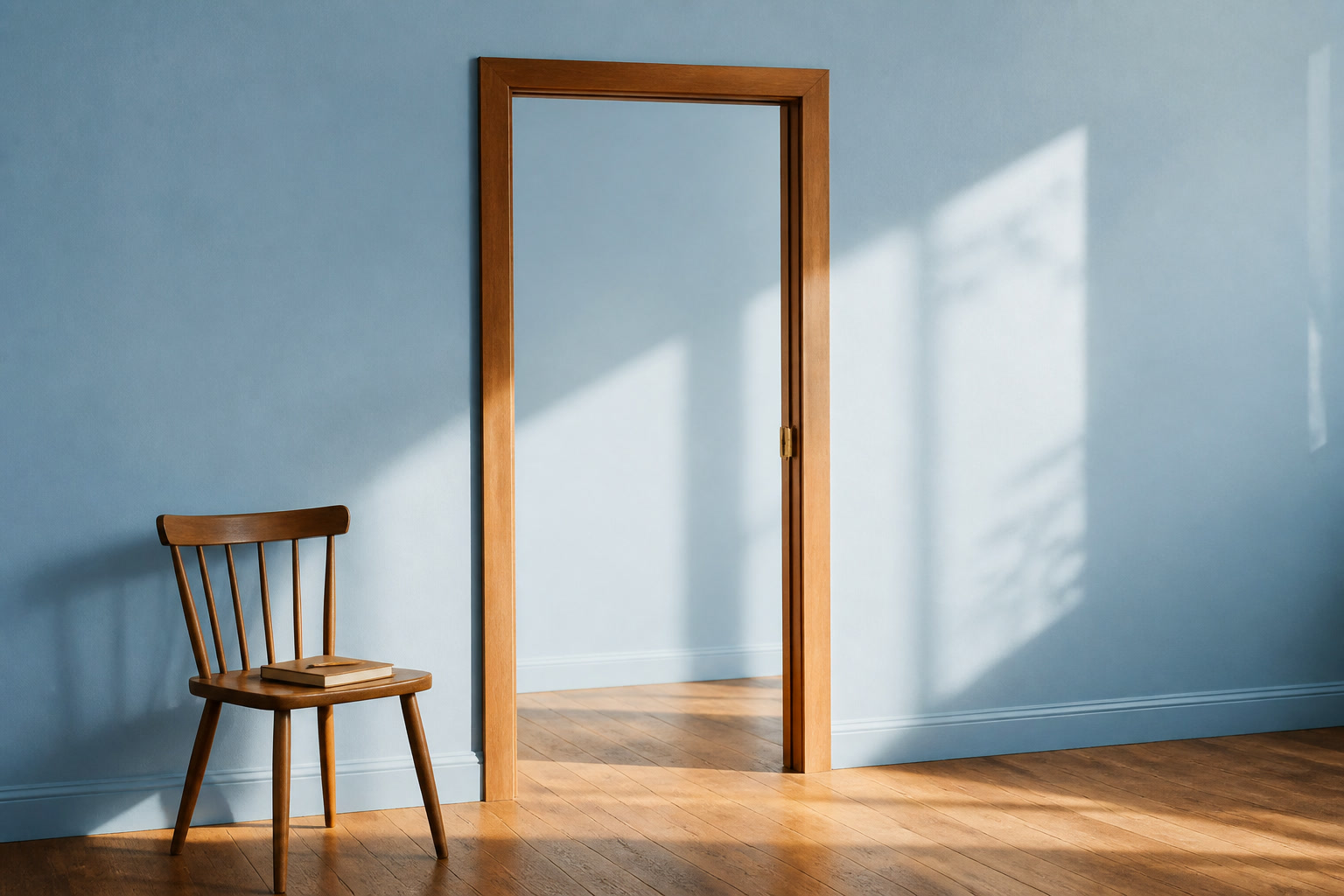
Angel visualization is a guided imagery practice that uses one chosen scene or symbol to support prayerful reflection. The image may be bright, faint, verbal, spatial, or absent.
Vividness is a feature of imagination, not a measure of spiritual truth.
Begin with one intention and one image. A doorway can hold transition.
A lamp can hold clarity. A pair of open hands can hold willingness.
Keep the scene still enough to notice when the mind starts adding characters, instructions, or dramatic events that the practice never asked for.
End with a body return. Open the eyes, feel the chair and floor, name several objects in the room, and write one descriptive sentence before making meaning.
This closing step separates the remembered image from the interpretation added afterward.
Quick Facts
- Image limit
- One chosen scene or symbol for one intention
- Aphantasia option
- Use a word, remembered object, shape, or spatial direction instead of a picture
- End with
- Eyes open, feet felt, room named, one descriptive sentence
- Interpret later
- Separate what appeared from what you think it means
- Stop when
- Distress rises, scenes multiply, or inner imagery starts issuing commands
How Do You Choose One Image That Can Hold One Intention?
Start with what you need from the practice, then select the image. A doorway can support reflection on transition.
A steady lamp can support clarity. Open hands can support willingness.
The image should make the intention easier to hold without pretending to answer it.
Write the intention in one line before closing the eyes. "I want to approach this choice with honesty" is bounded.
"Show me exactly what will happen" asks imagination to produce prediction.
Choose an ordinary image with few moving parts. A real doorway you know is easier to release than an invented celestial landscape full of figures, voices, and changing light.
A physical object from crystal-focus practice can serve as a tactile anchor, but its material does not make the inner scene more authoritative.
A simple breath-led meditation is the better fit when holding any image feels effortful. Visualization adds a tool.
It does not correct or complete basic meditation.
Keep the session under ten minutes at first. The image may sharpen, fade, or change.
Return it once to the chosen form. If it keeps multiplying, move to the body return and end.
The practice begins well when the reader can name why this image belongs. Decoration is not enough.
This limit matters because the doorway, lamp, or hands must carry a specific reflective job.
What Does a Simple Guided Angel Visualization Sound Like?
A useful script tells you what to attend to without telling you what you must discover. Read the following practice slowly or record it in your own voice, leaving several quiet breaths between each instruction.
A six-minute doorway visualization
The doorway is a reflection prompt for one next step, not a portal or prediction.
- Settle
- Input
- Feet, chair, and three unforced breaths
- Action
- Notice the room before closing the eyes or softening the gaze.
- Result
- The present environment remains available throughout the practice.
- Choose
- Input
- One real doorway you know
- Action
- Recall its color, material, handle, and position without adding a person or destination beyond it.
- Result
- One stable image carries the exercise.
- Reflect
- Input
- One current transition
- Action
- Ask which honest next step belongs to you and allow the doorway to remain closed while you listen for your own response.
- Result
- The image supports a question without staging an answer.
- Return
- Input
- The body and actual room
- Action
- Let the doorway fade, open the eyes, name five objects, and write one factual sentence about what appeared.
- Result
- Observation is recorded before meaning.
If you use angel language, keep it invitational: you may ask for wisdom, courage, or protection while holding the doorway. Do not instruct an angelic figure to appear, speak, hand over an object, or reveal what will happen next.
For a non-visual version, use the word doorway or the spatial idea of a threshold. You can know that a door has a frame and two sides without seeing it in the mind.
End on time even when the image feels unfinished. A clear ending is part of the practice because it proves that attention can return without receiving a message or reaching a dramatic scene.
What If You Cannot See Pictures in Your Mind?
Aphantasia describes little or no voluntary visual imagery. It does not prevent focused reflection.
Replace the picture with another stable form of attention and keep the same one-intention limit.
Four non-picture anchors
Use the mode that arrives naturally instead of forcing a visual scene.
Let the word carry the intention without describing a picture
Know its shape and location without seeing it
Use direction and relation as the anchor
Keep sensation grounded in the present room
Do not rate the substitute by how close it feels to seeing. A word can hold an intention precisely.
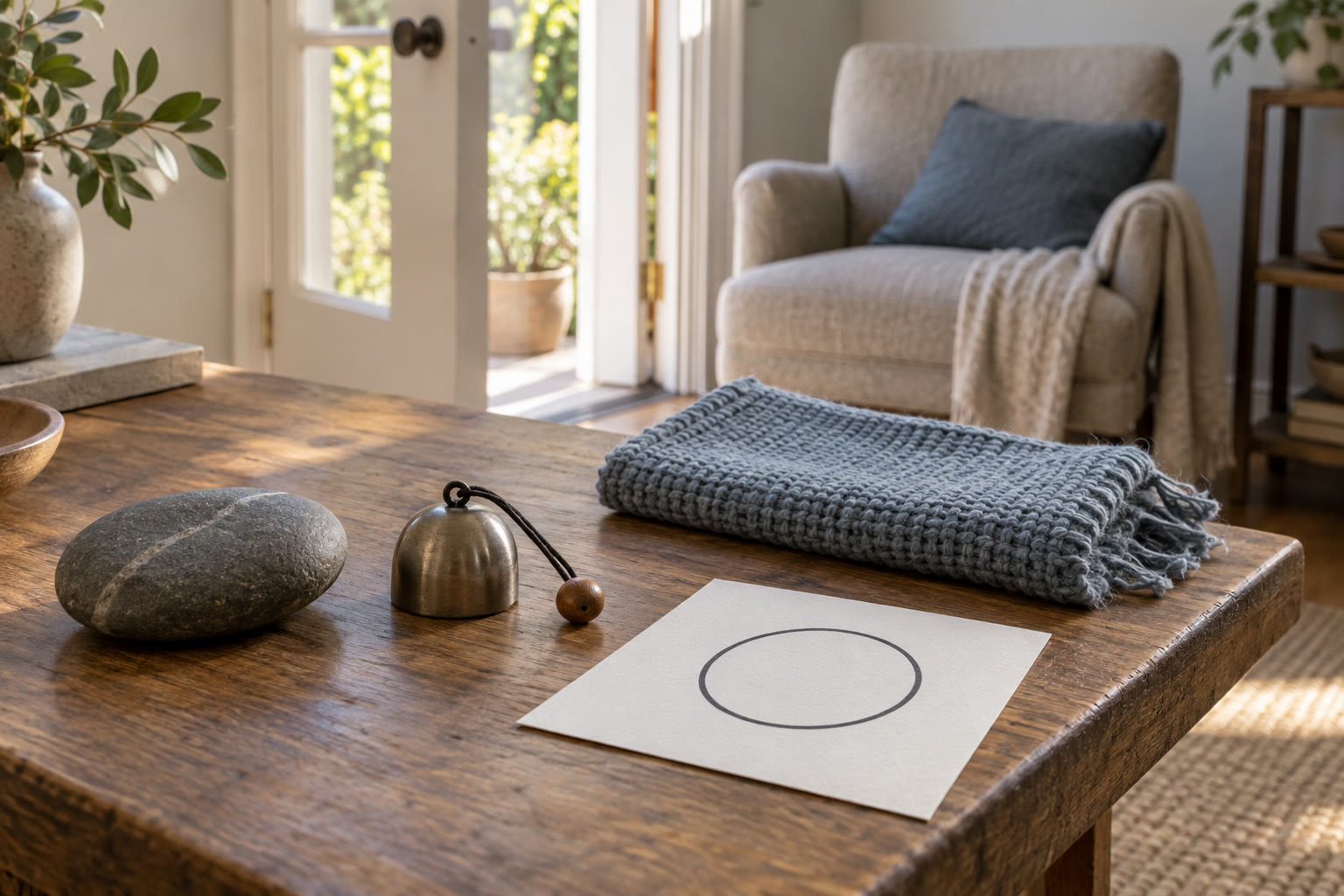
A spatial sense may be clearer than a picture. The method needs stable attention, not visual spectacle.
A tactile devotional surface may help readers who prefer objects, but the object should remain simple. Adding many props only moves the pressure from inner imagery to outer staging.
Guided recordings often rely on visual verbs. Translate them.
The intended reflection survives the change.
The reader can now participate without treating aphantasia as spiritual absence. A clear word, body cue, or spatial relation completes the same practice job.
How Do You Write and Record Your Own Visualization Script?
Write for attention, not performance. A usable recording names the purpose, settles the body, introduces one image or sensory anchor, leaves quiet space, and guides a complete return.
Draft the script at normal speaking length, then read it aloud with a timer. Written sentences often become dense when spoken, so remove explanations that belong before or after the practice rather than inside it.
Build a script that remains easy to leave
Each part has one attention job and a clear boundary.
- State the purpose
- Input
- One reflective intention
- Action
- Name what the session will hold without promising insight, contact, or prediction.
- Result
- The listener knows the task before imagery begins.
- Settle
- Input
- Breath, chair, feet, and room
- Action
- Use a few concrete sensory cues and keep permission to open the eyes.
- Result
- The present environment remains available.
- Offer one anchor
- Input
- A doorway, lamp, open hands, word, sound, or spatial relation
- Action
- Use optional language such as imagine, sense, remember, or simply know.
- Result
- Visual and non-visual listeners can follow the same purpose.
- Leave silence
- Input
- Several unfilled breaths
- Action
- Pause without adding a visitor, gift, color change, or interpretation.
- Result
- The listener can notice without being pushed toward a story.
- Return
- Input
- Eyes, room, movement, and one written note
- Action
- Release the anchor, orient to the date and room, then record observation before meaning.
- Result
- The practice has a complete end.
Record in a familiar, unhurried voice and keep the volume even. Dramatic whispers, sudden effects, and swelling music can make an ordinary image feel externally important before the listener has evaluated it.
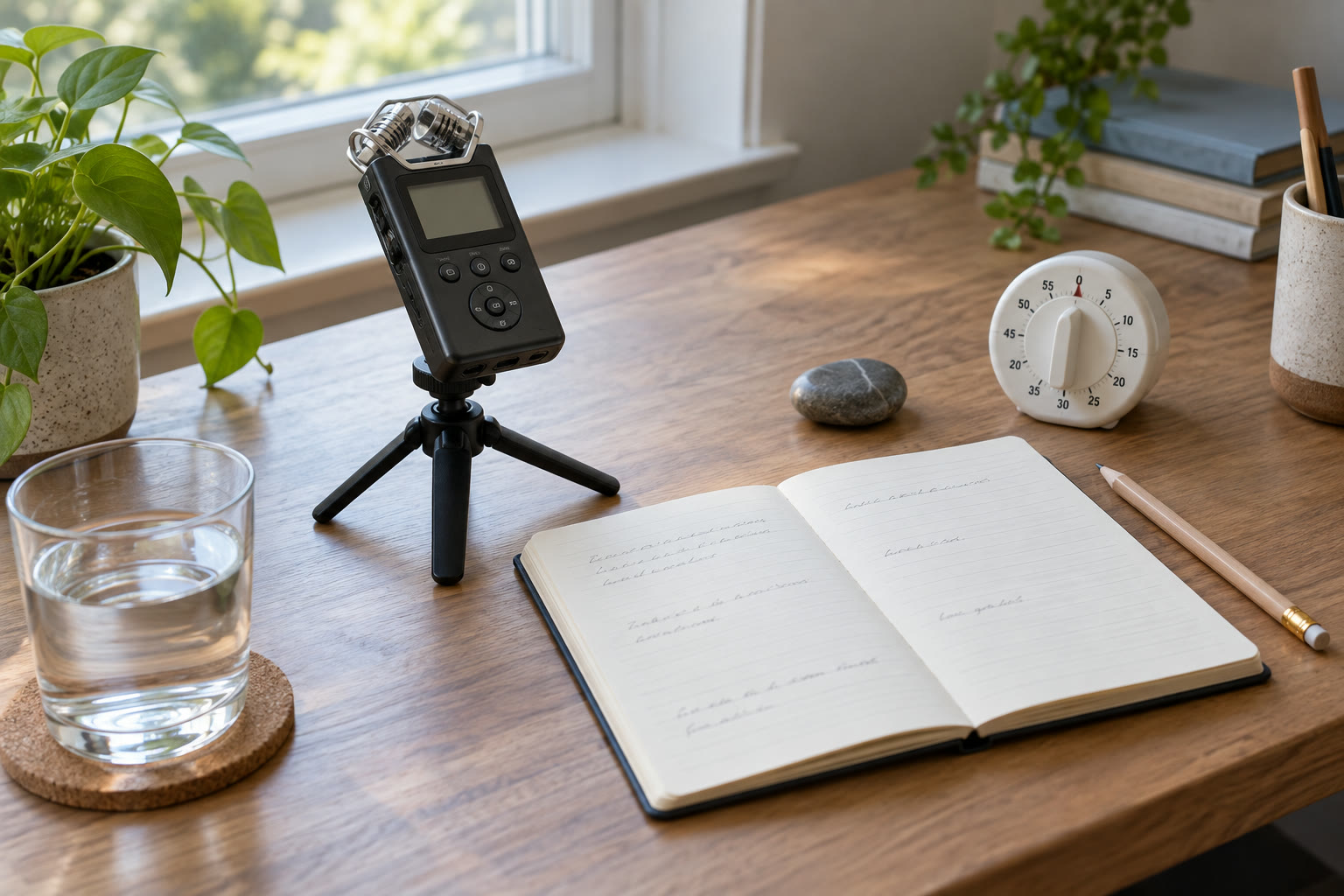
Test the recording once while fully awake and in a safe setting. Check whether the pauses are long enough, the ending is unmistakable, and every instruction can be declined without the listener feeling they failed.
Do not use a recording while driving, bathing, operating equipment, or in any setting where reduced attention creates risk. Headphones are optional; the listener should still be able to respond to the environment when needed.
The best recording does not tell the listener what appeared or what it meant. It gives enough structure to focus and enough freedom to report an ordinary, partial, non-visual, or empty experience honestly.
Can a Vivid Inner Scene Count as an Angel Message?
Vividness cannot identify a source. Mental images draw on memory, expectation, emotion, recent media, guided language, and sleep-related processes.
A surprising scene may feel meaningful while remaining internally generated.
Describe before interpreting. Record color, movement, people, words, and the point where the chosen image changed.
Do not add "Michael appeared" when the observation is a blue figure with a sword.

Use a four-field discernment entry when words or instructions arise. Preserve the exact wording and delay conclusions.
The visualization session itself should not become an argument for the image's authority.
A figure that resembles Michael's iconography may reflect prior knowledge of sword, shield, or blue-color associations. Familiar symbolism explains why the figure appeared without settling whether it carried an external message.
Commands deserve a firm boundary. Do not obey instructions involving danger, health, money, secrecy, or control of another person.
Return to the room and use qualified practical advice.
Personal meaning can remain. The reader may treat the image as a prompt to consider courage or honesty while leaving its cause unresolved.
That is a fuller response than either automatic belief or automatic dismissal.
Why Does the Body Return End the Practice?
Visualization changes where attention is organized. The body return marks a deliberate shift back to the present environment.
Without it, the reader may continue interpreting while still absorbed in the scene.
The ninety-second body return
Close the chosen image before deciding what it means.
- Reduce
- Input
- The chosen image
- Action
- Let movement stop and allow the scene to become smaller or fade.
- Result
- The image no longer asks for continuation.
- Contact
- Input
- Feet, chair, and hands
- Action
- Press gently into each point of support and notice temperature and pressure.
- Result
- Attention returns to the body in the room.
- Orient
- Input
- The present environment
- Action
- Open the eyes and name five ordinary objects, the date, and the location.
- Result
- The current setting becomes primary again.
- Record
- Input
- One descriptive sentence
- Action
- Write what appeared without assigning a cause.
- Result
- Observation is preserved before interpretation.
The return differs from an evening release phrase. Evening practice hands one open loop into rest.
Here the reader is leaving an intentionally generated image and restoring ordinary sensory orientation.
Keep the eyes open longer when the session felt intense. Drink water, walk through the room, or speak with someone before reviewing the image.
During illness, consent-aware healing prayer may hold hope, while imagery still cannot replace treatment or make a recovery promise.
If the body still feels unreal or the scene feels hard to exit, stop using guided imagery and seek qualified support. A practice that repeatedly produces detachment is not doing what it was meant to do.
The body return completes the method even when no insight follows. Ending cleanly is a valid result.
The image does not owe the reader a conclusion.
Why Do Crowded Visualization Scripts Fail?
A guided script is too crowded when it adds a path, temple, angel, object, voice, gift, and prediction in one session. Each new element creates another interpretation claim and makes it difficult to locate what the reader actually supplied.
Edit the script until one visual action remains. Guided imagery works through focused attention and suggestion, so every spoken scene change supplies new memory material.
Approach a doorway without crossing it, or sit beside a steady lamp without asking it to change.
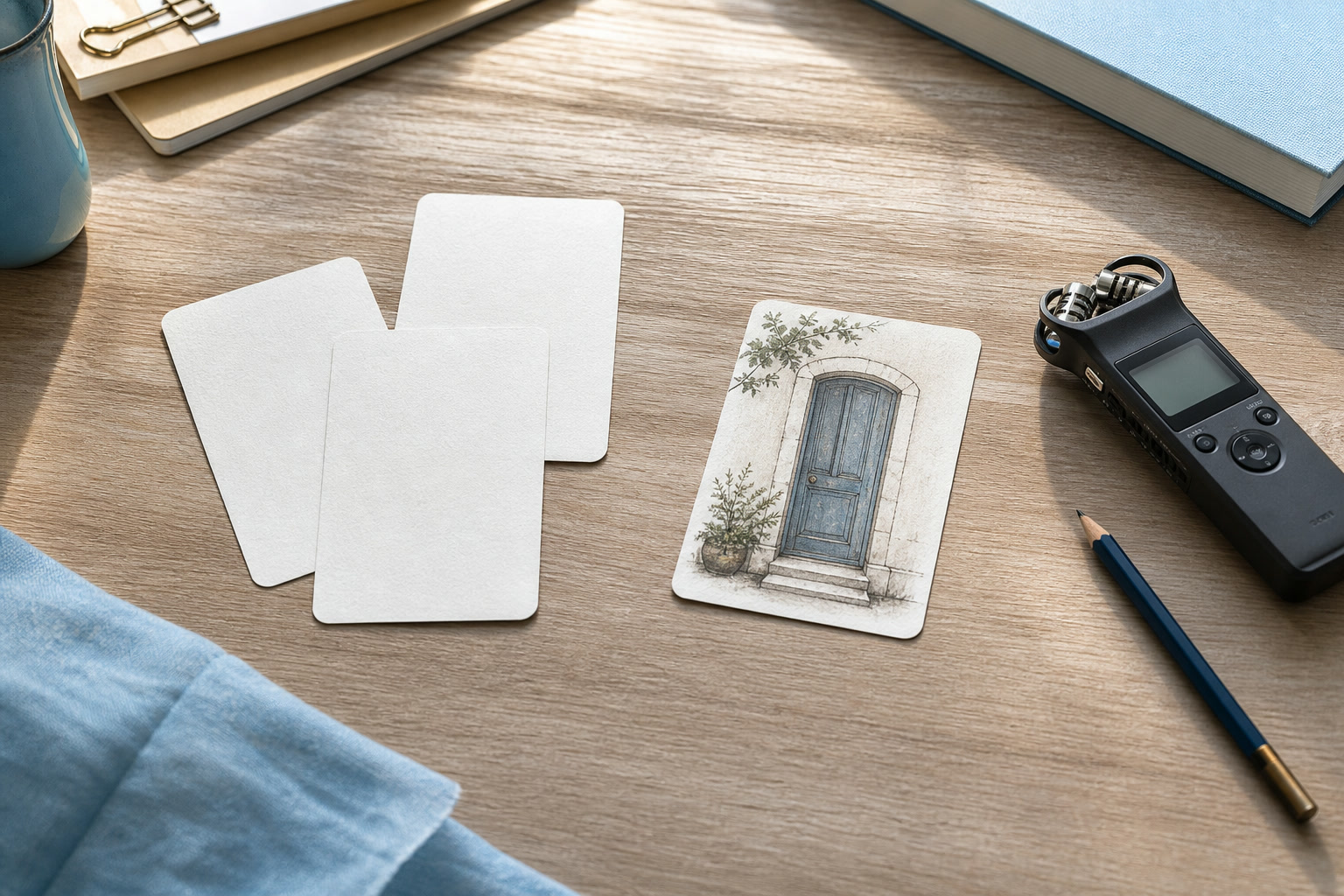
Audio can support pacing, but silence between prompts matters. A constant voice prevents the reader from discovering whether the image can hold attention without more instructions.
Music should not manipulate the reader into treating emotion as evidence. Use neutral sound or none.
A swell at the moment an angelic figure appears can manufacture importance through editing.
An oracle card prompt offers a different structure because the image exists outside the mind. That visible card can be revisited.
A visualization script needs the descriptive record because the scene disappears and memory changes.
The strongest script is easy to leave. It names the purpose, gives one image, allows a quiet interval, and guides the body return without announcing what the reader should discover.
This boundary helps the reader separate a chosen prompt from an interpretation added later.
How Do You Keep an Image Log Without Mixing Recall and Meaning?
Use two columns after the body return. The first records what appeared.
The second records possible meanings. This small layout prevents an interpretation from slipping back into the remembered scene.
Write sensory facts first. A wooden door remained closed.
The lamp was dim. The hands felt warm.
Then list more than one interpretation, including an ordinary one shaped by memory or expectation.
| Observation | Possible reflection | Ordinary context to check |
|---|---|---|
| A closed doorway | A transition feels delayed | Recent choices, buildings, or images involving doors |
| A dim lamp | Clarity feels incomplete | Room light, fatigue, and the script wording |
| Warm hands | The posture felt receptive | Circulation, room temperature, and hand position |
| A blue figure | Michael symbolism came to mind | Prior Michael reading, artwork, and color expectation |
A gratitude practice may help a reader name the support already present after the session. Keep that reflection separate so gratitude does not become proof that the chosen meaning was correct.
Review several logs for repeated images. Repetition may show a stable personal symbol, a frequently used script, or a recurring concern.
It still does not identify an external speaker.
The log changes the reader's action by slowing certainty. A scene can remain personally useful while its cause and final meaning stay open.
Which Practice Works Better When Visualization Does Not?
A different practice is the better choice when visualization repeatedly increases agitation, detachment, compulsive interpretation, or pressure to see. Choose the replacement by the actual need rather than looking for a more intense version of imagery.
The substitute should remove the part that caused trouble while preserving the purpose.
Breath can train attention, a journal can test wording, and an external card can supply a visible prompt without forcing an inner picture.
Choose a nearby method by need
A different practice can do the same work without inner pictures.
Use breath, posture, and timer without imagery
Preserve exact language and review later fruit
Keep the external image separate from interpretation
Use a release phrase and protect sleep
Readers seeking a courage rehearsal may choose Michael-focused meditation, but only when one restrained attribute supports a real boundary. It is not a repair for distress caused by imagery itself.
Use the replacement for a week before comparing. Notice whether attention steadies, daily action becomes clearer, and the practice is easier to end.
Visualization is one method among several. This choice helps the reader match attention to a usable method, so leaving imagery is not evidence of spiritual failure or lack of imagination.
Frequently Asked Questions
What should I visualize in an angel meditation?
Choose one simple image tied to the intention, such as a doorway for transition, a lamp for clarity, or open hands for willingness. Avoid building a crowded fantasy scene.
Can I practice visualization if I have aphantasia?
Yes.
Use a word, concept, remembered object, spatial direction, or body sensation.
The practice depends on focused attention, not on producing a visual picture.
Does a vivid inner image mean it came from an angel?
No.
Vivid imagery can arise through imagination, memory, expectation, emotion, and sleep-related processes.
Record the image descriptively and treat meaning as interpretation.
When should I stop a visualization?
Stop when anxiety rises, the scene becomes hard to exit, commands appear, or you feel detached from the room. Open your eyes, ground in the environment, and seek qualified support if distress continues.
Sources
- (2015). Lives Without Imagery: Congenital Aphantasia. Cortex. Link
- (2021). Behavioral and Neural Signatures of Visual Imagery Vividness Extremes. Cerebral Cortex Communications. Link
- (2023). Diversity of Aphantasia Revealed by Multiple Assessments. Frontiers in Psychology. Link
- (2026). Meditation and Mindfulness: Effectiveness and Safety. National Institutes of Health. Link
About Our Editorial Process
Every KnowTheAngels guide separates calculation method, tradition context, and personal reflection. We cite where interpretations come from, present more than one view, and never present symbolic reading as prediction.
Read our editorial policy