Who Is Israfil, the Angel Who Blows the Trumpet?
The Qur'an describes the blast that ends the world in more than a dozen places, and never says who sounds it.
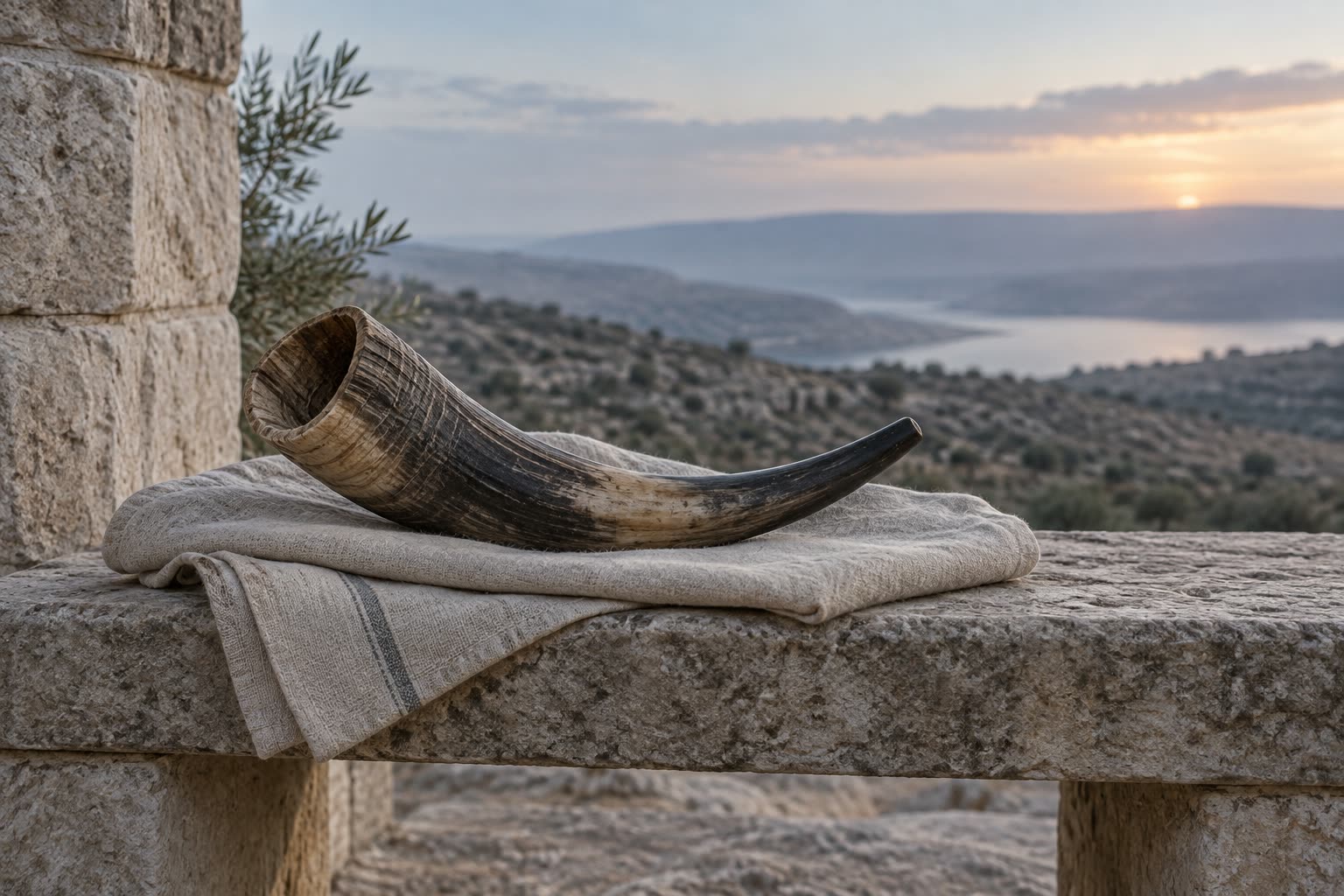
A trumpet sounds and the world ends. The Qur'an returns to that moment again and again, from more than a dozen directions.
It never names the angel holding the instrument.
That gap is where this figure lives. Israfil is one of the best known angels in Islam and one of the least documented in the text that his tradition treats as decisive, which makes him an unusually clear case for reading each kind of source carefully.
What follows separates the verses from the reports, and the reports from the commentary built on them.
Quick Facts
- Arabic name
- إسرافيل, Israfil
- In the Qur'an
- Not named; the trumpet is described without him
- Named in hadith
- Sahih Muslim, in a night prayer beside Jibril and Mikail
- Office
- Sounding the sur at the appointed hour
- Blast count
- Two in 39:68; three in the common commentary scheme
- Equated with Raphael?
- By modern comparison only, not by either tradition
Is Israfil named anywhere in the Qur'an?
The short answer is no, and it is the single most useful thing to know before reading anything else about this angel. The Qur'an returns to the trumpet blast that ends the world in more than a dozen passages, and in none of them does it say who blows it.
This is not an argument from silence about an obscure detail.
The blast is one of the most frequently described events in the entire book, so the absence of a name across all of those passages is a deliberate feature of how the text handles it.
What the Qur'an gives and what it withholds
The second list is where the tradition, rather than the text, is doing the work.
What the evidence supports
- The trumpet itself
The sur, sounded at the appointed hour.
- The effect of the blast
What becomes of the living and the dead when it sounds.
- More than one sounding
The blasts come in sequence rather than singly.
- Whose command it is
The order to blow issues from God.
What remains limited
- The blower's name
No passage names the angel who sounds it.
- Any description of him
Nothing is said of his appearance or his stature.
- A fixed count
The book never settles how many soundings there are.
- The waiting
No verse has him poised, awaiting permission to blow.
Everything in that second list arrives from hadith and from the commentary tradition built on it. Nothing there is invented, and nothing there is Qur'anic either.
Saying so plainly is not scepticism about the tradition.
It is how a great deal of Islamic angelology actually works, and the honest move is to label the layer rather than to blur the two together. A reader who keeps the two lists apart can evaluate almost any claim about this figure without knowing Arabic.
That check has an immediate use. A page that opens by citing a surah for the name has skipped the step, and the citation will not survive being looked up.
Why does the Qur'an name so few angels?
The previous answer invites an obvious follow-up, and answering it changes how the silence should be read. If the Qur'an describes the trumpet a dozen times without naming its blower, is that unusual?
It is not. The book describes a great many angels and names almost none of them.
| Name | Where | What the passage says of them |
|---|---|---|
| Jibril | 2:97 and 2:98 | Brings the revelation down to the Prophet's heart |
| Mikail | 2:98 | Named alongside Jibril as one whom God defends |
| Malik | 43:77 | Addressed by the people of the fire as its keeper |
| Harut and Marut | 2:102 | A pair associated with what was sent down at Babylon |
That is close to the whole list. Everyone else appears by office rather than by name.
The angel of death is described at 32:11 without a name. The bearers of the throne are counted at 69:17 without names.
The recorders, the guardians and the gatekeepers all act unnamed.
Set Israfil beside that pattern and his absence stops being a gap in the record.
He is missing for the same reason nearly every other angel is missing, which is that naming individual angels is not something this book does often. The question worth asking is not why the Qur'an withholds his name but why the later tradition supplied one, and the answer is that a figure with a defined office tends to acquire a name once people start discussing him.
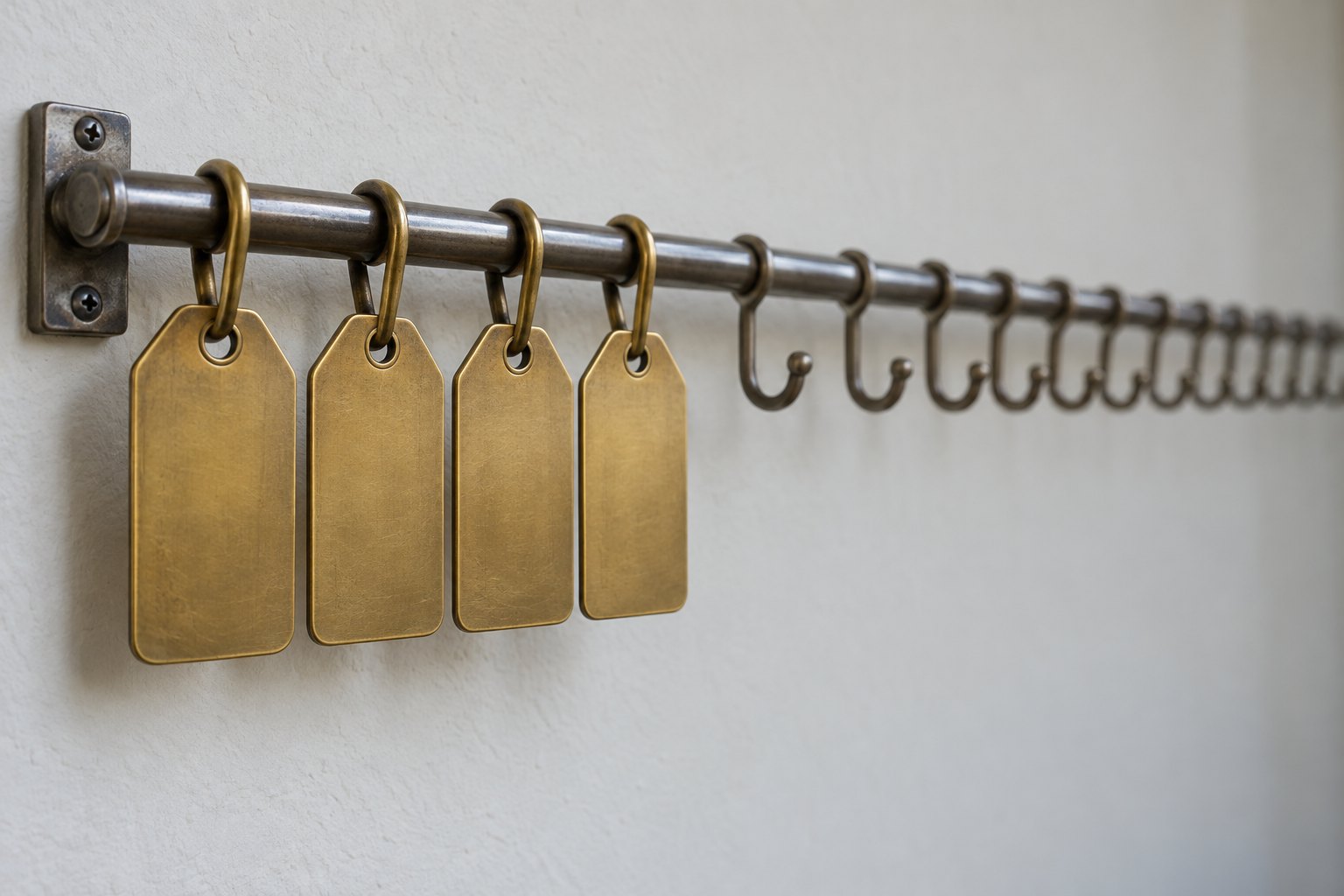
What does the Qur'an say about the trumpet itself?
The clearest passage is Surah az-Zumar 39:68, which does the work of a whole chapter in two sentences. It says the trumpet is blown and everyone in the heavens and on the earth falls dead, except whom God wills, and then it is blown a second time and they are standing, looking on.
And the trumpet will be blown, and whoever is in the heavens and whoever is on the earth will fall dead, except whom Allah wills. Then it will be blown again, and at once they will be standing, looking on.
Qur'an 39:68, in a standard English rendering
Two blasts, one sentence apart.
Other passages return to the same moment from different angles rather than repeating it. Surah al-An'am 6:73 makes the blast the hinge on which divine sovereignty turns, and Surah an-Naba 78:18 has the day the trumpet sounds bring people forward in crowds.
Surah Ya-Sin 36:51 adds the detail that matters most to a reader picturing the scene, having the dead come out of their graves and hasten to their Lord at the sound.
Surah an-Nazi'at 79:6 and 79:7 describe a quaking followed by a second convulsion, without naming a trumpet at all. Read beside 39:68 those verses invite a reader to line the events up, and that invitation is the origin of most of the schemes discussed below.
The vocabulary shifts as well, which is easy to miss in translation. Most of these passages use al-sur, but Surah al-Muddaththir 74:8 reaches for a different word, al-naqur, for the same sounding.
Two words for the instrument, and still no word for the one holding it.
Then there is Surah al-Haqqah 69:13, which speaks of a single blast.
Set the passages side by side and the count is not fixed anywhere in the book. That open question is precisely the gap the later tradition moved into, which means the commentators are answering something the Qur'an left unresolved rather than restating something it settled.
Where does the name Israfil actually come from?
The name enters the record through hadith, and one attestation is considerably stronger than the rest. Sahih Muslim preserves a prayer the Prophet is reported to have opened his night worship with, addressing God as Lord of Gabriel, Michael and Israfil.
Three names stand together in a single line of one of the two most authoritative collections in Sunni Islam.
That is a very different footing from a name that appears only in a later compilation, and it is why Israfil is treated as securely traditional even though he is absent from scripture.
The name in two halves
The ending is the part that travels; the opening is the part nobody has settled.
No agreed Arabic root, so a loan from elsewhere is generally assumed
The same close carried by Jibril and Mikail
The seraph proposal is the one most often repeated and the one most often overstated.
The difficulty is that the Arabic offers no root to work from. A name that behaves like Arabic would let a grammarian point to a verb and a pattern, and here there is nothing to point at except the ending.
It is a reasonable philological suggestion about where a loaned name came from. It is not a claim that Islamic tradition understands Israfil to be a seraph, and those two statements are far apart.
Pages regularly print the second while footnoting the first. Noticing the substitution is a good general test, because the same move turns a hadith identification into a Qur'anic fact elsewhere on the same pages.
The same gap explains why the spelling is stable while the meaning is not. Nobody disputes how to write the name, because it was received whole rather than built from parts anyone could argue about.
How many blasts does the tradition describe?
Commentators reading the trumpet verses together arrived at a sequence, and the most widely repeated version has three stages.
Each stage is anchored to a different passage, which is what makes the scheme look textual when it is summarised quickly.
- The blast of terror: creation seized by fear, drawn from the quaking of Surah an-Nazi'at.
- The blast of death: the swoon of 39:68, at which the living fall.
- The blast of resurrection: the second blast of that same verse, at which they stand.
The three-blast scheme is a synthesis rather than a quotation.
It reconciles verses that describe terror, death and rising without ever stating how many separate soundings are involved. Scholars who weighted the passages differently arrived at two, and the disagreement is old rather than modern.
For a reader the practical consequence is small and worth holding onto. A source that presents three blasts as the Qur'anic account has converted an interpretive tradition into a text, which is the same move that puts the name into the Qur'an.

The scheme is still worth knowing. It is what most Muslim readers will have encountered, and a page that omits it is as unhelpful as one that mislabels it.
What happens between the two blasts?
Surah 39:68 puts two blasts in one sentence and says nothing about the gap between them.
The tradition does address it, and the way it does so is unusually candid.
A report preserved in Sahih al-Bukhari has Abu Hurayra relate that between the two blasts there are forty. When his listeners press him to say forty what, he declines three times: not forty days, not forty months, not forty years, only forty.
Between the two blasts there are forty.
Sahih al-Bukhari, the report of Abu Hurayra, in a standard English rendering
That refusal is the most interesting thing in the passage.
A tradition inventing detail does not usually preserve a narrator declining to supply it, and the number survives with its own uncertainty attached. Anyone quoting the forty without the refusal has tidied the report into something more confident than it is.
Later commentary fills the interval with events. The most widely repeated is that a rain falls during it and the bodies of the dead are restored, ready for the second blast to raise them.
One further tradition is worth stating because it surprises most readers. At the first blast the angels die too, Israfil among them, and he is raised to sound the second, which places the trumpeter inside the event rather than outside it.
Is Israfil one of Islam's four archangels?
He is almost always listed as one of four, and the list itself is traditional rather than Qur'anic.
That distinction sounds pedantic until you look at how the four are actually named.
| Figure | Office | Named in the Qur'an? |
|---|---|---|
| Jibril | Bringing revelation | Yes, at 2:97 and 66:4 |
| Mikail | Traditionally sustenance and rain | Yes, at 2:98 |
| Israfil | Sounding the trumpet | No |
| The angel of death | Taking the soul | The office at 32:11; the angel is not named |
The bottom two rows are the ones that repay attention.
Two of the four are named in the book and two are not, so the familiar set is assembled from scripture and tradition together rather than read off a single page.
The same pattern produced the name Azrael, which the Qur'an also never uses for the angel of death. In both cases the office is scriptural and the personal name is not.
Recognising the pattern is more useful than memorising the list.
It tells a reader in advance which claims will have a verse behind them and which will rest on report and commentary. That single habit resolves most of the disagreements between two pages about this figure.
Why is Israfil pictured waiting with the trumpet at his lips?
The waiting posture is the most vivid image attached to this angel, and it comes from a reported saying rather than from the Qur'an. In a hadith preserved by al-Tirmidhi the Prophet is asked how he could be at ease when the bearer of the horn has already put it to his mouth, inclined his head, and is waiting for permission to blow.
That detail is easy to skim past and it changes how the scene should be cited.
The image is early and widely known, and the name attached to it is an identification made afterwards. A careful page will make clear which of the two it is quoting, because a reader who wants to check the reference needs to know what to look for.
What the posture contributes is theological rather than decorative. An angel already in position, waiting only on a command, makes the hour imminent in a way that a scheduled future event would not.

That is the point the hadith is making about the listener rather than about the angel. The question put to the Prophet is how anyone could be comfortable, and the posture is the reason offered.
Why do some lists equate Israfil with Raphael?
Western reference works often print Israfil and Raphael as one figure under two languages, and the equation deserves more scrutiny than it usually receives. The two names are not linguistic equivalents in any sense.
Raphael is transparent Hebrew, built from a root meaning to heal and closed with the divine element. Israfil has no agreed derivation at all, which is why the seraph proposal exists in the first place.
What the equation actually rests on
A comparison made from outside both traditions.
What the evidence supports
- A structural match
Both traditions carry a set of named great angels, and both sets run to four or seven depending on the source.
- A shared ending
The -el and -il close is the same divine element in both languages.
- Comparative convenience
Mapping one set onto another gives a reader a fast handle on an unfamiliar tradition.
What remains limited
- The offices differ
Raphael heals and accompanies in Tobit; Israfil sounds the trumpet, and neither text assigns the other's role.
- No source makes the identification
It is a modern comparative move rather than a claim inside either tradition.
- The etymologies do not meet
A healing root and an unexplained loan do not converge on a single name.
The safest formulation is that the two occupy comparable positions in different systems. That is a real observation about how traditions organise their great angels, and it is worth making.
The failure is upgrading it into an identity.
Neither the Qur'an, nor the hadith collections, nor the Book of Tobit supports the stronger claim, and a page that prints it as fact has quietly crossed from comparison into assertion.
Frequently Asked Questions
Is Israfil mentioned in the Qur'an?
No. The Qur'an describes the trumpet and its effects in more than a dozen passages but never names the angel who blows it.
The name comes from hadith, most solidly from a night prayer recorded in Sahih Muslim.
What does Israfil do?
He sounds the trumpet that ends the present order and raises the dead.
Surah 39:68 describes two blasts: at the first everyone falls, and at the second they are standing.
How many times does Israfil blow the trumpet?
The Qur'an describes two blasts in a single verse and elsewhere speaks of a single blast, so the book does not fix a number.
The familiar three-blast sequence of terror, death and resurrection is a commentary synthesis drawn from several passages.
Is Israfil the same as Raphael?
No source in either tradition makes that identification. It is a modern comparative mapping between two sets of named great angels.
The offices differ and the names do not share a derivation, so the honest formulation is that they hold comparable positions in different systems.
Is Israfil one of the four archangels?
He is usually listed with Jibril, Mikail and the angel of death, though the set is traditional rather than Qur'anic.
Two of the four are named in the Qur'an and two are not, which is worth knowing before citing the list.
Why is Israfil shown holding the trumpet to his lips?
A hadith recorded by al-Tirmidhi describes the bearer of the horn with it already at his mouth, head inclined, waiting for permission to blow.
The report does not give a personal name; identifying that figure with Israfil is the work of the commentary tradition.
Sources
- (7th century). Surah az-Zumar 39:68, al-An'am 6:73, al-Haqqah 69:13, an-Naba 78:18. Qur'an
- (9th century). Sahih Muslim, the night prayer naming Jibril, Mikail and Israfil. Hadith collection
- (9th century). Jami' at-Tirmidhi, the report of the bearer of the horn. Hadith collection
- (7th century). Surah as-Sajdah 32:11, the angel of death named by office. Qur'an
- (7th century). Surah al-Baqarah 2:97-98, Jibril and Mikail named. Qur'an
About Our Editorial Process
Every KnowTheAngels guide separates calculation method, tradition context, and personal reflection. We cite where interpretations come from, present more than one view, and never present symbolic reading as prediction.
Read our editorial policy