Angel Number 20: The Zero, Biblical Waiting and Tarot XX
A root of 2, a symbolic zero and two older readings of twenty answer different questions about cooperation, expectancy and awakening.
Twenty reaches 2 in a single addition: 2 + 0 = 2. A reading based on that result inherits the partnership theme of modern numerology, whereas a reading of the original compound can retain meanings that reduction removes.
That difference explains why an account of angel number 20 can discuss cooperation, biblical waiting and Tarot Judgement without treating them as one message.
The sources interpret different things: a digit, a written zero, selected biblical durations and a numbered card. Their claims about patience or awakening remain attached to those inputs, rather than becoming evidence that a particular person will return or an employer will make an offer.
Quick Facts
- Root calculation
- 2 + 0 = 2
- Intermediate 11
- Absent from the reduction of 20
- Zero interpretation
- Amplifier in Walmsley's 2011 account
- Biblical commentator
- Bullinger: expectancy
- Tarot counterpart
- XX, The Last Judgment
- Compound reading
- Cheiro: awakening and a call to duty
Is 20 a master number, or does it reduce directly to 2?
Numerology.com's master-number list names 11, 22 and 33, so 20 is not a master number in that convention.
The digits of 20 immediately total 2, whereas 11 may be retained when the calculation's master-number rule applies. Both can give a fully reduced result of 2, but their paths differ.
The difference becomes visible with 29: 2 + 9 = 11, then 1 + 1 = 2 if reduction continues.
| Written input | Addition to a single digit | Possible master-number treatment |
|---|---|---|
| 20 | 2 + 0 = 2 | No 11 appears |
| 11 | 1 + 1 = 2 | 11 may be retained in an applicable chart position |
| 29 | 2 + 9 = 11; 1 + 1 = 2 | An intermediate 11 may matter under that method |
| 22 | 2 + 2 = 4 | 22 may be retained; its root is 4, not 2 |
Among two-digit positive integers other than 11, only 20 reaches 2 in one digit addition. The other two-digit numbers with root 2, from 29 through 92 in increments of nine, first total 11.
That arithmetic makes 20 a direct root-2 compound, not a concealed master 11.
Numerology.com's profile associates 2 with cooperation, tact and sensitivity, alongside indecision and difficulty asserting a position. These are symbolic traits assigned by that account, not conclusions that addition alone establishes about a person.
Master-number treatment also depends on the system and the chart position being calculated.
The doubled form, angel number 22, introduces a different calculation as well as the master-number label. Doubling the written 20 instead gives 2020, whose four digits total 4; a repeated visual form therefore need not retain the root of one half.
What does the zero mean in an angel-number reading?
Joanne Walmsley's June 27, 2011 entry for angel number 20 says zero "reinforces, amplifies and magnifies" the number beside it. In this reading, the written zero adds symbolic emphasis to the qualities assigned to 2.
Symbolic amplification is not an arithmetic operation. Adding zero leaves a sum unchanged, while multiplying by zero gives zero; neither operation mathematically increases the influence of another digit.
Walmsley's language also supplies no unit for the supposed increase. It does not say that cooperation becomes twice as strong, that a pause lasts twenty days, or that a repeated 20 proves greater angelic involvement.
Retaining the compound and reducing it answer different questions. A digit-root reading treats 20 and 2 alike at its final step, while Walmsley's written-digit interpretation keeps the zero available for a further symbolic association.
Twenty in the Bible: durations and Bullinger's expectancy
E. W. Bullinger calls twenty a number of expectancy in Number in Scripture, Part II. He reads 21 as three times seven, which he associates with divine completion, and treats 20 as falling one short of that symbolic total.
His argument is a commentator's interpretation of numerical patterns, not a definition stated by the following biblical passages.
| Passage | Twenty-year reference | Context that changes the reading |
|---|---|---|
| Genesis 31:38–41 | Jacob's service to Laban | Fourteen years for Laban's daughters and six for his flock; Jacob describes the terms of his labor |
| Judges 4:2–6 | Oppression under Jabin | Israel is oppressed for twenty years before Deborah summons Barak |
| Judges 15:20; 16:31 | Samson's period as judge | Twenty years describes his tenure during the Philistine period |
| 1 Samuel 7:2 | An interval after the ark comes to Kirjath-jearim | The verse connects elapsed time with Israel's lamenting after the Lord; it does not give the ark's entire stay |
Jacob's total is explained by two periods of service, whereas Samson's records how long he judged Israel. Calling both periods waiting would replace their different narrative purposes with Bullinger's theme.
Jabin's oppression does precede Deborah's summons, so that example gives expectancy a more direct narrative connection. It still concerns Israel's circumstances in Judges, rather than an instruction to postpone a modern decision whenever twenty appears.
The ark example needs particular care: the twenty years in 1 Samuel 7:2 are an elapsed interval within the story. The verse does not say the ark left Kirjath-jearim as soon as those years ended.
Elsewhere, Numbers 1:3 uses age twenty as the lower threshold for men counted for military service. The wilderness period in Numbers 14:33 is forty years, so it cannot support a claim that the Israelites wandered for twenty.
These differences leave room for Bullinger's expectancy reading as a named symbolic interpretation. They do not establish a biblical timetable of twenty days, twenty months or twenty years for the reader.
Why Tarot XX is called Judgement and Awakening
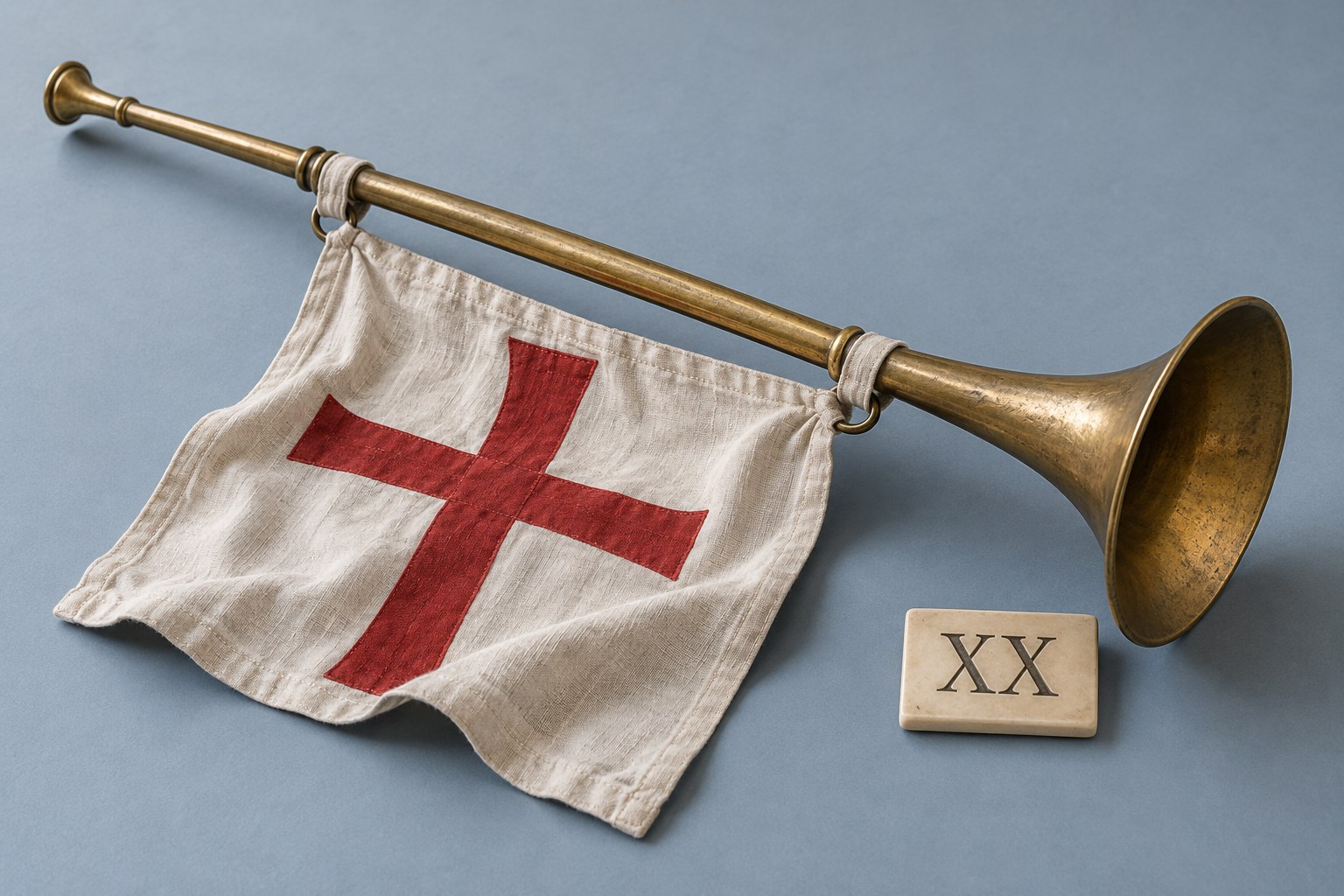
Card XX introduces an awakening image rather than a digit calculation. In The Pictorial Key to the Tarot, A. E. Waite titles it The Last Judgment and describes a great angel sounding a trumpet above figures rising from the dead.
The visible details give the card its summons-and-response theme.
Motifs in Waite's description of card XX
The trumpet connects the scene to a call that the figures answer.
Waite specifies a cross on the banner carried by the trumpet.
The woman, man and child are described as responding to what they hear.
Waite understands the response as something "heard and answered from within". This explains why the scene can be read through inner recognition or transformation, without reducing it to the cooperative traits assigned to 2.
Cheiro's Book of Numbers, compound 20, uses the same trumpet-and-rising-figures symbolism for the titles Awakening and Judgment. His interpretation concerns answering a call to a purpose, cause or duty.
His reservation about material results matters as much as that attractive title: Cheiro calls twenty "doubtful" for worldly success and associates it with delays and obstacles to plans. An account promising money or an effortless promotion on the strength of his 20 would reverse this part of his reading.
The neighboring compound 19 uses Sun symbolism in Cheiro's account. XX's summons therefore belongs to the twentieth image, rather than a general favorable meaning shared by consecutive Tarot numbers.
Waite's description does not identify his great angel as Gabriel; a familiar trumpet attribute alone cannot settle that name.
Bullinger's expectancy and Cheiro's awakening can be compared because both discuss twenty. Their agreement stops at the numeral: one interprets biblical number patterns, while the other assigns a compound-number meaning to a Tarot-like image.
Patience, love and work: what the readings leave open
In a relationship reading of 20, the root-2 theme can concern cooperation between two people. The written zero in Walmsley's account emphasizes that theme, but does not reveal what the other person feels or whether a commitment is mutual.
For example, two partners may agree to resume a conversation after one returns from a trip. Their agreed timing explains the pause; the appearance of 20 does not supply or extend its end date.
A separation without an agreement is a different situation. The same numeral cannot turn silence into consent, and a twin-flame interpretation does not establish that a reunion will occur.
The distinction from Life Path 2 is equally important: that profile interprets a calculated birth-date result. A repeated 20 is an observed number, not the required chart input, even though both interpretations may mention cooperation.
At work, cooperation may describe a shared project, while Cheiro's duty theme may describe why its purpose matters to someone. Those are interpretive associations, not evidence that the project will succeed financially.
A candidate waiting for an employer's answer provides a different example of delay. The employer's stated process determines what is actually pending; Cheiro's warning does not measure that wait or identify the outcome.
Seeing 20 on a clock, date or receipt
A 24-hour clock displays 20 throughout the hour that a 12-hour clock calls 8 p.m. An evening routine can therefore show the same hour repeatedly without any change in the underlying timekeeping.
The complete display matters before a symbolic calculation begins.
| Observed form | Calculation if all displayed digits are added | Distinction |
|---|---|---|
| 20 on its own | 2 + 0 = 2 | A single compound |
| 20:00 | 2 + 0 + 0 + 0 = 2 | A clock time, equivalent to 8:00 p.m. |
| 20:20 | 2 + 0 + 2 + 0 = 4 | Two matching halves; each half separately reduces to 2 |
| 8:20 p.m. | 8 + 2 + 0 = 10; 1 + 0 = 1 | The same minute as 20:20, written in a different clock format |
With 20:20, a per-half interpretation can retain two instances of 20, while a whole-clock reading totals 4. These are different declared inputs, and neither calculation justifies reporting the whole timestamp's root as 2.
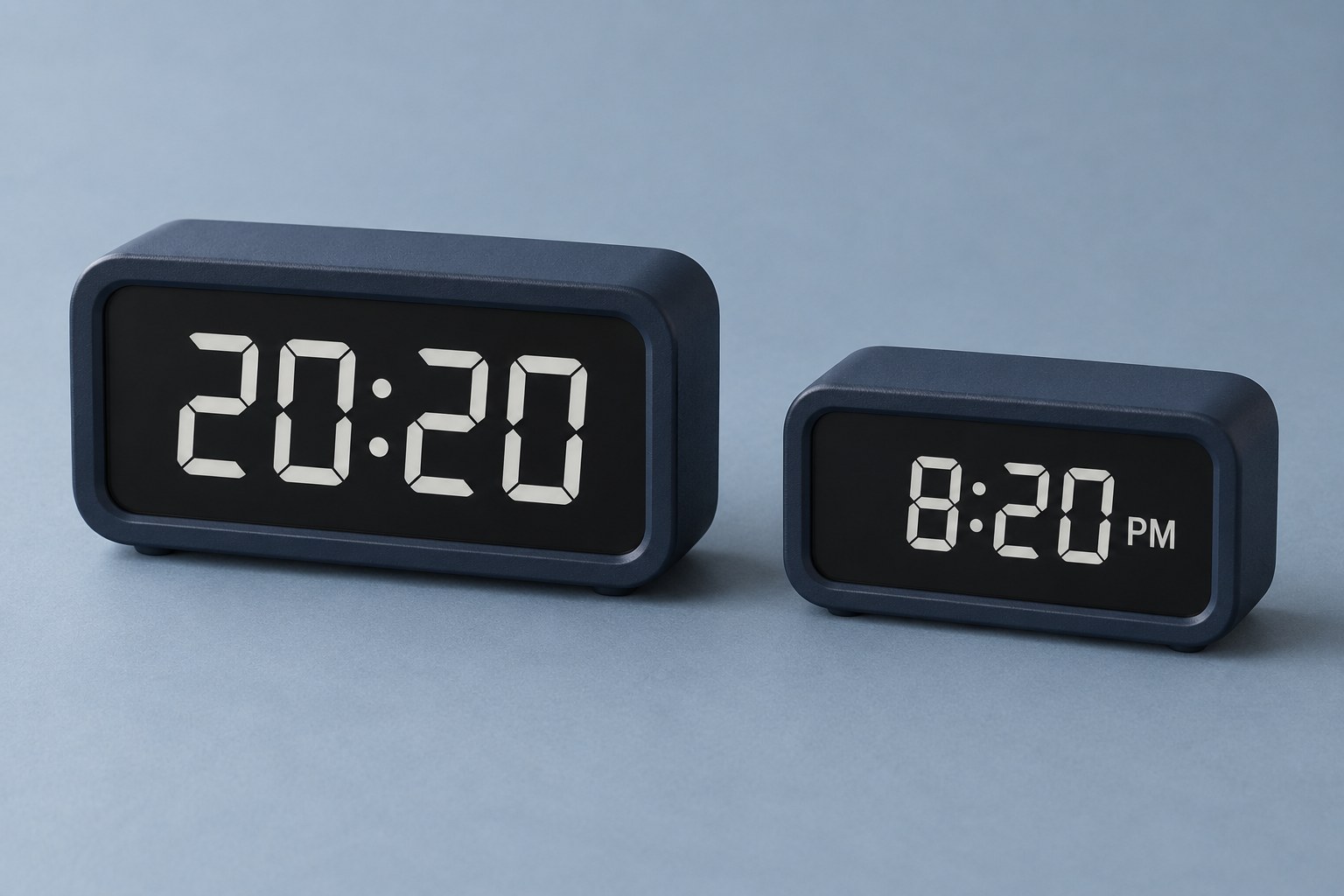
A date showing the twentieth and a receipt showing a quantity of twenty have other ordinary explanations: one records a calendar position, the other an amount. Selecting 20 from either is a choice about what to interpret, not evidence that both carry an identical message.
Arnold Zwicky's 2005 discussion names the frequency illusion: something newly noticed can seem more frequent as attention selects further instances. That observation offers an ordinary explanation for recognition; it does not diagnose an individual reader or settle whether they attach spiritual meaning to the number.
A personal association can coexist with those details. Its meaning comes from the interpretation and context being applied, rather than from how often the digits alone appear.
Sources
- (n.d.). Number 2 Meaning in Numerology. Numerology.com. Link
- (n.d.). The Master Numbers of Numerology. Numerology.com. Link
- (2011). Angel Number 20. Joanne Sacred Scribes, June 27, 2011. Link
- (1921). Number in Scripture: Its Supernatural Design and Spiritual Significance. Eyre & Spottiswoode, 4th edition (first published 1894); Part II, entries Nineteen, Twenty and Twenty-one. Link
- (1611). Genesis 31:38-41; Judges 4:2-6; Judges 15:20; Judges 16:31; 1 Samuel 7:2; Numbers 1:3; Numbers 14:33. BibleGateway. Link
- (1910). The Pictorial Key to the Tarot. William Rider & Son; Part II, cards XIX-XXI. Link
- (c. 1926). Cheiro's Book of Numbers. Herbert Jenkins, London; compound numbers 19, 20 and 21 on p. 82 of the scanned edition. Link
- (2005). Just between Dr. Language and I. Language Log, on the frequency illusion. Link
About Our Editorial Process
Every KnowTheAngels guide separates calculation method, tradition context, and personal reflection. We cite where interpretations come from, present more than one view, and never present symbolic reading as prediction.
Read our editorial policy