Angel Number 19: Why Lucky and Karmic Readings Disagree
The reduction to 1, Cheiro's Sun symbolism, Decoz's chart rules, and the separate religious uses of nineteen
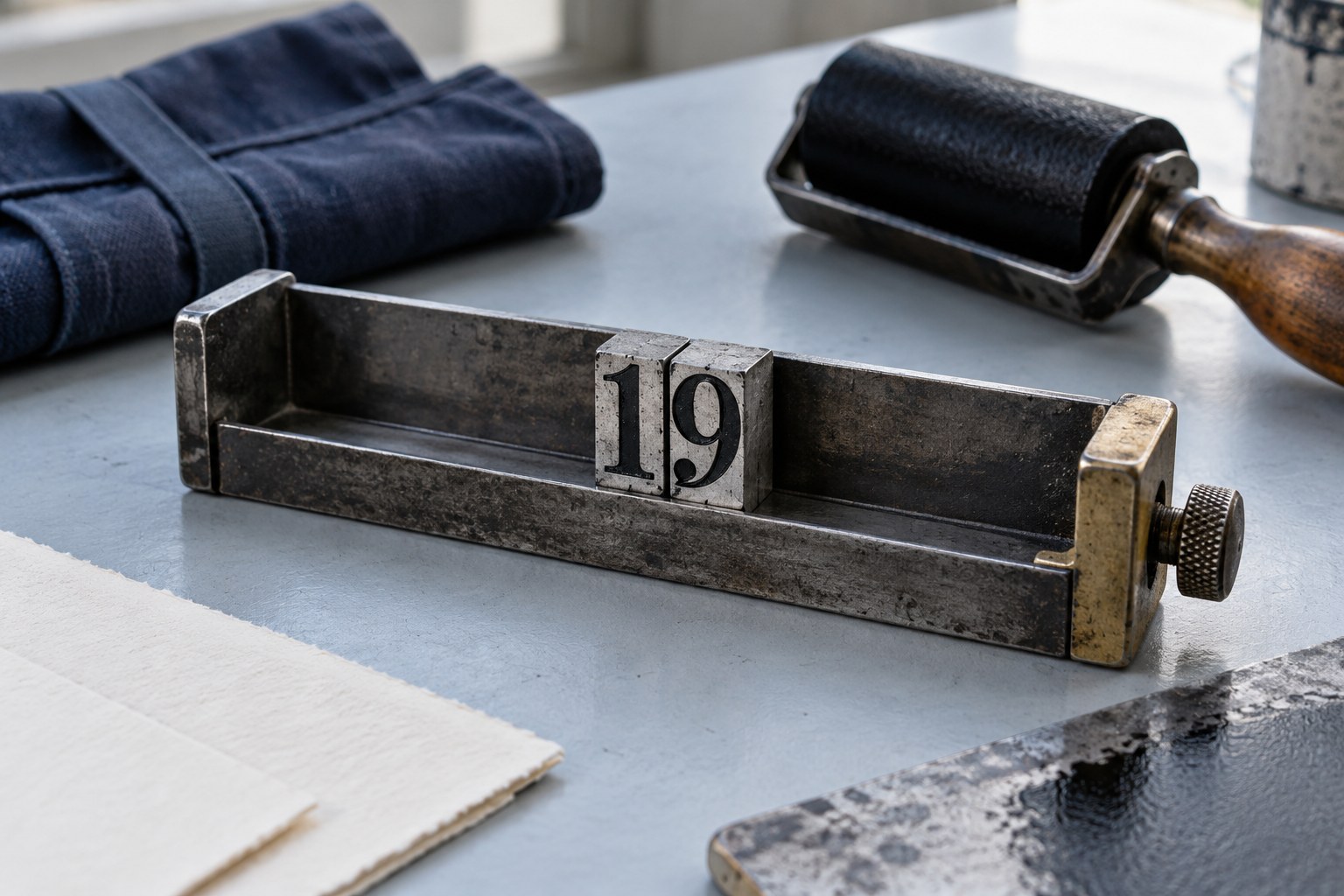
Nineteen has a favorable reading in Cheiro's Book of Numbers and a challenging one in Hans Decoz's numerology. The disagreement concerns the compound number, not whether 1 + 9 = 10 and 1 + 0 = 1.
Cheiro connects 19 with the Sun and successful plans, whereas Decoz's 19/1 concerns independence and the use of power within a numerology chart. Seeing 19 on a receipt does not establish that chart condition, and adding its digits does not show that a relationship or career phase has ended.
Quick Facts
- Digit sum
- 19 → 10 → 1
- Decoz's condition
- 19/1 in a specified core chart position
- Cheiro's compound
- Favorable; associated with the Prince of Heaven
- Tarot correspondence
- XIX, The Sun
- Calendar structure
- Bahai: 19 months of 19 days plus intercalary days
- Whole-clock distinction
- 19:19 → 20 → 2, not 1
What does reducing 19 to 1 actually show?
The digit-reduction method adds the written digits: 1 + 9 = 10, then 1 + 0 = 1. It combines two digits rather than counting every number between 1 and 9.
Numerology.com associates 1 with independence and new beginnings, and its account of number 9 describes completion. Combining those associations can produce an interpretation about initiative and closure, but that interpretation is an additional symbolic step.
The calculation alone supplies no sequence of life events. A completed sum is not evidence that a person has finished grieving, left a job, or reached the end of a relationship.
| Written number | Digit addition | What survives |
|---|---|---|
| 19 | 1 + 9 = 10; 1 + 0 = 1 | Root 1; the original compound remains 19 |
| 10 | 1 + 0 = 1 | Root 1; a different compound |
| 1 | No further reduction | The single digit itself |
| 91 | 9 + 1 = 10; 1 + 0 = 1 | Root 1; reversed written order |
The comparison explains why a root is an incomplete description of a compound. Cheiro's separate entry for nineteen would disappear if every compound ending at 1 were treated as interchangeable.
The same distinction separates angel number 19 from angel number 10, whose visible zero raises a different interpretive question. Angel number 1 supplies the root association without either compound's additional source history.
Reversing 19 to 91 changes the order on the page, not the sum. Any claim that one means an ending before a beginning and the other a beginning before an ending therefore needs its own interpretive source; addition does not establish it.
Why is 19 called both lucky and a karmic debt?
Cheiro describes compound 19 as fortunate in his Book of Numbers, using the title Prince of Heaven and the symbol of the Sun. Decoz places 19 alongside 13, 14 and 16 in a different category, karmic debt numbers.
These accounts give the same numeral different jobs. Cheiro offers a favorable compound interpretation, while Decoz applies a lesson about independence and power when 19 occurs in specified positions within a personal chart.
| Account | Input being interpreted | Meaning in that account | Limit |
|---|---|---|---|
| Cheiro, compound 19 | A compound number within his numerological system | Favorable prospects, esteem and honor; Sun symbolism | An interpretive attribution, not measured odds |
| Hans Decoz, 19/1 | 19 in specified core chart positions before reduction | Independence and the proper use of power | A chart rule, not a diagnosis from seeing 19 |
| Repeated everyday 19 | A receipt, date, label or display | May invite a personal symbolic association | Does not establish either chart input |
In Decoz's account, the difficult tendency is resisting assistance so strongly that self-reliance becomes isolation. The distinction is between taking responsibility and refusing cooperation, not between strong people and weak people.
His karmic-debt framework uses core positions such as the Life Path, Expression, Heart's Desire, Personality and Birth Day numbers. The method and the unreduced result matter: a root of 1 by itself does not identify 19/1.
For example, the day of birth is the input for a Birthday Number, so a birth day of 19 can meet Decoz's Birth Day condition. A purchase costing 19 has not supplied that birth-date input, even if both numbers look identical.
Other positions consume different information. An Expression Number comes from the full name, the Soul Urge or Heart's Desire uses vowels, and the Personality Number uses consonants.
Those distinctions explain why a chart label cannot be borrowed from an unrelated sighting. They also keep a traditional karmic interpretation separate from evidence about a person's conduct or a supposed past life.
What a 19/1 chart label can establish
What the evidence supports
- System-specific classification
Decoz identifies 19 as one of his karmic debt numbers when its chart conditions apply.
- Interpretive theme
His account connects independence with the proper use of power and difficulty accepting help.
What remains limited
- Personal diagnosis
The label does not demonstrate that a particular person is selfish, isolated or responsible for past-life wrongdoing.
- Everyday occurrence
A repeated 19 does not provide the calculation required for a core chart position.
Calling nineteen lucky does not refute Decoz's chart rule, and calling it karmic does not cancel Cheiro's favorable entry. They are different interpretive frameworks, so agreement about a universal message is the wrong expectation.
How does the Sun XIX explain Cheiro's favorable 19?
The Sun is numbered XIX, the Roman numeral for nineteen, in the tarot sequence discussed by Arthur Edward Waite. Cheiro's compound entry associates 19 with that Sun imagery, making the correspondence more specific than a general reference to confidence.
In The Pictorial Key to the Tarot, Waite describes a child on a white horse carrying a red standard, with a garden wall behind. The scene provides the recognizable subjects behind the card's bright, affirmative symbolism.
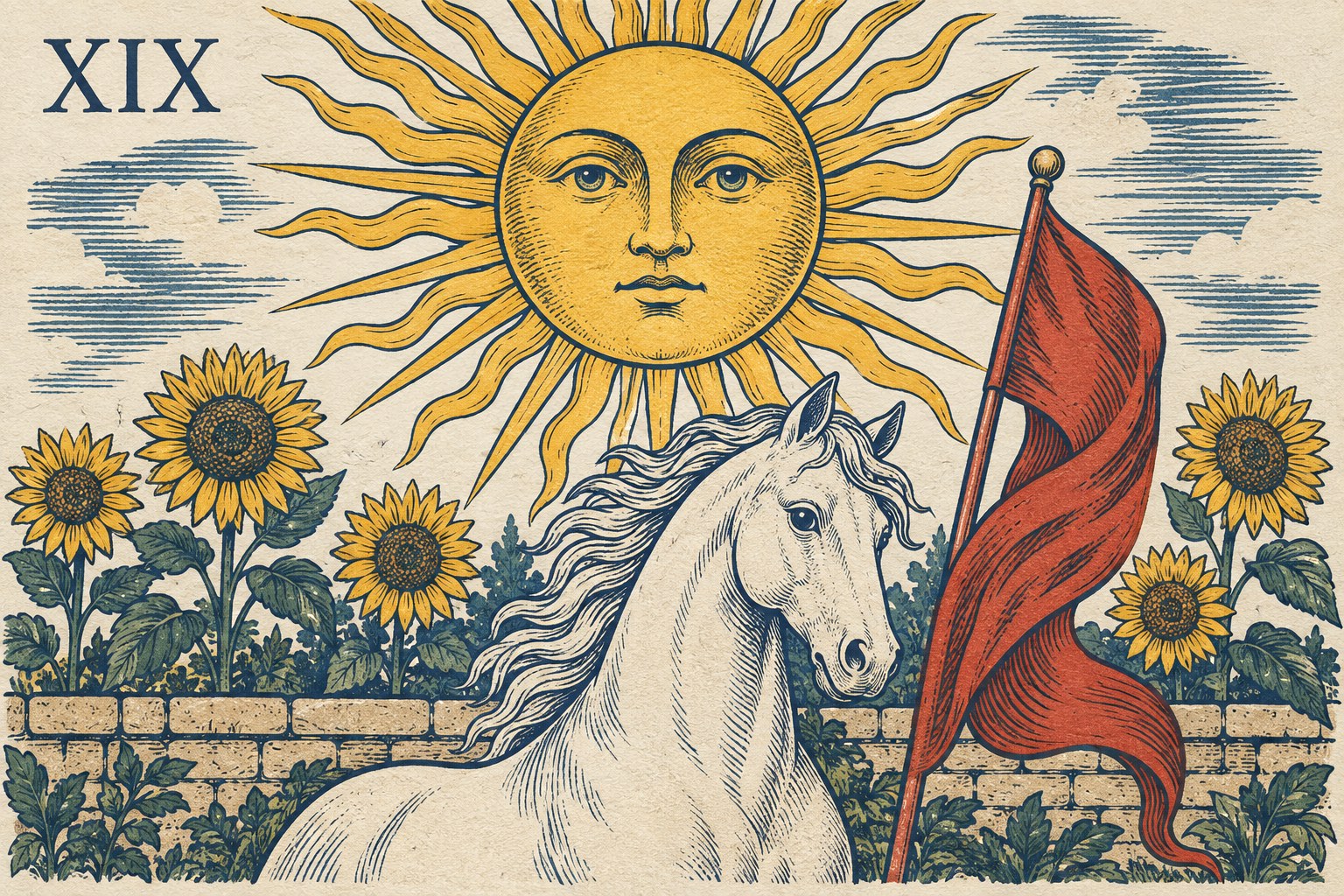
The neighboring Moon XVIII discussed on angel number 18 has a different scene and Cheiro gives eighteen a different compound reading. That contrast concerns named symbols and entries, not a prediction that eighteen must finish something before nineteen can begin it.
The Roman numeral identifies a card's position; it is not the calculation 1 + 9. Reducing XIX to a root would discard the very card identity being used to explain the favorable compound.
Cheiro's language about success belongs to his numerological interpretation. A Sun correspondence does not establish that a future plan will succeed, and the two cited accounts do not establish a partner's identity or a reunion date.
Why does the Bahai calendar use nineteen?
The Bahai calendar has nineteen months of nineteen days, giving 361 days before the intercalary days that complete the solar year. The Bahai International Community describes this religious calendar structure, not a method for interpreting unexpected number sightings.
Nineteen also has a letter-value connection to the Arabic word wahid, meaning one, recorded in the account of the Letters of the Living. In abjad, letters have numerical values; the word's total comes from those letters rather than from adding the digits of 19.
| Letter in word order | Name | Value |
|---|---|---|
| و | Waw | 6 |
| ا | Alif | 1 |
| ح | Ha | 8 |
| د | Dal | 4 |
| واحد | Wahid, one | 6 + 1 + 8 + 4 = 19 |
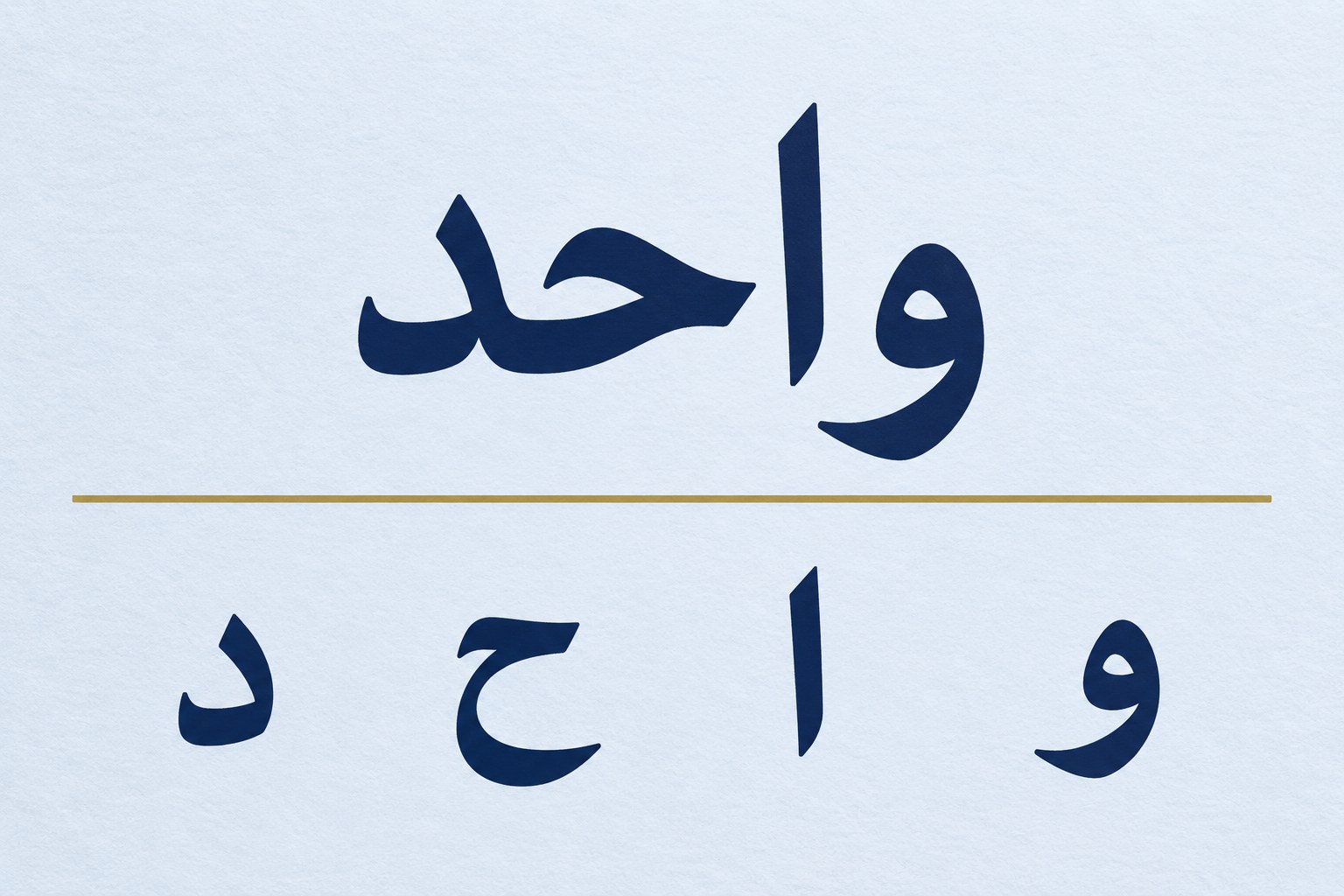
The Arabic word and the decimal root both involve the idea or numeral one, but reach it in different directions. Letter values produce 19 from a word, whereas digit reduction produces 1 from the numeral 19.
That difference changes the meaning of the religious example. A calendar organized in nineteens expresses a tradition's structure; it does not turn every occurrence of 19 into evidence of the same religious message.
A calendar with only 361 days would drift against the solar year. Intercalary days complete the year without giving one of the nineteen months a different length.
Why do I keep seeing 19, and is 19:19 the same number?
A date on the nineteenth, a repeated label, and the hour 19 on a twenty-four-hour clock can return because the underlying schedule or object returns. On that clock, 19:00 is 7 pm; the display represents an hour without calculating a personal chart.
A daily journey near 7 pm repeatedly presents the same hour, so counting those displays as unrelated events would exaggerate the apparent coincidence.
A whole display of 19:19 is also different from a single 19. Its four digits total 1 + 9 + 1 + 9 = 20, then 2 + 0 = 2, while each separate 19 reduces to 1.
The distinction matters when a reading switches between the repeated pair and the entire clock without saying so. The clock-specific interpretation of 19:19 owns that display question; the single compound's source comparison does not settle it.
A sighting can still have personal significance because it coincides with a remembered date or a current concern. That association describes the person's context, while a claim about angel contact, a deadline or a required action needs evidence the numeral itself has not supplied.
19 in love: independence does not identify a destined partner
In a relationship reading, Decoz's independence theme raises a specific distinction between having separate responsibilities and refusing shared decisions. A partner making every choice alone illustrates the second issue, but the behavior would remain relevant even without a 19/1 chart label.
Cheiro's favorable compound can support an optimistic symbolic reading of a new relationship. It does not answer whether the people keep agreements, communicate honestly or want the same commitments.
For someone dating after a breakup, those two readings can coexist as hope and a question about cooperation. The digits do not establish that grief is finished, so the appearance of 19 cannot decide readiness on the person's behalf.
A twin-flame claim goes further by assigning a destined relationship or reunion to a number. Neither the cited favorable compound entry nor the chart-debt account provides a way to identify another person, establish mutual consent or calculate when a reunion will occur.
19 in a career: favorable plans and accepting help differ
At work, Cheiro's account speaks favorably about plans, while Decoz's interpretation concerns how independence and power are exercised. These are different questions: whether a plan succeeds and whether its organizer permits useful cooperation.
For example, a project leader may own a decision while relying on another person's specialist knowledge. Decoz's theme describes the tension between responsibility and rejecting that contribution, not a rule that an independent career is inherently mistaken.
A new role can also follow a redundancy, an unfinished project or a voluntary move. None of those conditions is established by 1 + 9, and nineteen does not mark a universally correct time to resign or start a business.
The symbolic accounts can name contrasting expectations, but the actual plan still has its own resources, obligations and uncertainties. A favorable label supplies no probability of success, and a karmic label supplies no evidence of inevitable failure.
Frequently Asked Questions
What does 19 mean in the Bible?
E. W. Bullinger's Number in Scripture interprets nineteen through 10 and 9, connecting divine order with judgment. That is Bullinger's later numerological commentary, not a biblical passage defining every sighting of 19 as an angel message.
Is 19 a master number?
Numerology.com's master-number framework identifies 11, 22 and 33, not 19. Nineteen reduces through 10 to 1, while Decoz's 19/1 karmic-debt notation preserves the compound for a different interpretive purpose.
Sources
- (n.d.). Karmic Debt Numbers in Numerology. World Numerology. Link
- (n.d.). Karmic Debt Number 19. World Numerology. Link
- (n.d.). Number 1 Meaning in Numerology. Numerology.com. Link
- (n.d.). Number 9 Meaning in Numerology. Numerology.com. Link
- (n.d.). The Master Numbers of Numerology. Numerology.com. Link
- (c. 1926). Cheiro's Book of Numbers. Herbert Jenkins, London; compound numbers 19, 20 and 21 on p. 82 of the scanned edition. Link
- (1910). The Pictorial Key to the Tarot. William Rider & Son; Part II, cards XIX-XXI. Link
- (n.d.). The Bahá'í Calendar. The Bahá'í Faith (bahai.org). Link
- (2026). Letters of the Living. Wikipedia, on the abjad value of wáḥid. Link
- (1921). Number in Scripture: Its Supernatural Design and Spiritual Significance. Eyre & Spottiswoode, 4th edition (first published 1894); Part II, entries Nineteen, Twenty and Twenty-one. Link
About Our Editorial Process
Every KnowTheAngels guide separates calculation method, tradition context, and personal reflection. We cite where interpretations come from, present more than one view, and never present symbolic reading as prediction.
Read our editorial policy