Why Do I Smell Roses, Perfume or Smoke When Nothing Is There?
Gas and fire checks first, then hidden household sources, phantom smells after COVID, the Catholic odor of sanctity, and the familiar scents of grief
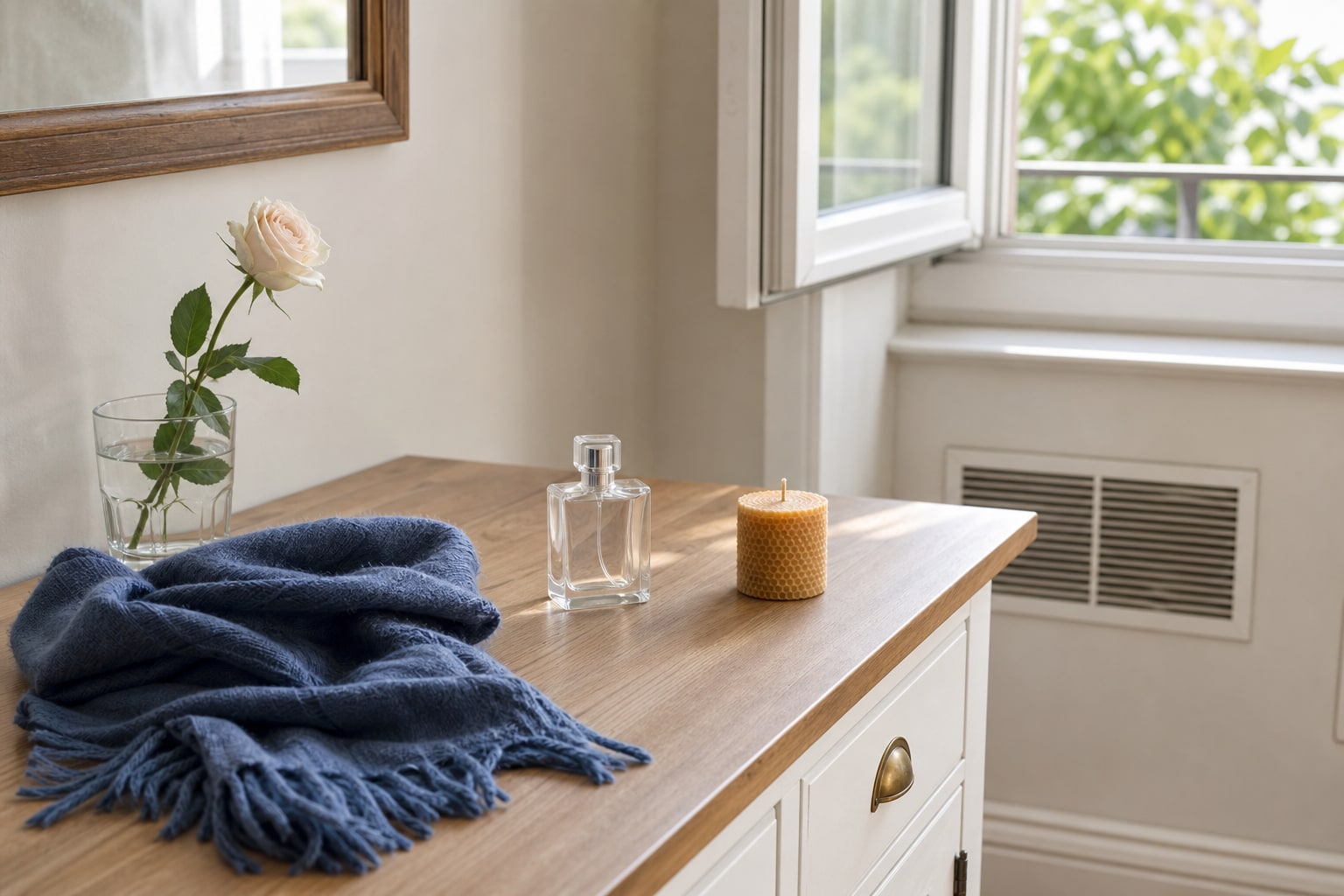
Smelling roses, perfume or smoke when nothing is there usually has an ordinary cause: scent carried on air or held in fabric, a neighbour's cigarette or cooking, a heating system, or a change in your own sense of smell. Doctors call smelling an odor that is not present phantosmia, and the NHS gives smoke and burnt toast as typical examples.
The spiritual readings are older and each has its own owner. Catholic tradition speaks of an odor of sanctity around certain saints, grief research records people smelling a dead relative's perfume or tobacco, and modern angel-sign writing treats a sweet scent as a sign that an angel is near.
None of those readings can be tested from the smell alone. A smell of burning or gas is a safety question first, and any meaning can wait until the building is safe.
Quick Facts
- Gas smell
- Natural gas has no odor; suppliers add mercaptan so a leak smells like rotten eggs
- Phantom smell
- Phantosmia, most often smoke, burning or something foul, and occasionally pleasant
- See a doctor
- When a changed or phantom smell has not settled within a few weeks
- Odor of sanctity
- Catholic term for a perfume-like scent reported from saints, recorded for Teresa of Avila in 1582
- In grief
- Studies in a 2020 review found 4 to 10 percent of bereaved people reported smelling the person who died
What should you do first if you smell burning, smoke or gas?
Check for fire and gas before asking what a smell means, because burning, smoke and rotten eggs are the smells of an overheating appliance, a fire or a gas leak.
Natural gas has no odor of its own.
Utilities add a chemical called mercaptan so that a leak smells like rotten eggs, and Connecticut's utility regulator tells anyone who smells it indoors not to flip a light switch, strike a match or ring the doorbell.
- Rotten eggs or sulfur. If the smell is strong, leave the building, tell others to leave, and call the gas company from outside or from a neighbour's home. In Britain the National Gas Emergency Service number is 0800 111 999.
- Smoke or burning plastic. Look at sockets, chargers, extension leads and appliances without opening a hot door or touching a scorched plug. If a smoke alarm sounds or you cannot find the source quickly, get everyone out and call the fire service.
- Dusty burning when the heating starts. Carrier, the furnace maker, says burning dust at the first use of the season usually fades within 30 minutes to a few hours. A burning-plastic or electrical smell from the same system means switching it off and calling an engineer.
Ask a second person to walk in and describe what they smell without being told what you noticed.
When nobody else can smell the burning and no source turns up, the question moves from the building to your own sense of smell.
Where can a rose, perfume or smoke smell come from when nothing is in the room?
Most scents that seem to come from nowhere came from somewhere out of sight.
Air moves odor through vents, gaps around doors and the channels that pipes and cables run through, while wool, upholstery and hair hold perfume long after the bottle is closed.
In flats and apartments the source is often next door. The American Lung Association estimates that 44 to 53 percent of multi-unit residents who do not allow smoking at home have had smoke come in from elsewhere in the building, through vents and cracks in walls or floors.
The same paths carry a neighbour's incense, candles, cooking and perfume. That is why a smell can arrive at the same hour every evening and never during the day.
| Scent you notice | Places to check | Clue that points there |
|---|---|---|
| Roses, lilies or another sweet floral | Flowers in another room, rose-scented soap or hand cream, plug-in air fresheners, a garden below the window | Strongest near a window, a door or the bathroom |
| Perfume or aftershave | Coats, scarves, upholstery, bedding, car seats, a hairbrush, a stored box of clothes | Stronger when you lift or move the fabric |
| Cigarette or cigar smoke | Neighbouring units, a stairwell, a balcony below, old smoke held in curtains or carpet | Arrives at set times, or when the heating or extractor fan runs |
| Incense, wax or a church smell | Candles, incense residue in curtains, clothes worn to a service, a neighbour's prayer corner | Fades after the room is aired or the fabric is washed |
| Burning dust | Furnace, radiator or space heater at its first use of the season | Starts when the heating switches on and fades within hours |
Change one thing at a time: wash the coat, move the flowers or close one vent, then note the next day whether the smell has changed.
A smell that stays in one spot usually belongs to that spot.
A smell that follows you from room to room, into the car and on to work is more likely to come from your clothes, your hair or your own nose.
Why might only you smell smoke, burning or perfume?
When no one else smells it and no source turns up, the likeliest explanation is a change in the sense of smell itself. The US National Institute on Deafness and Other Communication Disorders (NIDCD) defines phantosmia as "the sensation of an odor that isn't there."
NIDCD describes parosmia as a change in how odors are perceived, "such as when the smell of something familiar is distorted," so coffee, onions or your usual shampoo suddenly smell rotten or chemical.
Phantom smells are usually unpleasant.
Cleveland Clinic lists burning rubber, garbage, rotting food, burnt toast and tobacco smoke among the odors people report, and an NHS Scotland factsheet for GPs notes that the smell is typically burnt, smoky or foul "but can be pleasant."
That last detail matters for anyone smelling perfume or flowers with no source. A pleasant phantom smell is less common than a burning one, but it is a recognised form of the same condition.
The causes run from the nose to the brain. NIDCD lists sinus and upper respiratory infections, nasal growths, head injury, dental problems, some medicines and conditions such as Parkinson's disease, and the NHS Scotland factsheet adds migraine, either as a smell aura or as heightened sensitivity to odors.
COVID-19 made both problems familiar.
A 2024 review by Mark Dias, the ENT surgeon Claire Hopkins and colleagues reports one study in which 23 percent of people had distorted or phantom smell about 100 days after infection, 30 percent at 244 days, and 1 percent by 721 days.
For most people the problem is a nuisance that settles or stays mild. The NHS Scotland factsheet calls phantosmia nearly always benign and cites a six-year follow-up of 44 patients in which 30 percent recovered, 25 percent improved and 40 percent stayed the same.
When should a phantom smell send you to a doctor?
See a GP or family doctor if a phantom or changed smell has not settled within a few weeks. The NHS gives that threshold for any lost or changed sense of smell, and Cleveland Clinic advises calling a provider when phantom smells last more than three weeks.
Signs that a smell change needs medical attention
- It lasts for weeks
The smell keeps returning for more than about three weeks, or your sense of smell has not recovered after a cold, flu or COVID-19.
- It comes with other symptoms
It arrives with confusion, memory gaps, a rising feeling in the stomach, numbness or moments you cannot account for. The NHS lists strange smells among the sensations of a focal seizure.
- It began after a head injury
NIDCD lists head injury among the causes of smell disorders, and a change after a fall or blow is worth reporting.
- It comes with headaches
A smell that arrives before or during a headache can be a migraine aura, which a doctor can help you confirm and manage.
- You can no longer trust your nose
If you cannot reliably smell smoke, gas or spoiled food, fit working smoke and carbon monoxide alarms while you wait for an appointment.
Call emergency services straight away if a strange smell comes with a seizure, sudden weakness on one side of the body, slurred speech or a sudden severe headache.
Take short notes to the appointment: what the smell is like, how long each episode lasts, whether it affects one nostril or both, and what you were doing when it began. A medical visit does not decide what the experience means to you, and it can rule out a treatable cause first.
What is the odor of sanctity, and which saints was it reported for?
The odor of sanctity is the Catholic name for a perfume-like scent reported from the bodies of certain saints, during life or after death. The Jesuit John Hardon's Modern Catholic Dictionary calls these fragrances "symbols of the fragrance of extraordinary virtue."
The image has scriptural roots: Paul writes that "we are the aroma of Christ to God" (2 Corinthians 2:15, NRSVUE), and Psalm 141:2 asks, "Let my prayer be counted as incense before you."
The one scriptural angel story built around a smell runs the other way. In the Book of Tobit, Raphael tells Tobias to burn a fish's heart and liver on the incense embers, and the odor drives the demon from the bridal room (Tobit 6:17-18 and 8:2-3), a book Catholic and Orthodox Bibles include and most Protestant Bibles place in the Apocrypha.
Four fragrance reports that shaped the tradition
Each entry names who reported the scent and what the report was used for.
- 2nd centuryWitnesses at the martyrdom of Polycarp of Smyrna write that they perceived "such a sweet odour ... as if frankincense or some such precious spices had been smoking there" (Martyrdom of Polycarp 15).
The earliest widely cited Christian account of a holy scent at a death.
- 1582Teresa of Avila dies at Alba de Tormes. Hardon's dictionary records that the water used to wash her body kept a fragrance and that a perfume rose from her grave for nine months.
Hardon says both reports were studied in her canonization process; she was canonized in 1622.
- 1897Thérèse of Lisieux, answering her sister's grief on June 9, says her death will be "like a rain of roses," according to the Lisieux Carmel archives.
Many devotees now read roses, including a rose scent, as a sign of her intercession. That reading is popular devotion, not a Church ruling.
- 1921Bishop Raffaello Carlo Rossi visits Padre Pio for the Holy Office, and accounts of the friar describe an intense scent of violets around him.
Witnesses tied the scent to Pio's presence for decades; he was canonized in 2002.
The Church handles these reports with caution.
Hardon notes that one condition for verifying the phenomenon is whether a physical miracle is associated with the fragrance, so the scent alone does not settle a case.
Natural explanations were proposed early. In 1907 the French psychologist Georges Dumas compared accounts of Teresa's fragrance with the sweet breath of people in diabetic ketoacidosis, as the writer John Last recounts in his 2022 history of sacred scent.
For a reader smelling roses at home, the tradition has a clear limit.
The odor of sanctity belongs to the bodies, graves and relics of people the Church was examining for holiness, and it offers no rule for reading a scent in an ordinary kitchen as a visit from a saint or an angel.
Why do grieving people smell a loved one's perfume or cigarette smoke?
Smelling a dead person's perfume, pipe tobacco or cooking is a recognised part of grief. A 2020 review in Schizophrenia Bulletin by Karina Stengaard Kamp and colleagues found that 47 to 82 percent of bereaved people in the studies it examined reported at least one sensory experience of the person who died.
Smell sits near the bottom of that list.
Studies in the review put smell experiences at 4 to 10 percent, well below the sense of a presence in the room, and its quoted examples include cigar smoke and a relative's Noxzema face cream.
The review concluded that "the vast majority of these experiences are benign," and most people found them helpful or pleasant. A significant minority found them unsettling, and the authors note that culture shapes the response, with some communities fearing these experiences and others welcoming them.
Smell also has a direct line to emotional memory. In a 2016 review, the Brown University smell researcher Rachel Herz described how odors call up personal memories that feel more emotional than memories cued by sight or sound.
That helps explain why a real trace can bring someone back so strongly.
A scarf that still holds their perfume, a drawer that smells of their soap, or a stranger passing in the same aftershave can stop you in the street.
"I smelled Dad's pipe tobacco in the hall" keeps the moment exactly as it happened. "Dad visited me" adds a claim the smell cannot settle, and many people find the first sentence comfort enough.
Talk to a GP or a bereavement counsellor if the smells frighten you, stop you sleeping, or come with seeing or hearing the person often and in distress. Kamp's review found most of these experiences harmless, and a professional can help with the minority that are not.
What do roses, lilies, incense or sulfur mean in popular belief?
Modern angel-sign books and websites list a sweet scent among the signs that a guardian angel is near, and many give each scent its own meaning. These readings are popular belief, and some psychic writers add a name for the experience, clairalience or "clear smelling," which rests on personal reports alone.
Popular scent meanings and where each one comes from
The middle column is what popular belief says; the note says where the association started or what to check.
The Marian and Thérèse links come from Catholic devotion, and Orthodox icons paint Archangel Barachiel with white roses as a sign of blessing.
Painters often give Gabriel a lily in Annunciation scenes, and lilies are common funeral flowers, so the smell may recall a service.
Psalm 141:2 compares prayer to incense, and incense clings to clothes and curtains after a service.
Grief research records this experience, and it cannot show who or what caused the smell.
These are the smells of gas leaks, drains and fires, and the most common phantom smells.
The grid has a pattern worth noticing: popular belief gives the pleasant scents angelic readings and the unpleasant ones warnings, yet burning and rot are exactly the smells that phantosmia most often produces.
How do you keep track of a scent that keeps coming back?
A short record helps whether the answer turns out to be a vent, a doctor's appointment or a memory. Write each episode down the same day, using the same fields every time.
| Field | What to write | What it can show |
|---|---|---|
| Smell | Roses, smoke, soap, perfume, wax, chemical, or your own precise words | Which products, rooms or people to check |
| Place | Room, car, outdoors, work, or several places | Whether the source is fixed or follows you |
| Time and conditions | Hour, heating or fan on, window open, candles lit, recent cleaning | A neighbour's routine or a heating cycle |
| Other people | Who else was present and what they smelled, asked without a hint | Whether the smell was shared or yours alone |
| Body and mood | Headache, blocked nose, recent illness, an anniversary, a strong memory | Whether a doctor or a quiet hour of remembering is the next step |
Read the notes after four or five episodes, not after each one. A smell tied to one room points to the building, a smell that follows you points to your doctor, and a smell that comes on birthdays and anniversaries shows how grief is working.
Frequently Asked Questions
Why do I smell cigarette smoke in my house when no one smokes?
The commonest sources are a neighbour's smoke drifting through vents and wall gaps, or old smoke held in curtains, carpet or a second-hand sofa. If nobody else can smell it, tobacco smoke is also one of the most frequently reported phantom smells, which a doctor can assess.
Is smelling roses a sign from an angel?
Popular angel-sign writing says so, and Catholic devotion links roses with Mary and Thérèse of Lisieux, but a smell cannot show who or what caused it. Check flowers, soaps, perfumes and neighbours first, and see a doctor if the scent keeps returning for weeks.
Can COVID make you smell things that are not there?
Yes. Phantom smells and distorted smells were common after COVID-19, and in one study reviewed in 2024 they affected 30 percent of people at around eight months before falling to 1 percent by two years.
Is phantosmia a sign of a brain tumour?
Rarely: most phantom smells come from the nose or sinuses, migraine, or a viral infection, and an NHS Scotland factsheet calls phantosmia nearly always benign. See a doctor if it lasts more than a few weeks or comes with seizures, confusion, weakness or severe headache.
Why do I smell my mother's perfume after she died?
Grief research records this experience in a small share of bereaved people, and most find it comforting. A trace of perfume in her clothes or belongings can also bring her back strongly, because smell calls up emotional memories quickly.
What should I do if I smell sulfur or rotten eggs?
Treat it as a possible gas leak. Do not switch lights or appliances on or off, leave if the smell is strong, and call the gas company or emergency line from outside.
Sources
- (2023). Smell Disorders. NIDCD, National Institutes of Health. Link
- (2023). Lost or changed sense of smell. NHS. Link
- . Phantosmia: GP factsheet. Right Decisions, neurology pathways. Link
- . Phantosmia (Olfactory Hallucinations). Cleveland Clinic. Link
- . Parosmia and Phantosmia. SmellTaste. Link
- . Epilepsy: Symptoms. NHS. Link
- (2024). Recovery rates and long-term olfactory dysfunction following COVID-19 infection. World Journal of Otorhinolaryngology - Head and Neck Surgery 10, 121-128. Link
- (2020). Sensory and Quasi-Sensory Experiences of the Deceased in Bereavement: An Interdisciplinary and Integrative Review. Schizophrenia Bulletin 46(6), 1367-1381. Link
- (2016). The Role of Odor-Evoked Memory in Psychological and Physiological Health. Brain Sciences 6(3), 22. Link
- . Fragrant Odors. Modern Catholic Dictionary, via Catholic Culture. Link
- (1912). St. Teresa of Avila. Catholic Encyclopedia. Link
- . Chapter 15. Ante-Nicene Fathers, via New Advent. Link
- . Pluie de roses. Carmel de Lisieux. Link
- (2022). The Centuries-Long Quest For The Scent Of God. Noema. Link
- . 2 Corinthians 2:14-16; Psalm 141:2; Tobit 6:16-18; Tobit 8:1-3. Bible Gateway. Link
- . What To Do If You Smell Natural Gas. CT.gov. Link
- . What to do if you smell gas. Cadent. Link
- . Is Secondhand Smoke Infiltrating Your Apartment or Condominium?. American Lung Association. Link
- . Burning Smell in House? Causes and Solutions for Furnace Odors. Carrier. Link
About Our Editorial Process
Every KnowTheAngels guide separates calculation method, tradition context, and personal reflection. We cite where interpretations come from, present more than one view, and never present symbolic reading as prediction.
Read our editorial policy