Who Is Archangel Selaphiel, the Angel of Prayer in Orthodox Tradition?
How a name linked to Salathiel and Sealtiel became the Orthodox archangel of prayer, what his icon shows, and where Catholic practice stands
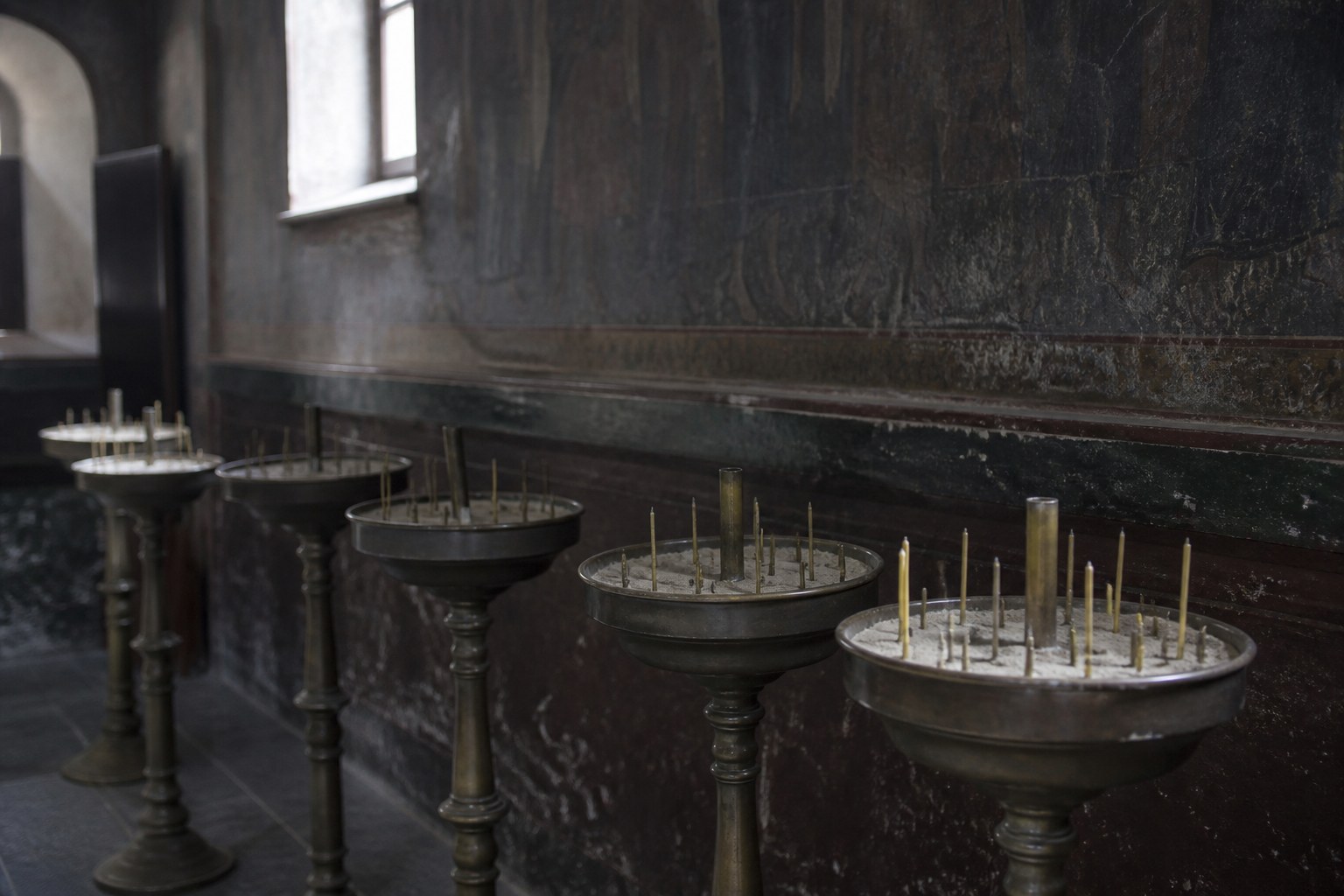
Archangel Selaphiel is the archangel of prayer in Eastern Orthodox tradition, one of the seven or eight archangels named at the Synaxis of the Bodiless Powers on November 8. English sources also spell the name Sealtiel, Selatiel, or Salathiel.
Orthodox calendars gloss his name as "the prayer of God," and the Orthodox Church in America says he "prays to God for mankind."
No verse of the Bible names an angel Selaphiel. In the West the name spread through a Franciscan revelation text attributed to Amadeus of Portugal, who died in 1482, and through a fresco of seven angels uncovered in a Palermo church in 1516.
His icon is the one detail every tradition keeps. Other archangels in the same list carry a sword, a crown, or a rose, while Selaphiel holds nothing: his eyes are lowered and his hands are folded on his chest.
Quick Facts
- Other spellings
- Sealtiel, Selatiel, Salathiel
- Name meaning
- "The prayer of God" in Orthodox usage; the related Hebrew name Shealtiel means "I have asked God"
- Orthodox feast
- November 8, the Synaxis of the Archangel Michael and the Other Bodiless Powers
- Icon
- Eyes lowered, hands folded on the chest; some later images add a censer
- In the Bible?
- Not as an angel; Salathiel appears as a human name in Matthew 1:12 and 2 Esdras 3:1
- Catholic status
- No Roman feast; Directory on Popular Piety 217 discourages angel names beyond Michael, Gabriel, and Raphael
What do Selaphiel's lowered eyes and empty hands show?
Selaphiel is the one archangel in the Orthodox set whose icon gives him nothing to hold. The OCA's account of the November 8 feast describes him "in a prayerful posture, gazing downwards, hands folded on the chest."
Every other figure in that account carries a sign of his task. Jegudiel holds a golden crown and a whip of three thongs, and Uriel raises a sword with a flame in his other hand.
In the same description, Barachiel wears a white rose on his breast. Selaphiel's hands stay folded because the icon presents prayer itself as his task.
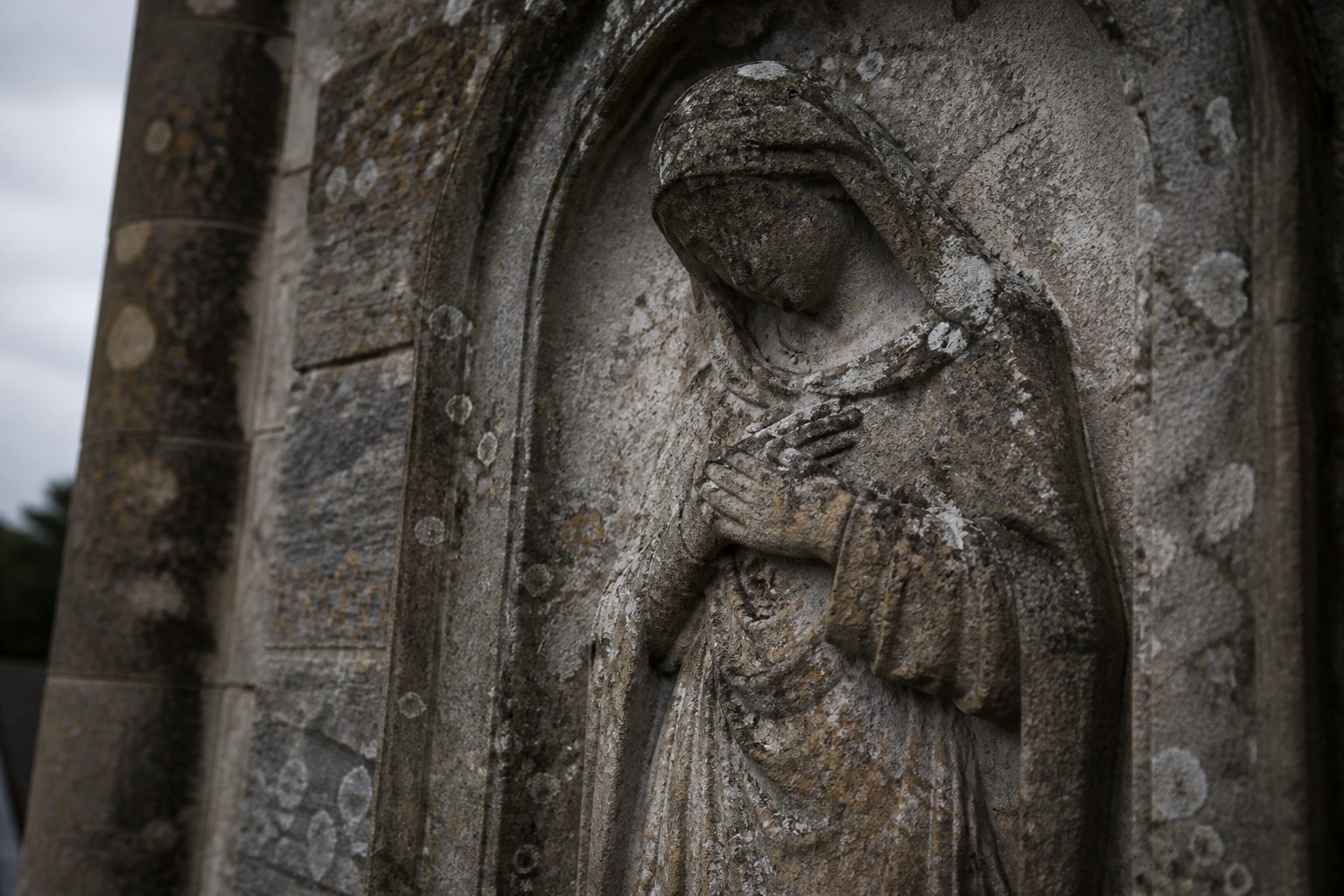
The Palermo fresco uncovered in 1516 used the same pose.
Italian accounts describe Sealtiel, "l'Orante," gathered in prayer with his head bowed and his hands joined before his chest.
Read within Orthodox practice, the lowered eyes show attention turned toward God instead of toward the viewer. That fits the calendar gloss of his name, "the prayer of God, impelling to prayer."
Is Selaphiel the Salathiel of 2 Esdras, Ezra, and Matthew?
Not in the biblical texts themselves.
Every Salathiel in the Bible is a human being, and no verse names an angel Selaphiel.
Salathiel is the Greek form of Shealtiel, a man of David's line whom Ezra 3:2 names as the father of Zerubbabel. The Hebrew lexicon of Brown, Driver, and Briggs glosses the name "I have asked (him) of God."
| Form | Where it appears | Who it names |
|---|---|---|
| Shealtiel | 1 Chronicles 3:17; Ezra 3:2; Haggai 1:1 | A man of David's line, named as the father of Zerubbabel |
| Salathiel | Matthew 1:12; 2 Esdras 3:1 | The same ancestor in Matthew; in 2 Esdras, the seer "who am also called Ezra" |
| Sealtiel | The Apocalypsis Nova; the Palermo fresco found in 1516 | The archangel who prays |
| Selaphiel | The Orthodox Synaxis of November 8 | The archangel "impelling to prayer" |
The seer of 2 Esdras causes a common mix-up.
When that book opens with "I, Salathiel, who am also called Ezra" (2 Esdras 3:1, NRSVUE), the speaker is a human visionary, and the angel who answers his questions is Uriel, not Selaphiel.
Orthodox calendars still tie Selaphiel to that book.
The OCA cites 2 Esdras 5:15, yet the verse speaks only of "the angel who had come and talked with me," and 5:20 names the angel who instructed the seer as Uriel.
2 Esdras also sits at the edge of the canon. Catholic Bibles print it at most in an appendix, Protestant Bibles place it among the Apocrypha, and Slavonic Orthodox Bibles carry it as 3 Esdras.
One text outside the Bible does use the name for an angel. In the First Book of Adam and Eve, a Christian work usually dated to the sixth century and preserved in Ethiopic, God commands "Suriyel and Salathiel" to carry Adam and Eve down a mountain to the Cave of Treasures (chapter 31).
The spellings reached English by different roads: Selaphiel from Greek and Slavonic service books, Sealtiel from Latin and Italian lists, and Salathiel from the Greek Bible.
Each ends in -el, the Hebrew word for God, as do most angel names ending in -el in Jewish and Christian lists.
Who is the angel with the golden censer in Revelation 8?
In Revelation 8:3-4, "another angel with a golden censer" stands at the altar and offers incense "with the prayers of all the saints." The smoke then rises "before God from the hand of the angel."
John never names this angel.
Calling him Selaphiel is a later devotional reading, drawn from the match between an angel who carries prayers and an archangel whose name is glossed "the prayer of God."
That reading reached the pictures.
Some later images of Selaphiel add a censer, the swinging vessel for burning incense, and sometimes show him kneeling.
The two versions say slightly different things about prayer. Folded hands show a person gathered into prayer, while the censer shows prayer carried up to God.
What do the November 8 hymns and private prayers ask of Selaphiel?
The service for November 8 addresses all the archangels at once, so its hymns are the prayers actually sung in church with Selaphiel among those addressed.
The troparion for the same day asks the archangels to "encompass us beneath the wings of your immaterial glory." Both hymns ask the angels to pray, which matches the calendar's picture of Selaphiel as one who "prays to God for mankind."
The feast date carries its own symbolism in the OCA account. November was the ninth month counting from March, where the ancient year began, to match the nine ranks of angels in Orthodox teaching, and the eighth day recalls the Last Judgment, which the Fathers called the Eighth Day.
That account traces the feast to the Council of Laodicea, which it places early in the fourth century. Its Canon 35 forbids Christians to "invoke angels and gather assemblies" apart from the Church, and the OCA reads the canon as rejecting angel worship while keeping proper veneration.
The OCA account names eight archangels: Michael, Gabriel, Raphael, Uriel, Selaphiel, Jehudiel, Barachiel, and Jeremiel. Other Orthodox lists stop at seven and add Jeremiel only as an occasional eighth.
A separate prayer addressed to "St. Selaphiel (Sealtiel)" circulates widely online, asking him to guide the reader's prayer and make their life "like incense pleasing to God." We could not trace it to an Orthodox service book or a named author, so we treat it as modern private devotion.
Online lists also make him a patron of breaking addictions, protecting children, and presiding over exorcisms. Wikipedia flags that list as lacking citations, and none of these roles appears in the Synaxis hymns, the OCA account, or the Palermo description.
His traditional role suggests when his name fits a private prayer: when prayer itself is the difficulty, such as a wandering mind or words that will not come.
Orthodox petitions to saints and angels usually end with "pray to God for us," and a short line in that pattern keeps the request with God. One such line, offered here as an example: "Holy Archangel Selaphiel, pray to God for me, that I may pray with attention."
How did a Palermo fresco of 1516 lead to a church in Rome?
The Western story of Sealtiel begins with a wall painting in Sicily and ends with a Michelangelo church in Rome. Between them stands Antonio Lo Duca, a Sicilian priest who spent decades asking popes to honor seven named angels.
From a Palermo wall to a Roman basilica
- c. 1420-1482Amadeus of Portugal, born João de Menezes da Silva, founds reformed Franciscan houses in Italy
The Apocalypsis Nova, a dialogue with Gabriel attributed to him, names seven archangels, Sealtiel among them.
- 1516Images of seven named angels are uncovered on a wall of the Carmelite church of Sant'Angelo in Palermo
Each angel carries a name and an attribute, and Sealtiel is shown praying.
- 1541Antonio Lo Duca, who had served at Palermo cathedral in 1513-15, reports a vision in the ruins of the Baths of Diocletian in Rome
He campaigns for a church there in honor of the seven angels.
- 27 July 1561Pope Pius IV dedicates a church in the baths to the Virgin, all the angels, and the martyrs
Michelangelo designs Santa Maria degli Angeli e dei Martiri, the Roman result of Lo Duca's campaign.
- 1860The Palermo church is demolished during the fighting in the city
Its former monastery later houses the Vittorio Emanuele II classical lyceum.
Accounts differ on who uncovered the Palermo images.
The Italian encyclopedia entry credits the vicar general Tommaso Belloroso, while Lo Duca's biographers credit Lo Duca himself.
From Palermo the devotion spread through the Spanish empire. Emperor Charles V joined the city's Confraternity of the Seven Angels, and a painting of the Seven Archangels of Palermo made between 1620 and 1650 is held by the Museo Pedro de Osma in Lima.
The Palermo names match the Apocalypsis Nova list, but the surviving record does not show whether the painter knew Amadeus's text. The two are best read as separate witnesses to one late medieval Italian tradition.
Rome's answer to Lo Duca was partial.
Pius IV's dedication named the Virgin, "all the Angels," and the martyrs, rather than the seven by name.
That caution still governs Roman Catholic practice. The Holy See's 2001 Directory on Popular Piety and the Liturgy says the naming of angels "should be discouraged, except in the cases of Gabriel, Raphael and Michael whose names are contained in Holy Scripture" (no. 217).
The same paragraph calls devotion to the holy angels "legitimate and good," so its caution falls on the names themselves. The Roman feast of September 29 accordingly honors only Michael, Gabriel, and Raphael, whose names appear in the books of the Catholic Bible.
The caution has an older precedent.
A Roman synod under Pope Zachary in 745 condemned the preacher Aldebert, whose prayers invoked angels named Uriel, Raguel, Tubuel, Adinus, Tubuas, Sabaoc, and Simiel, though Selaphiel's name does not appear in that condemnation.
Byzantine-rite Catholic churches follow the Eastern calendar and keep the November 8 Synaxis, so Selaphiel is named in their services.
A Roman Catholic who follows the Directory can pray with the angels as a company or by the three scriptural names, and treat Selaphiel as part of Eastern and folk tradition.
Frequently Asked Questions
What does the name Selaphiel mean?
Orthodox calendars gloss it "the prayer of God." The related biblical name Shealtiel, Salathiel in Greek, means "I have asked (him) of God" in the Brown-Driver-Briggs lexicon.
Is Selaphiel one of the seven archangels in the Book of Enoch?
No, the list in 1 Enoch 20 names Uriel, Raphael, Raguel, Michael, Saraqael, Gabriel, and Remiel. Selaphiel belongs to the later Orthodox list and the Italian list of seven found at Palermo.
Is Selaphiel the same angel as Sariel or Zerachiel?
Some websites merge these names, but the sources do not. Sariel (Saraqael) comes from 1 Enoch 20, while Selaphiel comes from Orthodox tradition and the Sealtiel of the Palermo list.
When is Selaphiel's feast day?
November 8, the Synaxis of the Archangel Michael and the Other Bodiless Powers. Orthodox churches that keep the old Julian calendar celebrate it on November 21 of the civil calendar.
What is Selaphiel the patron of?
Orthodox calendars make him the archangel of prayer, one who "prays to God for mankind" in the OCA's wording. Online lists that add breaking addictions, protecting children, and exorcisms cite no church source, and those roles do not appear in the November 8 hymns.
Can Selaphiel send signs or answer prayers?
The Orthodox sources describe Selaphiel as one who prays to God for people, and none of them gives him a set of signs. In that tradition an answer to prayer comes from God, with the angel praying alongside the person who asks.
Can Catholics pray to Selaphiel?
The Directory on Popular Piety (no. 217) discourages naming angels other than Michael, Gabriel, and Raphael, and the Roman calendar has no feast for Selaphiel. Byzantine-rite Catholics keep the November 8 Synaxis, where he is named.
Sources
- . Synaxis of the Archangel Michael and the Other Bodiless Powers (November 8). Lives of the Saints, oca.org. Link
- . Synaxis of the Archangel Michael and the Other Bodiless Powers: Troparion and Kontakion. oca.org. Link
- (2021). 2 Esdras 3:1-2 and 5:13-20. Bible Gateway. Link
- (2021). Revelation 8:3-4; Ezra 3:2; Matthew 1:12. Bible Gateway. Link
- . Shealtiel (Strong's Hebrew 7597), Brown-Driver-Briggs lexicon entry. Bible Hub. Link
- (2001). Directory on Popular Piety and the Liturgy, nos. 216-217. The Holy See. Link
- (1900). The Seven Ecumenical Councils: Synod of Laodicea, Canon 35. Nicene and Post-Nicene Fathers, Series 2, vol. 14, Christian Classics Ethereal Library. Link
- (1882). The First Book of Adam and Eve, chapter 31. Project Gutenberg. Link
- . Amadeus of Portugal. Wikipedia. Link
- . Antonio del Duca. Wikipedia. Link
- . Chiesa dei Sette Angeli (Palermo). Wikipedia. Link
- . Sac. Antonio Lo Duca e i Sette Arcangeli. settearcangeli.it. Link
- . The Seven Archangels of Palermo (oil on canvas, 1620/1650). Google Arts and Culture. Link
- . Aldebert. Wikipedia. Link
- . Selaphiel. Wikipedia. Link
- . Archangel: Eastern Orthodox tradition. Wikipedia. Link
About Our Editorial Process
Every KnowTheAngels guide separates calculation method, tradition context, and personal reflection. We cite where interpretations come from, present more than one view, and never present symbolic reading as prediction.
Read our editorial policy