Who Is Archangel Jegudiel, and What Is His Role in Christian Tradition?
The Orthodox archangel with a golden crown and a three-thonged whip: what his name means, how a fifteenth-century revelation named him, and the prayers said to him
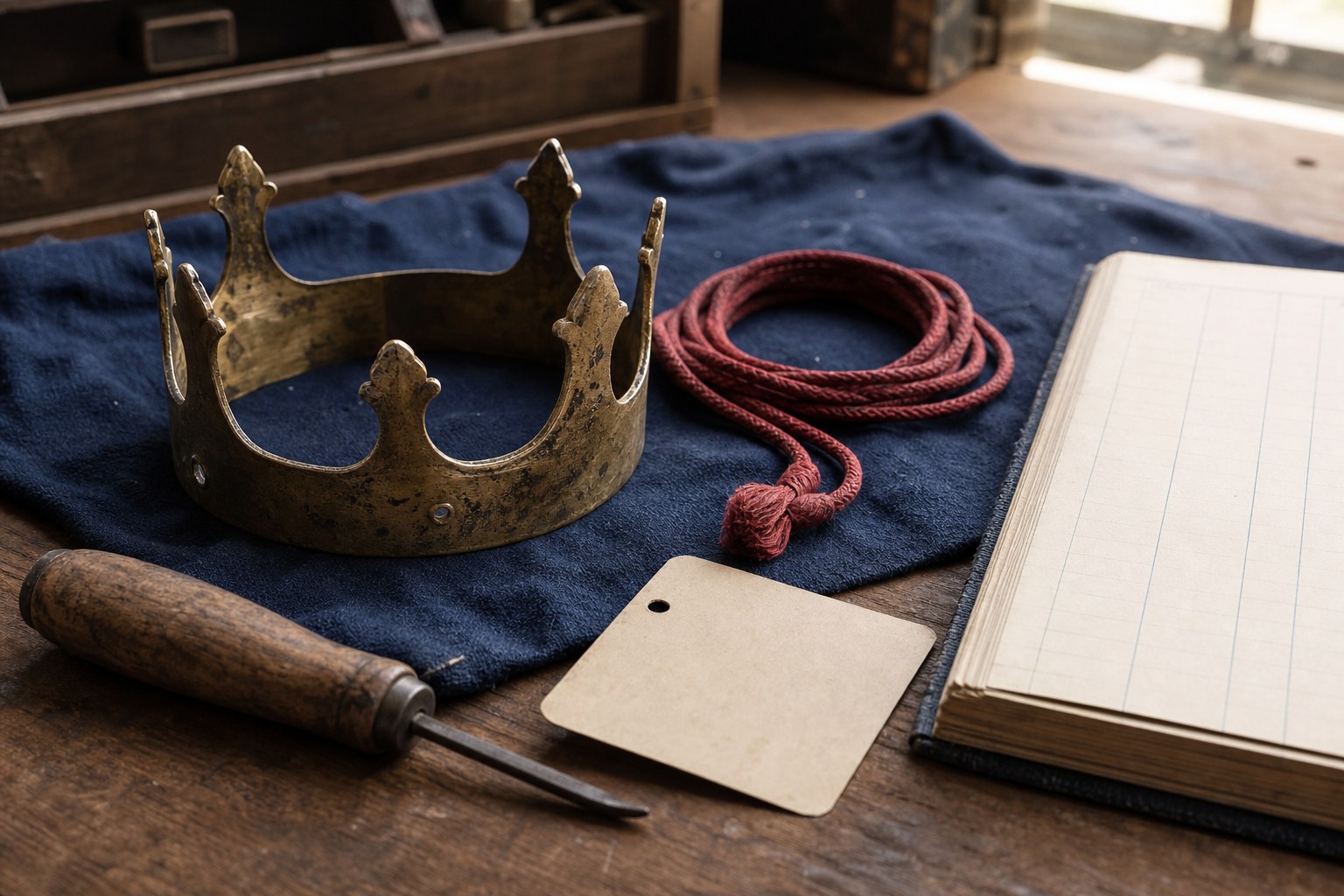
Jegudiel is the archangel who holds a golden crown and a whip in Orthodox icons, the only archangel in the Orthodox descriptions who carries both a reward and a punishment. The Orthodox Church in America glosses his name as "the glorifying of God" and says he encourages "exertion for the glory of the Lord" while "interceding for the reward of efforts."
He belongs to the seven archangels named at the Synaxis of the Bodiless Powers on November 8, with Jeremiel sometimes counted as an eighth. English sources also spell the name Jehudiel, Iegudiel, or Jhudiel.
No verse of the Bible names him. The name comes from a Franciscan revelation of the fifteenth century, appeared in the West on seven angel images uncovered in Palermo in 1516, and entered Russian books of saints' lives in 1700.
Quick Facts
- Other spellings
- Jehudiel, Iegudiel, Jhudiel; Russian Iegudiil
- Name meaning
- "The glorifying of God" in the OCA calendar; "praise of God" in the Russian Orthodox Encyclopedia
- Icon
- A golden crown in the right hand, a whip of three red or black thongs in the left
- Orthodox feast
- November 8, the Synaxis of the Bodiless Powers (November 21 on the civil calendar in Julian-calendar churches)
- In the Bible?
- Not by name; Russian tradition links him to the unnamed angel of Exodus 14:19 and 23:20
- Earliest source
- The Apocalypsis Nova attributed to Amadeus of Portugal, who died in 1482
Why does Jegudiel hold a golden crown and a three-thonged whip?
The two objects stand for the two ways God answers human labor. V. D. Fartusov's 1910 guide for Russian icon painters places in Jegudiel's right hand "a golden crown, as a reward from God to holy people for useful and pious labors," and in his left "a whip of three black cords with three ends, as punishment to sinners for sloth toward pious labors."
The whip is aimed at one fault, sloth, so the pair judges labor from both sides: the crown answers the person who worked faithfully, and the whip answers the person who would not work at all.
Descriptions differ only on the whip's color. Fartusov makes the cords black, while the Orthodox Church in America allows "three red (or black) thongs." The three-part form stays the same in the OCA account, in Fartusov, and in Archbishop Seraphim of Chicago's description of "a whip made of three thongs."
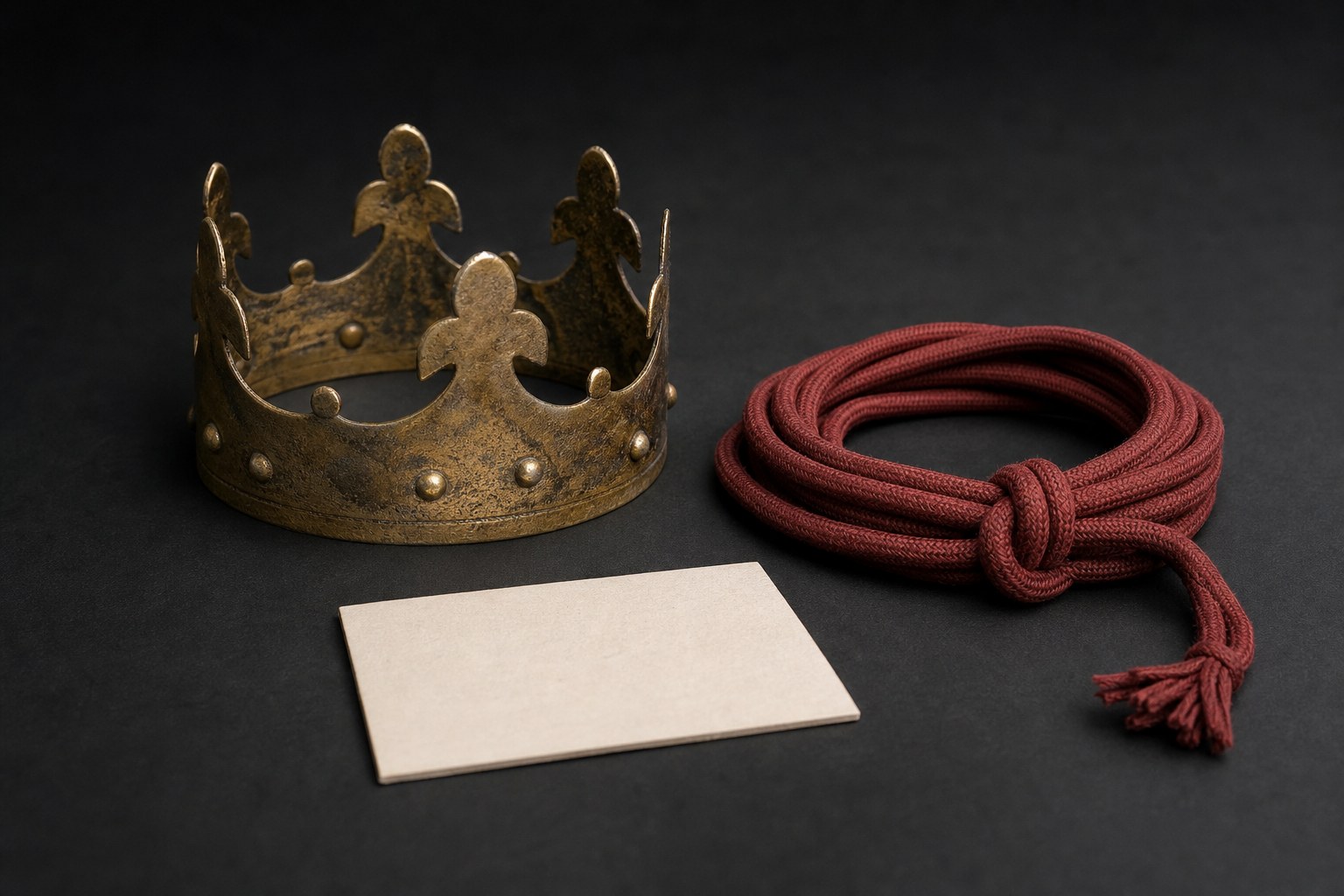
The objects also identify him in a row of archangel icons. In the OCA's account of the November 8 feast each archangel carries a different sign, from Selaphiel's empty, folded hands to Jeremiel's scales, and only Jegudiel holds a crown.
| Archangel | What the icon shows |
|---|---|
| Michael | A spear with a white banner and a green date-palm branch, with the devil underfoot |
| Gabriel | A branch from Paradise, or a lantern and a mirror of jasper |
| Raphael | A vessel of medicine, while leading Tobias, who carries a fish |
| Uriel | A naked sword in the right hand and a flame in the left |
| Selaphiel | Nothing: eyes lowered, hands folded on the chest |
| Jegudiel | A golden crown in the right hand, a whip of three thongs in the left |
| Barachiel | A white rose on his breast |
| Jeremiel | Balance scales |
What does the name Jegudiel mean, and where does "God is One" come from?
Orthodox sources translate Jegudiel as praise of God. The OCA calendar gives "the glorifying of God," the Russian Orthodox Encyclopedia gives "praise of God, glorifier of God," and the Prologue from Ohrid calls him "glorifier of God the Almighty."
That gloss matches the Hebrew name Judah, Yehudah, which opens with the same letters. When Leah names her fourth son in Genesis 29:35 she says, "This time I will praise the Lord," and the NRSVUE notes that in Hebrew "Judah resembles the verb for I will praise."
The spellings record the road the name took into English. Jegudiel and Iegudiel come from the Russian form Iegudiil, where Russian writes g for the Hebrew h, as it does in Iegova for Jehovah; Jehudiel is the form used in Latin lists.
English Wikipedia gives a different Hebrew name, Yahdiel, translated "God is One," and cites Strong's concordance for it. That entry belongs to Jahdiel, one of the clan heads of the half-tribe of Manasseh in 1 Chronicles 5:24, whose name Strong's glosses "unity of God" and the Brown-Driver-Briggs lexicon glosses "God giveth joy." No Orthodox source connects the archangel with that man, so the "God is One" translation rests on a mix-up of two names.
Is Jegudiel the angel who led Israel through the wilderness?
The Bible never names Jegudiel, but Russian Orthodox tradition gives him an unnamed biblical role. The Orthodox Encyclopedia identifies him with "the angel of God who was going before the Israelite army" in Exodus 14:19, and with the angel God promises in Exodus 23:20: "I am going to send an angel in front of you, to guard you on the way."
The Azbyka Orthodox calendar extends that reading to all forty years in the wilderness and makes Jegudiel the protector of the Israelites on the way. Exodus gives the angel no name, so the identification is a reading brought to the text by a tradition that already honored Jegudiel.
Other readers of the same verses named a different angel. The Babylonian Talmud (Sanhedrin 38b) applies Exodus 23:21, "for my name is in him," to Metatron, "whose name is like the name of his Master."
The Orthodox count of seven archangels does have a verse behind it. In the Book of Tobit, Raphael says, "I am Raphael, one of the seven angels who stand ready and enter before the glory of the Lord" (Tobit 12:15), and the Orthodox Encyclopedia cites that verse when it numbers Jegudiel sixth of the seven. Tobit names only Raphael, so the other six names come from later tradition.
Jegudiel is also absent from the Book of Enoch, although English Wikipedia says the name was first mentioned there and flags the claim as needing a citation. The archangel list in 1 Enoch 20 names Uriel, Raphael, Raguel, Michael, Saraqael, Gabriel, and Remiel.
How did a fifteenth-century revelation put Jegudiel on Orthodox calendars?
Jegudiel's name reached the Orthodox Church from the Latin West. Russian histories of the list trace the seven names Michael, Gabriel, Raphael, Uriel, Selaphiel, Jegudiel, and Barachiel to the Apocalypsis Nova, a revelation attributed to the Portuguese Franciscan Amadeus of Portugal, who died in 1482.
How the name Jegudiel traveled from Italy to Russian icons
- Before 1482The Apocalypsis Nova attributed to Amadeus of Portugal names seven archangels
The earliest known source for the name Jegudiel.
- 1516Images of seven named angels are uncovered in the Carmelite church of Sant'Angelo in Palermo
Jegudiel appears as "the Remunerator," the one who repays, holding a crown and a scourge.
- 1700Dimitry of Rostov's Lives of the Saints prints the seven names under March 26
The names enter Russian Orthodox reading.
- 1910V. D. Fartusov publishes his guide to painting icons of the saints
He explains the crown as reward for pious labor and the whip as punishment for sloth.
- TodayThe OCA calendar lists Jehudiel at the November 8 Synaxis
He stands sixth of seven, with Jeremiel sometimes counted as an eighth.
The Palermo image settles an icon question. The crown and scourge were attached to the name in Italy almost two centuries before Russian readers met it in Dimitry of Rostov's collection, which suggests the Russian manuals were explaining attributes that had come with the name.
The foreign origin has made some Orthodox writers wary. An Old Believer history of the seven archangels notes that neither Metropolitan Macarius's sixteenth-century Great Menaion Reader nor earlier Russian saints' lives contains these names, and it treats Jegudiel as known only from Amadeus's revelation.
The Church kept him all the same. The Prologue from Ohrid, compiled by St. Nikolai Velimirovich, places its hymn to the archangels on March 26, the date Dimitry of Rostov used, and gives Jegudiel a couplet of his own.
Who is Jegudiel the patron of: all who labor, or those who lead?
Orthodox sources make Jegudiel the helper of everyone who labors for God's glory, and one of them adds a special charge over people with authority. The Azbyka calendar says he "strengthens those who strive and monastics, and intercedes for the reward of their labors," close to the OCA's "interceding for the reward of efforts."
The labor meant here includes the spiritual kind. A 1999 sermon by Monk Vsevolod calls Jegudiel "the patron, defender and helper of all those who toil," physically "to earn our daily bread" and spiritually "in order to perfect ourselves," and ties his crown to those "who will endure to the very end."

Archbishop Seraphim of Chicago gives the patronage its sharpest edge in "The Rational Heavenly Powers." There Jegudiel guards "all those who work for the glory of God in various responsible domains of human endeavor, to reward the good laborers and punish the bad," and "should be appealed to with prayer by kings, military and civil leaders, judges, heads of households." English Wikipedia's statement that kings and judges turn to Jegudiel cites this text.
| Who | Source | What the source says |
|---|---|---|
| All who toil | Monk Vsevolod, Orthodox Russia (1999) | Physical work for daily bread and spiritual effort both count |
| Those who strive, and monastics | Azbyka Orthodox calendar | He strengthens them and intercedes for the reward of their labors |
| Kings, leaders, judges, heads of households | Archbishop Seraphim of Chicago | They should pray to him, because he rewards good laborers and punishes bad ones |
| Everyone who works for God's glory | OCA calendar | He encourages exertion and intercedes for the reward of efforts |
What prayers do Orthodox Christians say to Jegudiel?
Jegudiel's feast is shared: the Orthodox Church honors him with all the bodiless powers at the Synaxis on November 8, which falls on November 21 of the civil calendar in churches that keep the Julian calendar. Russian prayer books add short prayers addressed to him alone, and the Azbyka prayer book, drawing on A. V. Fomin's collection The Invisible World of Angels, gives this one.
A longer prayer in the same collection takes up the whip's theme. It asks him to rouse "me, the slothful one, to glorify the Father and the Son and the Holy Spirit," and to wake the one praying "from the heavy sleep of sinful sloth," the same fault Fartusov's whip punishes.
Both prayers keep the Orthodox pattern for addressing angels and saints. The request ends with "pray to God for me," so the archangel is asked to intercede and the answer is left to God.
Russian prayer books also give each day of the week to an angel, and the Azbyka weekday cycle places Jegudiel's prayer on Saturday. English Wikipedia's claim that he rules Friday carries a citation-needed tag and does not match the Russian cycle.
Can Jegudiel help with a job, promotion, or money?
Orthodox sources give Jegudiel no role over employment or income. His crown is described as God's reward for "useful and pious labors," and Monk Vsevolod's sermon promises it to those who endure "to the very end," which places the reward in God's final judgment.
A prayer about work fits the tradition when it asks for what the Orthodox texts ask for. The short Russian prayer requests strength "for every deed and labor" and says nothing about results, so a person facing a job search or a heavy workload can ask for diligence and steadiness without expecting a set outcome.
The whip is sometimes read as divine approval for relentless work. Fartusov aims it at sloth toward pious labor, a fault of neglect, and none of the Orthodox descriptions treats exhaustion as a virtue or turns the whip against workers.
Modern English sites such as Learn Religions go further and describe people praying to Jehudiel about career choices and job searches. That devotion builds on the Orthodox patronage of labor, while the Orthodox sources themselves describe intercession for faithful work and make no promise about a job offer or a raise.
Frequently Asked Questions
Is Jegudiel the same angel as Jeremiel?
No. The OCA calendar lists them separately: Jehudiel is "the glorifying of God" with a crown and whip, while Jeremiel is "the raising up to God" (2 Esdras 4:36) and holds balance scales. Jeremiel is sometimes counted as an eighth archangel beside the seven.
Can Catholics pray to Jegudiel?
The Roman calendar has no feast for him, and the Vatican's 2001 Directory on Popular Piety and the Liturgy (no. 217) discourages naming angels other than Michael, Gabriel, and Raphael. Byzantine-rite Catholic churches follow the Eastern calendar and keep the November 8 Synaxis, where he is named.
When is Archangel Jegudiel's feast day?
November 8, the Synaxis of the Archangel Michael and the Other Bodiless Powers. Churches on the Julian calendar, including the Russian Orthodox Church, keep it on November 21 of the civil calendar.
Sources
- . Synaxis of the Archangel Michael and the Other Bodiless Powers (November 8). Lives of the Saints, oca.org. Link
- (2009). Iegudiil. Orthodox Encyclopedia (Pravoslavnaya Entsiklopediya), vol. 21, p. 188. Link
- (1910). Guide to Painting Icons of the Saints (Rukovodstvo k pisaniyu ikon svyatykh ugodnikov Bozhiikh), p. 227. Azbyka.ru library. Link
- . Iegudiil, Archangel: life, icons, day of commemoration. Azbyka Orthodox calendar. Link
- . Prayers to the Heavenly Bodiless Powers: prayers to Archangel Iegudiil (from A. V. Fomin, comp., The Invisible World of Angels). Azbyka prayer book. Link
- . Prayers to the Angels for Each Day of the Week. Azbyka prayer book. Link
- . The Rational Heavenly Powers. The World of the Angels, Transfiguration of Our Lord Russian Orthodox Church, Baltimore. Link
- (1999). The Heavenly Host and Our Modern Life. Orthodox Russia, vol. 22; reprinted by Transfiguration of Our Lord Russian Orthodox Church, Baltimore. Link
- . The Prologue from Ohrid: March 26, Hymn of Praise to the Archangels. orthodox.cn. Link
- (2021). Exodus 14:19; Exodus 23:20-21; Genesis 29:35; Tobit 12:15; 1 Chronicles 5:24. Bible Gateway. Link
- . Jahdiel (Strong's Hebrew 3164). Bible Hub. Link
- . Sanhedrin 38b. Sefaria. Link
- (1917). The Book of Enoch, chapter 20. Sacred Texts. Link
- . Chiesa dei Sette Angeli (Palermo). Wikipedia. Link
- . Arkhangel (Archangel): the seven names and the 1700 Lives of the Saints. Wikipedia. Link
- . The History of the "Seven Archangels". belstarover.org. Link
- (2001). Directory on Popular Piety and the Liturgy, no. 217. The Holy See. Link
- . Jegudiel. Wikipedia. Link
- . Archangel Jehudiel, Angel of Work. learnreligions.com. Link
About Our Editorial Process
Every KnowTheAngels guide separates calculation method, tradition context, and personal reflection. We cite where interpretations come from, present more than one view, and never present symbolic reading as prediction.
Read our editorial policy