How Do You Create a Simple Angel Altar and Use It at Home?
Choose a place, use objects you already own, and keep a devotional surface safe, respectful, and easy to put away
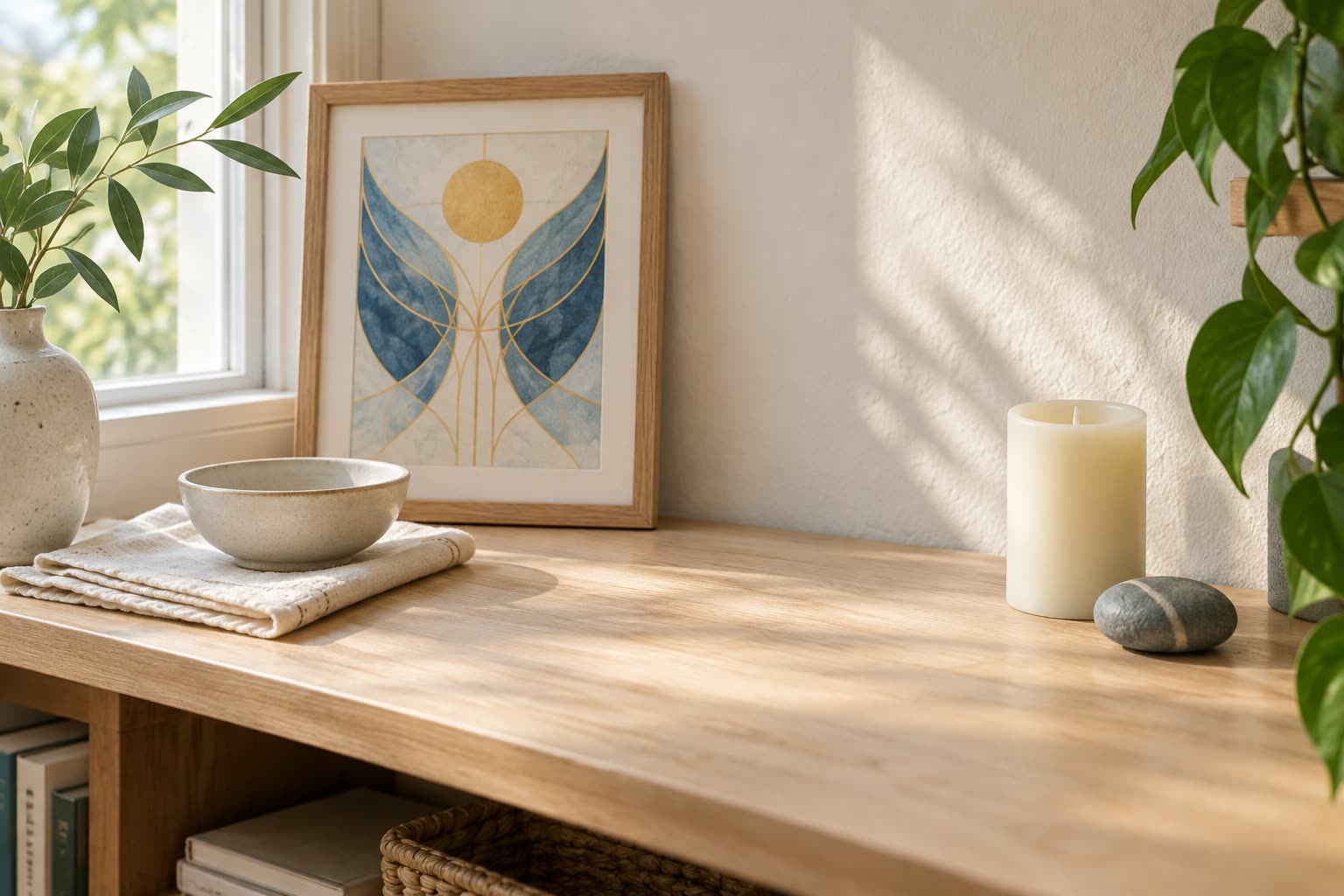
An angel altar is a small home surface set aside for angel-focused prayer or reflection, often with a text or image that gives the practice a visible place. In this guide, the term describes an optional personal arrangement, not a consecrated religious altar or a method of attracting angels.
You can begin without buying anything. The useful work is choosing where to sit, deciding what belongs there, and knowing how to finish the session and care for the objects afterward.
Quick Facts
- Minimum setup
- A stable surface and one text or meaningful image
- Best reason to keep one
- Having a particular place helps you begin an existing prayer or reflection
- Candle alternative
- Daylight, an ordinary lamp, or a safely enclosed battery light
- Tradition boundary
- A personal arrangement does not establish a church altar or reproduce a community's rites
- When to simplify
- Upkeep, spending, or checking objects begins to displace the practice
What is an angel altar for, and do you need one?
A personal angel altar gives a chosen prayer or reflection a place to happen. A card that you can read from your chair may be more useful than a large display you rarely approach.
Decide what you intend to do before choosing objects: read a guardian-angel prayer, sit quietly with a religious image, or remember someone while praying. These are possible household uses, not promises that a particular arrangement produces spiritual results.
Keep the surface if it removes a real obstacle, such as repeatedly misplacing your prayer book or struggling to find a quiet seat. If you already pray comfortably without objects, there is no practical reason to build a display.
An altar also adds work: it occupies space, gathers dust, and may need to be packed away.
Try a temporary arrangement with existing belongings before deciding whether that work is worthwhile.
The surface cannot supply the content of a practice: gratitude journaling still depends on what you write, and inherited prayer still depends on the words and tradition you choose.
How do you set up an angel altar in a small space?
Clear a small, stable area that you can reach comfortably, then place one chosen text or image where you can use it. A side table, secure shelf, or tray resting on a firm table can be enough.
For a first attempt, use a chair and surface already in the room, with a handwritten prayer card laid where you can read it.
Choose the location by how the household uses the room. Keep doorways, mobility routes, work surfaces, heaters, and electrical equipment clear; a narrow windowsill beside moving curtains is a poor place for a flame.
In shared accommodation, agree which space is available and whether other people are comfortable with a religious display.
A box holding a prayer card and small image can be opened for a session and stored afterward.
Arrange the text for the reader's actual needs: large print, good contrast, sufficient light, and a comfortable viewing angle. A stable book support can help someone who cannot hold a book, while an audio reading may suit someone who cannot comfortably read print.
A seated practice does not require kneeling, reaching overhead, or sitting on the floor. If the only safe place is temporary, setting it out and putting it away can be the beginning and ending of the session.
For this personal arrangement, choose a useful location without assigning a compass direction or color as a requirement. If you are following a community's prayer rule, ask that community about its placement customs.
What should you put on an angel altar?
Choose objects by purpose and provenance: what you will do with the object, and where its meaning comes from.
A religious picture needs more explanation than "it feels angelic." Find the name of the figure, the artist or publisher when available, and the community whose teaching gives the image its meaning.
Personal associations can be stated just as plainly: a card may matter because a relative gave it to you. That family connection does not establish an ancient religious custom or give the card protective powers.
| Object | A concrete purpose | What to check |
|---|---|---|
| Prayer card or book | Supplies the words you intend to pray | Its source, addressee, and readable placement |
| Religious image | Shows the figure or event you intend to contemplate | Its identity and the tradition it belongs to |
| Ordinary keepsake | Recalls a person or event | Whose belongings it is and whether displaying it feels appropriate |
| Plain cloth | Protects a surface or marks a temporary space | Washability, slipping, and distance from any heat |
| Lamp or flameless light | Makes the text visible or marks the session | Electrical condition, battery security, and easy operation |
An optional stone can be one object on the surface, but crystal practice involves separate questions about mineral identity, handling, and assigned symbolism. An altar does not need a collection of stones to be complete.
Add another item only when it serves a different, understood purpose and leaves enough room to use the first.
Keep any shopping budget separate from hopes for angel contact; a higher price does not establish a spiritual benefit.
Food, drinks, and other offerings are not required for the personal practice described here. If an offering belongs to an actual religious observance, learn its meaning and care requirements from that community instead of inventing an obligation to feed or appease angels.
Can you use an angel altar without candles or incense?
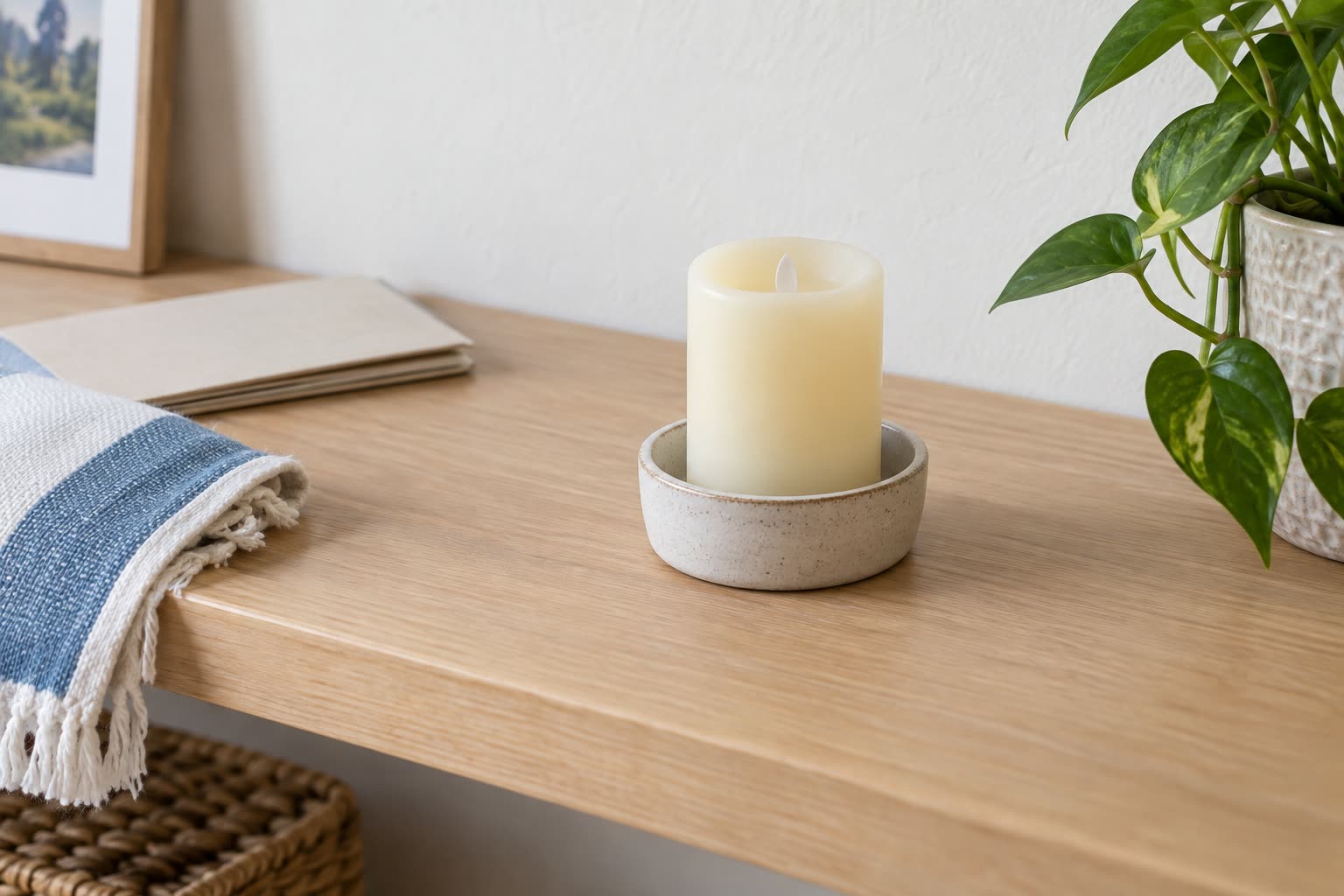
For this personal setup, we recommend a prayer card in daylight because it avoids flame and fragrance and makes the surface easier to share.
The United States Fire Administration recommends considering flameless candles; for real candles, it specifies stable holders and at least 12 inches of clearance from anything that can burn. Its guidance also says to extinguish candles before leaving the room or sleeping and to avoid lit candles in bedrooms, bathrooms, and sleeping areas.
Apply those clearances to the whole arrangement, including paper, cloth, dried flowers, curtains, and decorations above the flame. Follow the candle maker's instructions too; if a small altar cannot provide the required space, use a light without a flame.
Make the surface safe for the household
- Flames and heat
Keep candles where they cannot be tipped or reached by children and pets; never burn them where medical oxygen is used. The Fire Administration includes these precautions in its home-worship guidance.
- Battery lights
Check that the battery compartment closes securely and keep spare and used batteries away from children. The Consumer Product Safety Commission warns that swallowed button and coin batteries can cause serious injury.
- Small or breakable objects
Keep loose beads, stones, glass, and trailing cloth out of children's reach; choose a closed storage box when a display cannot be kept secure.
- Flowers and pets
Identify plants before bringing them home and check a veterinary source. The ASPCA advises keeping Lilium and Hemerocallis lilies out of homes with cats.
- Shared air and access
Skip incense and scented products when they bother anyone in the home, and keep cords and furniture out of walking and wheelchair routes.
An essential-oil diffuser is not automatically a suitable replacement for incense. The ASPCA warns about concentrated oils around pets and advises against using a diffuser in a home with birds.
Remove an unsafe object immediately. You do not need a closing prayer or replacement object before doing so.
How is an angel altar different from a Christian prayer corner?
A Christian prayer corner belongs within Christian prayer, while the personal angel arrangement described here makes no claim to represent a church.
The Catholic Catechism, paragraph 2691, describes a home prayer corner with Scripture and icons as a place for personal prayer before the Father. It also distinguishes that setting from the parish church's liturgical prayer.
The church altar has a further meaning: Catechism paragraph 1182 relates it to Christ's sacrifice and the Lord's table. Placing angel pictures on a household shelf does not give the shelf that sacramental role.
The Orthodox Church in America's explanation of icons grounds them in the Incarnation and the presence of God's Kingdom, going beyond an account of pictures as concentration aids. Someone seeking an Orthodox icon corner should learn its use from their parish rather than assemble it from a generic angel-decorating list.
Our recommendation for respectful borrowing is to learn who uses an arrangement and what they understand it to do before copying it. When a community identifies an object or rite as restricted, or you cannot establish an appropriate use, leave it out.
A family custom should be identified as that family's custom unless evidence supports a wider claim. A seller's phrase such as "ancient angel ritual" is not enough to establish a lineage or permission to reproduce a sacred arrangement.
For Christian readers, choosing traditional angel prayers involves the text's addressee and teaching before any furniture choice. An altar arrangement cannot settle a disagreement about whether or how a community addresses angels.
What do you actually do at an angel altar session?
Use the surface for one activity with an ending you choose in advance, such as reading a short prayer and sitting quietly for a few minutes. The following session is an editorial suggestion for personal use, not an inherited rite.
Before beginning, decide what you are bringing to the prayer: concern for a family member, thanks for help, or a wish to act patiently. Choose a prayer text whose words you understand.
A short session with a clear ending
About five minutes is a practical starting length, not a sacred duration.
- Set out
- Input
- Your selected text or image
- Action
- Place it on the clear surface and sit comfortably; leave unnecessary objects stored.
- Result
- The place is ready for the activity you chose.
- Begin
- Input
- One concern or intention
- Action
- Name the concern silently or aloud, then read the chosen prayer or begin quiet reflection.
- Result
- You have started without needing a sensation or sign.
- Stay with the practice
- Input
- A short reading or period of silence
- Action
- Return to the words or image when distracted; let an ordinary interruption end or shorten the session if needed.
- Result
- The activity remains manageable within household life.
- Finish and leave
- Input
- The planned ending
- Action
- Close the book, extinguish any candle before leaving, and return to the next task.
- Result
- The session ends with the space safely attended to.
For example, a reader might set out a guardian-angel prayer card, name tomorrow's difficult conversation, and pray the text once. After a quiet pause, they put the card away and prepare the information needed for that conversation.
Someone using the surface for reflection rather than prayer can read a personally meaningful sentence and consider one action it suggests. They should describe that as their own reflective exercise, without presenting it as a church devotion.
An interruption does not require a restart. When practicing with a religious community, follow its prayer rule and seek guidance about adaptations instead of treating this sample as an authority over it.
How do you clean, change, or retire an angel altar?
Clean the altar according to the materials on it, and change the arrangement when your use changes.
Let any candle and holder cool before handling them, remove objects carefully, and clean the surface according to its finish. Keep water and cleaning sprays away from books, electrical items, and materials whose care you do not know.
Wash a cloth according to its care instructions, remove wilting flowers, and attend to spills promptly.
For a valuable, fragile, painted, or unfamiliar religious object, ask its maker or a qualified conservator before attempting a cleaning method.
If objects have accumulated, put aside everything except the text or image you currently use. Decide separately which belongings should be stored, returned to their owner, donated with consent, or disposed of through an appropriate household route.
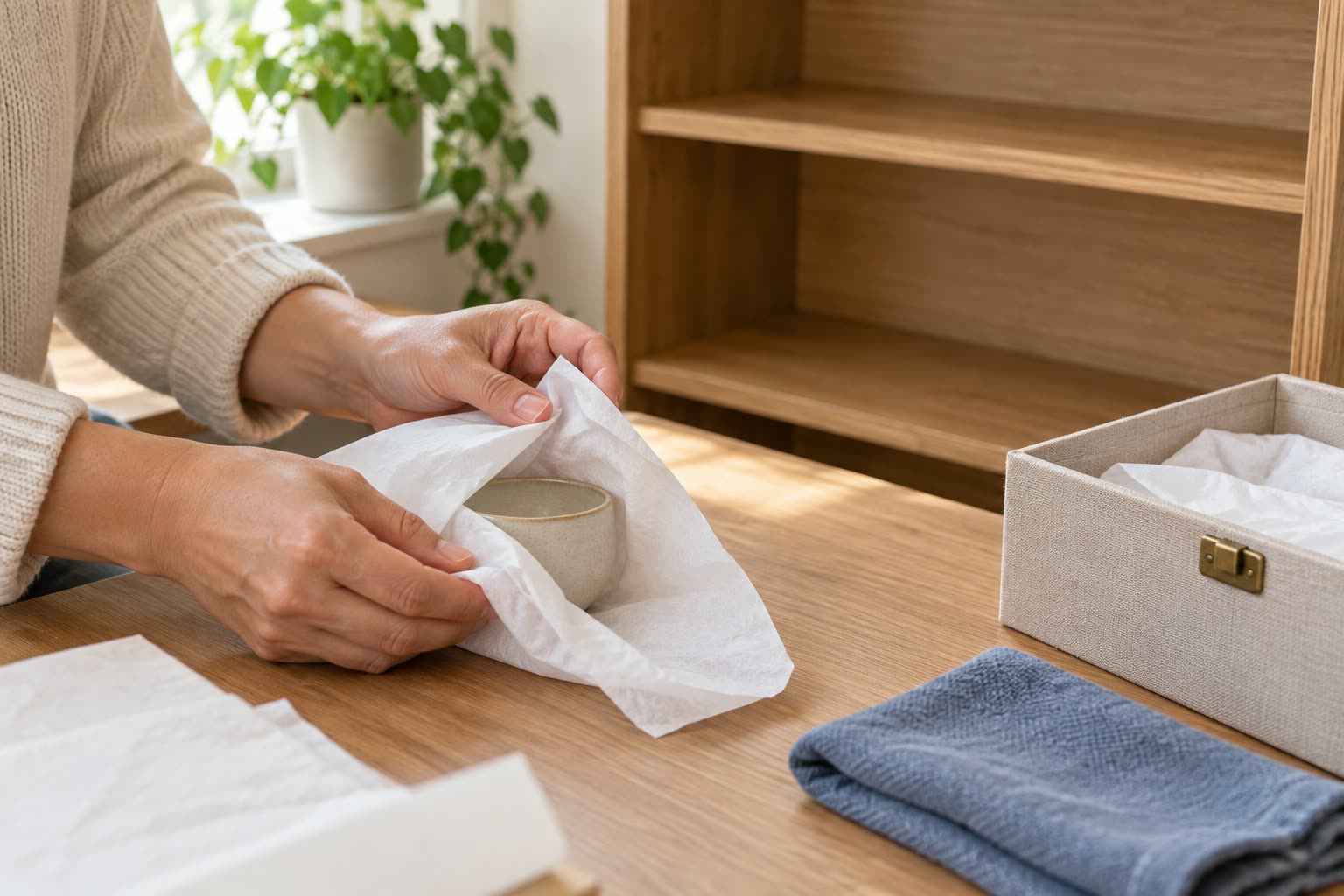
Gifts need not stay on display. Photographing an ordinary keepsake or storing it with a note about its giver may preserve the memory while freeing the surface.
For a blessed or consecrated item, ask the community that blessed or uses it about respectful retirement. Do not invent a universal burning, burial, salt, or water ritual, and do not release objects into waterways or public land.
To retire an ordinary personal setup, close the last session, put the reusable belongings away, and return the furniture to household use. If the altar belonged to someone who has died, consult those responsible for their belongings before changing or disposing of it.
You can keep the prayer or reflection after removing the display. Moving home, losing access to a room, or needing the furniture for another purpose does not create a duty to buy a replacement altar.
What if you keep rearranging altar objects or waiting for signs?
The altar is useful when its location and contents make the chosen activity easier to begin and finish. After several uses, notice whether you read the text, found the seat comfortable, and could leave the display alone afterward.
Watching a flame for approval, repeatedly moving objects until they feel safe, or buying replacements to prevent bad events changes the purpose of the setup. A flicker, fallen card, or damaged ornament does not establish an angelic message or a warning.
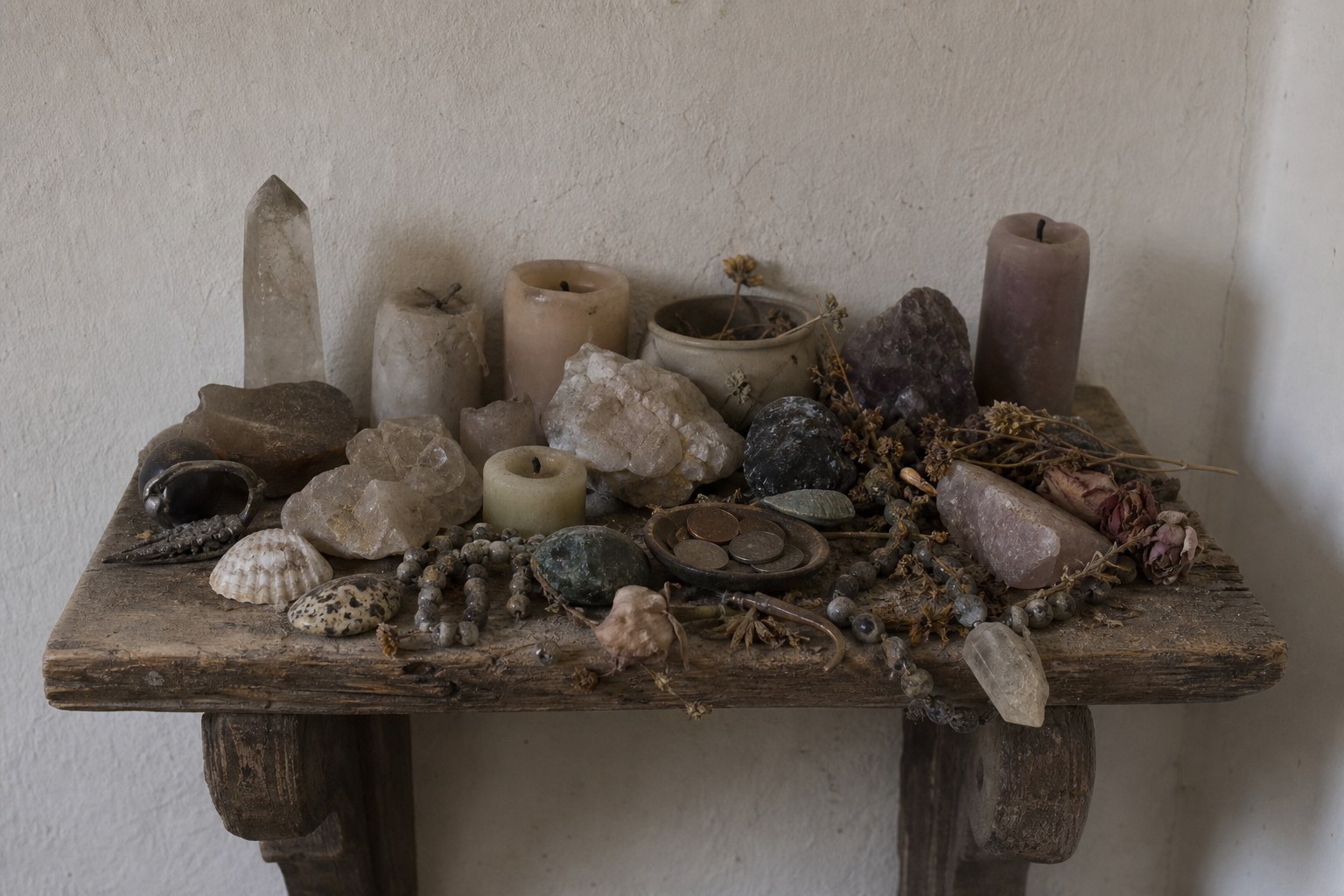
Treat a physical change as a practical matter first: check a candle for unsafe burning, secure an unstable stand, or remove broken glass. Do not postpone action while trying to interpret the event.
If keeping the altar brings escalating fear, expense, or repeated checking, pause additions and seek help with the distress. The National Institute of Mental Health identifies uncontrollable recurring thoughts and repetitive behaviors that disrupt daily life as reasons to seek assessment; this is not a diagnosis based on having a religious practice.
A trusted pastoral adviser can help with religious concerns, and a qualified mental-health professional can help when fear or checking interferes with everyday life.
An altar offers no basis for changing treatment, ignoring a legal obligation, spending money you need for essentials, or remaining in danger. Those decisions need the relevant facts and practical help, even when prayer accompanies them.
When the problem is simply that the display goes unused, put it away for a while and continue the activity elsewhere. Whether you miss the useful place, rather than the obligation to maintain it, can help you decide if it belongs in your home.
Frequently Asked Questions
Can I keep an angel altar in my bedroom?
A small display without flame can fit a bedroom if it is stable, accessible, and acceptable to anyone sharing the room. The United States Fire Administration advises against lit candles in bedrooms and sleeping areas.
Can I use an angel picture on my phone instead?
You can use a digital image you understand and have permission to use for your personal reflection. Silence notifications and position the device comfortably; access to the image does not make a physical altar necessary.
Do I need to bless or consecrate the altar?
The optional household exercise described here does not include a consecration rite. For a religious blessing, ask your community what it means and who conducts it, rather than assuming that a purchased object or internet script confers religious status.
What if someone touches or moves my altar objects?
Check whether anything was damaged or made unsafe, then explain any household boundary about handling your belongings. An object being moved does not establish that you have lost protection or need a cleansing purchase.
Sources
- (1997). Catechism of the Catholic Church, paragraph 2691: Guides for Prayer. The Holy See. Link
- (1997). Catechism of the Catholic Church, paragraph 1182: Where Is the Liturgy Celebrated?. The Holy See. Link
- . The Orthodox Faith, Volume II: Worship, Icons. Orthodox Church in America. Link
- . Candle Fire Safety. Federal Emergency Management Agency. Link
- . Best Practices in Community Risk Reduction, sections 13.1 and 13.2: Candle Safety and Candle Use in Home Worship. Federal Emergency Management Agency. Link
- . Button Cell and Coin Battery FAQs. CPSC. Link
- (2026). Do You Know Which Flowers and Plants Are Toxic to Pets? Our Experts Explain!. ASPCA Poison Control. Link
- (2022). The Essentials of Essential Oils Around Pets. ASPCA Animal Poison Control Center. Link
- . Obsessive-Compulsive Disorder (OCD). National Institutes of Health. Link
About Our Editorial Process
Every KnowTheAngels guide separates calculation method, tradition context, and personal reflection. We cite where interpretations come from, present more than one view, and never present symbolic reading as prediction.
Read our editorial policy