How Do You Start the Day With a Morning Angel Meditation?
A short practice from waking to the first task, with the older morning prayers that already ask an angel to stay near through the day

A morning angel meditation is a short pause between waking and the first demand of the day, in which you address your guardian angel or God and decide how you will meet the first task. The shortest version takes about ninety seconds and needs no candle, app, or quiet house.
The Catholic Angel of God prayer, the Orthodox morning prayer to the guardian angel, and Luther's Morning Prayer each ask for an angel's help through the coming day, then send the person back to ordinary work.
What follows treats the meditation as an optional devotional habit. It does not promise a calm day, a safe commute, or a sign that the prayer was heard.
Quick Facts
- Shortest form
- One breath, one short prayer, one virtue, and one named first task
- Typical length
- About ninety seconds; up to five minutes when an inherited prayer is said slowly
- Older prayers to borrow
- Angel of God (Catholic), To the Guardian Angel (Orthodox), Luther's Morning Prayer (Lutheran)
- Best cue
- Something you already do each morning, such as the kettle, curtains, or front door
- Missed morning
- Restart at the next doorway, car door, or desk chair with the same virtue
What happens between waking and the first task?
The practice has five small moves: feet on the floor, one slow breath, a line addressed to your guardian angel or to God, one chosen virtue, and the first task where that virtue will be used. It ends when the task begins, which is why it fits a morning that is already moving.
The morning handoff, step by step
An editorial method. A church prayer rule, where you follow one, supplies its own order.
- Feet down
- Input
- The moment you sit up, before the phone
- Action
- Put both feet on the floor and take one breath slower than the urge to check the screen.
- Result
- A pause exists before any message sets the first demand.
- Address
- Input
- Your guardian angel, or God if your tradition prays to God for an angel's help
- Action
- Say one line of address, aloud or silently.
- Result
- The pause has a devotional direction instead of being a blank rest.
- One virtue
- Input
- The first demand you can already see coming
- Action
- Choose one word: patience, courage, honesty, mercy, or attention.
- Result
- You carry one quality into the morning, not a list.
- First task
- Input
- Breakfast, the school run, the first call, the first page of study
- Action
- Join the virtue to the task in one sentence, such as "Help me bring patience to breakfast."
- Result
- The prayer names a place where it can be tested.
- Threshold
- Input
- An action you already do every morning
- Action
- Fill the kettle, open the curtains, or open the front door, then start the task.
- Result
- The meditation ends as the task starts.
The breath comes before the phone for a practical reason. A message read first decides the first demand for you, and the virtue you then choose is a reaction to someone else's request.
Without a named task the prayer stays sincere but has nowhere to go, and the first hour runs on whatever habit already runs it.
On a slower morning, the same five moves can stretch to about five minutes by saying an inherited prayer slowly before naming the virtue. Sitting meditation for beginners, with a posture and a timer, is a different exercise, and none of the prayers quoted below require it.
Which church morning prayers ask an angel to stay through the day?
At least three Christian traditions include an angel in their standard morning prayers, and in each one the request covers the day that is starting. The practice of praying at first light is older still: Psalm 5:3 says "in the morning you hear my voice; in the morning I plead my case to you and watch" (NRSVUE).
| Prayer | Tradition and published source | Addressed to | Words about the day |
|---|---|---|---|
| Angel of God (Angele Dei) | Catholic; printed in the Compendium of the Catechism, Appendix A, and by the USCCB | The guardian angel | "Ever this day be at my side" |
| To the Guardian Angel | Orthodox; one of the OCA's five morning prayers | The guardian angel | "Protect me during this day" |
| Morning Prayer | Lutheran; Luther's Small Catechism, 1529 | God the Father | "Let Thy holy angel be with me" |
| Morning Offering | Catholic devotion; text published by EWTN | Jesus | Offers "prayers, works, joys and sufferings of this day"; no angel is named |
The Catholic and Orthodox prayers speak to the guardian angel directly, while Luther's prayer speaks to God and asks God to let an angel be present.
Luther's instructions also show where the prayer ends. After the prayer, the Creed, and the Lord's Prayer, the Small Catechism says to "go to your work with joy," which is the same handoff from prayer to first task described above.
The Orthodox text is the longest of the four and asks for help against temptation during the day. It comes fourth in the OCA's order, after prayers to the Trinity, the Father, and the Theotokos, and before a prayer to one's patron saint.
Any of these can supply the line in the second step, and someone who prays in one of these communities will usually keep the familiar wording the household or parish says together.
Traditional angel prayers are usually said whole, in the wording a community shares. The morning meditation borrows only the short phrase that carries a person from waking into the first task.
What can you say before breakfast, the school run, or the first call?
A useful morning line joins three things: whom you are addressing, one virtue, and one task you will reach within the hour.
"Guardian angel, stay with me on the school run and help me keep my voice low at the gate." "Angel of God, help me say the plain truth in the nine o'clock meeting."
For someone whose tradition prays to God rather than to an angel, Luther's phrasing adapts easily: "Lord, let your holy angel be with me on the drive in, and give me patience in traffic."
Compare those with "Give me a perfect day," which names no task and no action, so by lunch there is nothing to check it against.
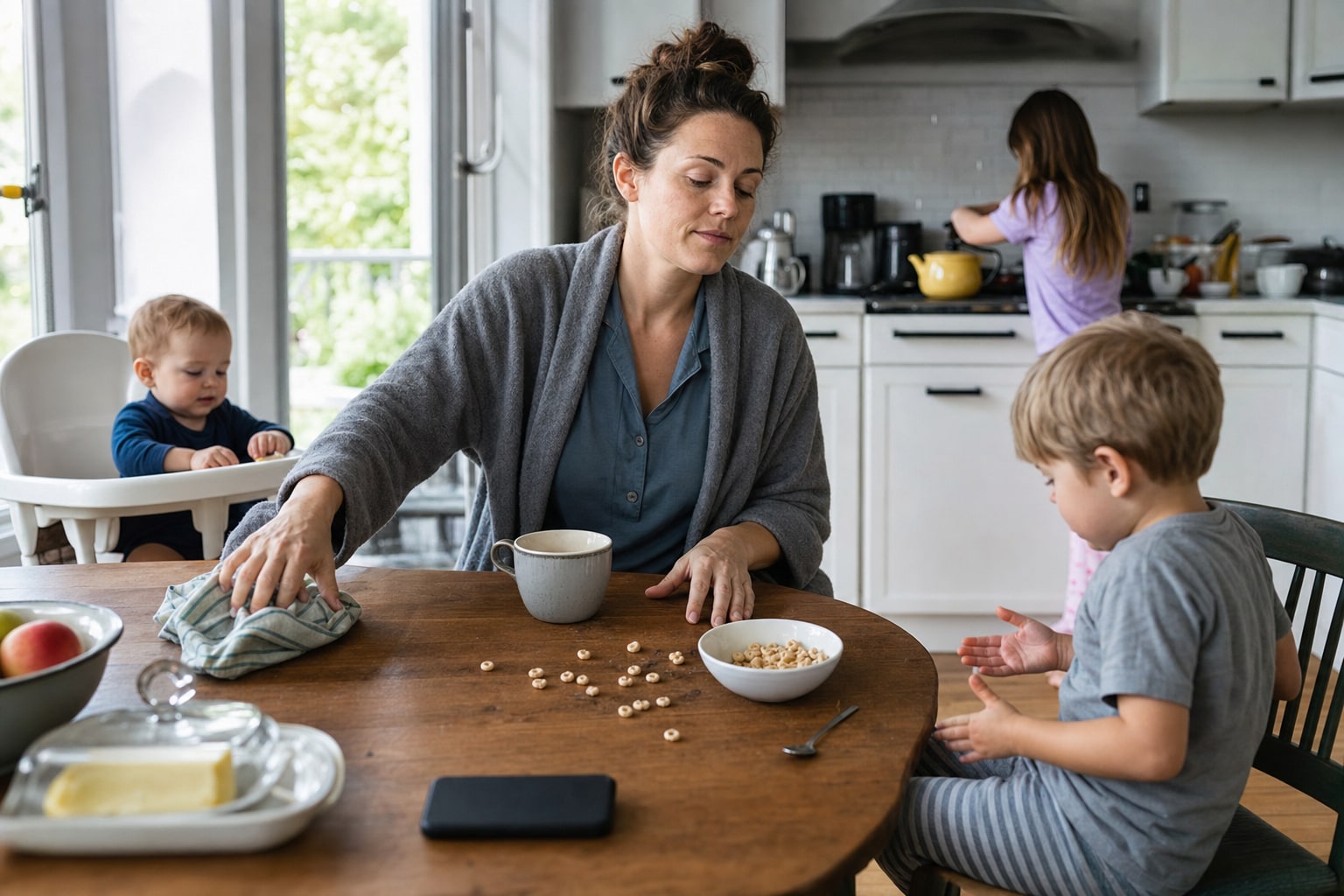
Choose the virtue from the first demand, not from the word that sounds most spiritual. A crowded breakfast like the one above usually asks for patience, and a difficult phone call usually asks for courage or honesty.
Keep the line about your own conduct. "Make my manager kind today" asks for something outside your control, while "help me answer my manager calmly" names an action you can take.
Why tie the prayer to the kettle, the curtains, or the front door?
Habit research points to context. Gardner, Lally, and Wardle, writing in the British Journal of General Practice in 2012, advise repeating a chosen behaviour "in the same context" and picking a cue met every day, with "after breakfast" as their example.
A morning angel meditation can use the same design. The kettle boils, the curtains open, the bathroom mirror gets used, and the front door gets opened whether or not the morning feels prayerful.
Psychologist Peter Gollwitzer called plans of this shape implementation intentions: "whenever situation x arises, I will initiate the goal-directed response y." Put in morning terms, the plan reads "when I open the front door, I will say my line and name the first task."
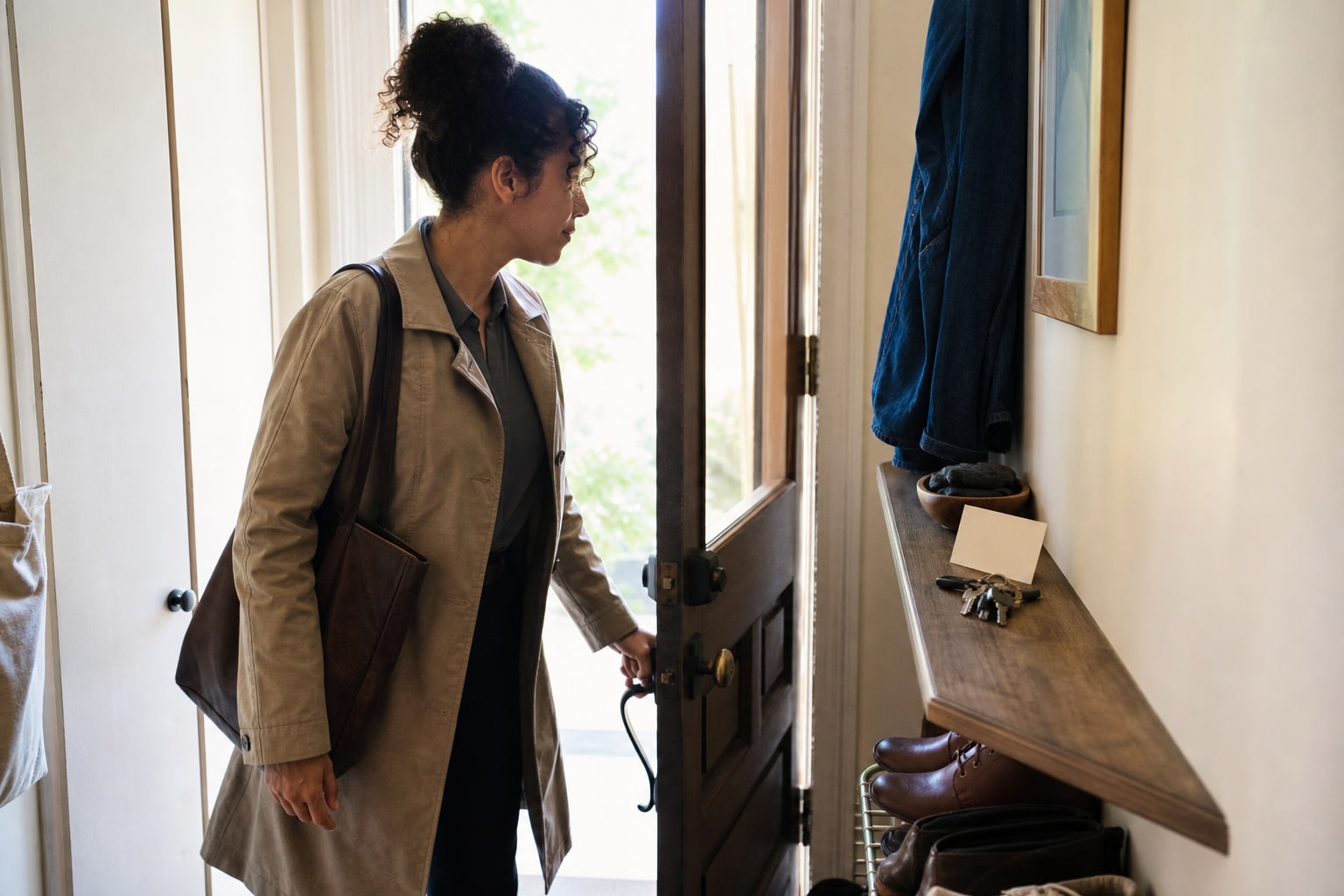
Place any reminder where the cue happens: a small blank card beside the keys, or a note on the closed laptop rather than in a drawer.
Keep one cue for at least a week before changing it. In a 2010 study by Lally and colleagues that followed 96 volunteers for 12 weeks, the time for a daily behaviour to become automatic ranged from 18 to 254 days, so a week shows whether you notice the cue, not whether the habit has formed.
A dedicated prayer corner serves a different kind of morning, one with time to sit. People who want that setting can build an altar practice, while the threshold method works in a flat with no spare shelf.
What if you check your phone before you pray?
Use the next threshold. Put the phone down, take the breath, and attach the same line to the next thing you do: the car door, the school gate, the lift, or the desk chair.
Keep the virtue you would have chosen at seven. Choosing a new one because the morning went badly spends the minute you just recovered.
The habit research supports a relaxed view of misses. Lally and colleagues reported that missing one opportunity "did not materially affect the habit formation process."
A restart at 10:15 still fits the older prayers. The Angel of God asks for help through "this day," and the hours that remain are still part of it.
On a crowded day the method can shrink to one breath and one sentence tied to the next task, and that shorter form is complete without a longer session later to make up for it.
Guardian angel or archangel: whom do morning prayers address?
In the traditional prayers above, the answer is the guardian angel. The Catechism of the Catholic Church (paragraph 336) teaches that "from infancy to death human life is surrounded by their watchful care and intercession," which is why a daily prayer addresses that angel rather than a named archangel.
Luther's prayer names no angel at all and asks God for "Thy holy angel," leaving the identity with God.
Modern angel-meditation writers often assign archangels to morning tasks. The Angelorum list of seven morning rituals, for example, pairs Michael with greeting the sun and asking for protection, and Raphael with a five-minute breathing exercise.
Those pairings are a contemporary convention. They draw on each figure's traditional role, such as Michael fighting the dragon in Revelation 12:7 and Raphael sent to heal in Tobit 3:17, but no church prayer book prescribes an archangel for the morning.
A reader who wants to rehearse courage before a hard day may prefer a Michael meditation, which uses his shield and sword as imagery. For the ninety-second form, one address used every morning is easier to remember than a different figure each day.
Which first-hour changes show the practice is working?
Look for one changed action in the first hour. The calm of the breath may be gone by the time the children need shoes, while the chosen virtue still shows in how you answer them.
| Setting | Evidence you can check | What does not count |
|---|---|---|
| Breakfast or caregiving | One pause before reacting, or one gentler instruction | Everyone else being calm |
| Commute | One less hurried choice on the road or platform | A journey without delays |
| Study or desk work | The first planned task starts before email or news | Finishing the whole list |
| Difficult conversation | The first sentence matches the virtue you named | How the other person responds |
Every row measures something you controlled, because traffic, another person's mood, and the size of the inbox sit outside both the prayer and the test.
Two habits pull the practice off course. Counting streaks turns it into a score, and scanning the first song, clock time, or number plate for a sign turns it into a request for confirmation.
Catholic teaching names the first error directly. The Catechism (paragraph 2111) calls it superstition "to attribute the efficacy of prayers or of sacramental signs to their mere external performance, apart from the interior dispositions that they demand."
A number that keeps catching your eye later in the day can go into a number journal with the time and setting. Keeping it out of the morning pause protects the ninety seconds for the task.
Meditation research is more modest than many morning-routine promises. The NIH's National Center for Complementary and Integrative Health reports mixed evidence on stress and sleep, and notes a 2020 review in which about 8 percent of participants had a negative effect, most often anxiety or depression.
If the pause regularly leaves you more anxious, shorten it to the breath and the task line, or stop. Persistent distress is a reason to speak with a health professional, and NCCIH advises against using meditation to postpone that visit.
What the whole day held, and what to let go of before sleep, belongs to evening meditation at the other end of the day, so this review stops after the first hour.
Frequently Asked Questions
How long should a morning angel meditation be?
About ninety seconds is enough for the full method: breath, address, virtue, task, and threshold.
Saying an inherited prayer slowly can extend it to around five minutes, and none of the traditional texts quoted here set a minimum.
Do I have to meditate at sunrise or facing east?
No.
Psalm 5:3 speaks of prayer "in the morning," and Luther's instruction begins when you rise. Sunrise timing and facing east come from some modern angel-practice sites, not from these prayers.
Can I use the Angel of God prayer as my morning meditation?
Yes.
Say it as the address in the second step, then name one virtue and the first task. Its line "ever this day be at my side" already points at the day ahead.
Is it acceptable to pray to God instead of an angel?
Yes. Luther's Morning Prayer does exactly that, asking God to "let Thy holy angel be with me."
That form fits Lutheran and other Protestant practice, which addresses prayer to God.
Can a morning angel meditation protect me for the day?
The traditional prayers ask for protection; none of them promise an outcome. Ordinary safety steps, such as checking the car or telling someone your route, still belong to the day.
Sources
- (2005). Compendium of the Catechism of the Catholic Church, Appendix A: Angele Dei. Libreria Editrice Vaticana. Link
- . Prayer to Your Guardian Angel. USCCB Prayers. Link
- . Morning Prayers: To the Guardian Angel. OCA Common Prayers. Link
- (1529). Small Catechism, Daily Prayers: Morning Prayer. Book of Concord, historical English translation. Link
- . The Morning Offering. EWTN Devotions. Link
- . Psalm 5:3. New Revised Standard Version Updated Edition, BibleGateway. Link
- . Catechism of the Catholic Church, paragraph 336. Libreria Editrice Vaticana. Link
- . Catechism of the Catholic Church, paragraph 2111: Superstition. Libreria Editrice Vaticana. Link
- (2012). Making health habitual: the psychology of 'habit-formation' and general practice. British Journal of General Practice 62(605): 664-666. Link
- (2010). How are habits formed: Modelling habit formation in the real world. European Journal of Social Psychology 40(6): 998-1009. Link
- (1999). Implementation intentions: Strong effects of simple plans. American Psychologist 54(7): 493-503. Link
- . Meditation and Mindfulness: Effectiveness and Safety. NCCIH, National Institutes of Health. Link
- . 7 Angelic Morning Rituals to Infuse Your Day with Angelic Energy. Angelorum. Link
About Our Editorial Process
Every KnowTheAngels guide separates calculation method, tradition context, and personal reflection. We cite where interpretations come from, present more than one view, and never present symbolic reading as prediction.
Read our editorial policy