How Does Angel Number 69 Combine Nurture and Completion?
Why 69 comes back to 6 through 15, Doreen Virtue's and Joanne Walmsley's reading of 69 as letting go of possessions, the mirrored shape behind yin-yang readings, and the 69 weeks of Daniel 9
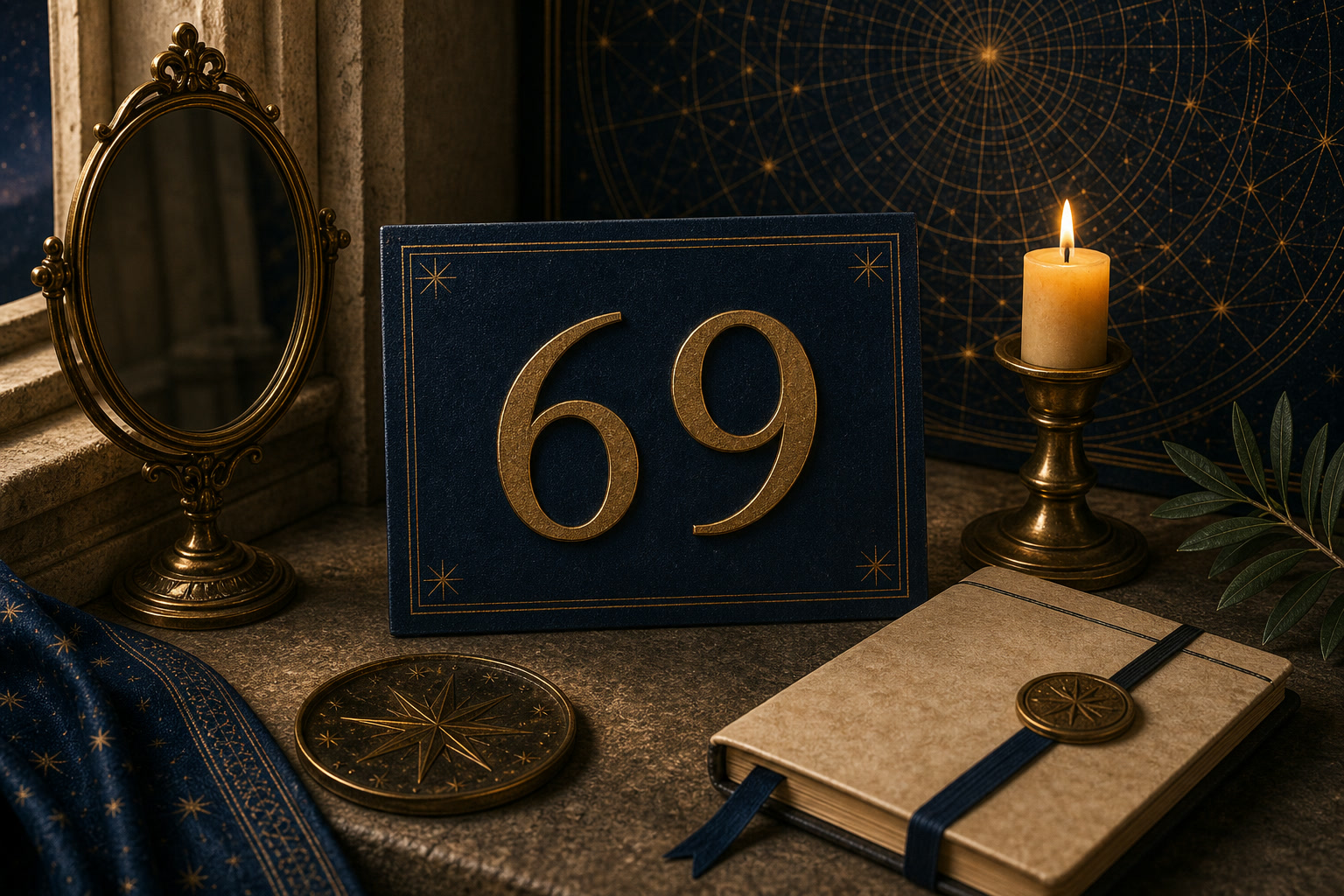
Angel number 69 puts the digit of care, 6, in front of the digit of completion, 9, and the arithmetic brings the pair back to where it started: 6 + 9 = 15 and 1 + 5 = 6. Numerology.com calls 6 "the embodiment of the heart" and 9 "completion, but not finality", so a numerology reading of 69 describes something being finished by a person who still has others to look after.
The angel-number writers read the same pairing another way. Doreen Virtue's list of number sequences, first printed in Healing with the Angels (1999), tells readers who see 6s and 9s together to "detach from your material items", and Joanne Walmsley's 2011 entry for 69 repeats that instruction and adds that an important phase is ending. Which reading fits depends on whether the 6 stands for care of people, as in numerology, or for the material world, as in Virtue's list.
Quick Facts
- Reduction
- 6 + 9 = 15, then 1 + 5 = 6
- 6 in numerology
- "The embodiment of the heart": care, nurture and healing (Numerology.com)
- 9 in numerology
- "Completion, but not finality" (Numerology.com)
- Angel-number reading
- Detach from possessions; a phase is ending (Virtue 1999; Walmsley 2011)
- Shape
- Strobogrammatic: it still reads 69 when turned upside down
- In the Bible
- Daniel 9:25 in the KJV counts 7 + 62 = 69 weeks
- Master or karmic number?
- Neither; 15 is not one of Decoz's karmic debt numbers
How does 6 + 9 = 15 bring 69 back to the caring 6?
The first sum is 6 + 9 = 15, and the second is 1 + 5 = 6. Adding a 9 never changes a digital root, because the root of a number is its remainder after division by 9, so every two-digit number ending in 9 reduces to its first digit: 19 to 1, 49 to 4 and 89 to 8. Sixty-nine shares that return with eight other numbers, and readings that present it as a rare circle back to the start give it more weight than the sum supports.
What the return changes is emphasis. Numerology.com describes the 6 as "the embodiment of the heart", a number of unconditional love and of the ability to "support, nurture, and heal". It describes the 9 as "completion, but not finality", the end of one cycle and "the potential it creates for another cycle to begin". Because the calculation closes on 6 rather than 9, numerology weighs 69 toward the care that continues after something is finished more than toward the finishing.
The middle total, 15, carries a reading of its own on some sites. Numerologist.com reads it through the fifteenth trump of the tarot, the Devil, and on that basis describes 69 as love that learns to tell itself apart from attachment; that reading depends on the tarot correspondence, which the arithmetic does not supply. Fifteen is also absent from Hans Decoz's karmic debt numbers, which are 13, 14, 16 and 19.
| Layer | Calculation | Source of the meaning |
|---|---|---|
| First digit | 6 | Numerology.com: care, nurture and healing |
| Second digit | 9 | Numerology.com: a completion that opens another cycle |
| Compound | 6 + 9 = 15 | Numerologist.com: the Devil, trump XV of the tarot |
| Root | 1 + 5 = 6 | The care of the 6 again, now after an ending |
Care or possessions: where do numerology and the angel-number lists part company on 69?
The angel-number reading of 69 comes from a combination entry rather than from the numerology of its digits. In Healing with the Angels (1999), Doreen Virtue grouped every sequence that mixes 6s and 9s, such as 669 or 699, under one message: "Detach from your material items, especially if you have had any obsession with any particular type of material possession." The same entry promises that "something in your life is about to be replaced with something better".
Joanne Walmsley's Sacred Scribes entry for 69, posted on 13 July 2011, follows Virtue closely. Her angels ask the reader to "let go" and "release the old", and she assures them that whatever leaves will be replaced with something "new" and "better". She adds that "an important phase or cycle is ending" for "very karmic reasons", and closes with a promise that the reader's "monetary and material needs will be met" while they turn to their life purpose.
The split comes from what each layer takes the 6 to mean. Virtue's list uses 6 for the material world: her entry for 666 warns of thoughts "focused too much on the material world". Read through that list, 69 concerns possessions and what to give up; read through Numerology.com's 6, it concerns people and what is still owed to them. The possessions reading fits a house clearance, a move or a downsizing, and the care reading fits a change in who looks after whom. Neither source offers a rule for choosing, so the choice rests on which of those situations the reader is actually in.
The promise of replacement is the part no reader can check, since neither writer names what will arrive, when, or how anyone would know it came because of the number. The instruction to let go of a particular possession can be carried out and judged by what happens afterwards.
Why are the mirrored digits of 69 read as yin and yang?
The yin-yang reading comes from the shape of the numerals, not from numerology. Written in Arabic numerals, 69 is strobogrammatic: turned upside down it still reads 69, because the 6 becomes a 9 and the 9 becomes a 6. Astrology.com, among other sites, takes the two curled digits for the interlocking halves of the yin-yang symbol and reads 69 as balance between opposing forces.
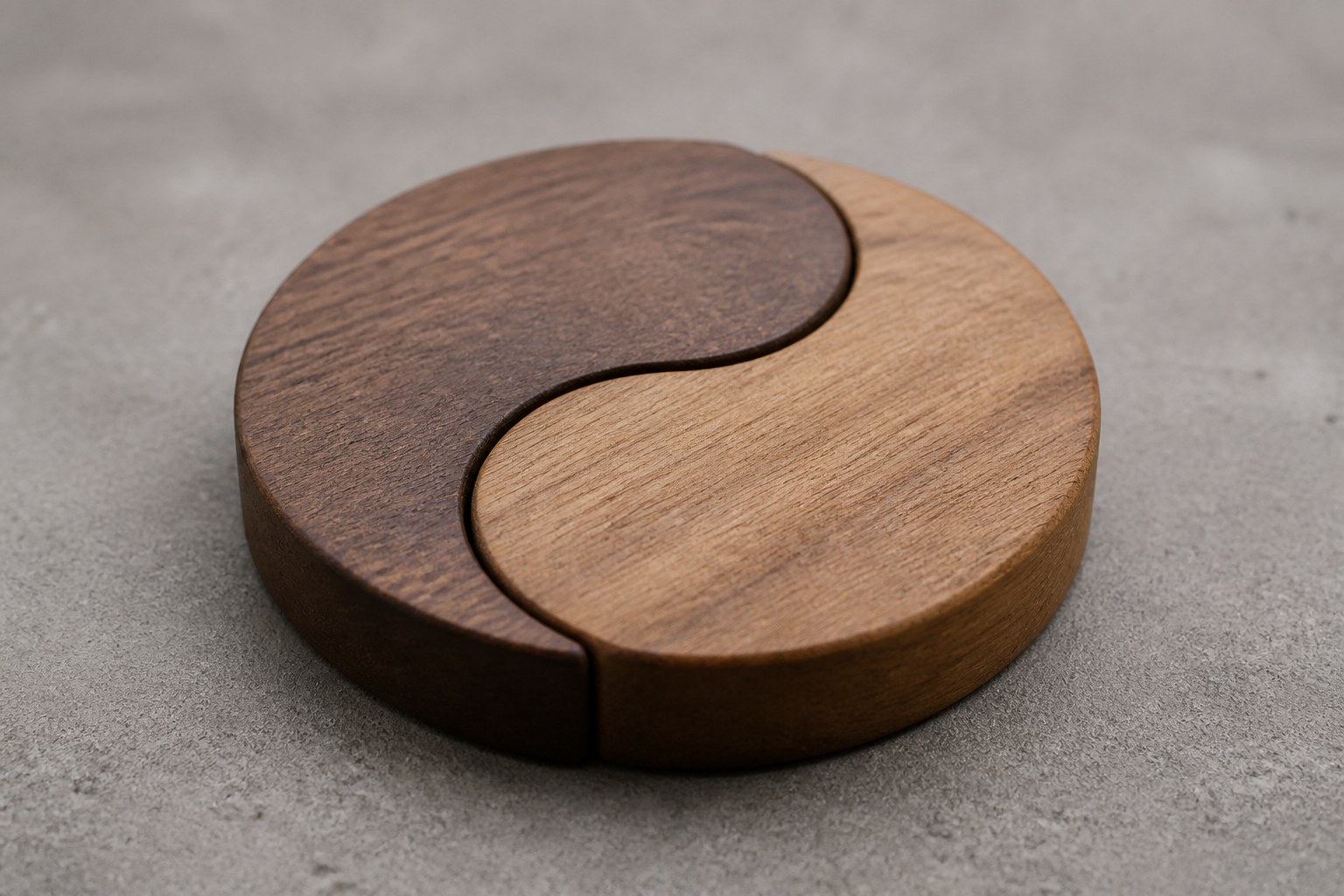
The symmetry belongs to the way the digits are drawn. It disappears in Roman numerals (LXIX) and in Chinese numerals, and it says nothing about the quantity sixty-nine, so a balance reading built on it is a visual association. The same mirrored shape gave 69 its English slang meaning for a sexual position, which in turn made the number a long-running internet joke; the angel-number sources behind the usual reading of 69 do not mention either.
What does 69 mean in love, and when a relationship is ending?
Neither Virtue nor Walmsley says anything about romance under 69; their message concerns possessions and the end of a phase. Love readings of the number come from later sites. Numerologist.com, working from the 15 and the Devil card, describes 69 as love that has learned to tell itself apart from attachment, while Astrology.com treats the yin-yang shape as a picture of two partners in balance.
Numerology.com's digit profiles add a caution that fits 69 more closely than either reading. It names self-sacrifice as a weakness of the 6, which can be "so willing to sacrifice itself for other people and the sake of harmony that it neglects its own needs", and it gives the 9 the same tendency to put others first at its own expense. When both digits of a number carry that weakness, the risk it points to in a relationship is looking after everyone through an ending except oneself.
For someone going through a breakup, each part of 69 answers a different question. The 9 marks the ending; the 6 at both ends of the calculation points to the duties that outlast it, such as children, a shared tenancy or a parent who needs care; and the promise that whatever leaves will be replaced belongs to Walmsley alone. No source ties 69 to a reunion, and the arithmetic cannot say whether a separation is right.
Does 69 promise money, or ask for one possession to go?
Both angel-number sources put possessions at the centre of 69, and both attach a promise. Virtue tells readers to "be open to receiving new possessions that exceed your expectations, as you are ready to be upgraded", and Walmsley writes that the Universe "will provide" while the reader turns to spiritual work. Neither passage names an amount, a date or a mechanism, so neither is a forecast about money.
The instruction beside the promise is more concrete. Detaching from "any particular type of material possession" can be tested against a single object: what it costs to keep, store, insure or repair, who else has a claim on it, and whether giving it up leaves a duty unmet. That last question is where the numerology 6 comes back in, because a possession is often tied to a person, as a family house or a shared car usually is.
At work the same split applies. The 9 fits a job, contract or project that is finishing, and the 6 asks who depends on it, from the colleague who inherits the files to the client waiting on a final delivery. Walmsley's entry points the reader toward a "Divine life purpose" but says nothing about notice periods, income or references, which still have to be settled on their own terms.
What is the biblical meaning of 69, and why does Daniel 9 count 69 weeks?
Scripture assigns no symbolic meaning to 69, but the number sits inside one of its most disputed passages. In Daniel 9 the angel Gabriel comes to Daniel "in swift flight at the time of the evening sacrifice" (9:21, NRSVUE) and announces that "seventy weeks are decreed" for Jerusalem (9:24). Verse 25 divides the period into seven weeks and sixty-two weeks, and the King James Version runs them together: from the command to rebuild Jerusalem "unto the Messiah the Prince shall be seven weeks, and threescore and two weeks", a total of 69.
Translations divide on how to read the seventy weeks. The Hebrew Masoretic text places a disjunctive accent between the seven and the sixty-two, and the NRSVUE follows it, so its "anointed prince" arrives after seven weeks and the sixty-two weeks describe the rebuilding. Christian readings that count 69 weeks of years to the time of Jesus depend on joining the two numbers as the KJV does. The theologian John Mark Hicks, writing in 2024, leans toward a second-century BCE reading in which the anointed one "cut off" is the high priest Onias III, in 171 or 170 BCE, while saying he is not certain of his own view.
In either reading the 69 in Daniel is a count of weeks inside a timetable, and the angel in the passage explains that timetable rather than sending a number sequence. No verse attaches a symbolic meaning to the total itself, so a biblical meaning for 69 beyond Daniel's count comes from later interpreters.
Why do I keep seeing 69, a number people already notice?
Sixty-nine is one of the few two-digit numbers that people already notice for reasons of their own. Its slang meaning has turned it into an internet meme, in which almost any appearance of the number online is answered with the word "nice". A number already marked that way is remembered when it turns up on a receipt, a page or a scoreboard, while the 68s and 71s around it pass unnoticed.
A personal association works in the same direction. Psychologists call the habit selective attention, which the APA dictionary describes as concentrating on some stimuli while excluding others; once 69 is tied to an ending or a decision about belongings, the sightings that fit are the ones kept in memory. That explains why a count of sightings cannot establish a cause; what a sighting means to the person who sees it is a separate matter. A note of where each 69 appeared, and what was being cleared, finished or looked after at the time, shows whether the recurring numbers keep gathering around one situation.
Frequently Asked Questions
Does angel number 69 have anything to do with the sexual meaning of 69?
Only through the shape of the digits. The slang use names a sexual position after the way the 6 and 9 mirror each other, the same symmetry that yin-yang readings draw on. Virtue's and Walmsley's angel-number entries do not mention it.
Is 69 a master number or a karmic number?
Neither. The standard master numbers are 11, 22 and 33, and Hans Decoz's karmic debt numbers are 13, 14, 16 and 19. The 15 inside 69 is not among them, and the root is an ordinary 6.
Is 96 read the same way as 69?
The digits are the same and both reduce through 15 to 6. Virtue's entry covers any mix of 6s and 9s, so in her list they share one message; the order matters only to readers who treat the first digit as the starting point, which makes 96 an ending that leads back into care.
What does 69 mean for twin flames?
Neither Virtue's nor Walmsley's entry for 69 mentions twin flames. Their reading concerns possessions and the end of a phase, and the twin-flame readings of 69 come from later websites.
Sources
- (n.d.). Number 6 Meaning in Numerology. Numerology.com (strengths and the weakness of self-sacrifice). Link
- (n.d.). Number 9 Meaning in Numerology. Numerology.com (completion and the weakness of self-sacrifice). Link
- (n.d.). Angel Number 69: The Love That Learned to Tell Itself from Attachment. Numerologist.com (the 15 read through the Devil card). Link
- (n.d.). Karmic Debt Numbers. World Numerology (13, 14, 16 and 19). Link
- (2026). Master Numbers 11, 22, 33. World Numerology. Link
- (2026). Digital root. Wikipedia (the root as the remainder on division by 9). Link
- (2008). Number Sequences from the Angels. Spirit Library, posted August 18, 2008, excerpt from Healing with the Angels (entries for 111, 666, 6's and 9's, 8's and 9's). Link
- (1999). Healing with the Angels: How the Angels Can Assist You in Every Area of Your Life. Hay House, Carlsbad, CA, 1999 (ISBN 1-56170-640-X); Open Library record. Link
- (2011). Angel Number 69. Sacred Scribes, posted July 13, 2011. Link
- (n.d.). 69 Angel Number Meaning. Astrology.com (yin-yang reading). Link
- (2026). 69 (number). Wikipedia (strobogrammatic form; slang and meme use). Link
- (2021). Daniel 9:20-27. Bible Gateway. Link
- (1611). Daniel 9:25. Bible Gateway. Link
- (2024). Daniel 9:20-27: The Seventy Weeks. johnmarkhicks.com, December 4, 2024. Link
- (2018). Selective attention. APA Dictionary of Psychology. Link
About Our Editorial Process
Every KnowTheAngels guide separates calculation method, tradition context, and personal reflection. We cite where interpretations come from, present more than one view, and never present symbolic reading as prediction.
Read our editorial policy