Who Is Archangel Barachiel, the Angel of Blessings in Orthodox Tradition?
The Orthodox feast list, the Amadeus and Palermo tradition, the 3 Enoch lightning question, and what the roses on his garment were painted to mean
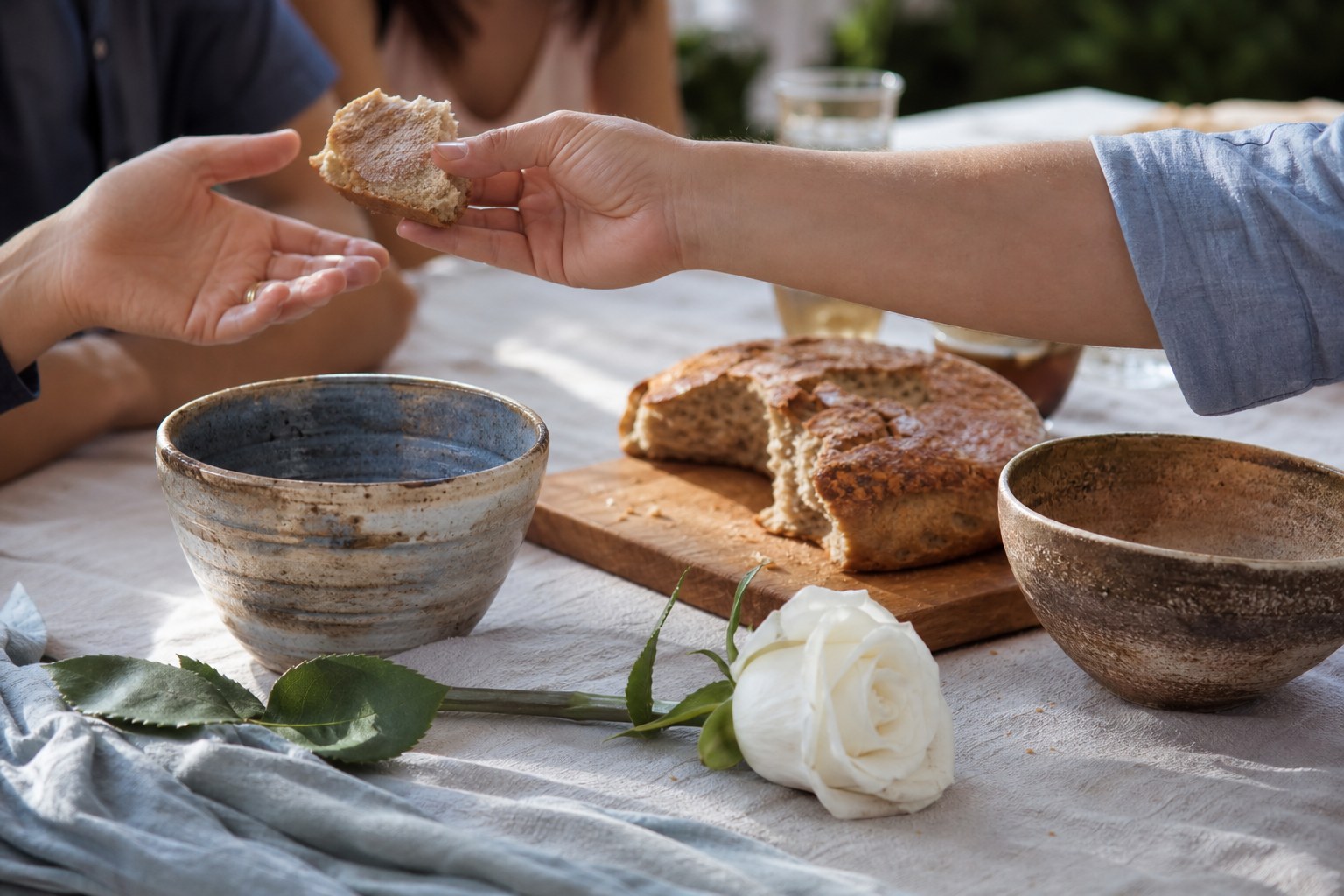
Archangel Barachiel is one of the seven or eight archangels of Eastern Orthodox tradition, and his name is usually translated “blessing of God.” The Orthodox Church in America calls him the distributor of God's blessings for good deeds and describes him with a white rose on his breast.
No book of the Bible names him. His place in church memory comes through the November 8 feast of the archangels, a list of seven angels circulated in Renaissance Rome under the name of Amadeus of Portugal, and Russian icon painting that gave him his roses.
A third thread is less certain. The Hebrew Book of Enoch, known as 3 Enoch, names a prince Barakiel and an angel Baraqiel who rules the lightning, and whether either one is Barachiel turns on a single Hebrew letter.
The Catholic Church does not use his name in the Roman liturgy. Prayers that promise luck or money through Barachiel belong to a recent layer that none of these older sources supports.
Quick Facts
- Name meaning
- “Blessing of God,” from the Hebrew root barak, “to bless”
- In the Bible?
- No. The similar name Barachel in Job 32:2 belongs to a man
- Main tradition
- Eastern Orthodox and Byzantine-rite Catholic churches
- Feast
- November 8, or November 21 on the Julian calendar
- Icon attribute
- White roses carried on his garment at the chest
- Catholic guidance
- Directory on Popular Piety 217 discourages angel names beyond Michael, Gabriel, and Raphael
What does the name Barachiel mean, and is it in the Bible?
Barachiel joins the Hebrew verb barak, “to bless,” to el, “God,” which gives the usual readings “blessing of God” and “God has blessed.” Russian Orthodox books spell the same name Varakhiil and translate it the same way.
No book of the Bible names an angel Barachiel. The Orthodox Encyclopedia says so directly, and the Russian church calendar Azbyka adds that his name is known only through church tradition.
The closest scriptural match is a man.
Job 32:2 introduces “Elihu son of Barachel the Buzite” (NRSVUE), and the Hebrew spelling of that father's name, barakh'el, carries the same blessing root.
A reader who looks up Barachiel in a concordance will land on Job 32, so a devotional page that cites that verse as proof of the archangel has mistaken a human father for an angel.
Even the rank has a thin scriptural base. The Greek word archangelos appears only twice in the New Testament, at 1 Thessalonians 4:16 and Jude 9, and neither verse offers a list of seven.
English spellings of the name Barachiel vary between books, with Barakiel and Varachiel both in print. Most of these point to the same Orthodox figure. The Barakiel of 3 Enoch is the exception, because his name may come from a different Hebrew word.
Which lists name Barachiel among the archangels?
Three lists carry Barachiel's name: the Orthodox feast of November 8, the Apocalypsis Nova attributed to Amadeus of Portugal, and a painting of seven angelic princes found in a Palermo church in the early 1500s.
The OCA's account of the feast names Gabriel, Raphael, Uriel, Selaphiel, Jehudiel, Barachiel, and Jeremiel beside Michael. Metropolitan Tikhon's 2025 reflection for the feast speaks of “seven or eight archangels,” with Jeremiel “sometimes added” to the seven.
The OCA dates the feast to the Council of Laodicea in the early fourth century.
That date is the feast's own account of its origin. Canon 35 of Laodicea, the canon the OCA points to, forbids Christians to leave the Church and “invoke angels” and names no archangel at all.
In the West, the Apocalypsis Nova circulated in early sixteenth-century Rome as the revelations of the Franciscan Amadeus Mendes da Silva, who died in 1482. The scholar Mirjam Wulff describes the text as only “allegedly written” by him, and its visions reveal seven archangels whose names include Barachiel, Jehudiel, and Sealtiel.
Between 1513 and 1515, the Sicilian priest Antonio Lo Duca found an old image of seven angelic princes, Barachiel among them, in the small church of Sant'Angelo in Palermo.
He spent decades campaigning for their public cult.
How Barachiel's name reached the lists
From the feast's own origin story to the Russian icon painters, including two points where the official record leaves the seven names out.
- 4th century, by church traditionThe OCA dates the November 8 feast to Laodicea
The surviving canons of that council name no archangel, so the date rests on the feast's own account.
- Early 1500s, RomeThe Apocalypsis Nova circulates under Amadeus's name
Western readers meet a list of seven that includes Barachiel.
- 1513 to 1515, PalermoLo Duca finds the seven princes in Sant'Angelo
A local cult of the seven named angels begins.
- 1561, RomePius IV authorizes Santa Maria degli Angeli
The church honors the Virgin and all angels and martyrs, without the seven names in its dedication.
- 18th and 19th centuries, RussiaIcons show Barachiel carrying white roses
The attribute Orthodox art still uses is fixed in this period.
- TodayNovember 8, or November 21 on the Julian calendar
Barachiel is honored inside the feast of all the bodiless powers, not on a day of his own.
Selaphiel reached the calendars by the same routes, which is why the two names travel together from the Palermo image to modern Orthodox icons. Barachiel's own contribution to those lists is the blessing role, and the roses are how painters made that role visible.
Is the Barakiel of 3 Enoch a prince over lightning?
Partly, and the answer depends on which chapter a source means.
In Hugo Odeberg's 1928 translation of 3 Enoch, the angel set over lightning is Baraqiel in chapter 14, while chapter 17 names a Barakiel who rules the second heaven.
3 Enoch 14:4 lists “the rulers of the world”: Gabriel over fire, Baradiel over hail, Ruchiel over wind, and “Baraqiel who is appointed over the lightnings.” The speaker is Metatron, telling Rabbi Ishmael how these angels trembled when he was crowned.
Chapter 17 is a different list. Seven princes rule the seven heavens, each “accompanied by 496,000 myriads of ministering angels,” and verse 3 places Barakiel over the second heaven, Raqia, with Badariel over the third.
So Baradiel is the hail angel and Badariel a prince of the third heaven, which leaves Baraqiel in chapter 14 as the only lightning figure.
The spelling carries the real question.
Hebrew baraq means lightning, and Odeberg himself glosses “lightning (Baraq)” elsewhere in the book, while the blessing verb barak ends in a different letter.
An English form such as Barakiel can hide that difference between q and k. The Orthodox Encyclopedia still cites 3 Enoch 14 and 17 for Varakhiil, so one Orthodox reference work reads these angels as Barachiel, while the q in Odeberg's chapter 14 points to lightning.
A third figure makes the tangle worse. 1 Enoch 6:7 names Baraqijal among the chiefs of the Watchers who came down to earth, and 1 Enoch 8:3 says he taught astrology.
| Text | Name as printed | Role in the text | Relation to Barachiel |
|---|---|---|---|
| 3 Enoch 14:4 | Baraqiel | Appointed over the lightnings | Built on baraq, lightning; the spelling does not match the blessing root |
| 3 Enoch 17:1-3 | Bakariel, Barakiel | Prince of the second heaven | Cited by the Orthodox Encyclopedia; the letter is unclear in English |
| 3 Enoch 14:4 | Baradiel | Angel of the hail | A different angel with no lightning or blessing role |
| 1 Enoch 6:7 and 8:3 | Baraqijal | Watcher chief who taught astrology | A fallen angel in that story, never honored in church lists |
| Orthodox feast, November 8 | Barachiel, Varakhiil | Distributor of God's blessings | The archangel of the icons and the feast |
Barachiel of the Orthodox feast is a blessing figure, and the lightning prince of 3 Enoch should stay a related but unconfirmed name until a Hebrew edition settles which letter the manuscripts use.
Why does Barachiel carry white roses on his garment?
Russian Orthodox icons of the eighteenth and nineteenth centuries paint Barachiel “bearing white roses on his garment on his chest.” The Orthodox Encyclopedia explains why in the same line: he appears “as if rewarding by God's command for prayers, labors and moral conduct of people.”
The roses therefore stand for blessing given in answer to a life, which matches the OCA's phrase for him, “distributor of the blessings of God for good deeds.”
The painting rule was written down in V. D. Fartusov's 1910 manual for icon painters, which both the Orthodox Encyclopedia and the Drevo encyclopedia cite. Some icons from the same period show a single flower in his hand instead, and on the Unburnt Bush icon of the Mother of God he sometimes holds a bunch of grapes.

Drevo reads the color simply: white roses mean God's blessing, and it asks what could be purer or more fragrant than the flower from which rose oil is made.
English devotional writing often describes something else: Barachiel scattering rose petals, or petals strewn across his cloak, as blessings falling on people. Learn Religions writer Whitney Hopler gives this version, while Fartusov's manual describes roses carried at the chest.
In Christian art the color white has its own long history of purity and resurrection, wider than any one angel. The Orthodox sources use the painted rose to identify him in an icon, and none of them treats a rose seen in daily life as a sign that Barachiel is present.
What does blessing mean in Barachiel devotion?
In Orthodox sources, blessing means God's help given to good work and a good life. Metropolitan Innocent of Kherson, quoted by the Drevo encyclopedia, says that through Barachiel “God's blessing is sent upon every deed, upon every good earthly occupation.”
The OCA adds a second role: Barachiel “entreats the mercy of God for people.” Blessing in this tradition runs two ways, as a gift sent to honest work and as mercy asked for people who need it.
Metropolitan Tikhon's 2025 reflection ends with a short prayer, “Holy archangel Barachiel, show us God's blessings!” It asks to see what God gives and names no outcome.
The nearest neighbor in the feast is Jegudiel, whose icon shows a golden crown as the reward for effort made for God's glory. Jegudiel's crown answers labor, while Barachiel's roses answer prayer, work, and moral conduct together, so the two roles touch without merging.
Russian Orthodox use also includes an akathist, a long standing hymn of praise, addressed to Barachiel, and Azbyka lists it in its prayer collection.
Is Barachiel the patron of families and marriage?
The family patronage is a modern devotional claim. The OCA, the Orthodox Encyclopedia, Azbyka, and Drevo all describe Barachiel as a bearer of blessing without naming marriage or family as his charge.
The patronage appears in English-language sources. The Wikipedia entry calls him “a patron of family and married life” in Byzantine Catholic and Eastern Orthodox tradition, and some devotional sites add a bread basket or staff standing for the blessing of children.
Other titles come from the same layer: chief of all guardian angels, patron of converts, and links to February, Pisces, and Jupiter. None of them appears in the OCA or Russian Orthodox descriptions of the feast.
What the family patronage claim can and cannot rest on
Why the family label seems to fit Barachiel's blessing role, and what the older sources do not supply.
What the evidence supports
- Blessing reaches home life
Innocent of Kherson's phrase “every good earthly occupation” can include marriage and raising children.
- The OCA wording is broad
“Blessings of God for good deeds” names no single area of life, so readers naturally apply it to a household.
What remains limited
- No Orthodox patronage
The OCA, the Orthodox Encyclopedia, Azbyka, and Drevo assign him no charge over marriage or family.
- The basket is unsourced
Neither Fartusov's manual as quoted nor the OCA mentions a bread basket or staff.
- No Catholic patronage
Directory 217 discourages his name, so a label calling him a Catholic patron of marriage has no official footing.
A family that asks Barachiel to bless its home is keeping a personal devotion that borrows older Orthodox blessing language, while the patronage label itself comes from modern English-language sources.
What does the Catholic Church say about Barachiel?
The Roman liturgy does not use Barachiel's name. The Directory on Popular Piety and the Liturgy (2001), paragraph 217, says that “the practice of assigning names to the Holy Angels should be discouraged, except in the cases of Gabriel, Raphael and Michael whose names are contained in Holy Scripture.”
The same paragraph calls devotion to the holy angels “legitimate and good,” so the limit falls on the names while prayer to the angels in general stays open to Catholics.
The rule is old. In 745 a Roman synod under Pope Zachary condemned the preacher Aldebert, who prayed to angels named Uriel, Raguel, Tubuel, Adinus, Tubuas, Sabaoc, and Simiel.
Barachiel is not on that list. The Western sources that name him, the Apocalypsis Nova and the Palermo image, come from around 1500, more than seven centuries later.
Lo Duca's campaign pushed against this line and won only part of what he asked.
The Roman church that Pius IV authorized in 1561 honors all the angels together, and the seven names did not enter the Roman calendar.
Eastern Catholic churches of the Byzantine rite are the exception inside the Catholic communion. They keep the November 8 feast and, like the Orthodox, honor seven or eight archangels, Barachiel among them.
Does Barachiel bring good luck or money?
No Orthodox or Catholic source says so, and the luck and money claims trace back to modern websites.
The clearest example is Holy Theurgy, where Timothy Lagarde's June 2025 article calls Barachiel “the celestial distributor of divine favors, good luck, and sudden abundance.” The same page offers paid ritual bookings and cites no historical source for the claim.
Other pages go further, with invocations for lottery numbers and candles for prosperity. They keep Barachiel's name and his rose, then change blessing from God's answer to good deeds into money that arrives without effort.
Catholic guidance speaks to this pattern directly. Directory 217 warns against reading daily events “schematically or simplistically, indeed childishly, so as to ascribe all setbacks to the Devil and all success to the Guardian Angels.”
- Source. Does the prayer cite the OCA, an icon manual, or any text older than the website that publishes it?
- Payment. Is a ritual, reading, candle, or course sold beside the prayer?
- Promise. Does it name a sum, a date, or a win? The Orthodox prayer to Barachiel asks to see blessings and names none.
- Rose signs. Does it treat a rose or a petal as proof that he is near? In the icons, the rose is a painted attribute.
Asking God for provision is an ordinary part of Christian prayer. What the Barachiel tradition adds is a question about conduct, which the luck pages leave out.
Frequently Asked Questions
What does the name Barachiel mean?
Barachiel means “blessing of God,” from the Hebrew root barak, “to bless,” joined to el, “God.”
Is Barachiel mentioned in the Bible?
No. The nearest match is Barachel, the human father of Elihu in Job 32:2, and Barachiel's name comes from Orthodox church tradition and later lists.
When is the feast of Archangel Barachiel?
He is honored on November 8 in the Synaxis of Michael and the other bodiless powers. Churches that follow the Julian calendar keep the same feast on November 21.
Is Barachiel a Catholic saint?
Not in the Roman liturgy. Directory 217 discourages angel names beyond Michael, Gabriel, and Raphael, although Byzantine-rite Eastern Catholic churches keep the November 8 feast with his name.
Is Barachiel the same as Barakiel in the Book of Enoch?
That is unsettled. 3 Enoch 17 names a Barakiel over the second heaven and 3 Enoch 14 a Baraqiel over lightning, and the q spelling points to the Hebrew word for lightning.
How do Orthodox Christians pray to Barachiel?
Metropolitan Tikhon's 2025 reflection for the November 8 feast closes with the line “Holy archangel Barachiel, show us God's blessings!” Russian Orthodox use also has an akathist hymn addressed to him.
What color is associated with Archangel Barachiel?
Orthodox icons give him white roses on his garment, and no Orthodox source assigns him a color ray. Green, pink, or violet links come from modern angel-color systems.
Sources
- (2004). Synaxis of the Archangel Michael and the Other Bodiless Powers. Lives of the Saints, November 8. Link
- (2025). Reflection on the Synaxis of the Archangel Michael and the Other Bodiless Powers. Orthodox Church in America. Link
- (online edition). Varakhiil. Church Research Center “Orthodox Encyclopedia”. Link
- (online edition). Varakhiil, Archangel. Orthodox calendar. Link
- (online edition). Varakhiil, Archangel. Drevo-info.ru. Link
- (1928). 3 Enoch, or the Hebrew Book of Enoch, chapters 14 and 17. Cambridge University Press. Link
- (1913). The Book of Enoch, 6:7 and 8:3. Apocrypha and Pseudepigrapha of the Old Testament. Link
- (2021). Job 32:2. Bible Gateway. Link
- (online edition). H1288, barak, to bless. Blue Letter Bible. Link
- (online edition). H1300, baraq, lightning. Blue Letter Bible. Link
- (2001). Directory on Popular Piety and the Liturgy, paragraph 217. The Holy See. Link
- (4th century). Canons of the Synod of Laodicea, Canon 35. New Advent, Nicene and Post-Nicene Fathers. Link
- (2025). The Apocalypsis Nova: Narrating Prophecy and Reform Theology on the Eve of the Reformation. Journal of Early Modern Christianity 12, no. 1. Link
- (2024). The Apocalypsis Nova and early modern prophetic discourse. European University Institute, doctoral thesis. Link
- (accessed 2026). Antonio del Duca. Wikipedia. Link
- (accessed 2026). Aldebert. Wikipedia. Link
- (accessed 2026). Barachiel (source of the family patronage claim). Wikipedia. Link
- (accessed 2026). Archangel Barachiel, Angel of Blessings and Chief of Guardian Angels. Learn Religions. Link
- (2025). 5 Powerful Prayers to Archangel Barachiel for Luck and Prosperity. Holy Theurgy. Link
About Our Editorial Process
Every KnowTheAngels guide separates calculation method, tradition context, and personal reflection. We cite where interpretations come from, present more than one view, and never present symbolic reading as prediction.
Read our editorial policy