Angel Number 28: Abundance Claims and a Perfect Number
What a promise of wealth, a birthday profile and the exact sum of 28's divisors each establish
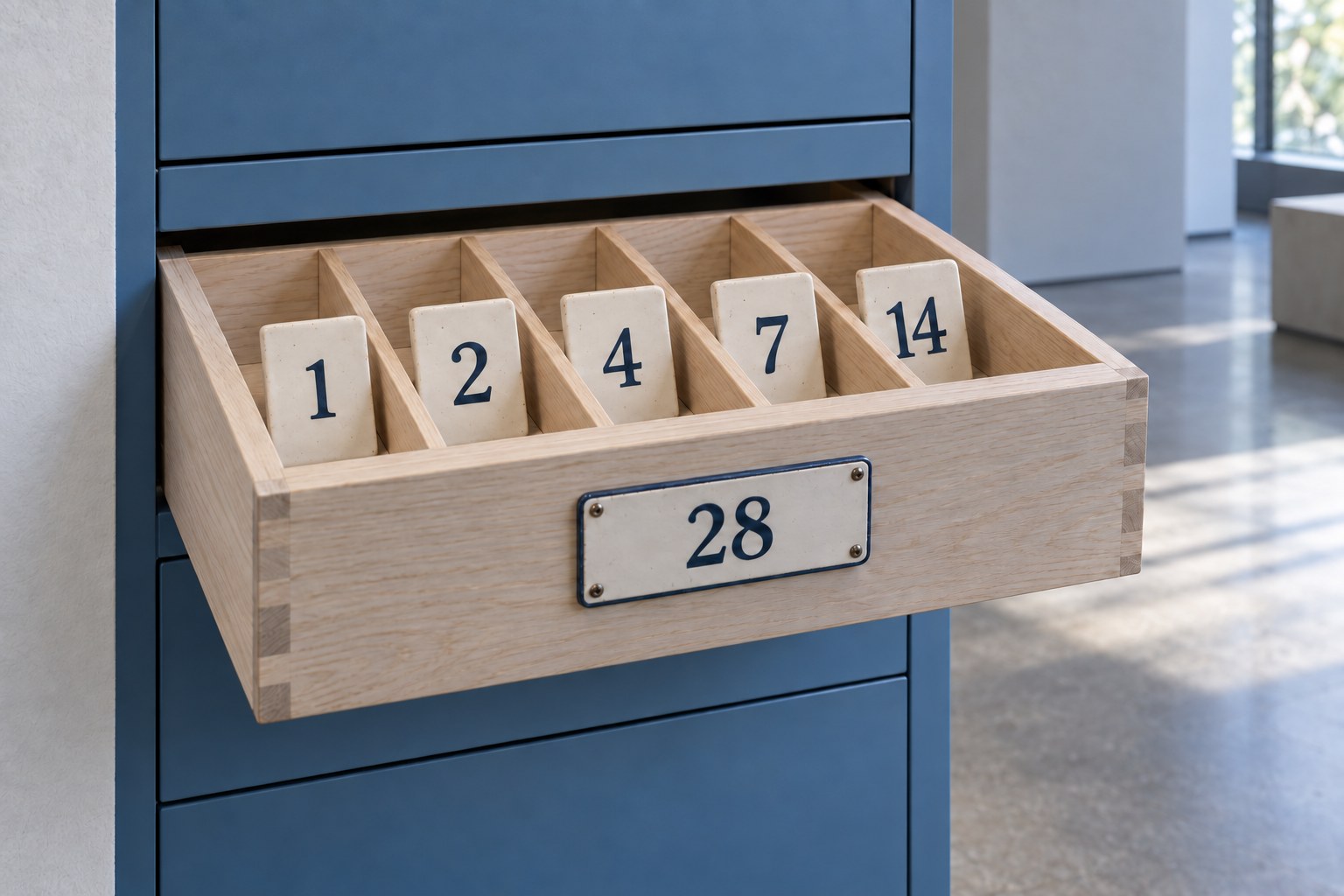
A promise that money will arrive sits beside a very different meaning of 28: the number has exactly as much in its proper divisors as in itself. The mathematical term 'perfect' describes that equality, without saying whether a person will prosper.
The same separation applies to Decoz's portrait of someone born on the 28th. An incidental 28 on a bill is not the birth-day input that portrait describes.
Quick Facts
- Reduction of twenty-eight
- 2 + 8 = 10; 1 + 0 = 1
- Proper divisors of 28
- 1, 2, 4, 7 and 14
- Exact divisor total
- 1 + 2 + 4 + 7 + 14 = 28
- Decoz's birthday input
- Day 28, not a repeated sighting
- Master status in Decoz
- Not 28; his set is 11, 22 and 33
- Philo's lunar model
- Four seven-day phases; mean measured cycle about 29.53 days
Does angel number 28 promise money and abundance?
Joanne's Sacred Scribes entry for 28, published in 2011, says that abundance will enter the reader's life as one door closes and another opens. It connects that promise with 8's associations with wealth and prosperity.
That is a prediction in the author's spiritual interpretation, rather than a finding about people's finances.
Decoz's World Numerology profile for 8 describes ambition, management and control, with money treated as a means rather than the final purpose. He also describes greed and dissatisfaction as failures of that outlook.
A description of how someone handles resources and a promise that resources will arrive answer different questions. Combining them into a single 'wealth meaning' hides the distinction between an attitude toward money and an expected financial event.
The other digits do not turn the prediction into a result of arithmetic.
Decoz associates 2 with cooperation and diplomacy. His profile of 1 emphasizes directing and leading, and 28 reaches that root through 2 + 8 = 10, then 1 + 0 = 1.
| Number | Digit calculation | What the addition establishes |
|---|---|---|
| 28 | 2 + 8 = 10; 1 + 0 = 1 | Root 1, with visible digits 2 and 8 |
| 82 | 8 + 2 = 10; 1 + 0 = 1 | Reversal preserves the total |
| 27 | 2 + 7 = 9 | The neighboring number has a different root |
Changing 28 to 82 cannot make authority precede cooperation through addition alone. A writer who gives that order a meaning is adding an interpretation of the compound, rather than discovering a timetable in its sum.
Blair Andrews' Numerologist.com reading gives the intermediate 10 a completed-cycle meaning before the final 1's new beginning. That emphasis is an author's account of the route to 1; it does not identify which event has ended or when another begins.
Decoz's master-number set consists of 11, 22 and 33, so 28 is not a master number in that system.
The financial abundance association remains a belief expressed by a named writer. Neither a digit sum nor the cited prediction measures how much money will arrive, from whom or on what date.
Why is 28 perfect, and how did Philo connect it with the Moon?
A perfect number equals the sum of its proper divisors: positive whole numbers that divide it without a remainder, excluding the number itself. For 28, those divisors are 1, 2, 4, 7 and 14.
The factor pairs make the list complete: 1 × 28, 2 × 14 and 4 × 7. Including 28 itself would double the total to 56 and answer a different question.
After 28 is excluded, 1 + 2 + 4 + 7 + 14 = 28.
Six is the first perfect number, since its proper divisors 1, 2 and 3 sum to 6. Twenty-eight is the second; its larger size does not change the definition.
Euclid's Elements, Book IX, Proposition 36, gives a construction that produces these examples. Adding the doubling sequence 1 + 2 + 4 gives the prime 7, and multiplying that total by the last term gives 7 × 4 = 28.
The primality condition is part of the construction, not decorative symbolism. The shorter sum 1 + 2 gives prime 3 and produces 3 × 2 = 6 by the same rule.
| Whole number | Sum of proper divisors | Mathematical comparison |
|---|---|---|
| 8 | 1 + 2 + 4 = 7 | Deficient: the sum is less than 8 |
| 12 | 1 + 2 + 3 + 4 + 6 = 16 | Abundant: the sum exceeds 12 |
| 28 | 1 + 2 + 4 + 7 + 14 = 28 | Perfect: the sum equals 28 |
MacTutor's history of perfect numbers describes Nicomachus's division between excess, deficiency and exact balance. His comparison of the balanced case with virtue gives the equality a philosophical interpretation; it is not an observation that 28 attracts money.
In the table, 'abundant' names the excess of a divisor sum over a whole number. The modern wealth claim uses the same ordinary word for something else, so it cannot be proved by calling 28 mathematically perfect.
Philo of Alexandria makes another connection in On the Creation, section 101: the sum 1 + 2 + 3 + 4 + 5 + 6 + 7 is also 28. He relates this count to a lunar pattern of four seven-day phases.
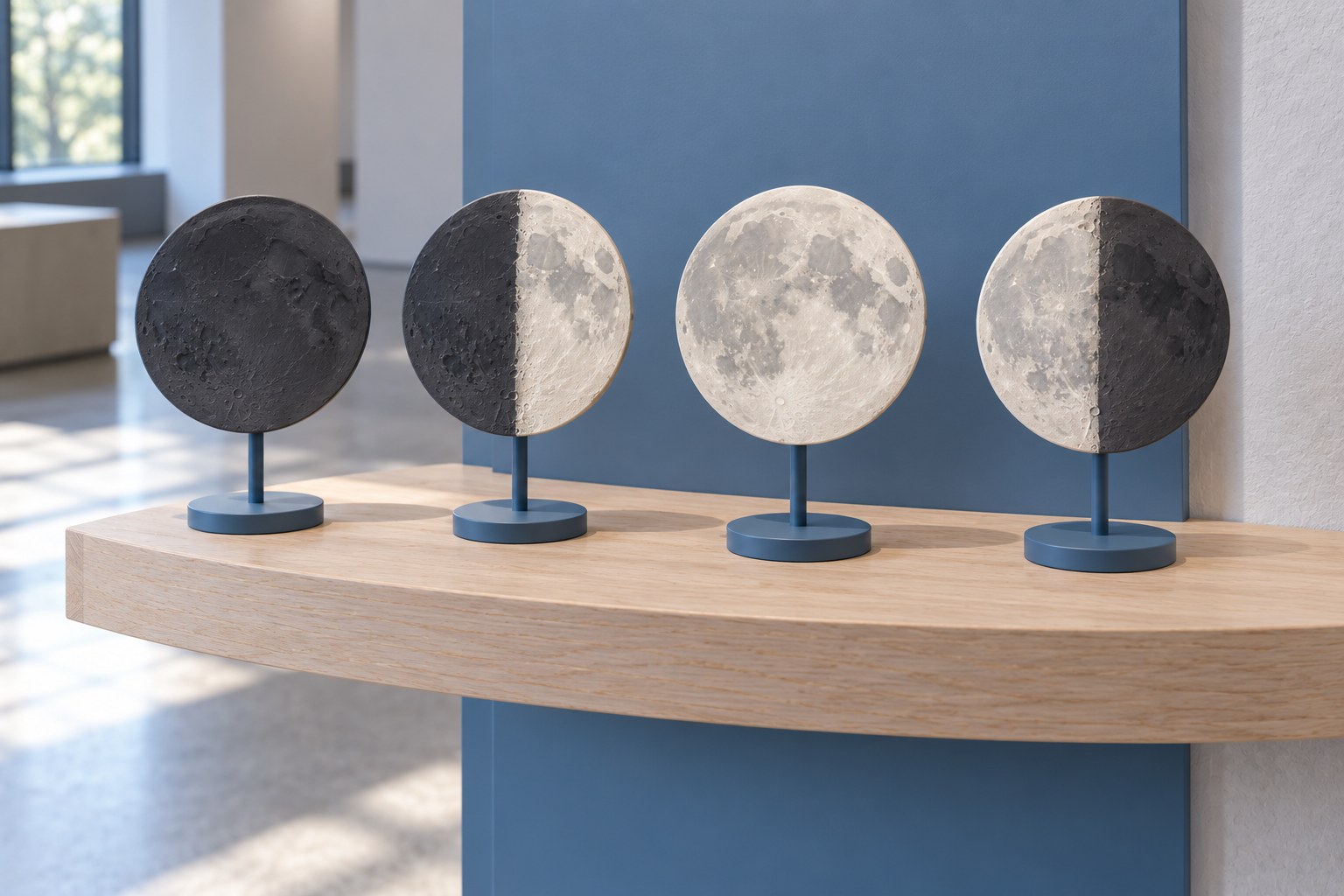
NASA's account of the Moon's orbit gives an average phase cycle of about 29.53 days, rather than 28.
Philo's four-week model therefore does not supply an exact astronomical period. Nor is his sum from 1 to 7 the same operation as adding 28's proper divisors: both reach 28, but they explain different relationships.
Love and career: a 28 birthday is different from a sighting
Decoz's birthday-number 28 profile describes leadership that works best through cooperative effort. The input is a person born on the 28th, rather than anyone who encounters the numeral during the day.
Within that portrait, gentle persuasion sits alongside a strong attachment to personal plans that can make compromise difficult. Cooperation describes a way of working with other people; it does not mean every decision already has their agreement.
For a relationship, those two traits can describe different kinds of interaction. A hypothetical partner may explain a plan calmly while still refusing any change to it.
The calm delivery does not resolve the disagreement.
The birthday profile gives that contrast a vocabulary, but seeing 28 cannot establish that a particular partner fits the portrait or agrees with the plan.
At work, Decoz describes the 28 birthday as capable of directing groups and inclined to hand an established project to others to maintain. That distinction separates starting or leading a project from running its continuing operations.
A hypothetical founder may enjoy setting a project's direction while a colleague prefers maintaining its routine. This is an example of the profile's contrast, not a claim that the number assigns either person a role.
A promotion or career change is another matter: neither the birthday description nor a repeated 28 establishes that an employer has offered new pay or authority.
A Life Path 1 also requires a different input, calculated from a full date of birth under a stated method. Sharing root 1 does not turn a day-28 birthday or a displayed 28 into that chart position.
Why can 28 keep appearing on dates, bills and displays?
Every month in the Gregorian calendar has a 28th, so a familiar date can supply repeated encounters with 28. February ends on the 28th in a common year but on the 29th in a leap year.
That calendar distinction also prevents confusion with Philo's lunar count: the date label 28 is not a measurement of the Moon's current phase.
On a conventional digital clock, 28 can appear as the minute value during any hour. A display written as 28:28 cannot be an ordinary 24-hour clock time, although a timer could use it for minutes and seconds.
A bill's 28 can name an amount, whereas a calendar's 28 identifies a day.
The American Psychological Association defines selective attention as concentrating on some stimuli while ignoring others. Once a number is associated with a promise of wealth, a matching figure on a bill may become more noticeable than the figures around it.
Recurring numbers can therefore stand out even if the underlying rate of encounters has not changed. Remembering the matches alone leaves the unremembered numbers unknown; it does not establish that a financial promise has come true.
Sources
- (n.d.). Numerology Meaning of number 2. World Numerology. Link
- (n.d.). Numerology Meaning of number 8. World Numerology. Link
- (n.d.). Numerology Meaning of number 1. World Numerology. Link
- (n.d.). Master Numbers 11, 22, 33. World Numerology. Link
- (n.d.). Numerology Meaning of a 28 Birthday. World Numerology. Link
- (2011). Angel Number 28. Sacred Scribes Angel Numbers. Link
- (n.d.). Angel Number 28: The Completed Cycle Opens a New One. Numerologist.com. Link
- (1996). Elements, Book IX, Proposition 36. Clark University. Link
- (2006). Perfect numbers. MacTutor History of Mathematics, University of St Andrews. Link
- (1854). On the Creation, XXXIV (101). Early Christian Writings. Link
- (n.d.). Eclipses and the Moon's Orbit. NASA Goddard Space Flight Center. Link
- (2018). Selective attention. APA Dictionary of Psychology. Link
About Our Editorial Process
Every KnowTheAngels guide separates calculation method, tradition context, and personal reflection. We cite where interpretations come from, present more than one view, and never present symbolic reading as prediction.
Read our editorial policy