What Does Angel Number 62 Mean, and What Are Its Sources?
Andrews' partnership metaphor, the shared digit sum of 62 and 26, provision promises, and the sixty-two-week interval in Daniel
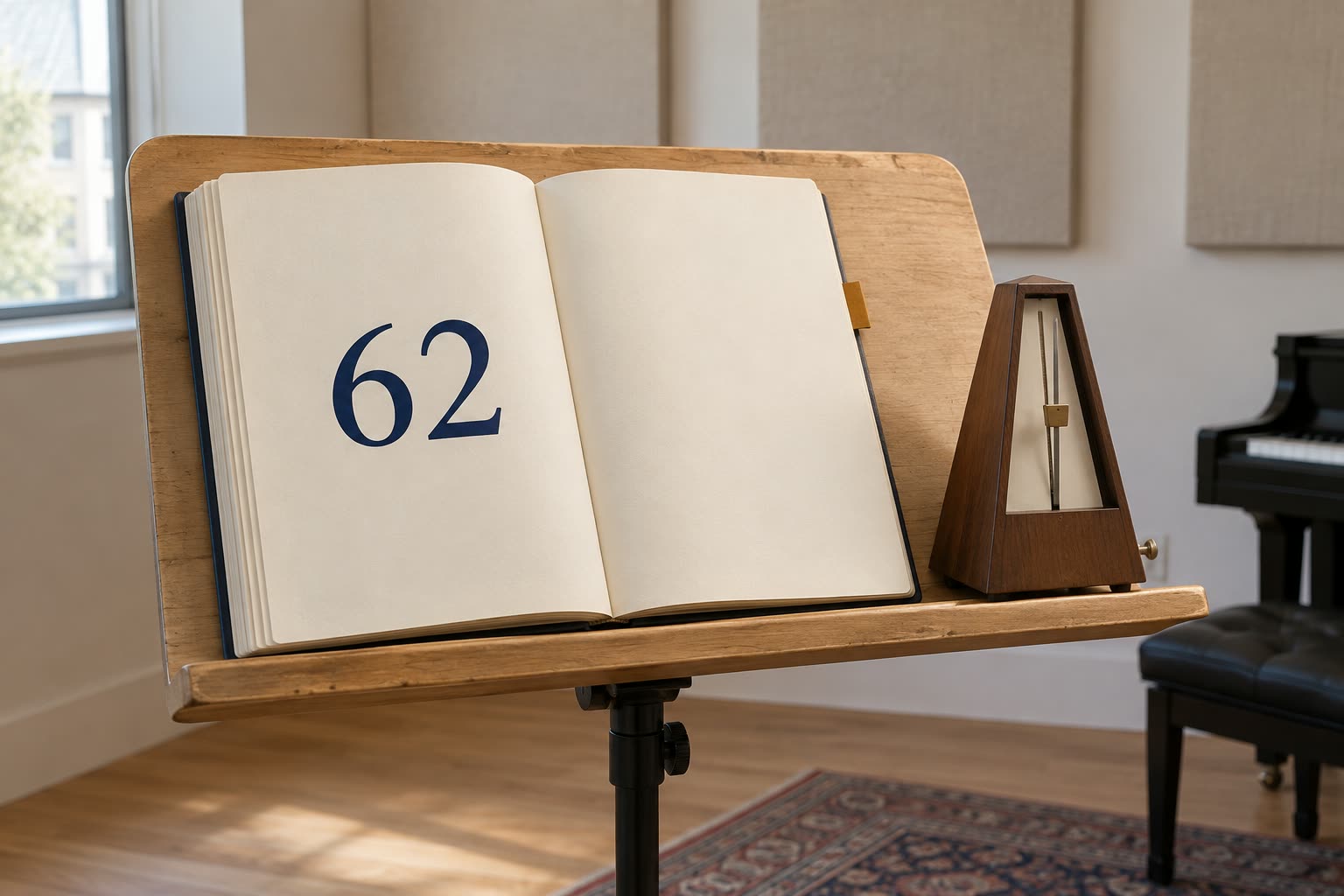
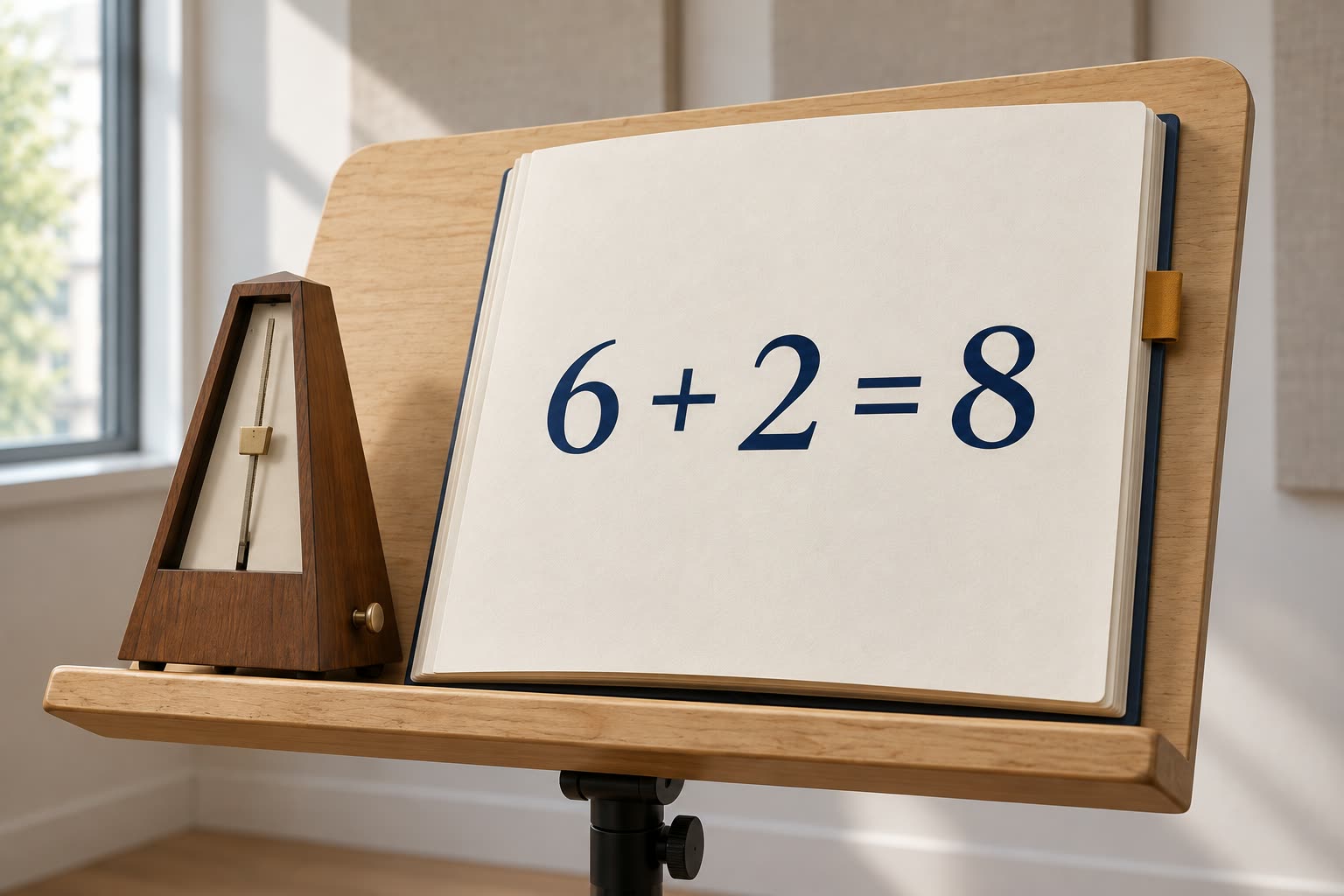
Blair Andrews reads angel number 62 through the image of love finding a partner and producing a shared rhythm. His interpretation brings together the care associated with 6, the partnership associated with 2 and their sum, 8.
That metaphor is one author's way of joining the numbers. The arithmetic itself gives a total, without identifying a couple, assigning decision-making powers or predicting that money will arrive.
The biblical discussion asks a different question: what does sixty-two count in a particular passage?
Quick Facts
- Direct reduction
- 6 + 2 = 8
- Reversed digits
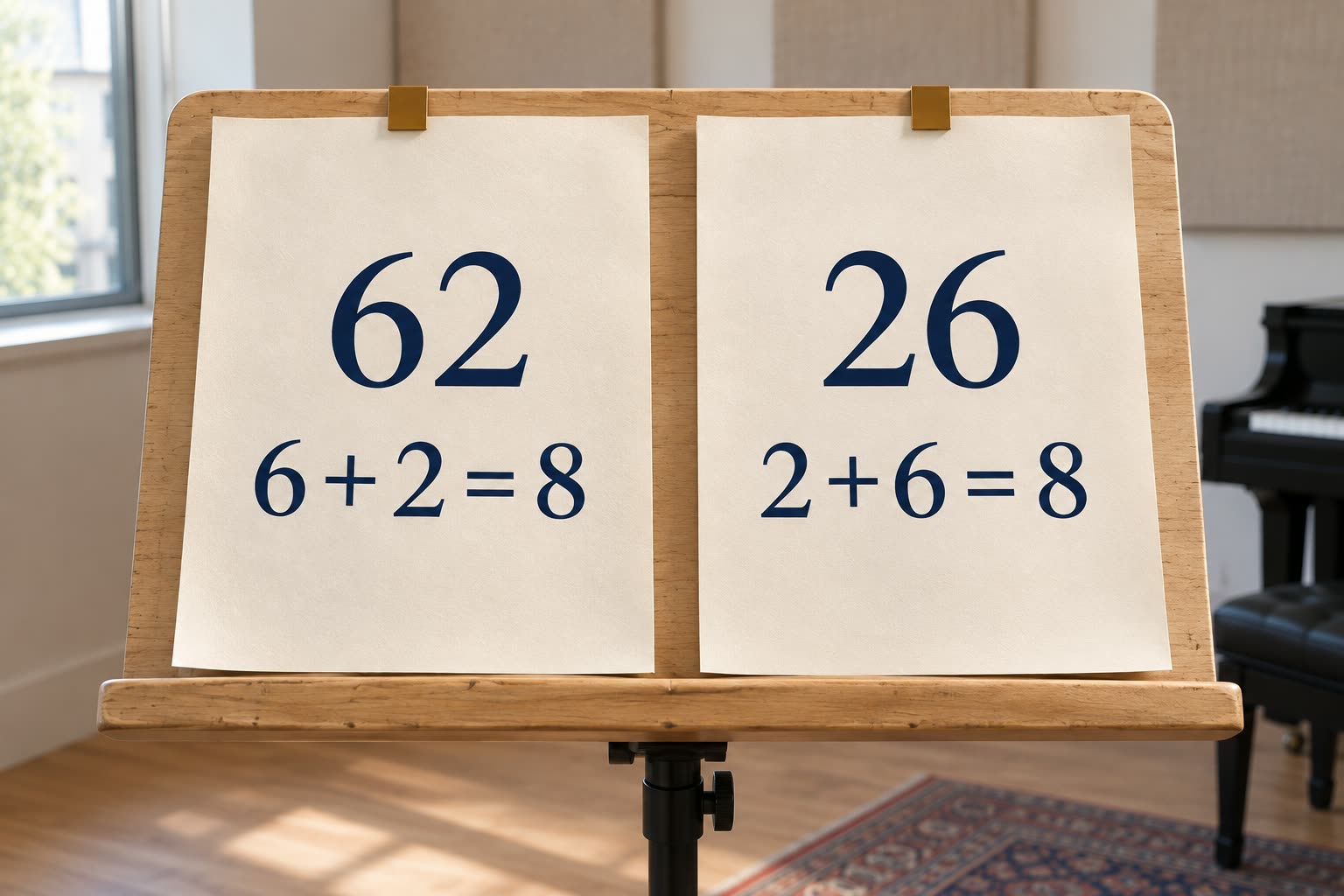
- 26 has the same digit sum
- Andrews' image
- Love, partnership and a shared rhythm
- Provision claim
- Joanne Walmsley, July 12, 2011
- Biblical time interval
- Sixty-two weeks in Daniel 9:25-26
The rhythm in Andrews' reading of 62 is an interpretation
The 6 and 2 in 62 are written digits; 8 is their sum. Andrews gives these three parts different roles when he describes love, partnership and rhythm.
The associations used in the reading
Andrews joins those ideas in the phrase "love (6) that has found its partner (2) and together produced rhythm (8)". The word rhythm makes regular coordination central to his particular interpretation.
For example, two people may recognize the metaphor in a routine they already share, such as preparing a meal together. The familiarity comes from their experience of that routine, rather than from the number discovering it.
A regular pattern can also continue when one person dislikes it. Repetition alone therefore cannot show the ease or mutual satisfaction suggested by the metaphor.
This leaves room for someone to find personal meaning in the image while keeping its source clear: Andrews has offered a symbolic description, not a test of how two people feel.
Why reversing 62 to 26 leaves 8 unchanged
The addition is 6 + 2 = 8. Reversing the digits gives 2 + 6 = 8, because changing the order of the two addends does not change their sum.
The visible order differs; the reduction result does not.
Andrews can place love before partnership within his chosen metaphor. That does not establish a universal rule that every sighting of 62 describes a duty which existed before a second person joined it.
The reverse claim about 26 needs the same care: its digits do not demonstrate that partnership came first and that care later produced control. Either story adds events that addition has no way to identify.
A comparison with 61 or 63 changes a value as well as the sequence, producing a different root. Those different sums still contain no information about whether a particular person acts first, speaks later or leaves a relationship.
A Life Path 8 calculation has another starting point: a complete birth date. Encountering 62 supplies neither that date nor the separate calculation used to describe a personal chart.
Daniel's sixty-two weeks need a unit and an interpretive context
In Daniel 9, Gabriel comes to Daniel during prayer and explains a period of seventy weeks. The sixty-two-week interval appears within that larger account, rather than as a standalone message about partnership.
The KJV wording of Daniel 9:25 includes "seven weeks, and threescore and two weeks". Threescore means sixty, so the second expression is sixty-two.
In a weeks-of-years interpretation, each week represents seven years. The multiplication for the sixty-two-week portion is then 62 x 7 = 434, a calculation also used by E. W. Bullinger in Number in Scripture.
| Portion | Calculation | Years in this reading |
|---|---|---|
| Seven weeks | 7 x 7 | 49 |
| Sixty-two weeks | 62 x 7 | 434 |
| One week | 1 x 7 | 7 |
| Total | 70 x 7 | 490 |
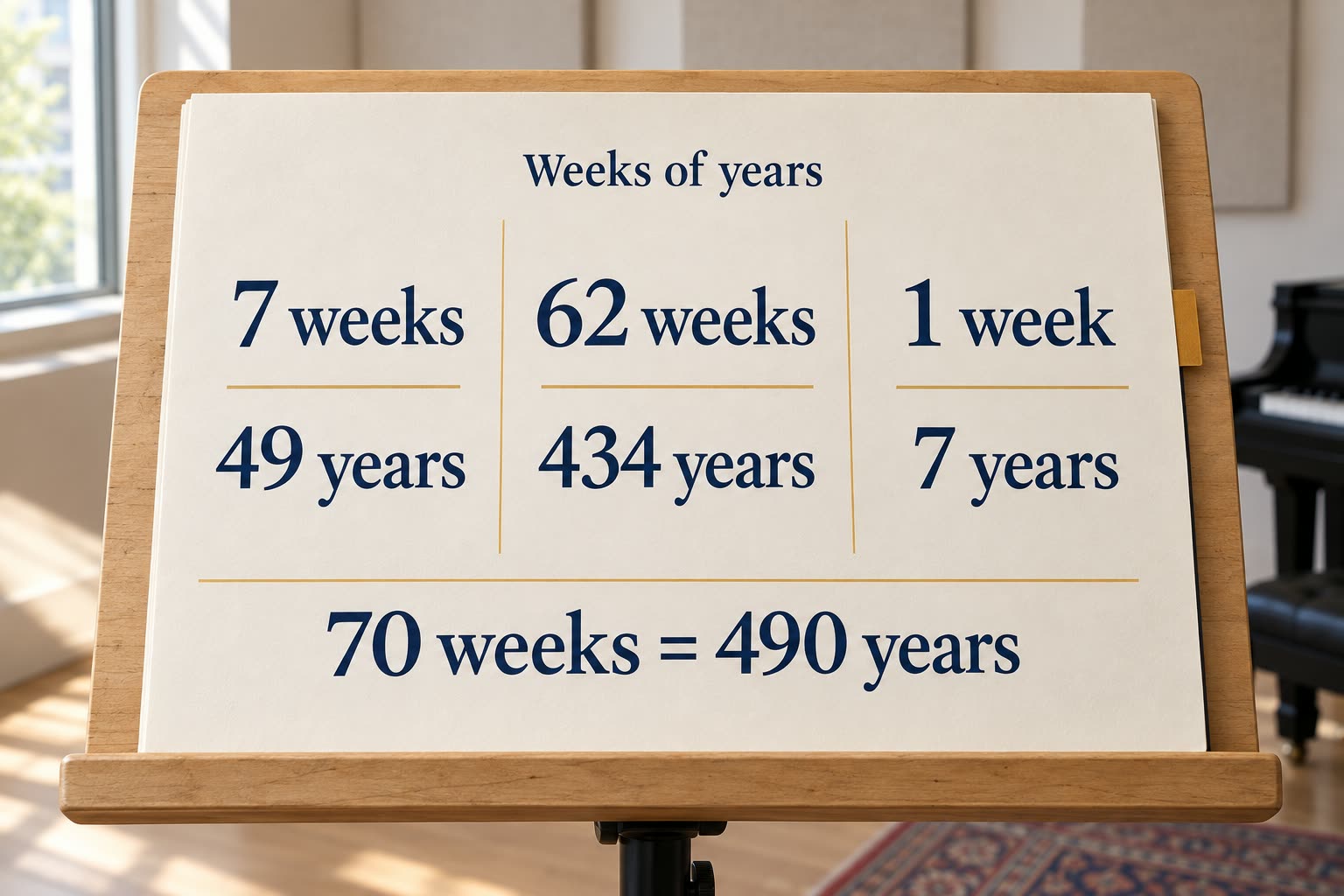
The arithmetic fixes the length once that unit has been chosen. It does not, by itself, identify a starting decree, an endpoint or the person described as anointed.
Daniel 9:26 places the cutting off of an anointed figure after the sixty-two weeks. Historical-critical interpretation commonly connects that figure with the high priest Onias III, while a longstanding Christian reading identifies the passage with Jesus.
Those readings depend on how the prophecy is related to historical events. Reporting their difference is more accurate than presenting 434 years as a calculation that settles the disagreement.
Other passages count different things with sixty-two.
| Passage | What sixty-two counts | What identifies its subject |
|---|---|---|
| Daniel 9:25-26 | An interval within the weeks | The prophecy and its larger chronology |
| Daniel 5:31 | The approximate age of Darius the Median | A named ruler receiving the kingdom |
| 1 Chronicles 26:8 | Members of Obed-edom's family serving as gatekeepers | The family and temple-service list |
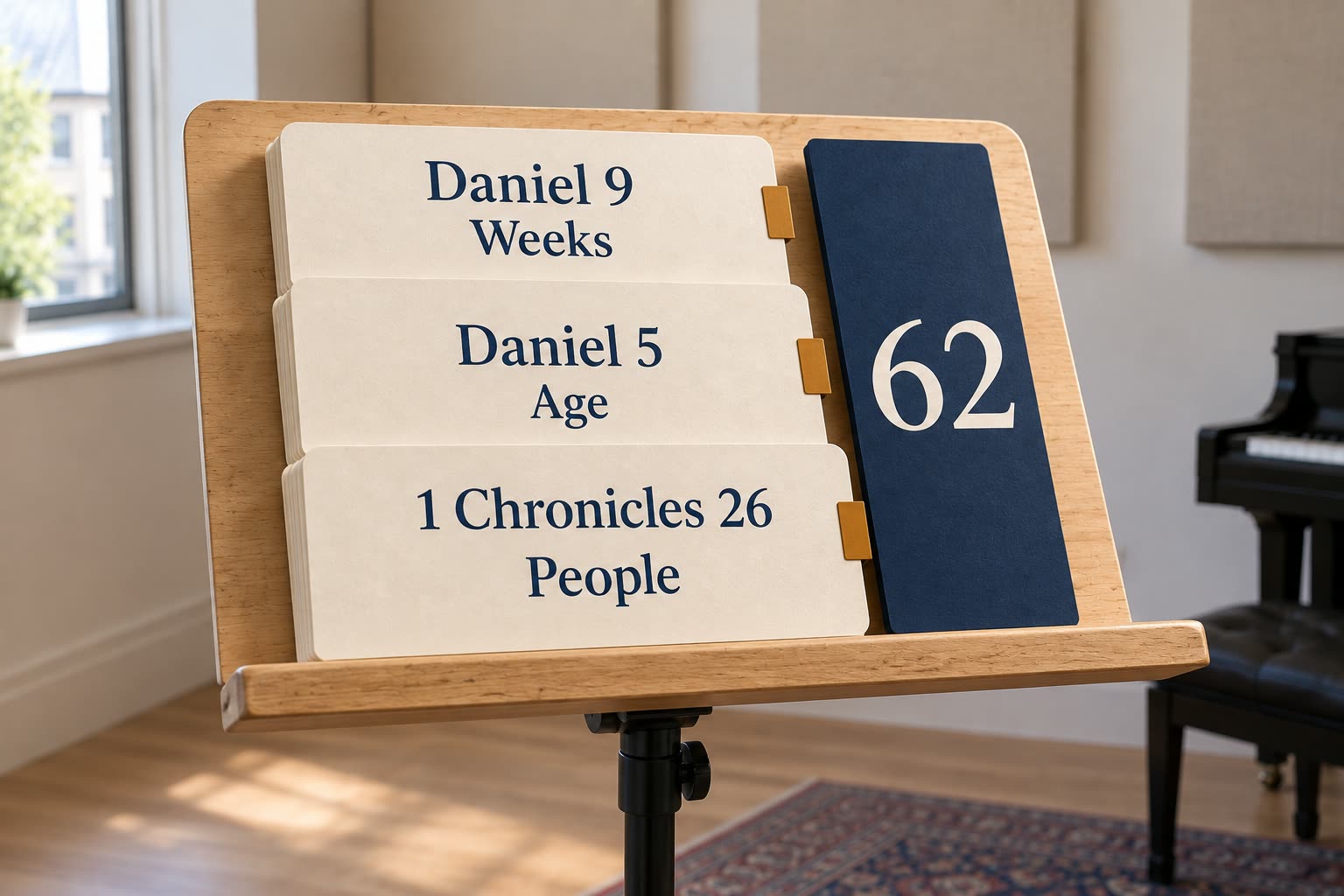
An age, a workforce total and an interval are not interchangeable inputs. Applying the care-and-partnership reading to all three would add a modern interpretive method to passages with different subjects.
A modern sighting of 62 supplies no starting date or unit for Daniel's chronology. Turning it into a personal countdown would require assumptions the sighting does not provide.
Why Walmsley's provision promise is not a calculation of income
Joanne Walmsley's Sacred Scribes entry dated July 12, 2011 connects 62 with work done for a life purpose. It asks readers to trust that "all of your needs will be provided for".
The date identifies a documented modern example of the claim, not proof that nobody made a similar claim earlier.
Astrology.com also presents repeated 62s as a manifestation sign. These statements belong to the authors' spiritual frameworks; neither follows from the equality 6 + 2 = 8.
Decoz explicitly challenges the belief that adding more 8s to a numerological chart will bring money and power. His objection matters because a financial association is often treated as though it already promised a favorable financial result.
Association, promise and an observable outcome
What the evidence supports
- An association in numerology
Decoz discusses career, finances and authority under 8.
- An attributed spiritual claim
Walmsley presents provision as something the reader can trust.
What remains limited
- A future payment
Neither association establishes that a particular payment will arrive.
- An amount or date
The digits supply no payer, amount or payment date.
For example, someone may connect the number with a collaborative project after reading Walmsley. The work completed, the payer's agreement and the payment actually received remain separate facts about that project.
A sighting can carry personal encouragement without establishing any of those facts. The financial-abundance interpretation reports a belief about the number, while evidence of income concerns a particular transaction.
Love and career: shared rhythm does not assign decision rights
Andrews' partnership image makes coordination a relevant theme for a love reading of 62. A couple may associate it with a familiar division of everyday tasks, but the metaphor does not reveal whether both people chose that arrangement.
In a hypothetical household, one partner cooks while the other shops. A stable routine may reflect preference, availability or habit; observing that it repeats does not settle which explanation applies.
| Example | What can be observed | What the number cannot establish |
|---|---|---|
| Two partners share meal preparation | Who shops and who cooks | Whether both prefer that division |
| Two colleagues share a scheduled role | Who handles a shift and the handover | Which decisions each is authorized to make |
At work, a job-share can give Andrews' rhythm metaphor a different setting: two colleagues coordinate a recurring handover. Their actual roles determine which decisions they share and which remain with someone else.
An assistant can willingly accept a narrower role, and a partner can share a task while retaining a different responsibility. Equal task counts or identical powers are not requirements produced by the sum 8.
During a career change into shared work, the relevant information is the role people have actually agreed. A number cannot fill in a missing agreement or establish that someone has accepted one.
Astrology.com extends its 62 reading to twin-flame balance and harmony. That spiritual description does not demonstrate mutual attraction, a desired reunion or permission to contact someone who has asked for distance.
Seeing 62 repeatedly: one recurring label can produce many sightings
A familiar route marked 62 can appear on tickets, a timetable and a vehicle during the same journey. Three sightings in that example are connected to one recurring label, rather than three independent events.
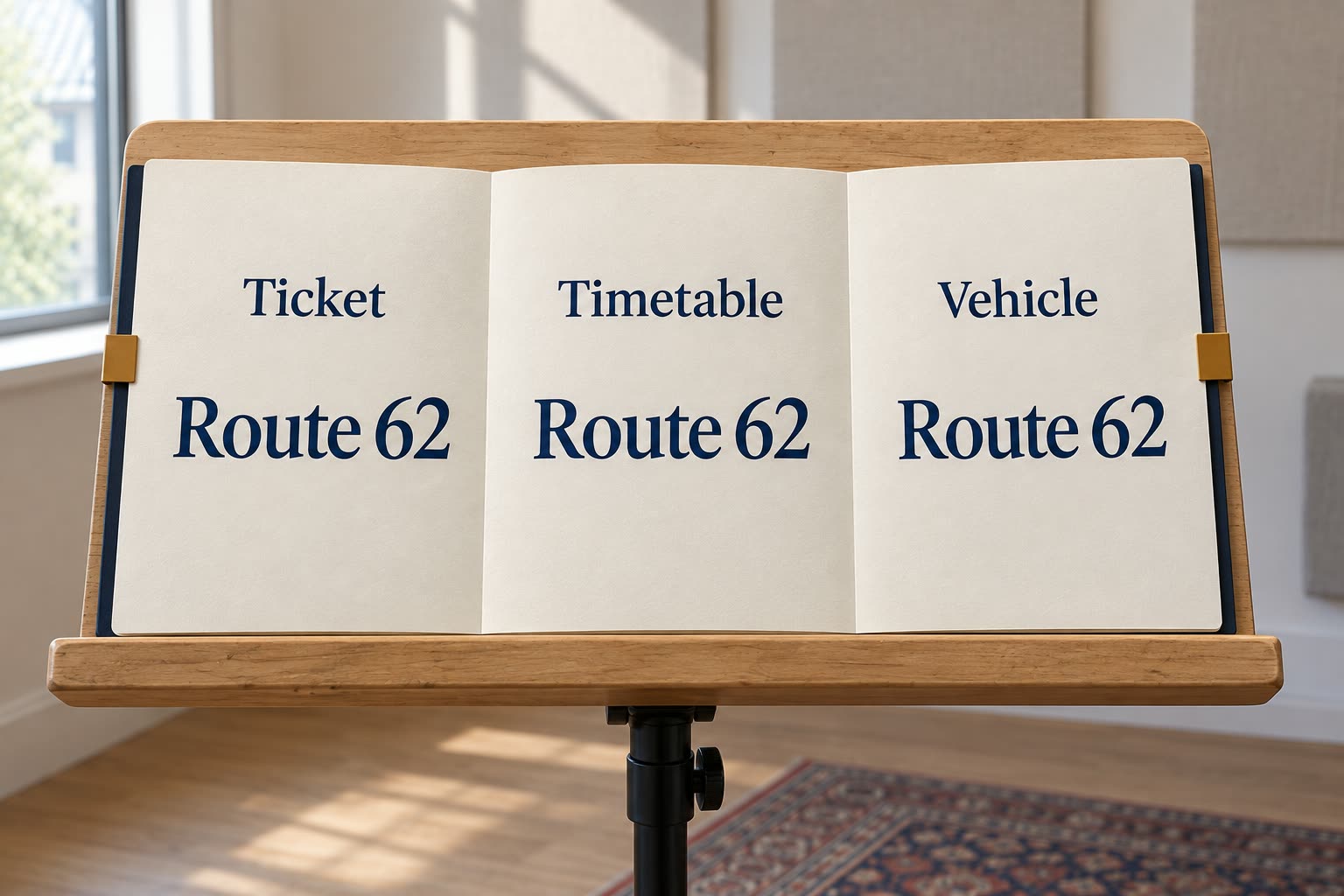
The APA definition of selective attention describes concentrating on some stimuli while overlooking others. Once 62 has become interesting, increased noticing is one possible explanation for its apparent prominence.
That explanation is a possibility, not a diagnosis of a particular person's experience.
A number journal can preserve the place, time and surrounding circumstances of remembered sightings. Recording the setting may reveal that several entries came from the same route, document or routine.
A sighting-only record still lacks the occasions when other numbers appeared or 62 was absent. It cannot establish an unusual frequency, identify an angelic sender or prove that a relationship interpretation caused the repetition.
Frequently Asked Questions
Is 62 itself a master number?
Its digits add directly to 8, without an intermediate 11, 22 or 33. The reduction does not give 62 a master-number result.
Do 62 and 26 have opposite meanings?
They have the same digit sum. Opposite stories about a relationship would come from an interpretation of order, not from the addition.
Does Daniel say that 62 means partnership?
Daniel 9 uses sixty-two within a prophetic time scheme. Applying a modern partnership meaning to that interval adds a separate interpretive method.
Does 62 predict that material needs will be met?
That promise appears in Walmsley's spiritual reading. The number provides no evidence about a particular expense, source of support or future payment.
Sources
- (n.d.). Number 6 Meaning in Numerology. Numerology.com. Link
- (n.d.). Number 2 Meaning in Numerology. Numerology.com. Link
- (n.d.). Numerology Meaning of number 8. World Numerology. Link
- (2023, updated 2026). Angel Number 62: The Rhythm Two People Make Together. Numerologist.com. Link
- (2011). Angel Number 62 (posted July 12, 2011). Sacred Scribes Angel Numbers. Link
- (n.d.). 62 Angel Number Meaning. Astrology.com. Link
- (1611). Daniel 9:21-26; Daniel 5:31; 1 Chronicles 26:1-8. Bible Gateway. Link
- (2026). Prophecy of Seventy Weeks (the 7, 62 and 1 weeks; Onias III; dating of Daniel 7-12; Christian messianic reading). Wikipedia. Link
- (1921). Number in Scripture: Its Supernatural Design and Spiritual Significance, 4th edition. Eyre & Spottiswoode, London (public-domain text). Link
- (2018). Selective attention. APA Dictionary of Psychology. Link
About Our Editorial Process
Every KnowTheAngels guide separates calculation method, tradition context, and personal reflection. We cite where interpretations come from, present more than one view, and never present symbolic reading as prediction.
Read our editorial policy