Angel Meditation for Beginners
A first-week angel meditation method built around posture, breath return, a short timer, and a clean ending rather than visions
Begin with a chair, a five-minute timer, and one plain prayer phrase. Notice the breath, return after distraction, and stop when the timer sounds. The skill is returning without self-criticism. Images, tingling, silence, and calm are possible experiences, but none proves angel contact.
Angel meditation for beginners is a short attention practice that may include a prayerful intention. The first goal is simple.
Sit in a stable position, notice one breath anchor, return when attention wanders, and stop when the timer sounds. A beginner is learning the return, not trying to produce a vision.
Start with five minutes in a chair. Let both feet meet the floor and keep the back supported if that reduces strain.
Choose one short phrase such as "May I meet this day with courage" or use the breath alone. The phrase gives attention somewhere to return.
It does not summon an event.
Review the session by asking what helped you return and what made the practice harder. A vivid image, a blank mind, restless legs, or ordinary planning can all happen.
None makes the sitting spiritually successful or failed. Short, repeatable sessions give clearer evidence than one long attempt built around intensity.
What should happen in your first five-minute angel meditation?
A first sitting needs a clear beginning, one attention anchor, and an ending that does not depend on mood. Use a chair that supports the body.
Set a quiet timer for five minutes and place both feet on the floor.
Choose the breath at one location. The nose, chest, or abdomen can work.
If prayer language helps, pair the exhale with one short phrase. Keep the same anchor for the whole sitting.
This stripped-down method differs from guided image work. A beginner does not need to hold a scene.
Breath return provides enough structure while attention is still learning the basic movement.
It also differs from a day-opening practice. Morning prayer hands one virtue into the first task.
This sitting stays with attention itself for a defined period.
The session is complete even if the mind wandered for most of the five minutes. Each moment of noticing followed by return is the skill.
A calm stretch may happen, but calm is not required. Objects used in crystal-focus practice are optional and should not compete with the chosen breath anchor.
Write one brief note after standing. Record the timer length, the anchor used, and the main obstacle.
That gives tomorrow a useful adjustment without turning meditation into a performance score.
Why returning matters more than clearing the mind
Returning is the core skill because clearing the mind gives a beginner an impossible target. Minds produce plans, memories, sounds, and body signals.
Meditation trains recognition and return. It does not stop ordinary mental activity on command.
Notice how quickly the mind adds a second problem. A thought about work appears, then another thought says meditation is going badly.
Drop the judgment first. Return to the physical breath before deciding what the original thought means.
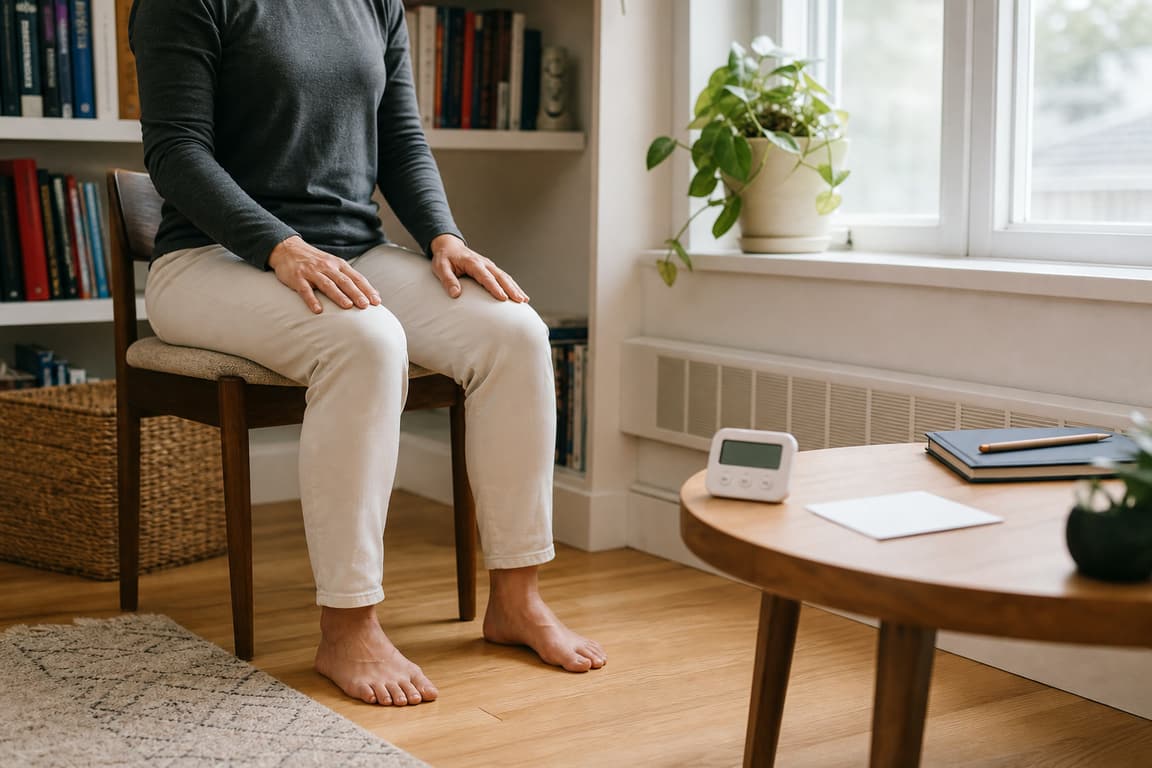
A stable chair, one anchor, and a visible timer give attention a place to return.
A short discernment journal can hold an unusual phrase after the session. Keep the sitting free from analysis.
Writing during every distraction teaches the mind to leave the anchor whenever something feels interesting.
Counting can help for a few breaths. Count each exhale from one to five, then begin again.
Losing the count is not evidence that the method failed. It simply shows that attention moved.
Use the same response for an outside sound. Hear it, allow it, and return.
Fighting the sound usually takes more attention than the sound itself.
After several sessions, the return may become quicker and less dramatic. That quiet change is useful evidence.
The mind still wanders, but it spends less time building a story about wandering. Gratitude noticed during the sit can be recorded later through a focused gratitude practice.
This separation matters because it keeps the return skill uncluttered.
How do you handle pain, sleepiness, anxiety, and restless thoughts?
Different obstacles need different repairs. Staying still through sharp pain is not a spiritual achievement.
Falling asleep does not call for stronger imagery. Anxiety does not improve when the session becomes a test of courage.
Match the repair to the obstacle
Change one condition before abandoning the whole practice.
Move, stand, or use more support
Protect the body instead of proving endurance
Sit earlier with eyes slightly open
Use a chair rather than the bed
Shorten to three minutes and count exhales
Reduce the task before adding more guidance
Open the eyes and orient to the room
End if grounding does not lower distress
Posture should feel alert without strain. A cushion on the floor is optional.
Many beginners breathe and return more easily in a plain chair because balance no longer competes with attention.
An evening release practice owns a different problem. Use it when open loops are blocking sleep.
Do not force a formal sitting at bedtime when the body needs a direct handoff into rest.
People with trauma histories or panic symptoms may prefer open eyes, a shorter duration, and a known exit. A mental health professional can help adapt meditation when inward attention repeatedly increases distress or dissociation.
Restlessness may remain even after the repair. Let hands rest where they can be felt and allow one deliberate posture change halfway through.
Planned movement is often less disruptive than a long fight against the body.
The decision is practical. Continue when the session remains tolerable and return is possible.
Shorten, change posture, or stop when the method repeatedly increases pain, panic, detachment, or sleep loss. This boundary helps the reader adapt the method without treating discomfort as a test.
A timer gives the practice a clean edge
The timer is a method boundary that prevents two common beginner errors. One is quitting at the first restless minute.
The other is extending a pleasant session until the body becomes strained or the reader starts waiting for something unusual.
Use a sound that can be heard without startling you. Put the device face down and turn off alerts.
The screen should not become another object to monitor.
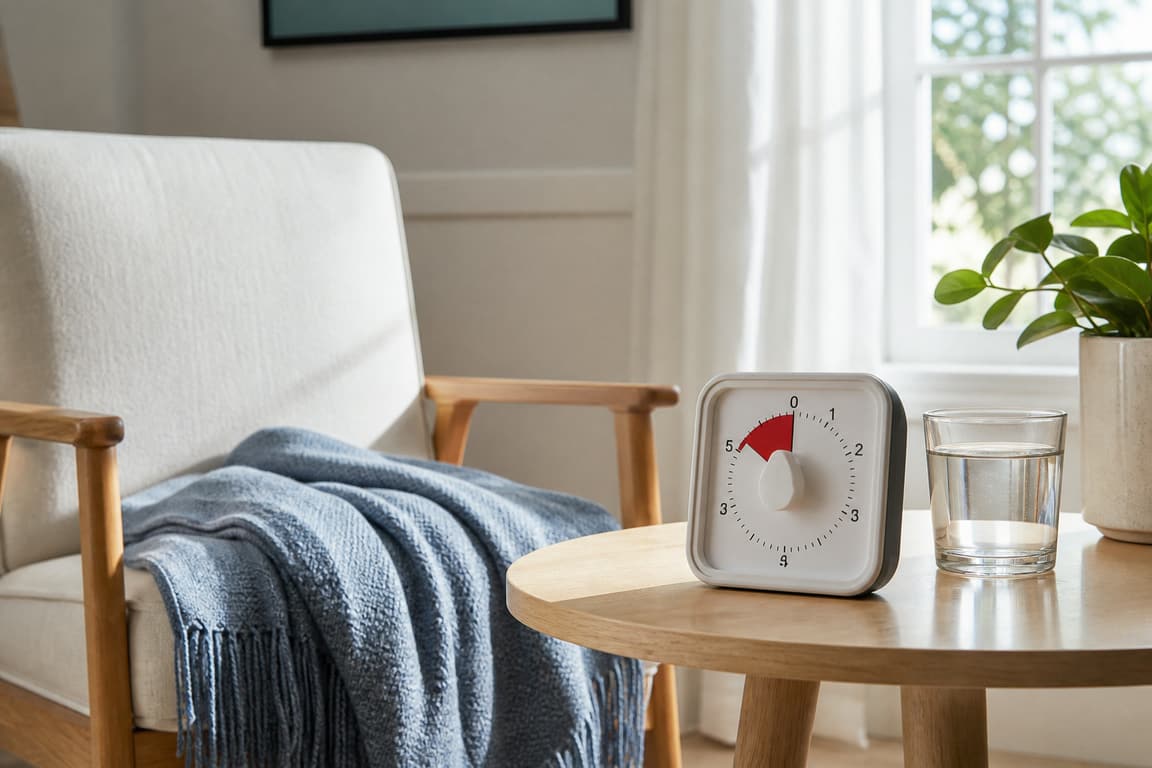
A simple timer protects both the beginning and the ending of a short session.
Five minutes can stay the standard for a week. Increase only when the current length ends cleanly and posture remains comfortable.
Adding time because one session felt disappointing turns duration into a punishment.
A repeated session can attach to an existing cue. The first cup of water, a closed laptop after lunch, or the chair used before dinner can provide a stable start.
An altar practice may help some readers, but a special surface is not required.
Stop with the timer even when a phrase or image feels unfinished. If it still matters, write one descriptive line after standing.
This timing boundary matters because it keeps a beginner prayer practice repeatable rather than dependent on intensity.
Which practice fits after your first week?
The next practice should match the skill that is missing. More time is not automatically the next step.
A reader who can return to breath may need help carrying attention into action, reviewing impressions, or ending the day.
Keep the beginner sitting when the return still feels confusing or highly pressured. Familiarity with one anchor creates a base that makes later imagery and journaling easier to evaluate.
A Michael-focused practice is narrower. Michael meditation uses figure-specific symbols to rehearse courage and boundaries.
It does not replace the basic attention skill.
Choose one change for the next week. Add two minutes, change the cue, or try one nearby method.
Several simultaneous changes hide which adjustment actually helped.
The right progression makes the practice easier to understand. It should not make the reader more dependent on elaborate conditions, special sensations, or a growing list of spiritual tasks.
Can meditation prove that an angel is present?
Meditation does not prove angelic presence. Warmth, tingling, light behind closed eyes, emotion, sudden thoughts, and a sense of company can arise through attention, expectation, physiology, memory, and the surrounding environment.
A spiritual interpretation may still matter personally. Keep it proportionate by describing the experience before assigning a cause.
Compare repeated patterns over time and allow ordinary explanations to remain possible.
The same boundary applies to tingling sensations and unusual points of light. Sensory detail deserves observation, not an automatic supernatural conclusion.
A grounded closing check
Use these questions after the timer rather than during the sitting.
Describe the sensation, thought, or image
Keep interpretation out of the first sentence
Name an ordinary explanation
Include posture, light, stress, sleep, and expectation
Look for calmer and more responsible action
Fruit is more useful than intensity
Leave the cause open
Uncertainty does not erase personal meaning
This limit gives the beginner a fair standard. Return, body comfort, a clean ending, and more deliberate action can all be reviewed.
The distinction matters because an invisible cause cannot be verified by the sitting alone.
Reader Resources
Review the FAQ, source trail, authorship notes, and related readings before moving to another interpretation.
Questions and sourcing
Move from interpretation into evidence by resolving common questions first, then checking the source trail that supports the page.
Frequently Asked Questions
How long should a beginner angel meditation last?
Five minutes is enough for the first several sessions. Add a minute or two only when posture stays comfortable and the timer ends before you begin chasing a special state.
What should I focus on during angel meditation?
Use the movement of breath at the nose, chest, or abdomen, or pair the exhale with one short prayer phrase. Return to the same anchor each time attention wanders.
What if I cannot clear my mind?
You do not need to clear it. The practice is noticing a thought and returning. Planning, sounds, and body sensations are normal material for learning that skill.
Can meditation prove that an angel is present?
No. Calm, imagery, tingling, emotion, and coincidence have several possible explanations. Treat spiritual meaning as reflection, not proof, and keep ordinary explanations visible.
Thomas Merton (1960). Thoughts in Solitude. Farrar, Straus and Giroux
Richard J. Foster (1978). Celebration of Discipline. Harper & Row
Thomas Keating (1992). Open Mind, Open Heart. Continuum
Adele Ahlberg Calhoun (2015). Spiritual Disciplines Handbook. IVP Books
Updates and authorship
The maintenance record and human editorial context stay together before related reading.
May 14, 2026: Expanded the page with clearer method steps, tradition context, and stronger practice boundaries.
July 12, 2026: Rebuilt the beginner guide around a five-minute first sitting, distraction repair, body comfort, and clear limits around unusual experiences.
Elena has studied comparative religion and angel traditions for over 12 years. She focuses on making spiritual concepts accessible without flattening the traditions behind them.
Continue through the library
Use these adjacent guides to compare the surrounding traditions, methods, or symbols without losing the article's main question.