What Does Angel Number 24 Mean for Care and Cooperation?
The modern care reading, Cheiro's fortunate compound, biblical groups of twenty-four, and the difference between a daily cycle and a number sighting

Modern readings of angel number 24 connect cooperation with steady care. Blair Andrews describes love expressed through ordinary daily effort, drawing on themes associated with 2, 4 and their sum, 6.
That reading belongs to an author and a symbolic method. Cheiro's older account emphasizes assistance and favorable associations, and biblical occurrences use twenty-four to count particular groups.
These sources answer different questions about the same number.
Quick Facts
- Digit addition
- 2 + 4 = 6
- Contemporary emphasis
- Cooperation, dependable effort and care
- Cheiro's comparison
- 24, 33 and 42 share a compound meaning in his book
- Priestly divisions
- 24 groups listed in 1 Chronicles 24
- Heavenly scene
- 24 elders in Revelation 4:4
Why modern writers connect 24 with dependable care
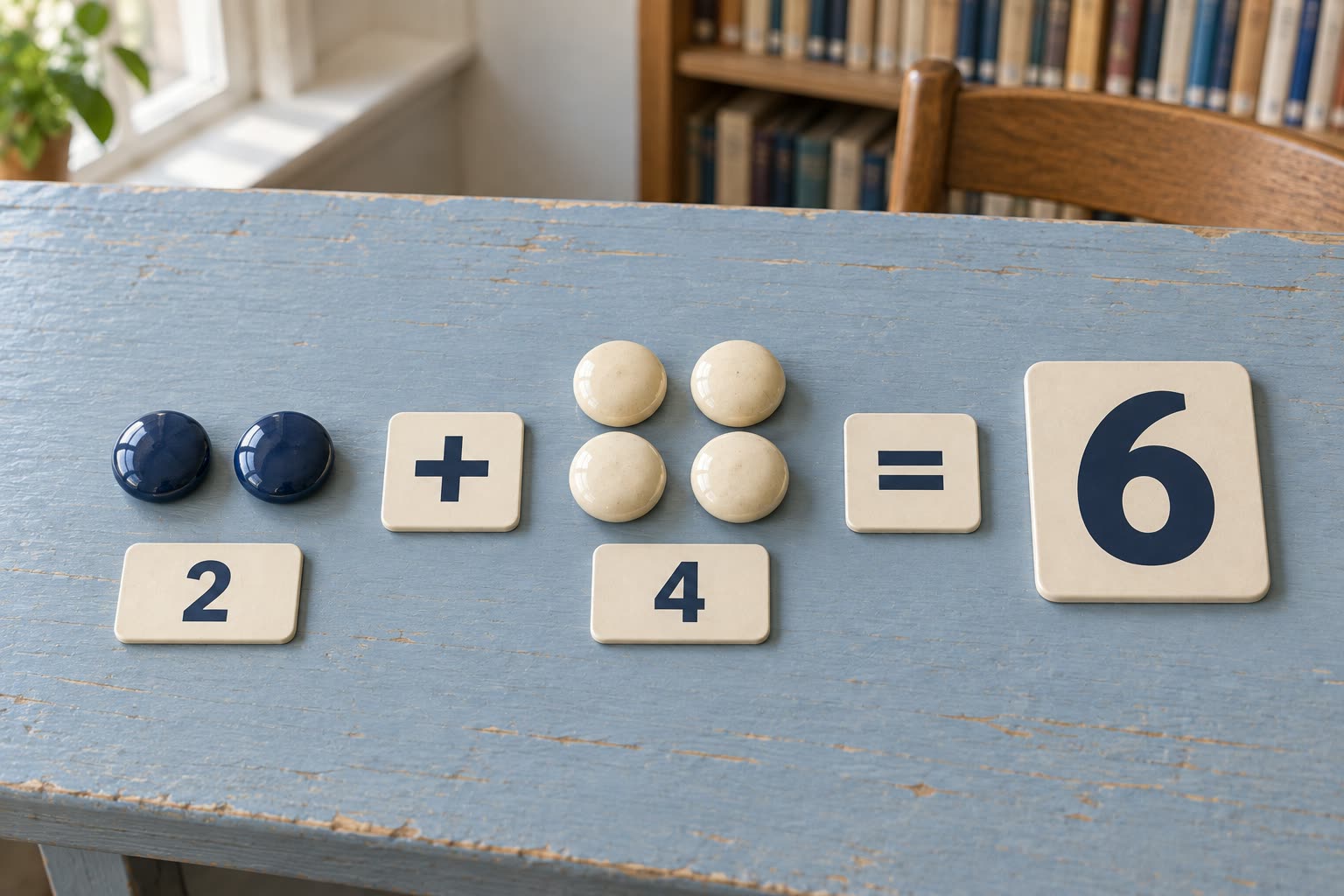
The calculation is short: 2 + 4 = 6. The interpretation requires an additional choice about what each number represents.
The sum and the two written digits
Blair Andrews at Numerologist.com applies this vocabulary to daily care in his reading of 24. A person who follows through on an ordinary commitment fits that image more closely than a dramatic declaration that is never followed by action.
For example, someone may associate 24 with regularly collecting a relative from an appointment. The connection starts with a known act of care; seeing the number does not reveal that an unknown relative needs help.
The position of 2 before 4 also supplies no timetable. Cooperation might lead to an agreed routine, but an existing routine can equally bring people into cooperation.
Cheiro calls 24 fortunate and gives 42 the same meaning
Cheiro's Book of Numbers treats 24 as a fortunate compound associated with assistance from influential people and gain through love. This is a prediction within his divinatory system, not a finding that a sighting produces those outcomes.
His entries for 33 and 42 refer back to the meaning of 24. That explicit equivalence matters when a modern account claims that reversing 24 must reverse the course of a relationship.
| Entry | Treatment in the book | Digit sum |
|---|---|---|
| 24 | Fortunate associations and assistance | 2 + 4 = 6 |
| 33 | Refers to the meaning of 24 | 3 + 3 = 6 |
| 42 | Refers to the meaning of 24 | 4 + 2 = 6 |
The common sum explains an arithmetic resemblance, while the cross-references establish what this particular author says. One does not substitute for the other.

A present-day writer may still interpret digit order differently. That distinction needs its own attribution rather than being presented as a consequence of addition or as Cheiro's position.
This also separates two senses of lucky. A favorable description in a numerology book is a reported belief; evidence of better outcomes would require observations beyond the entry itself.
Priestly divisions and heavenly elders: what scripture actually counts
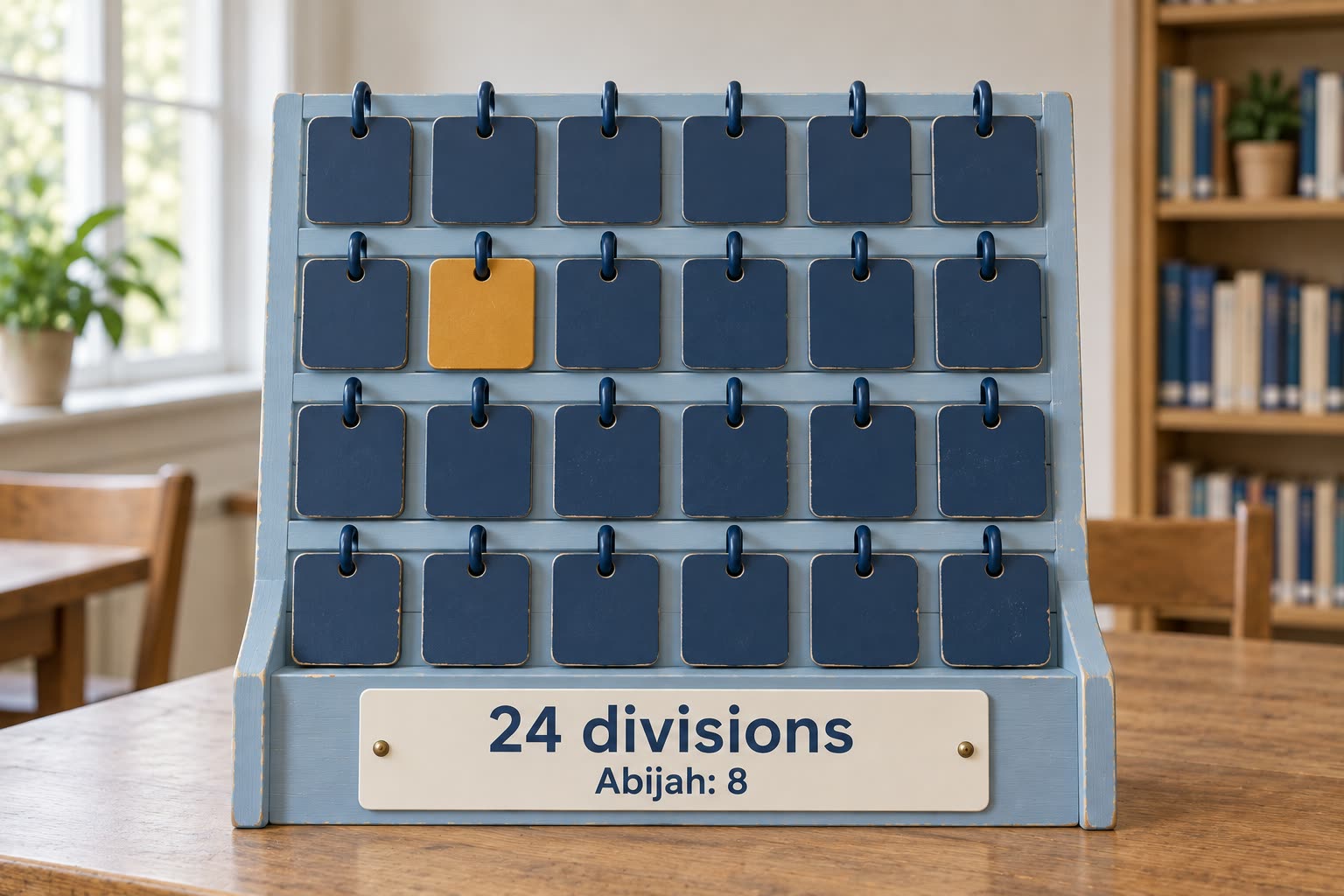
First Chronicles 24:7-18 lists twenty-four priestly divisions, beginning with Jehoiarib and ending with Maaziah. The number counts groups assigned to service.
Luke 1:5 identifies Zechariah as belonging to the division of Abijah, called Abia in the King James Version. Abijah is eighth in the Chronicles list, linking a named priest to a named division.
Revelation 4:4 describes a different scene: twenty-four elders sit on thrones around God's throne, wearing white garments and gold crowns. Here the number counts figures in a vision.
| Passage | What the text describes | What interpretation adds |
|---|---|---|
| 1 Chronicles 24:7-18 | Twenty-four priestly divisions | The organization of priestly service |
| Luke 1:5 | Zechariah belongs to Abijah's division | A connection to a named group in the earlier list |
| Revelation 4:4 | Twenty-four enthroned elders | An explanation of whom the elders represent |
The elders' identity has received different readings, including redeemed people, the twelve tribes together with the twelve apostles, and heavenly beings. E. W. Bullinger reads them as angelic leaders of heavenly worship and connects their number with the priestly divisions.
Bullinger's connection is an interpretation of the two settings, not a statement in Chronicles that its divisions are angels.
These passages give a biblical reader identifiable groups and scenes to study. Applying them to an individual's chores or relationship requires a further analogy that the texts do not make.
How the Hebrew Bible counts twenty-four books
The Hebrew Bible is traditionally counted as twenty-four books, while the same material is divided into thirty-nine books in the Protestant Old Testament. Several combined works account for the different totals.
| Hebrew Bible grouping | Protestant count | Increase in the total |
|---|---|---|
| Samuel | 1 and 2 Samuel | 1 |
| Kings | 1 and 2 Kings | 1 |
| Chronicles | 1 and 2 Chronicles | 1 |
| Ezra-Nehemiah | Ezra and Nehemiah | 1 |
| The Twelve | Twelve minor-prophet books | 11 |
The additional fifteen comes from dividing those groups: 1 + 1 + 1 + 1 + 11 = 15. Adding fifteen to twenty-four gives thirty-nine.
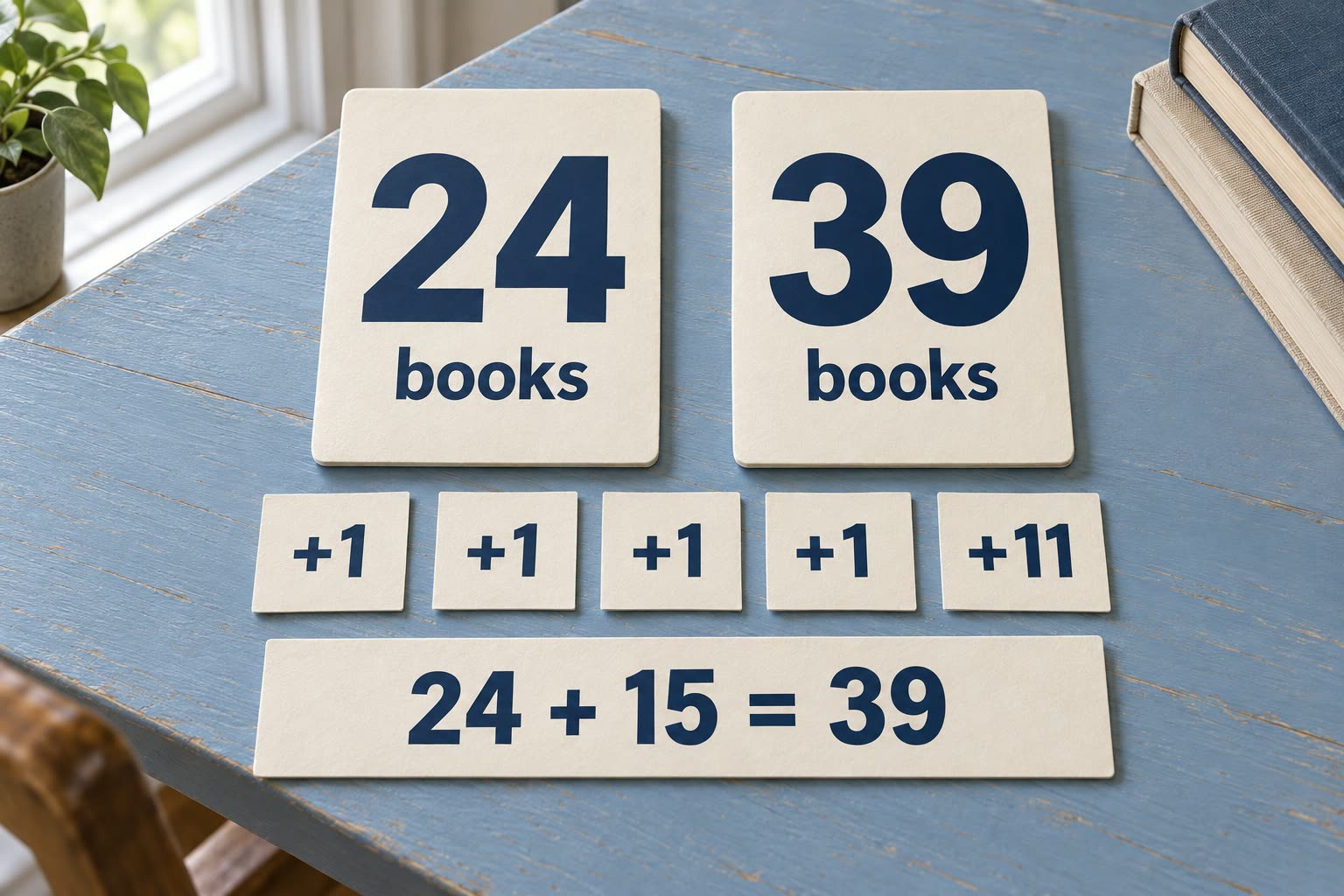
The numerical difference does not mean fifteen texts went missing. It concerns where a collection counts one book and where it counts several.
This comparison is specifically with the Protestant Old Testament; it does not describe every Christian canon. Book order and other canonical traditions raise separate questions.
A symbolic claim based only on the total consequently needs to identify the collection being counted. The twenty-four books, twenty-four priestly divisions and twenty-four elders are three different uses of the number.
Daily care in love and work: an example has to begin with the people
Andrews' daily-care image can describe a relationship where affection is expressed through dependable actions. It does not reveal how much work either partner actually does.
Consider a hypothetical household where one person remembers a repair and another arranges it. A finished repair is visible, but the remembering, booking and waiting may belong to different people.
What a shared-task record can distinguish
These are separate parts of a known arrangement, not meanings discovered from a sighting.
- Noticing
Who recognized that the repair was needed?
- Arranging
Who contacted the repairer and agreed the time?
- Completing
Who was present when the work happened?
The same distinction applies at work when one colleague notices a problem, another organizes a response and a third completes the visible task. Calling only the final action care would leave out part of the example.

Different names do not automatically make an arrangement fair, and the same name in several places does not automatically make it unfair. Availability, an agreed division of work and the people's preferences change what the record means.
Those circumstances supply information that 2 + 4 = 6 does not contain.
During a career change, a similar task record may describe work being handed over. Any new responsibility still depends on what the people have agreed.
Seeing 24 often: a day has twenty-four hours, but a clock may never display 24
A twenty-four-hour day makes 24 familiar in timetables and signs such as 24/7. It does not put a visible 24 on every clock.
A twelve-hour clock cycles through hours 1 to 12, and a usual digital twenty-four-hour clock runs from 00 to 23. The minute 24 can still appear once per hour on either digital format.

The history of the day's division also differs from a modern number interpretation. Egyptian timekeeping used twelve daytime and twelve nighttime hours whose lengths could vary with the seasons; equal hours belong to a later development in astronomy.
The 24th of a month, a pack containing twenty-four items and the same bus number seen repeatedly provide other ordinary contexts. Several encounters with one label are different from encounters across unrelated settings.
The APA Dictionary defines selective attention as concentrating on some stimuli while overlooking others. Greater attention to 24 is one possible explanation for increased noticing, but a list of sightings alone does not establish its cause.
A number journal can preserve the setting and what was already happening at the time.
A diary of sightings answers where 24 was noticed. Estimating its frequency would also require the other numbers encountered and the opportunities to see them.
Frequently Asked Questions
Does 24 reduce to a master number?
Its digits add directly to 6. No intermediate 11, 22 or 33 occurs in that calculation.
Why do some writers call 24 lucky?
Cheiro gives it a favorable compound interpretation involving assistance and relationships. That attribution reports his system; it does not establish improved odds for an event.
Does reversing 24 to 42 change its root?
Both sums equal 6, and Cheiro assigns the compounds the same meaning. A modern distinction based on digit order is an additional interpretation.
Are the twenty-four elders definitely angels?
Their identity is disputed in interpretation. Bullinger's angelic reading is one account, while other readings identify the elders with redeemed people or the tribes and apostles.
Sources
- (2026). Angel Number 24 Meaning: The Architecture of Care. Numerologist.com. Link
- . The Number 2 in Numerology. Numerology.com. Link
- . The Number 4 in Numerology. Numerology.com. Link
- . The Number 6 in Numerology. Numerology.com. Link
- . Cheiro's Book of Numbers, chapter XIII, the compound numbers 23 to 42. Herbert Jenkins, London; Indian edition, D. B. Taraporevala Sons, Bombay. Link
- (1921). Number in Scripture: Its Supernatural Design and Spiritual Significance, 4th edition, part II, entries for twenty-two to twenty-five. Eyre & Spottiswoode, London (public-domain text). Link
- (1611). 1 Chronicles 24:7-19; Luke 1:5; Revelation 4:4. BibleGateway. Link
- (2026). Twenty-Four Elders (interpretations of their identity). Wikipedia. Link
- (2026). Hebrew Bible (the 24 books of the Masoretic canon). Wikipedia. Link
- (2026). Hour (Egyptian seasonal hours and the division of the day into 24). Wikipedia. Link
- (2018). Selective attention. APA Dictionary of Psychology. Link
About Our Editorial Process
Every KnowTheAngels guide separates calculation method, tradition context, and personal reflection. We cite where interpretations come from, present more than one view, and never present symbolic reading as prediction.
Read our editorial policy